
Trabrocco Long Lunch
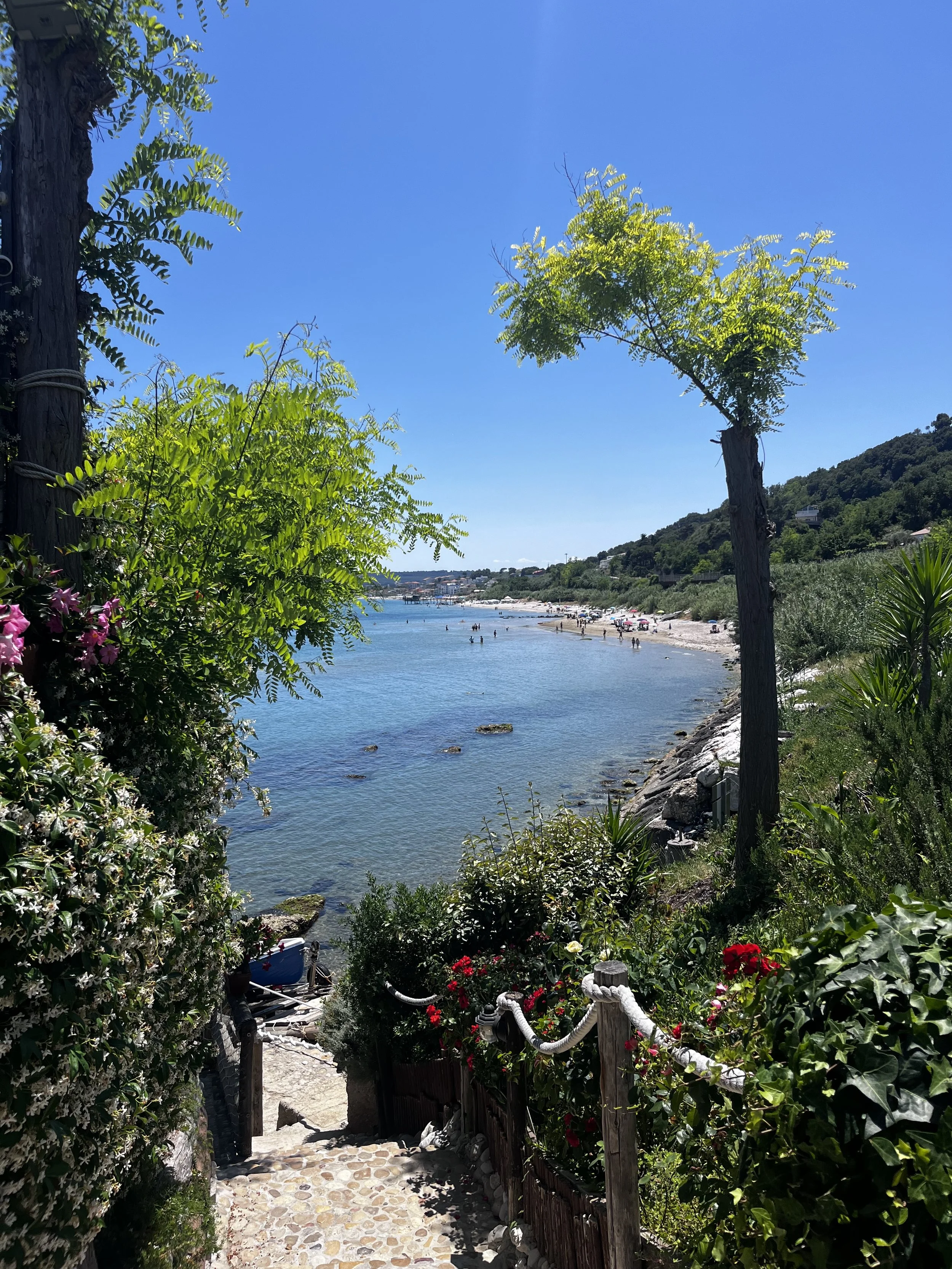
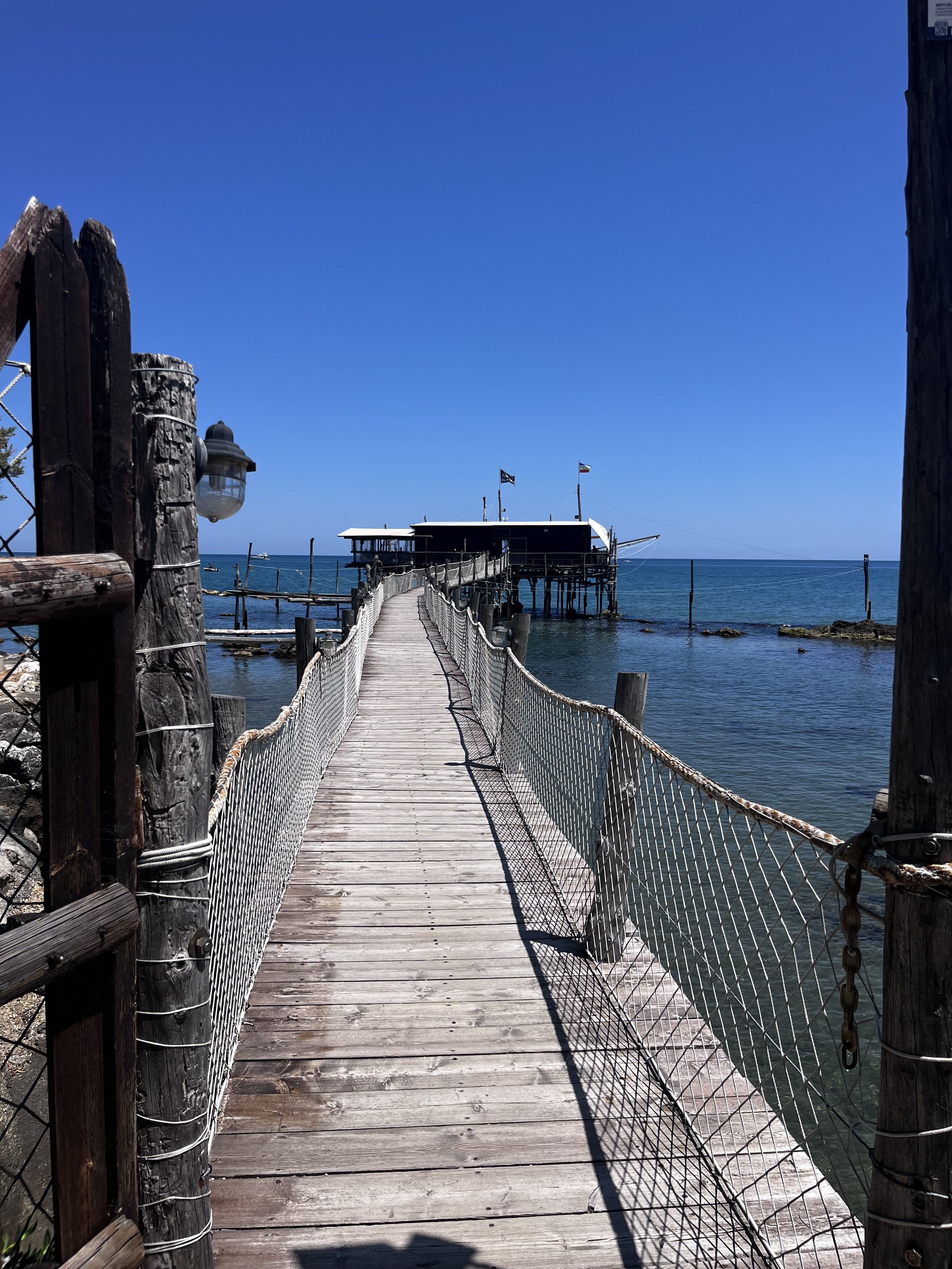
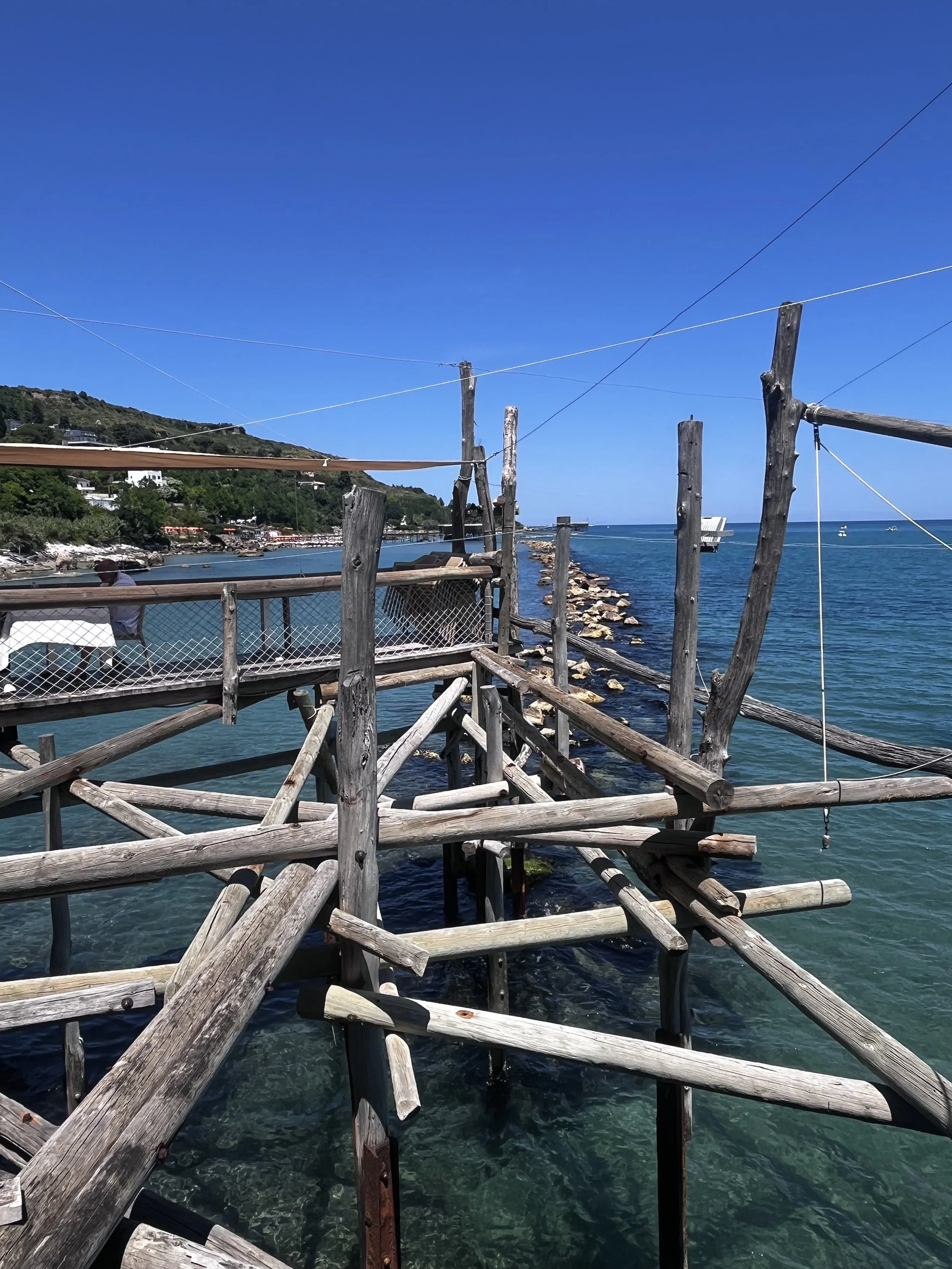
The sadness of leaving Masseria Pistola was quickly surpassed as we made our way to Trabocco Palomba for a lunch I had arranged. There are more than 25 of these ancient structures along the coast. Built on stilts, they were originally used as ingenious fishing machines. Constructed from wooden poles and characterised by their long arms supporting large nets, they enabled fishermen to catch fish from the shore. Many have now been beautifully restored and transformed into restaurants.
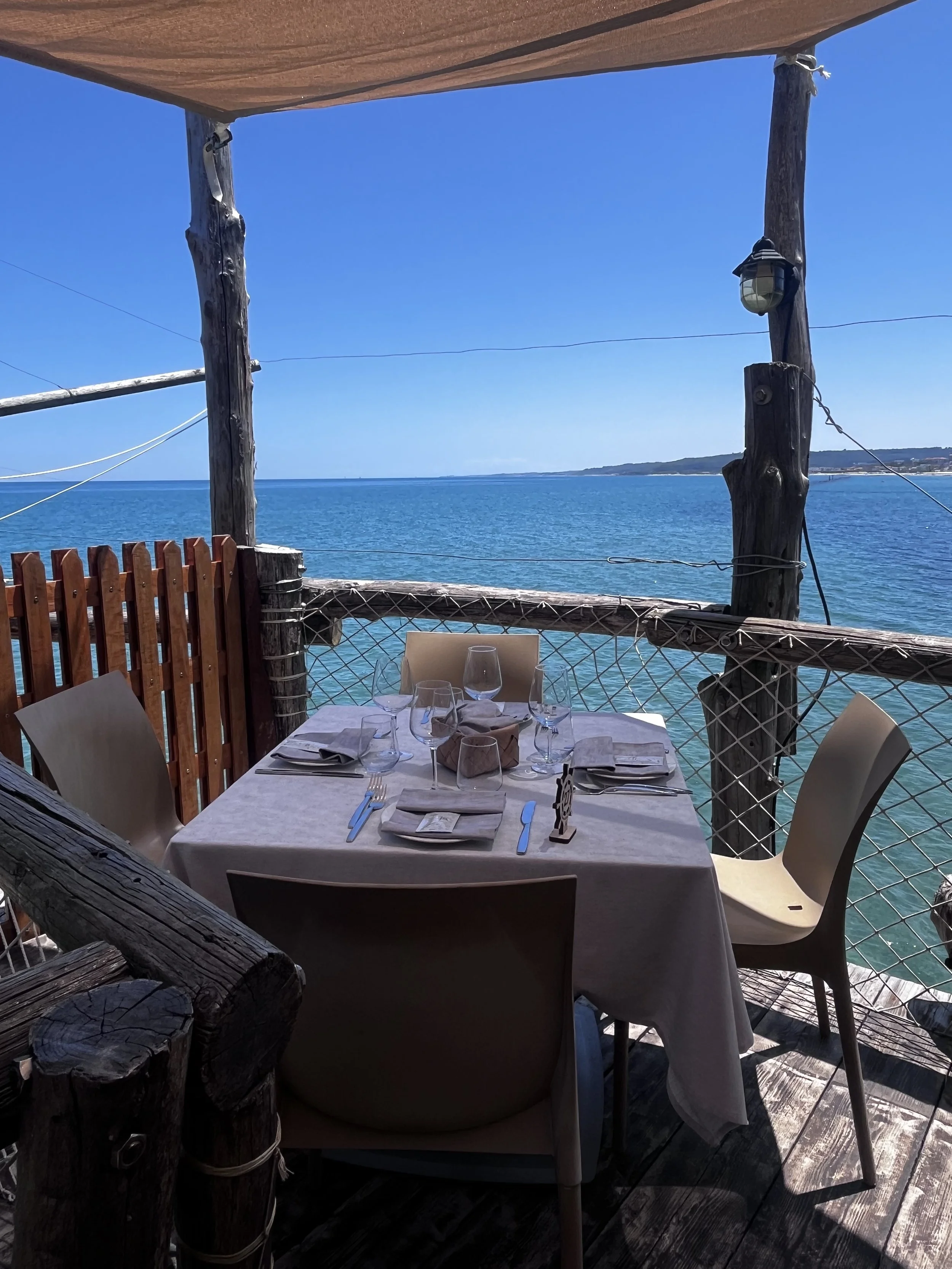
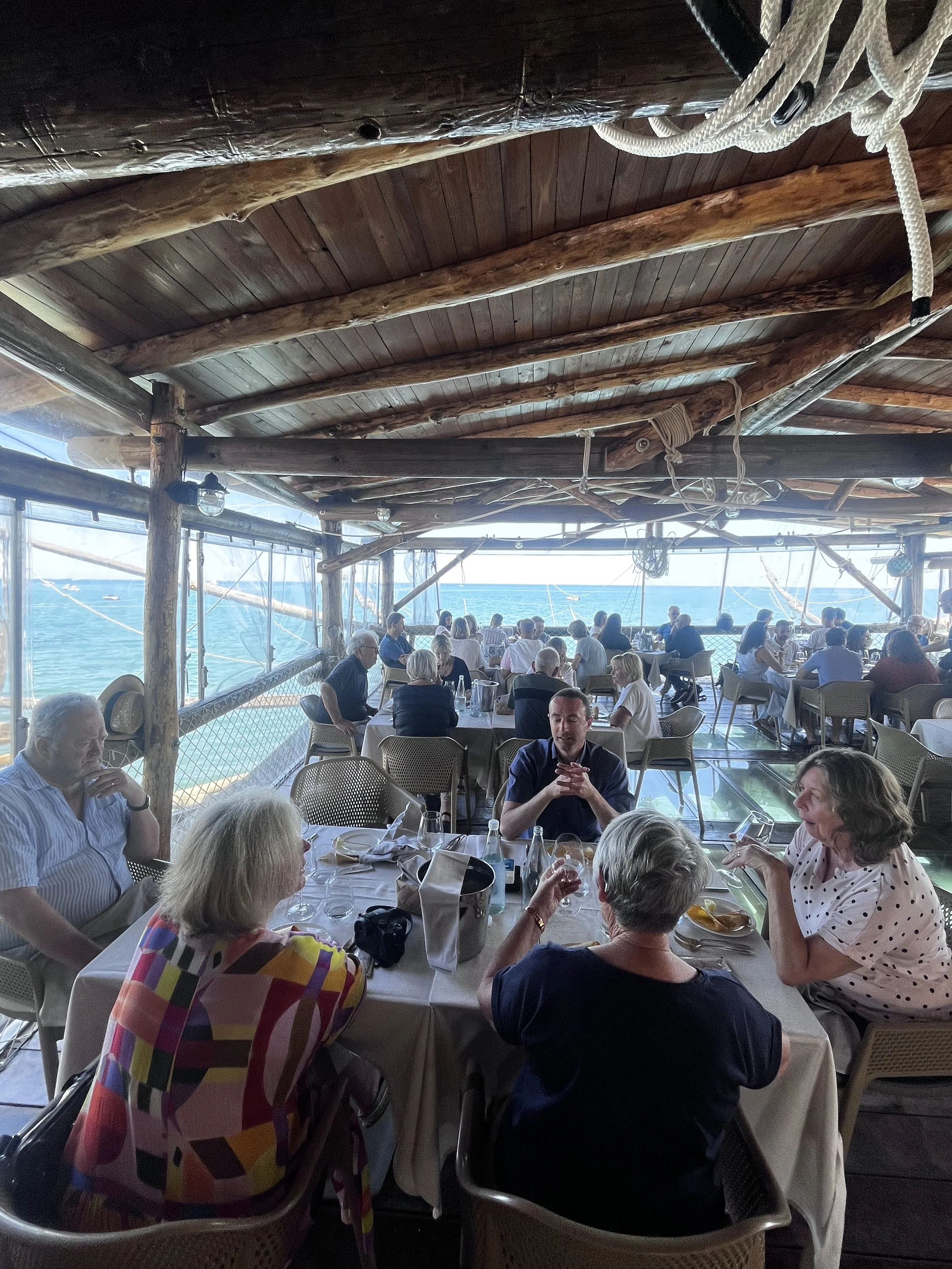
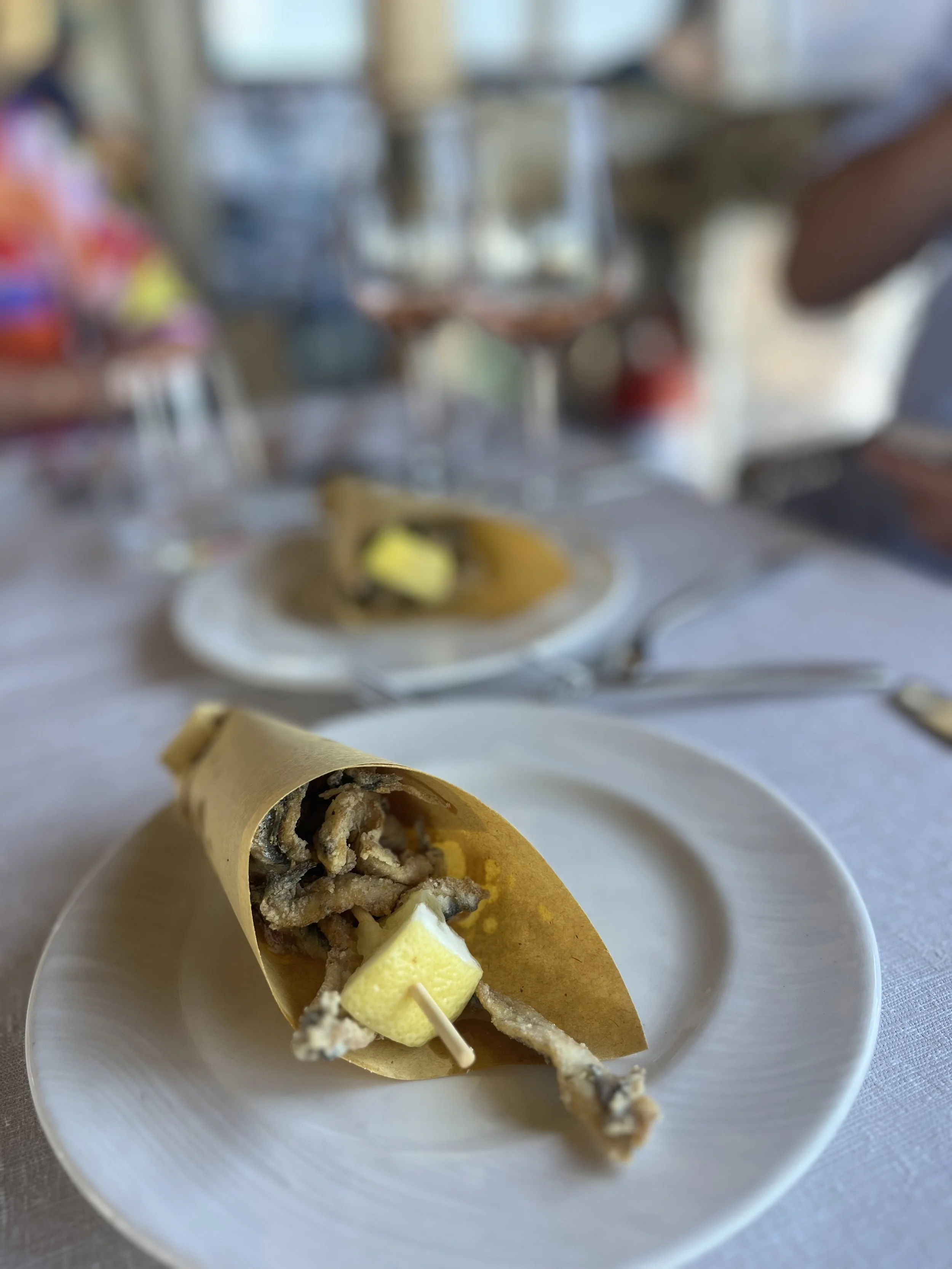
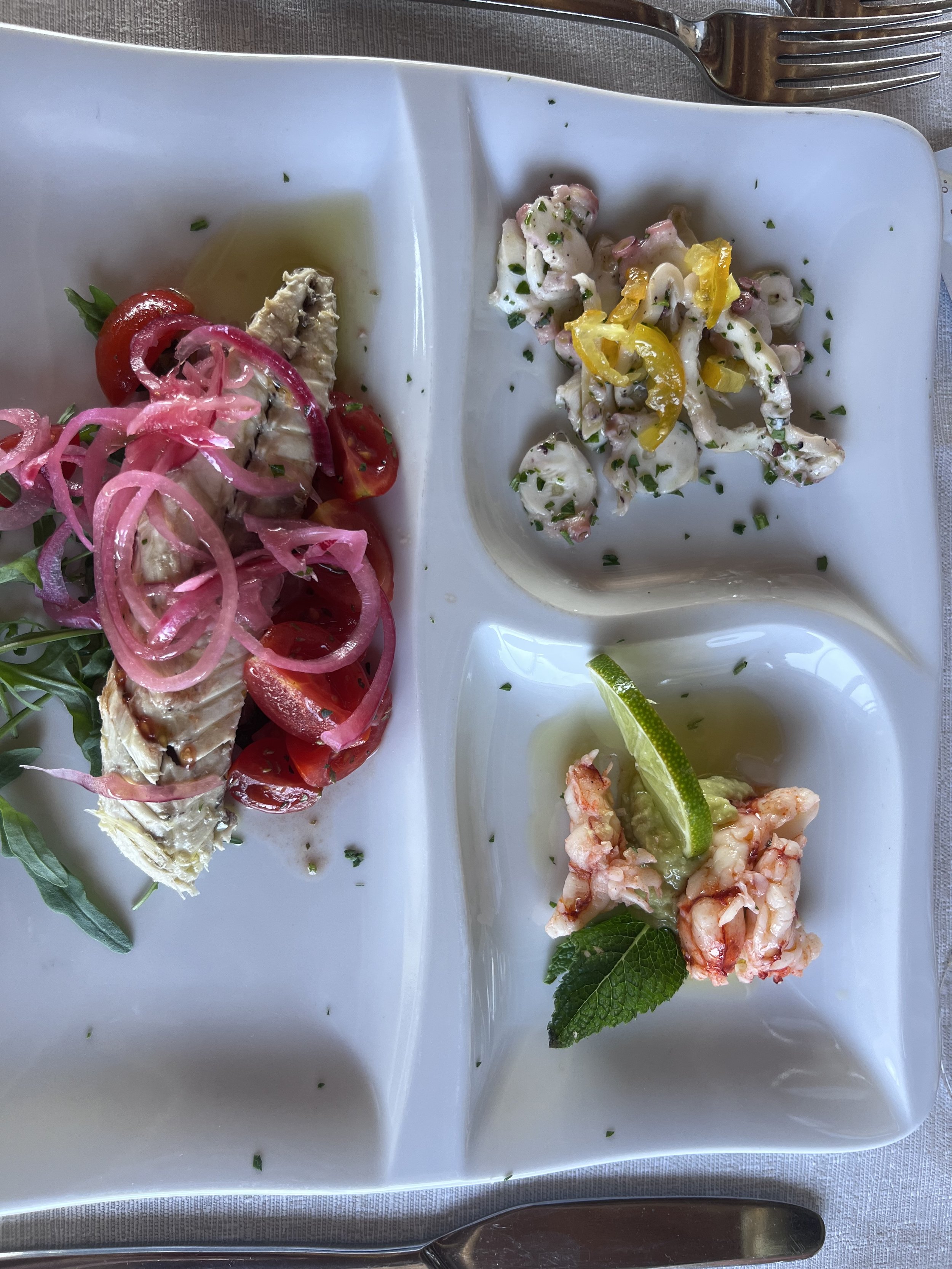
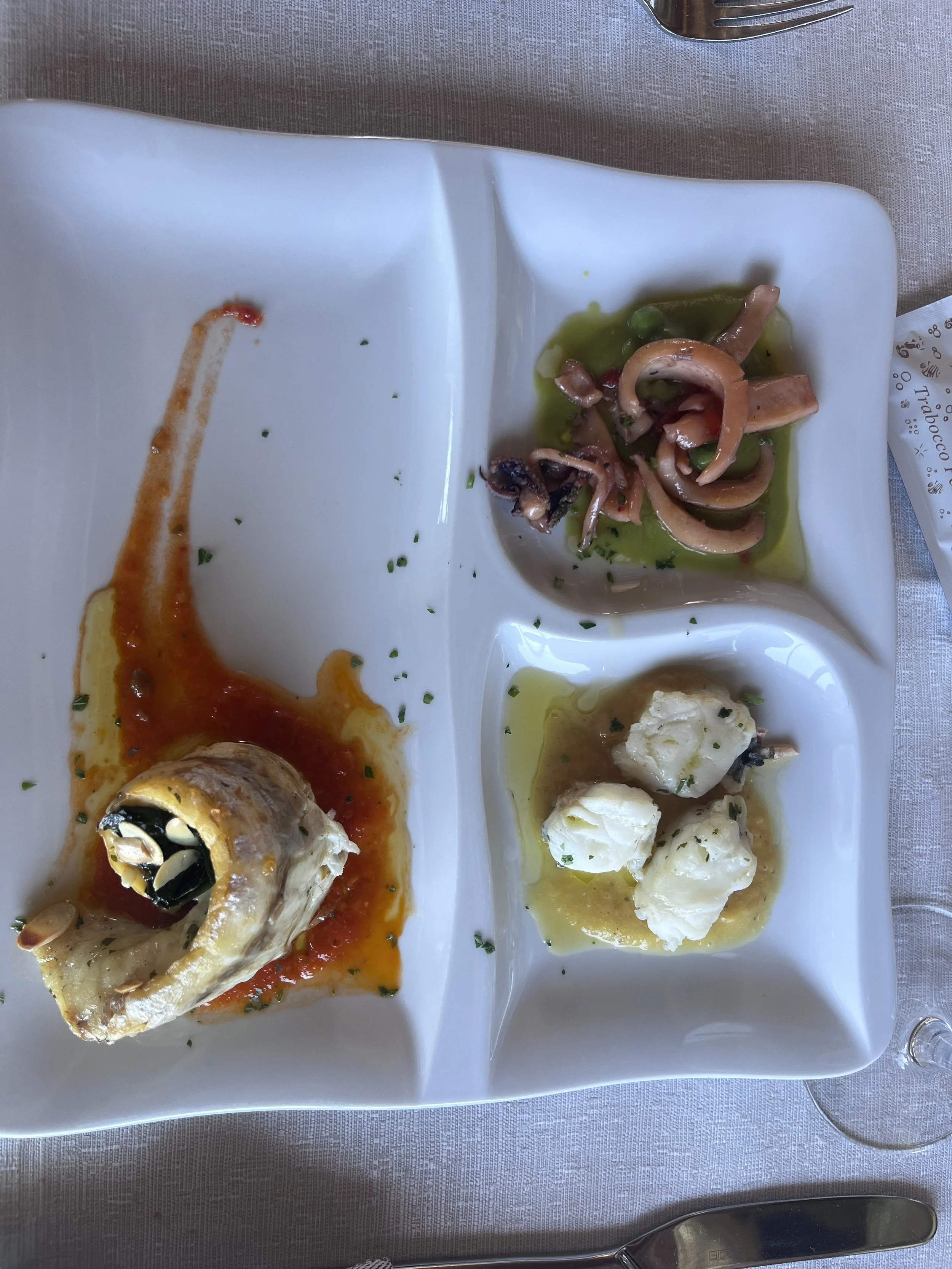
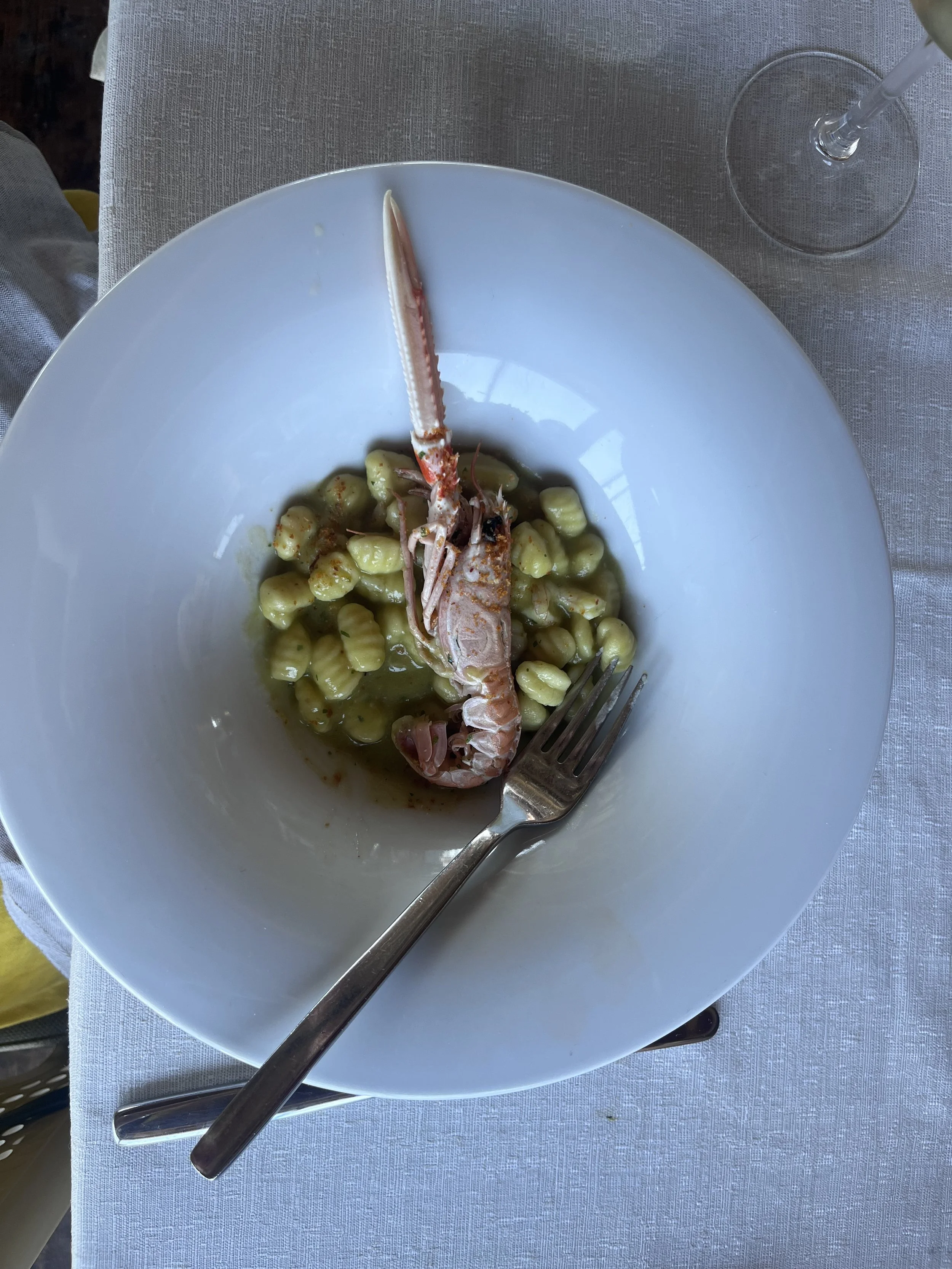
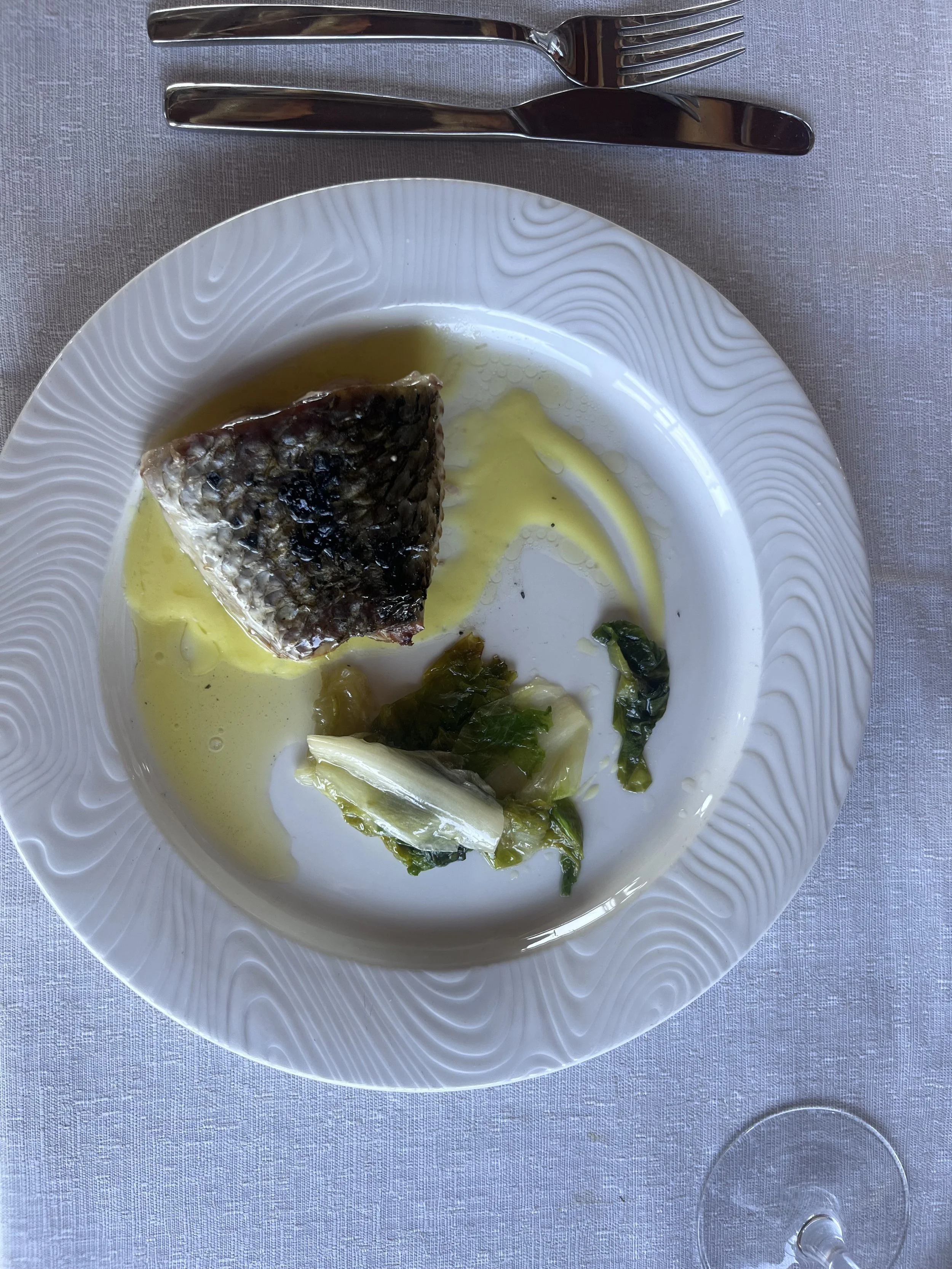
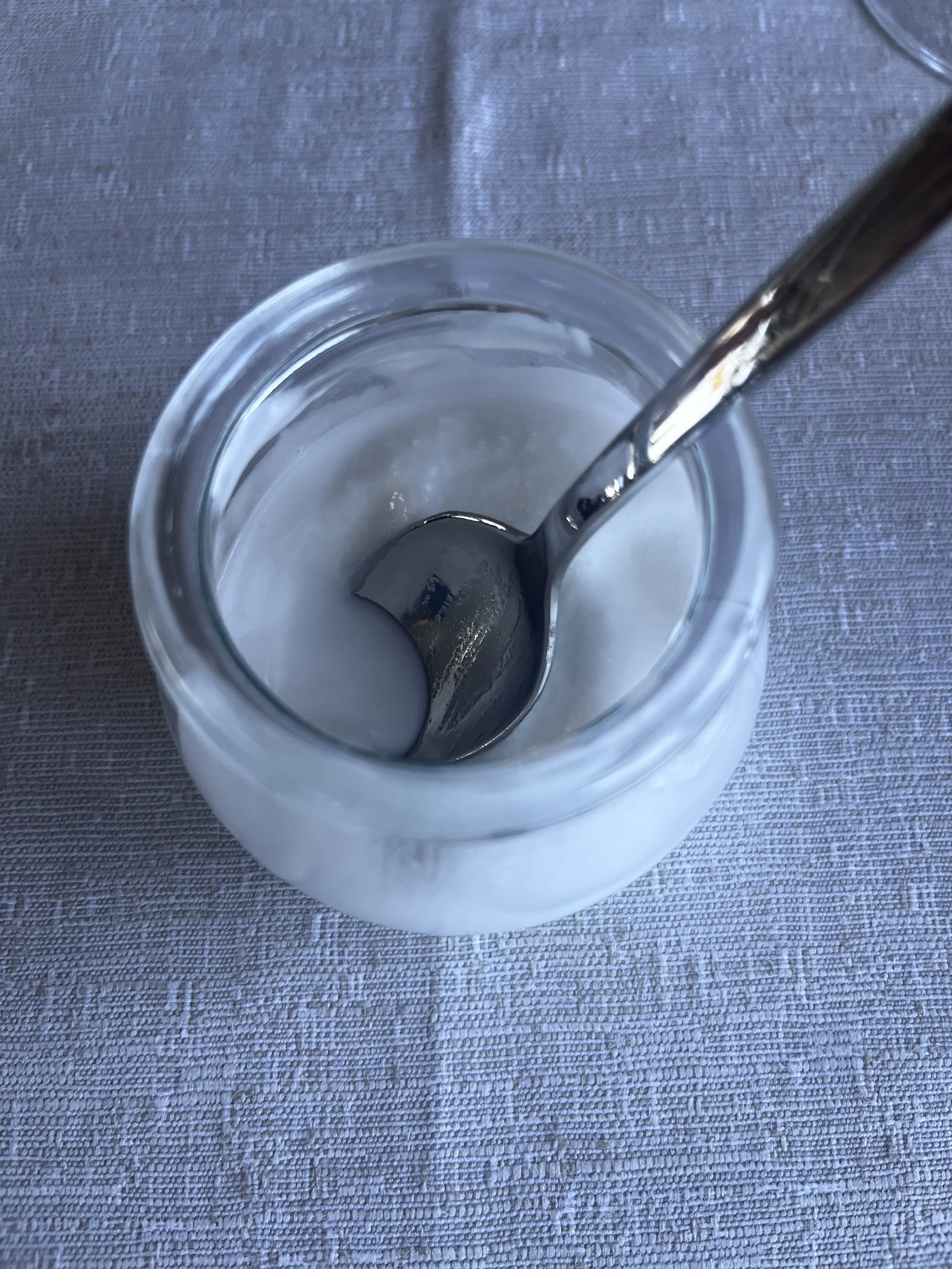
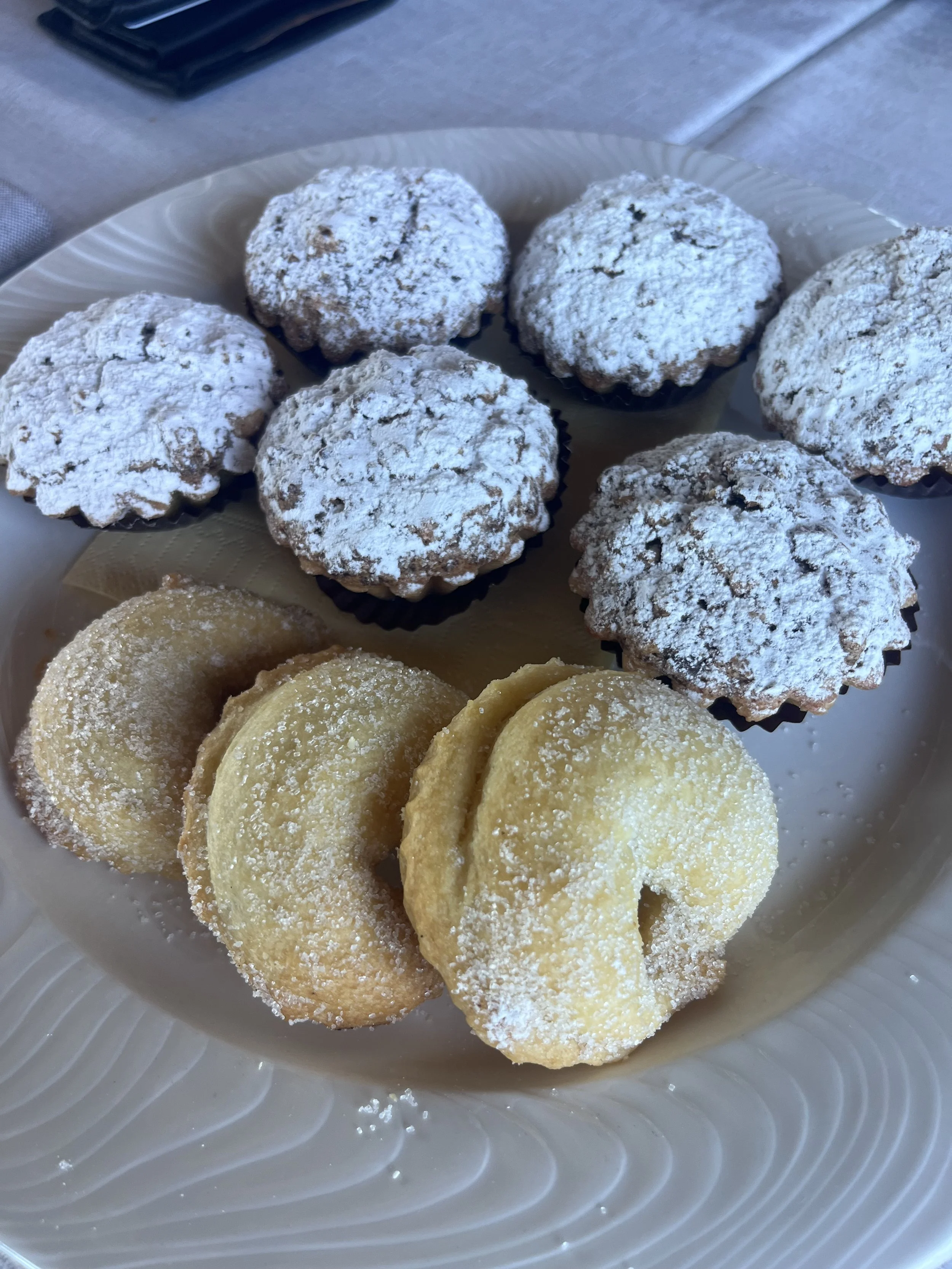
Connected to the mainland by a long walkway, the trabocco was a complete surprise for my group. Over the next three hours we enjoyed one of the best seafood lunches imaginable. Surrounded by water and dining tables stretching across the platform, the setting was unforgettable. The service operated with military precision. Everyone in the restaurant received the same menu, and each course was served simultaneously. The kitchen effortlessly delivered plate after plate of fresh seafood. By the end, however, I felt they did not quite do justice to the beautiful sea bass.
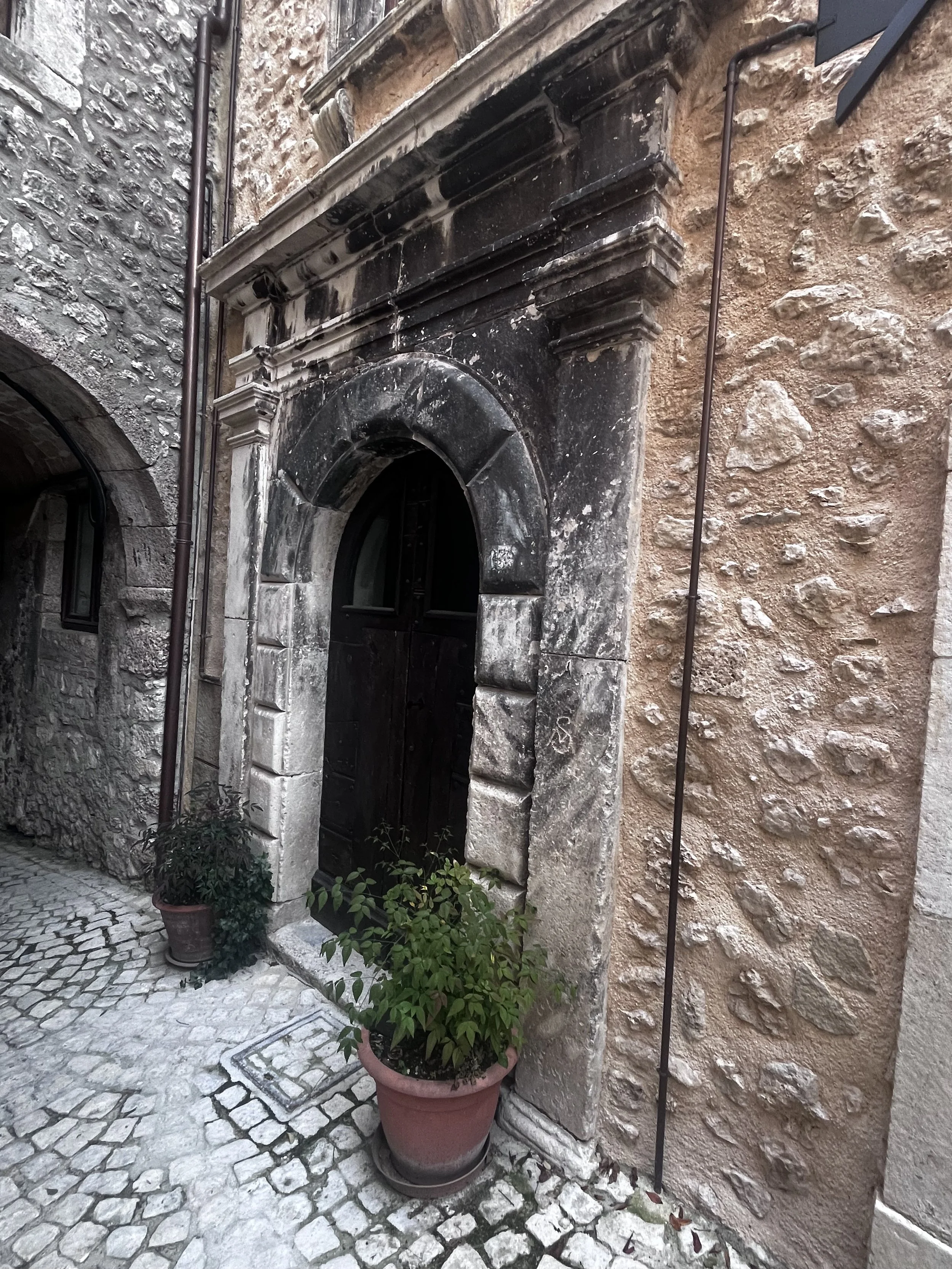
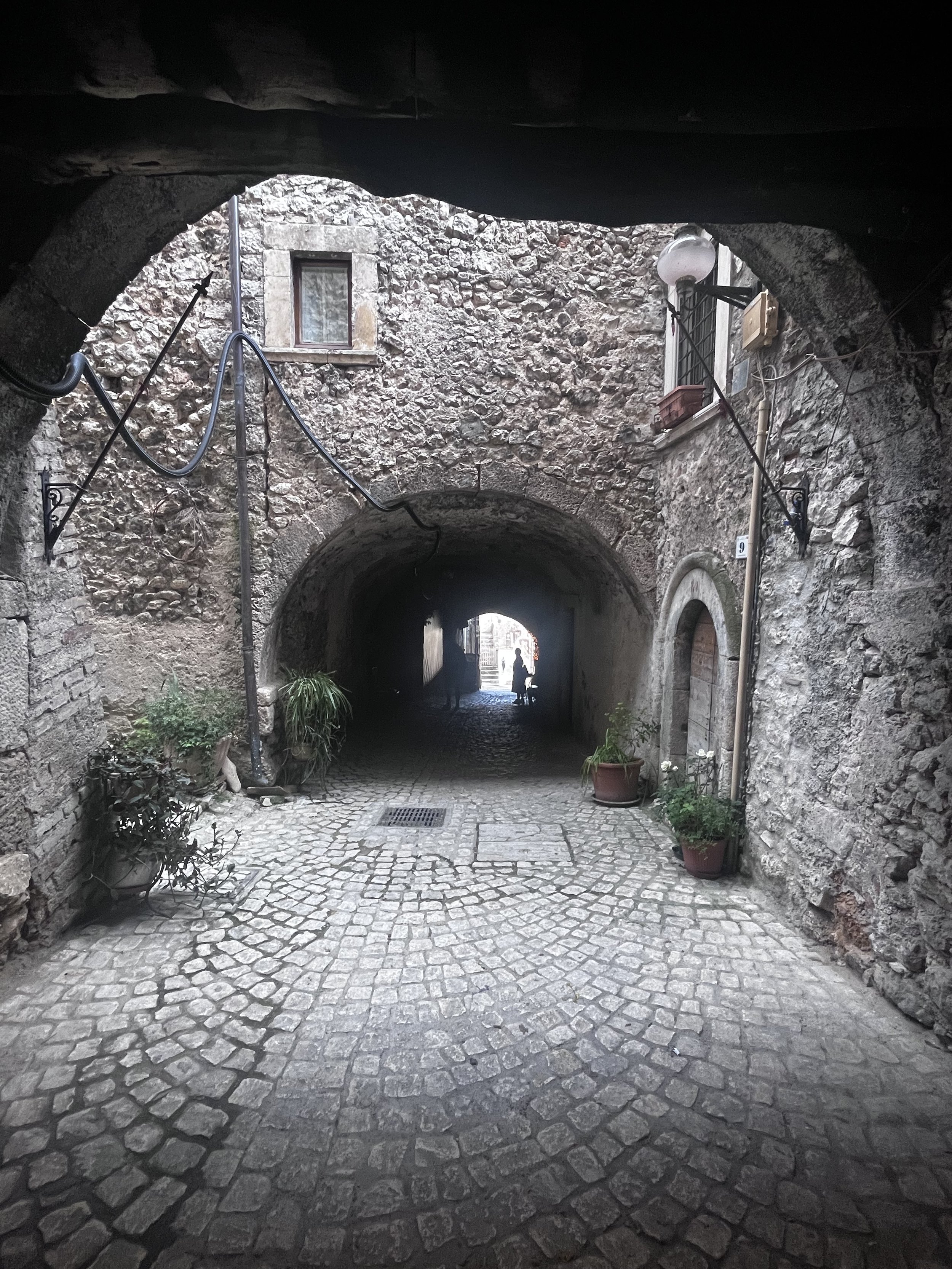
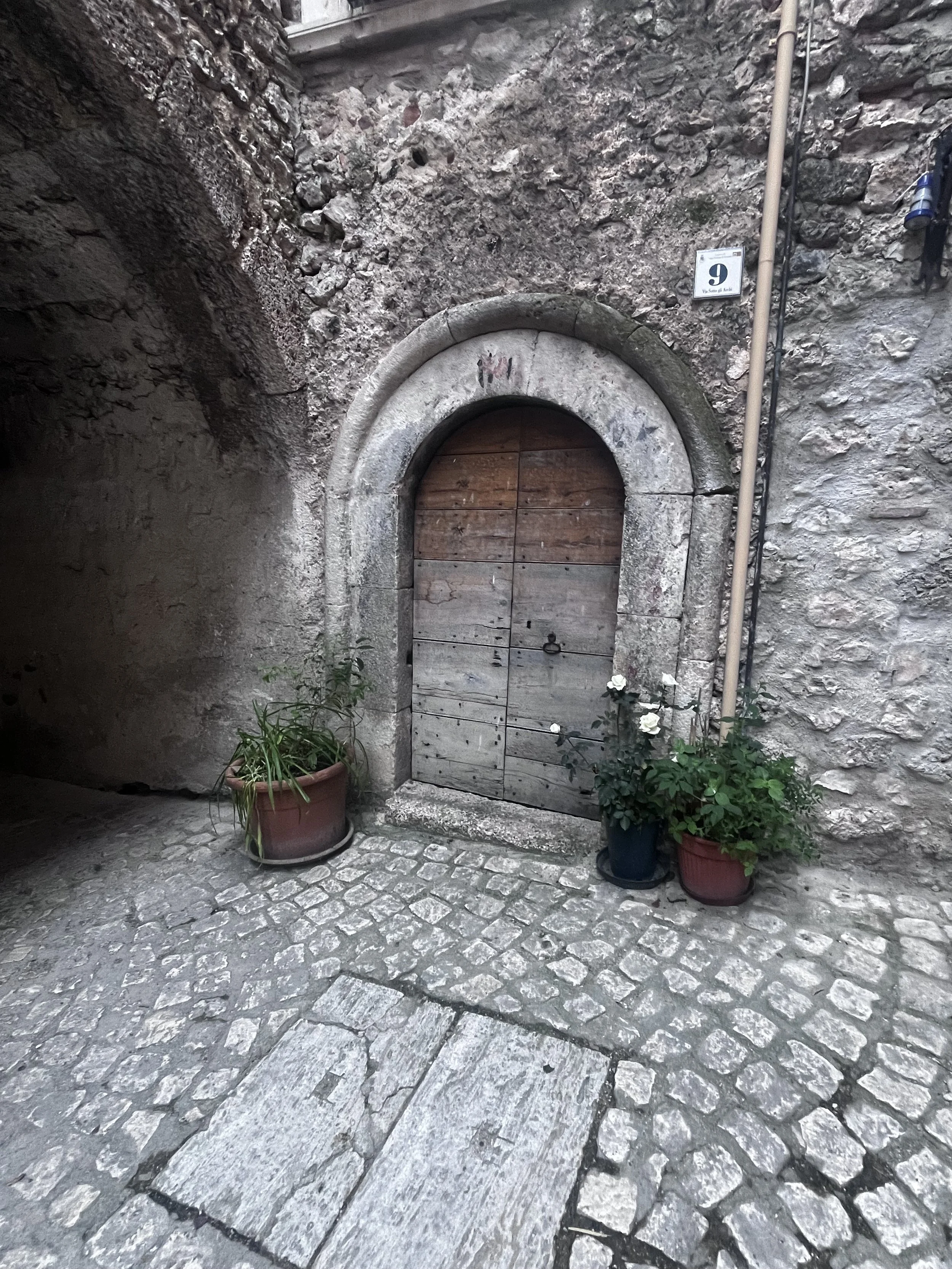
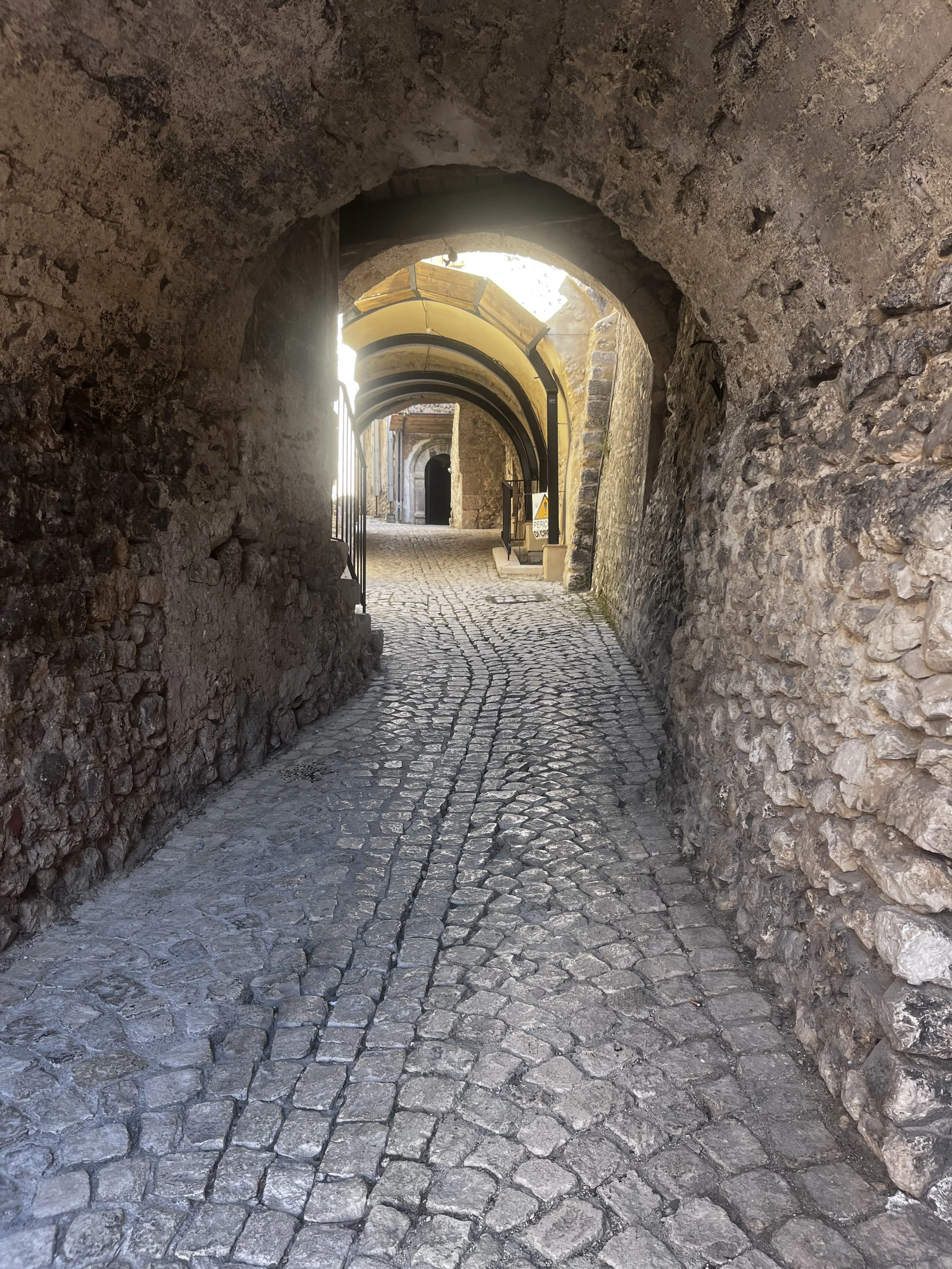
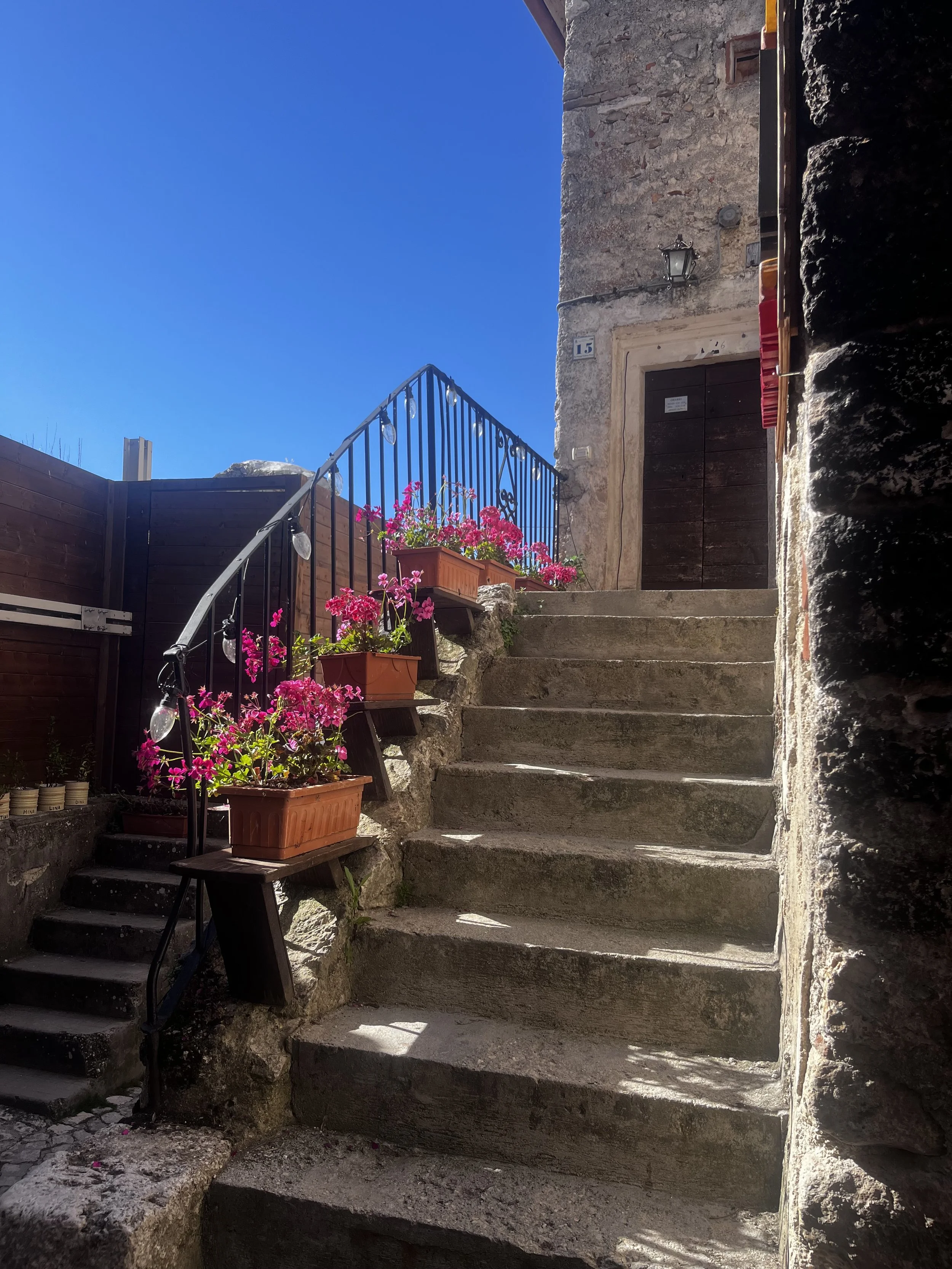
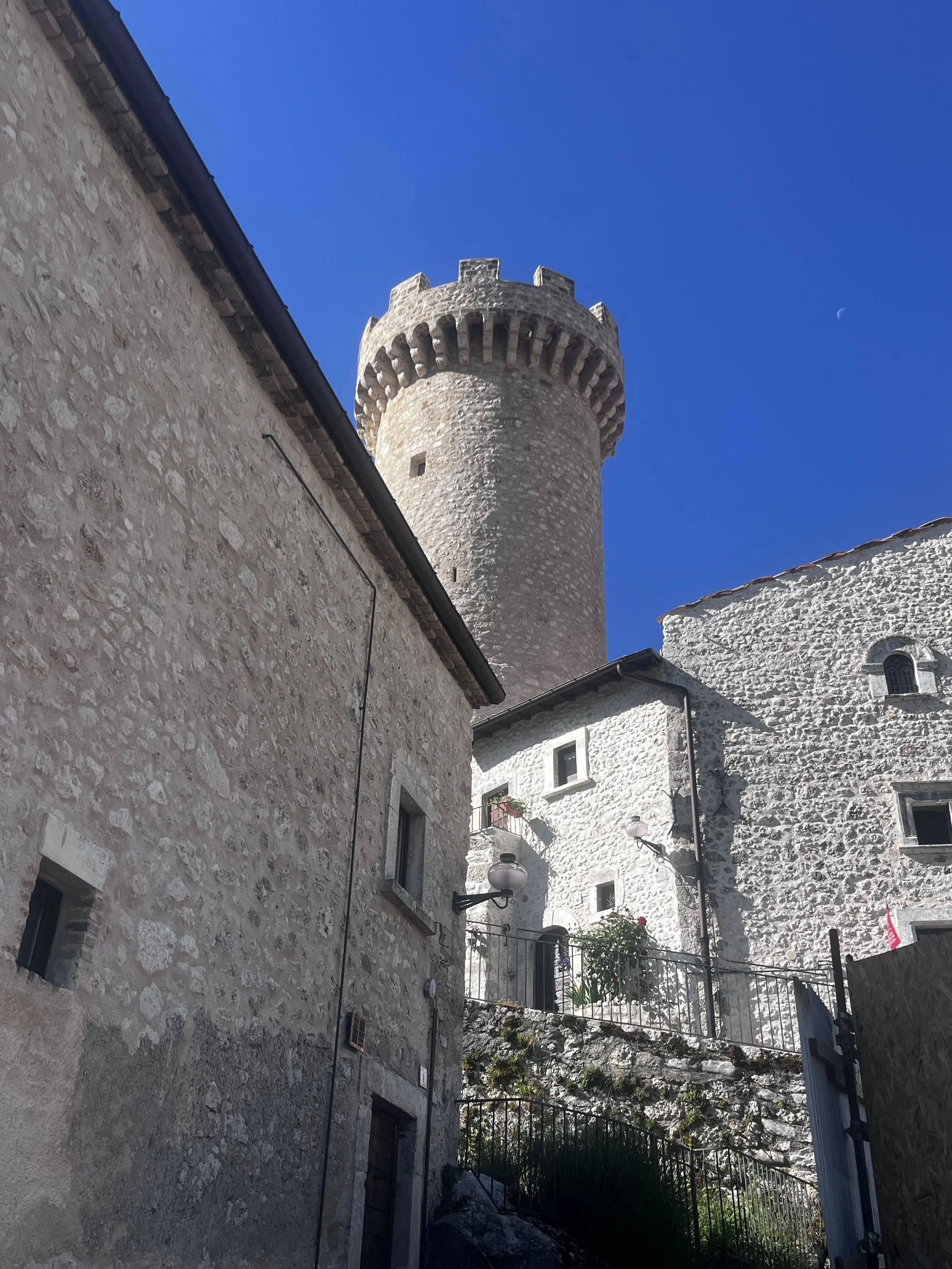
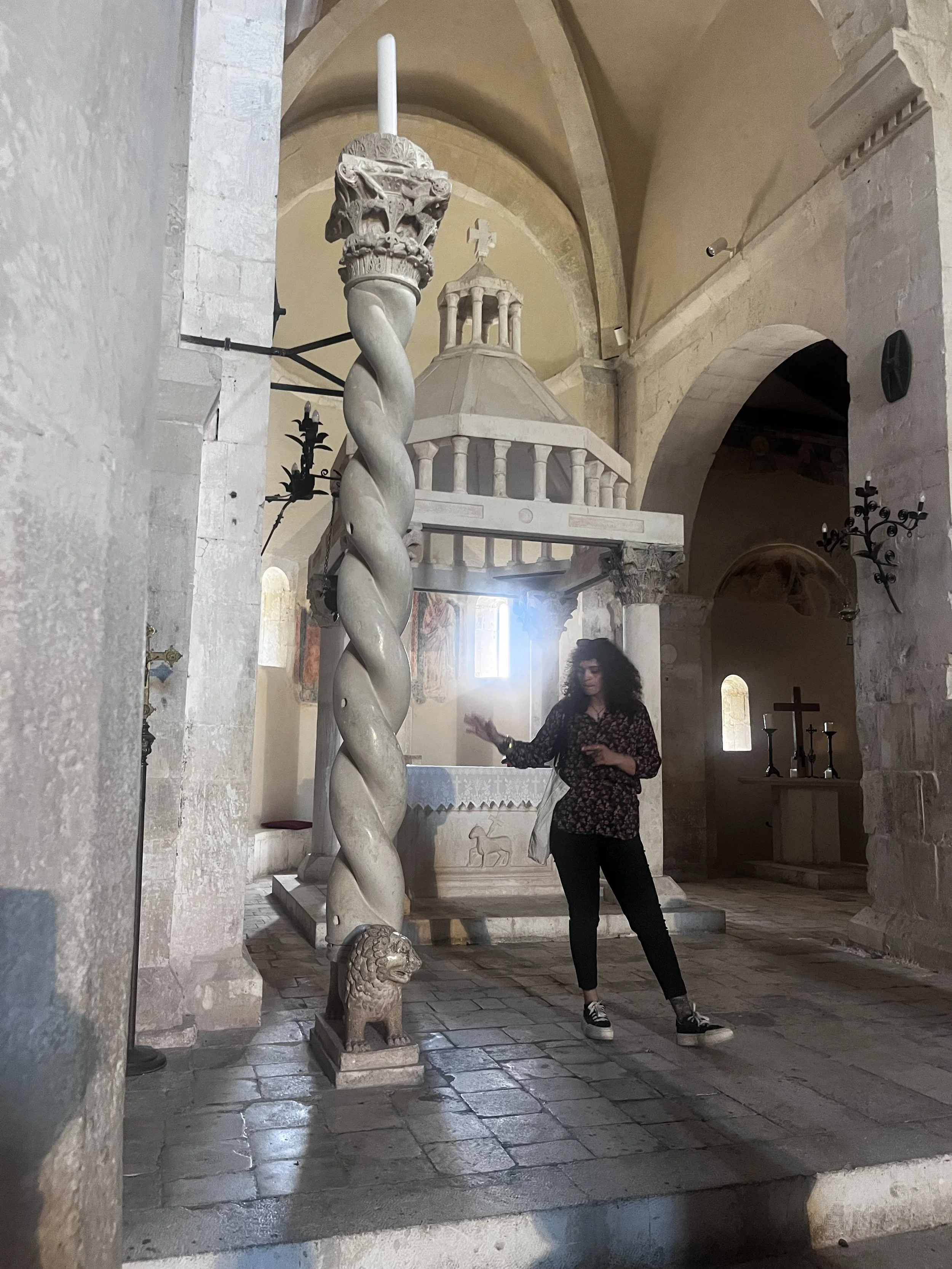
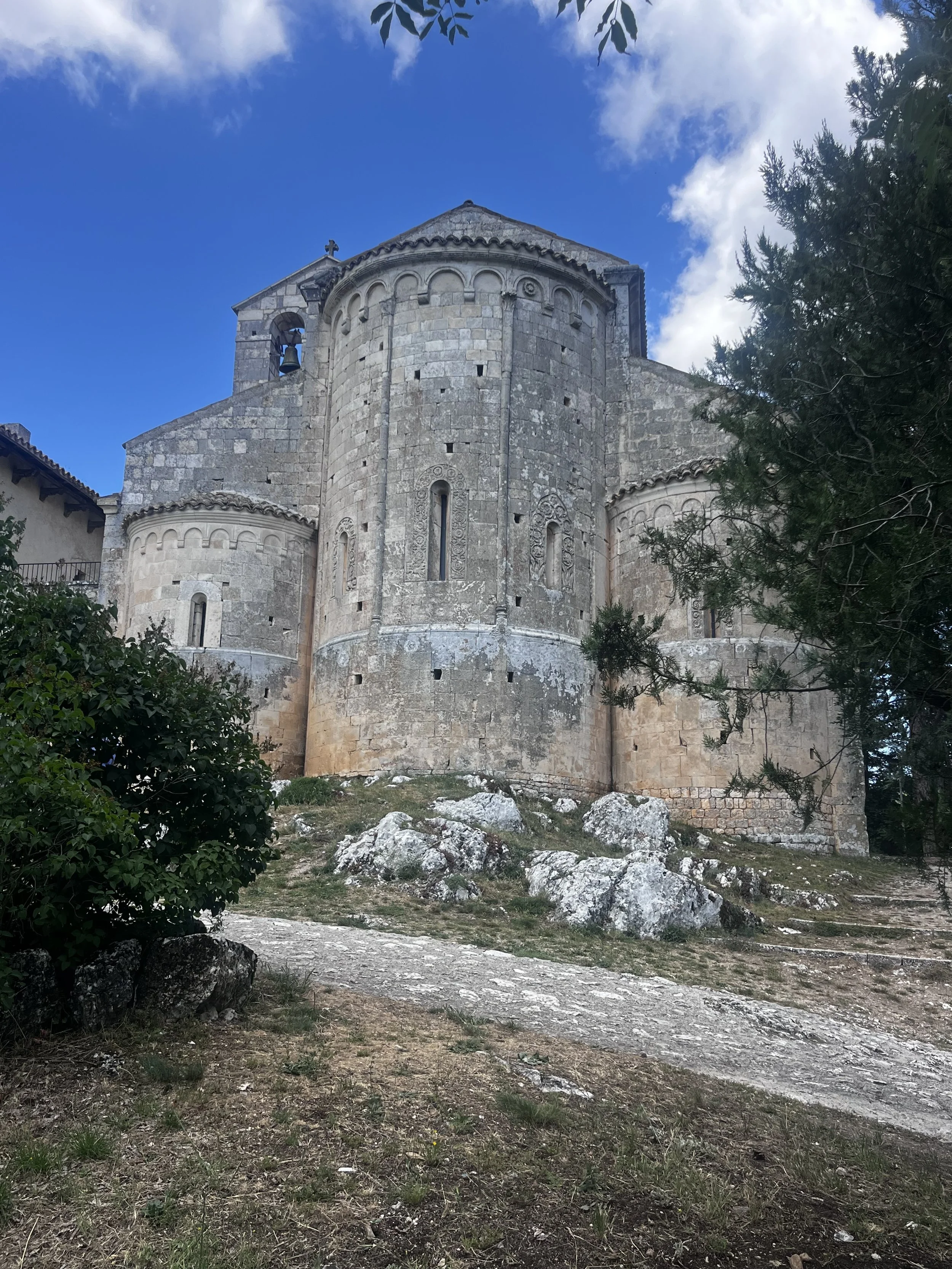
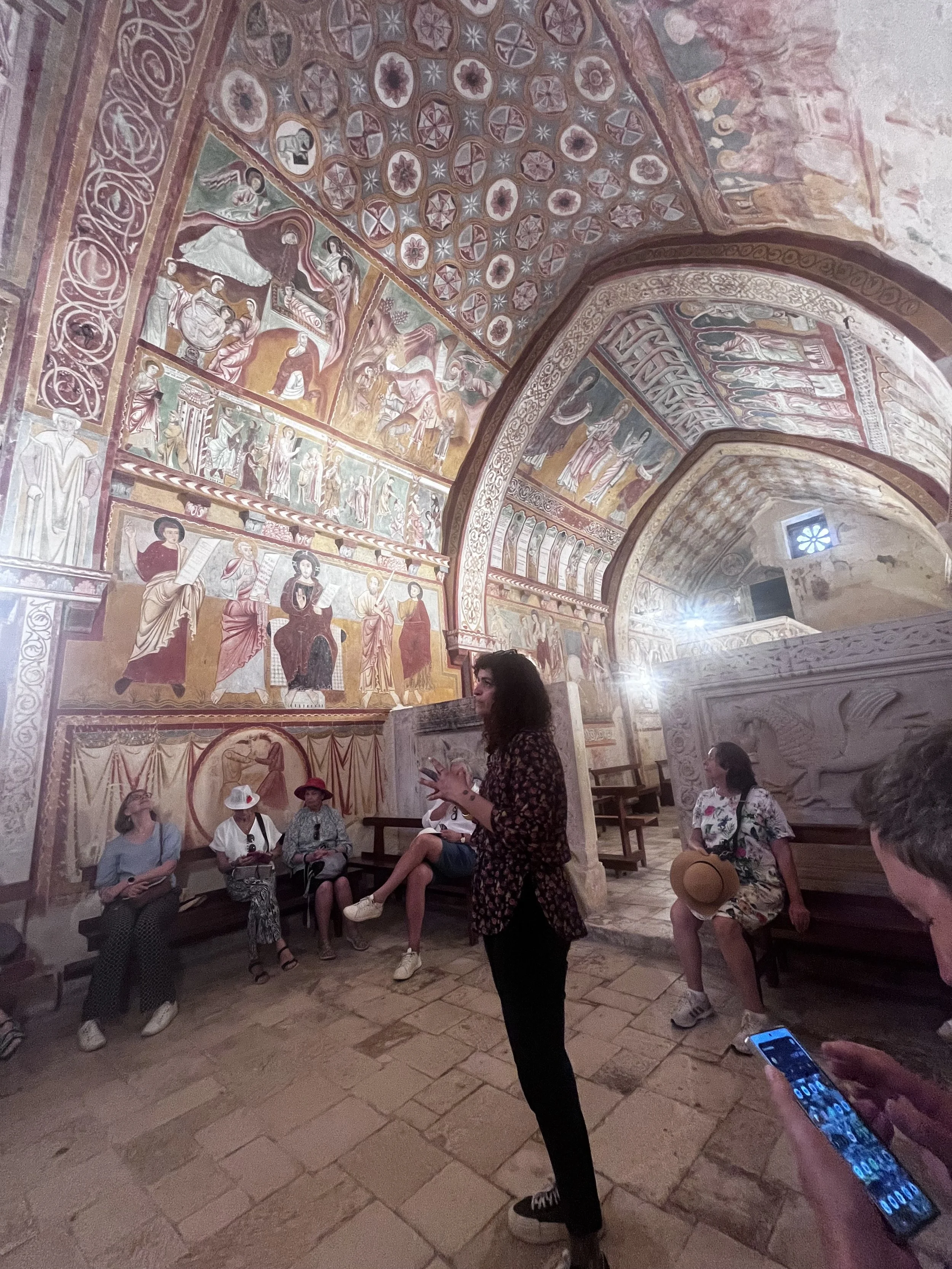
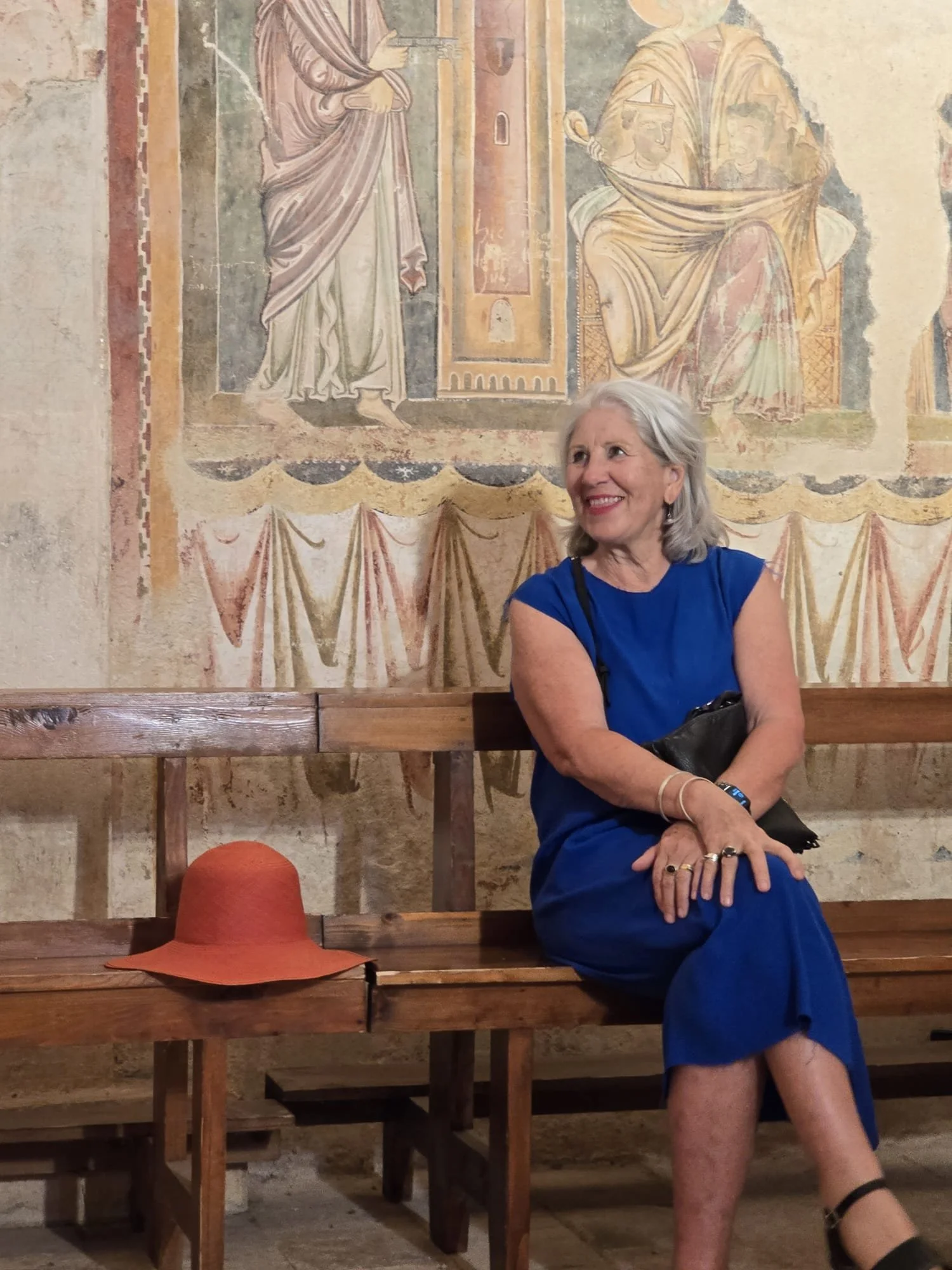
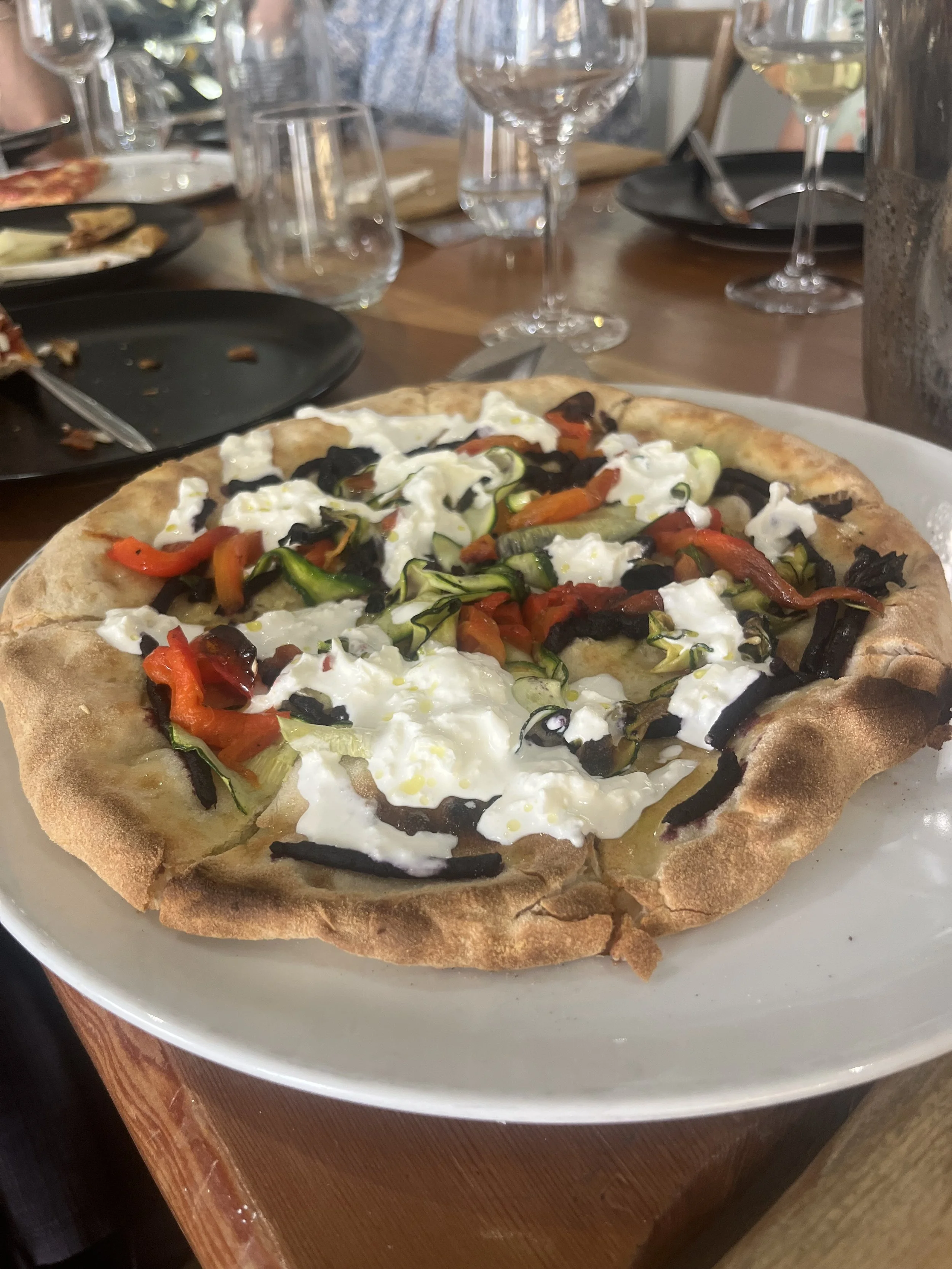
For the next two nights we stayed in the village of Santo Stefano. High in the Abruzzo hills, the hotel Sextantio holds tightly to medieval traditions. Rooms are scattered throughout the village, while the furniture, décor and cobbled streets all reflect the life that once existed here in what would have been a harsh mountain climate. The restoration is remarkable. From here we spent a day with my lovely guide, Elena, whom I had met last year. A young woman passionate about her region, she experienced the tragic 2009 earthquake firsthand and brings both knowledge and personal insight to her work. After a walk through Santo Stefano, Elena met us at one of the most stunning churches I have visited, located in the tiny village of Bominaco. Often described as a miniature Sistine Chapel, it is a true jewel. Our afternoon concluded with a walk through L’Aquila, the largest city in Abruzzo, but not before enjoying a fun pizza lunch. The city is beginning to look magnificent again and has recently been named Italy’s Capital of Culture for 2026.
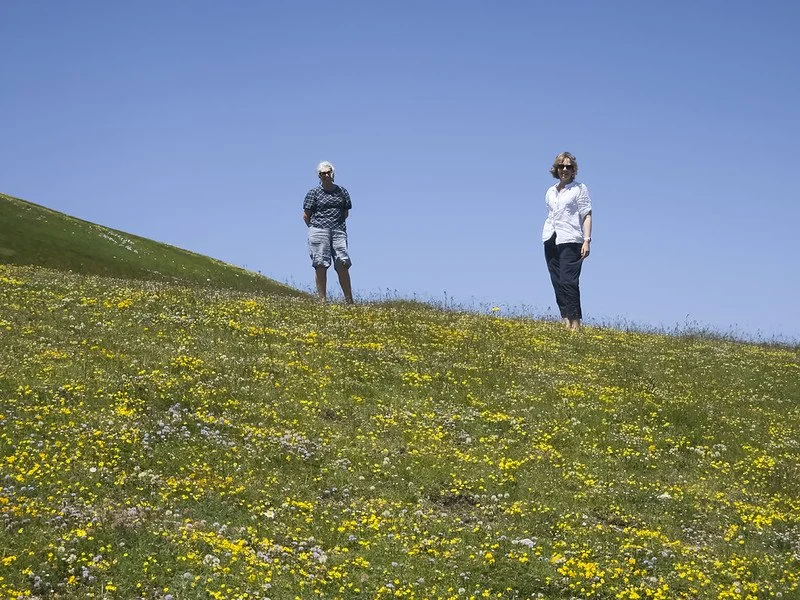
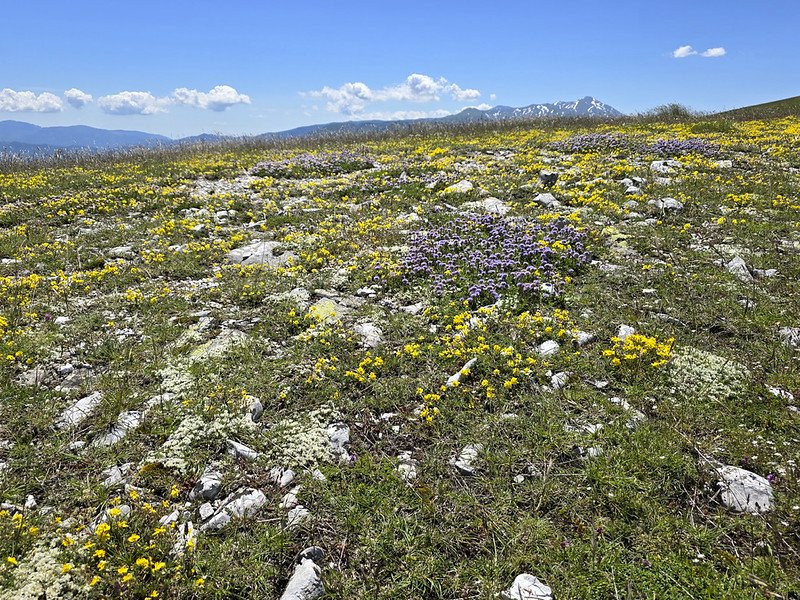
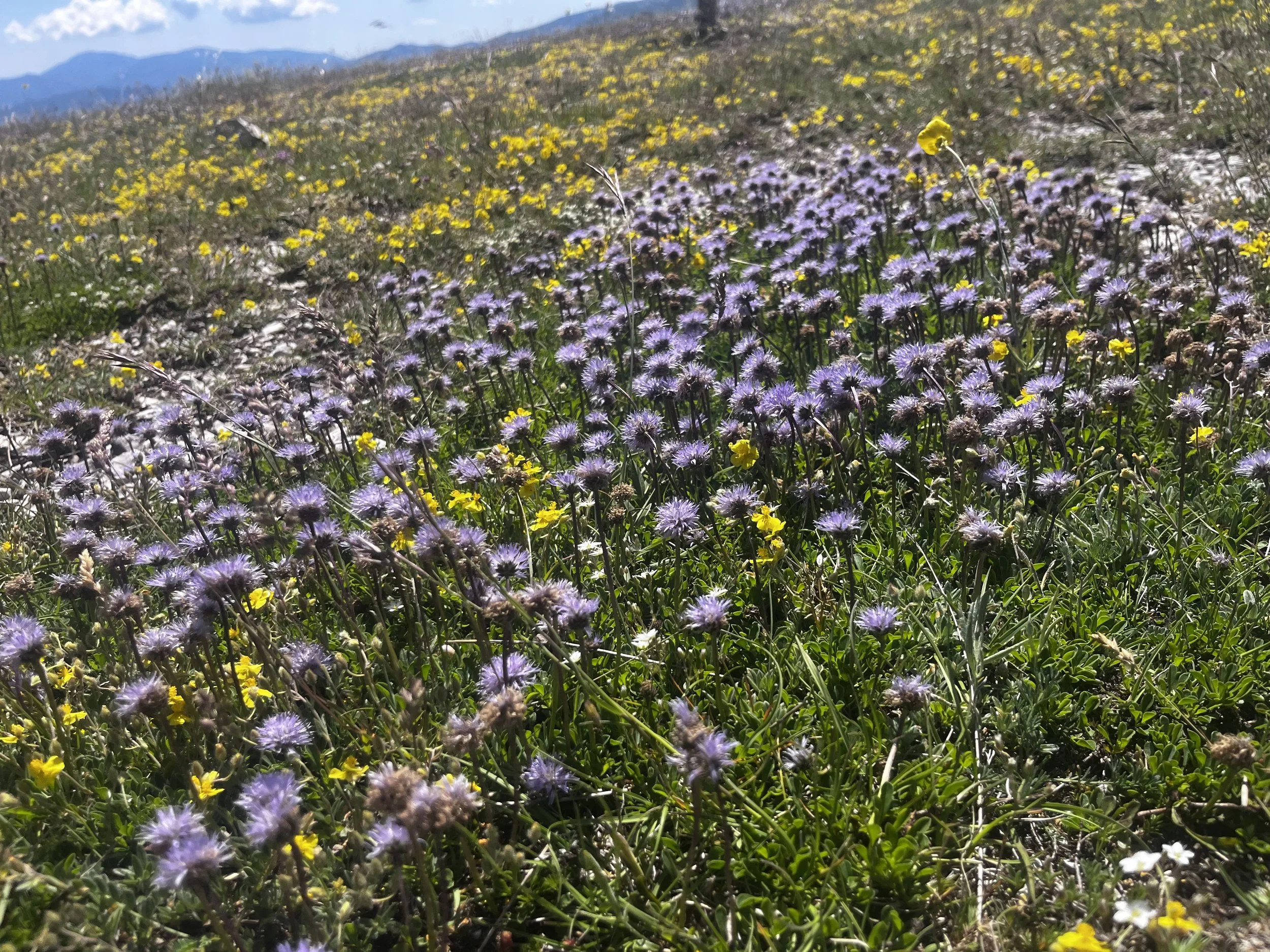
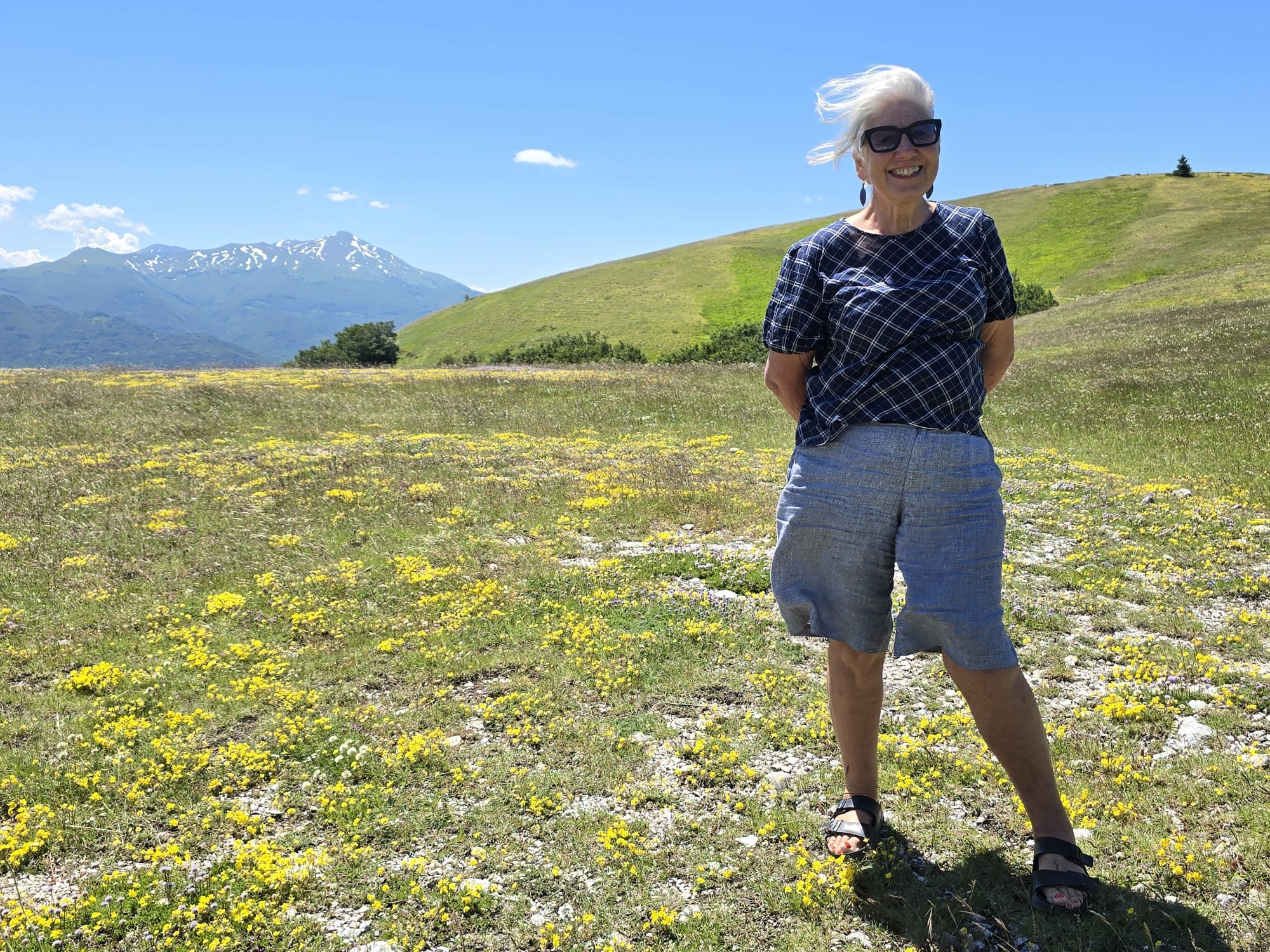
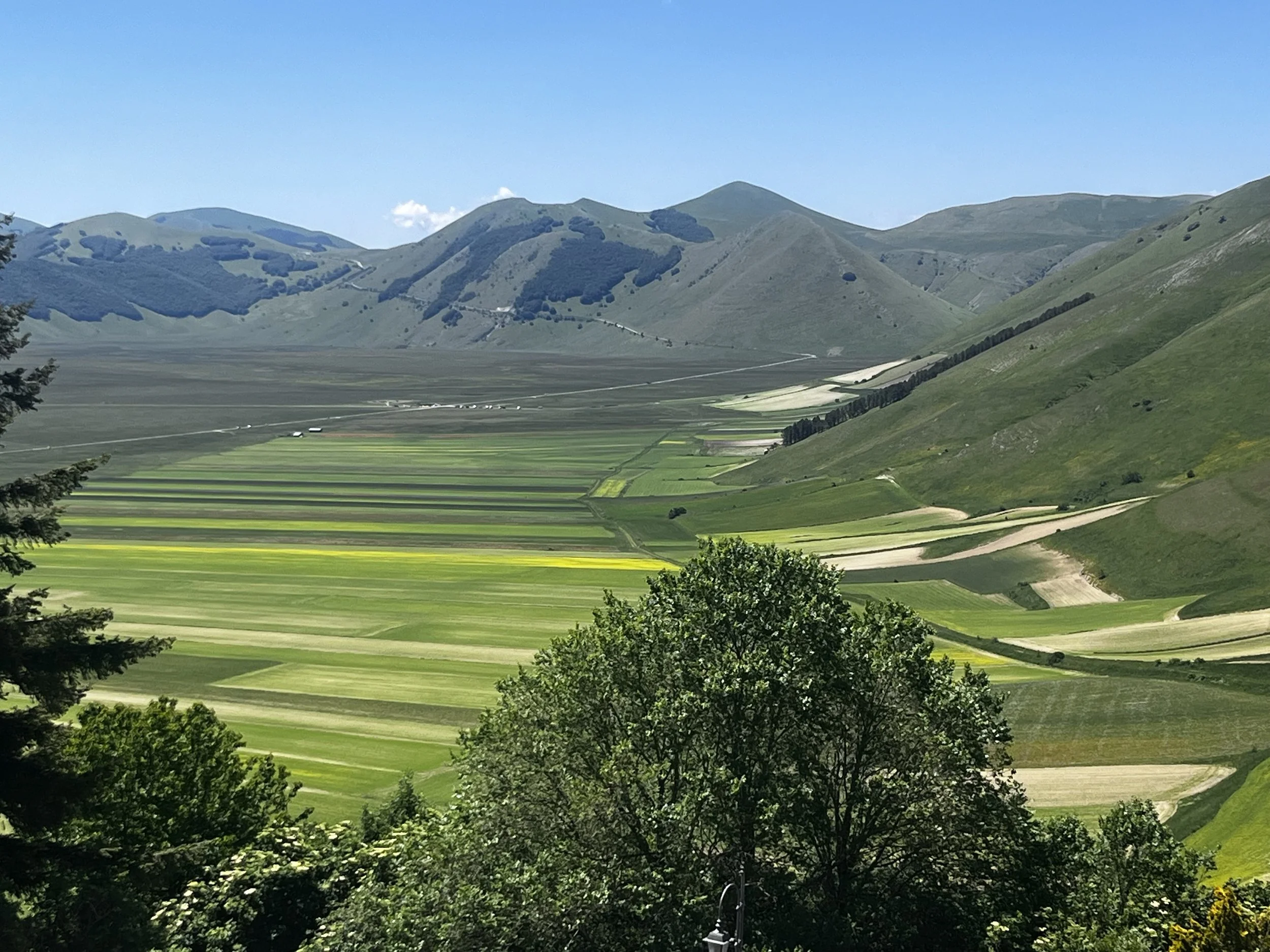
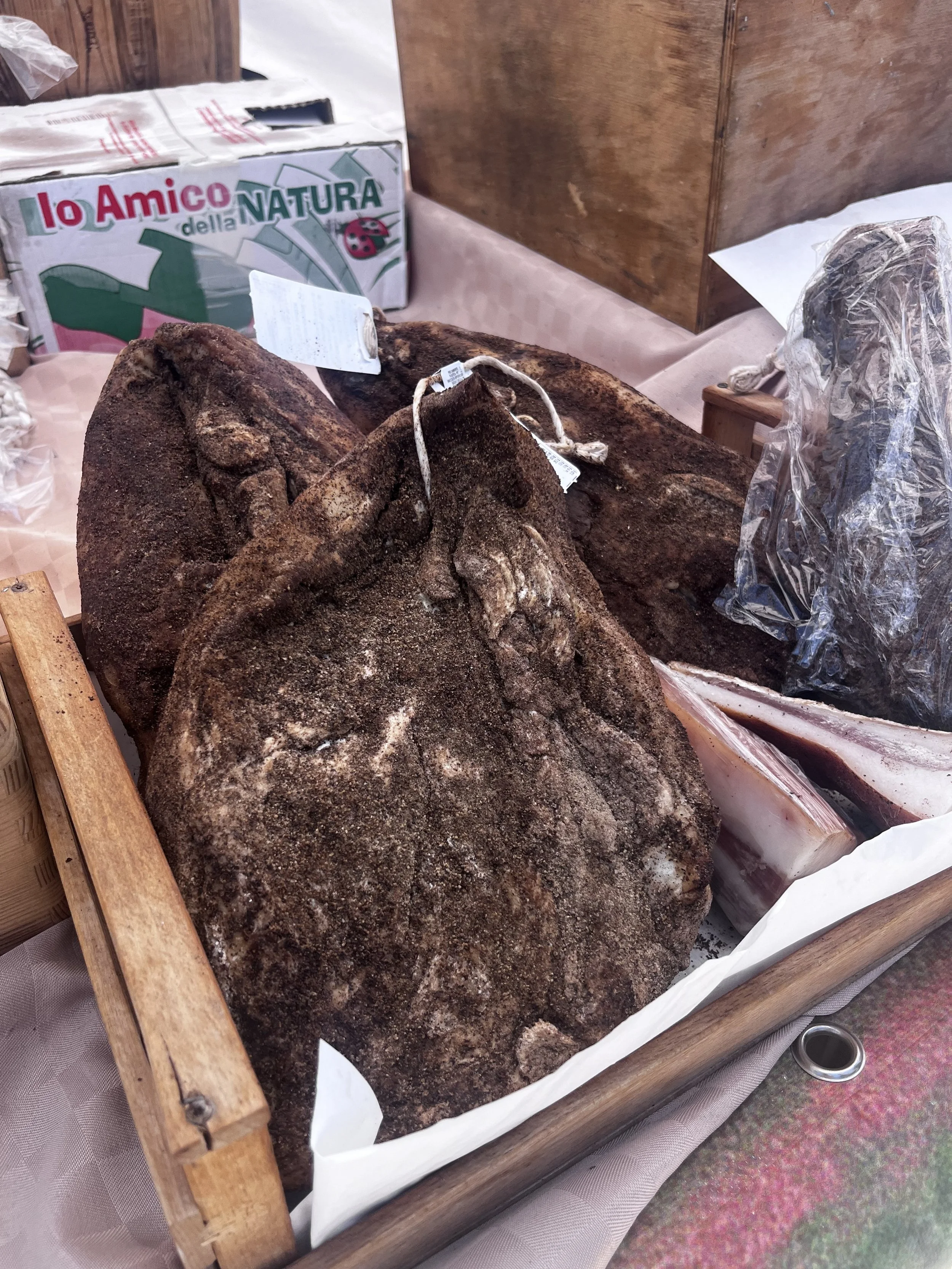
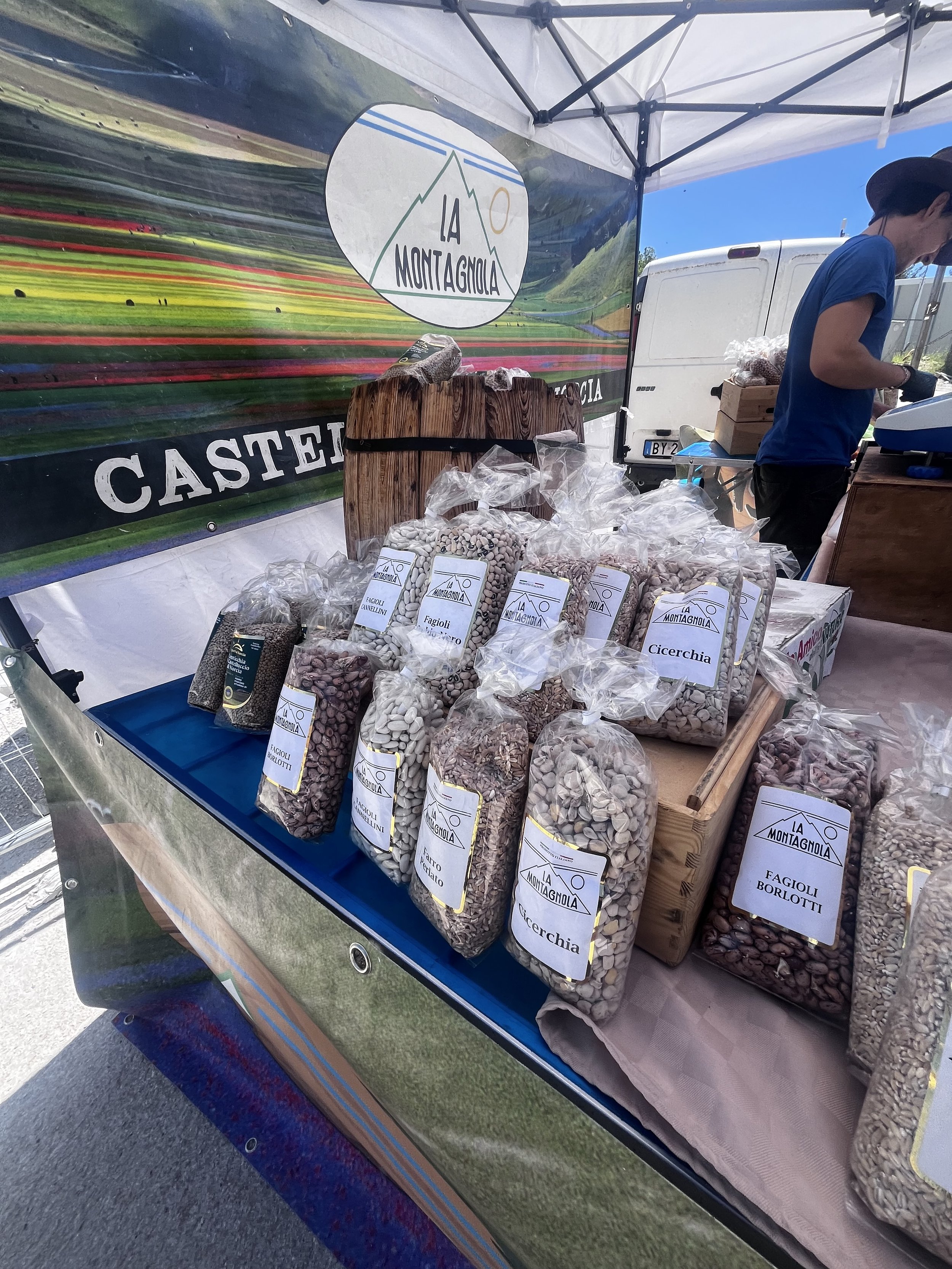
The following morning we enjoyed a beautiful drive through forested countryside before climbing through villages still bearing the scars of the 2016–2017 earthquake sequence. Reaching an altitude of 1,200 metres, we were surrounded by carpets of wildflowers that showcased the region’s natural beauty. Euphorbias, potentillas and wild thyme flowered in shades of blue and yellow. As we descended the other side, the extensive fields had not yet reached the spectacular blaze of colour for which they are famous later in the season. We stopped for coffee in the once-devastated village of Castelluccio. Ingeniously, temporary accommodation remains in place six years later, housing cafés and shops selling cured meats, cheeses, pulses and grains, all produced in the valley below.
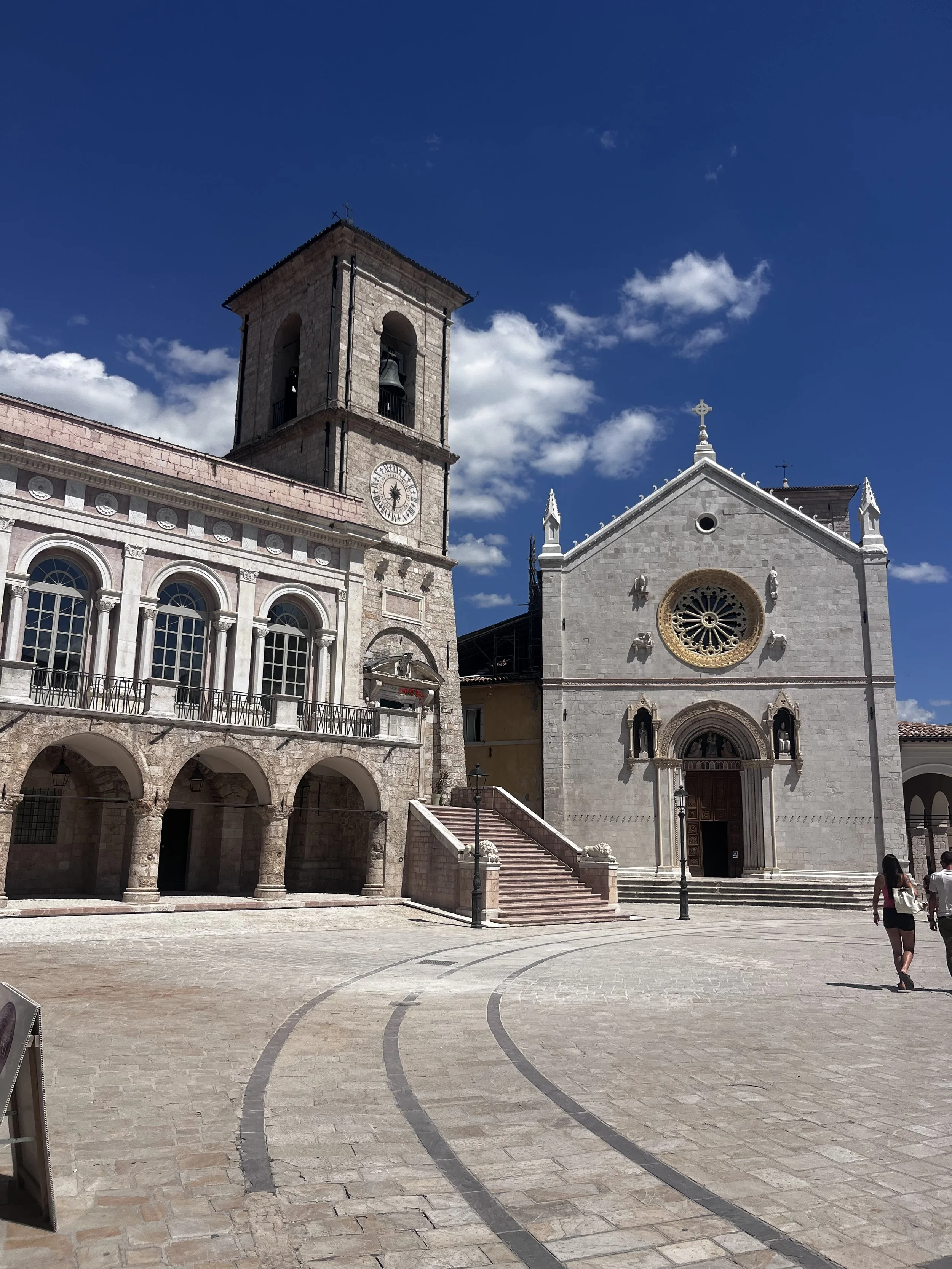
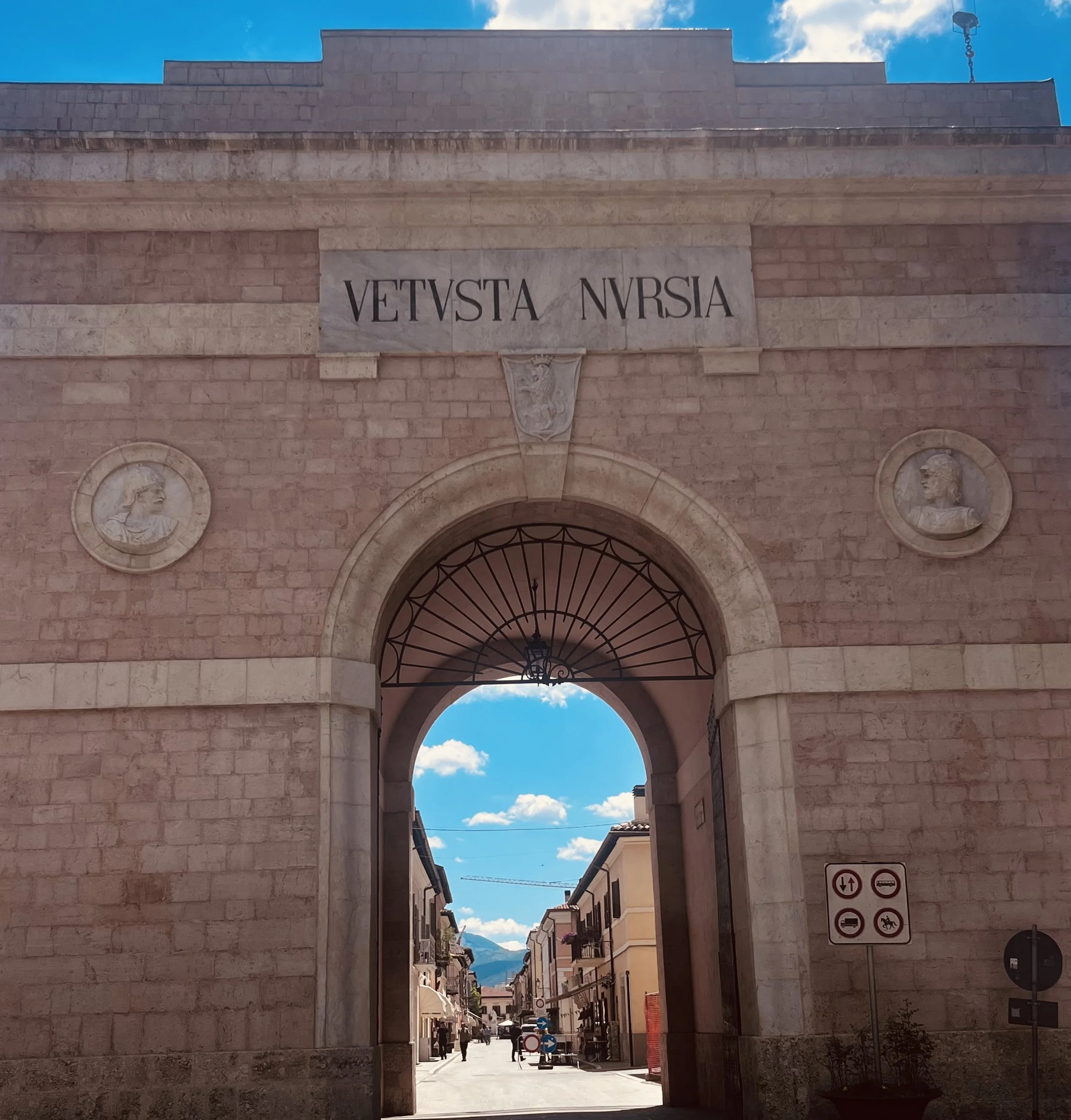
For the next four nights, we are based in Umbria, home to gorgeous villages cascading down hillsides in shades of pink and cream. Today’s lunch stop was Norcia, just inside Umbria and near the epicentre of the devastating earthquakes. Although much of the town was destroyed, residents have created a beautiful new centre within the original walls and gates, which miraculously survived. The town’s famous Basilica is undergoing extensive restoration and reinforcement.
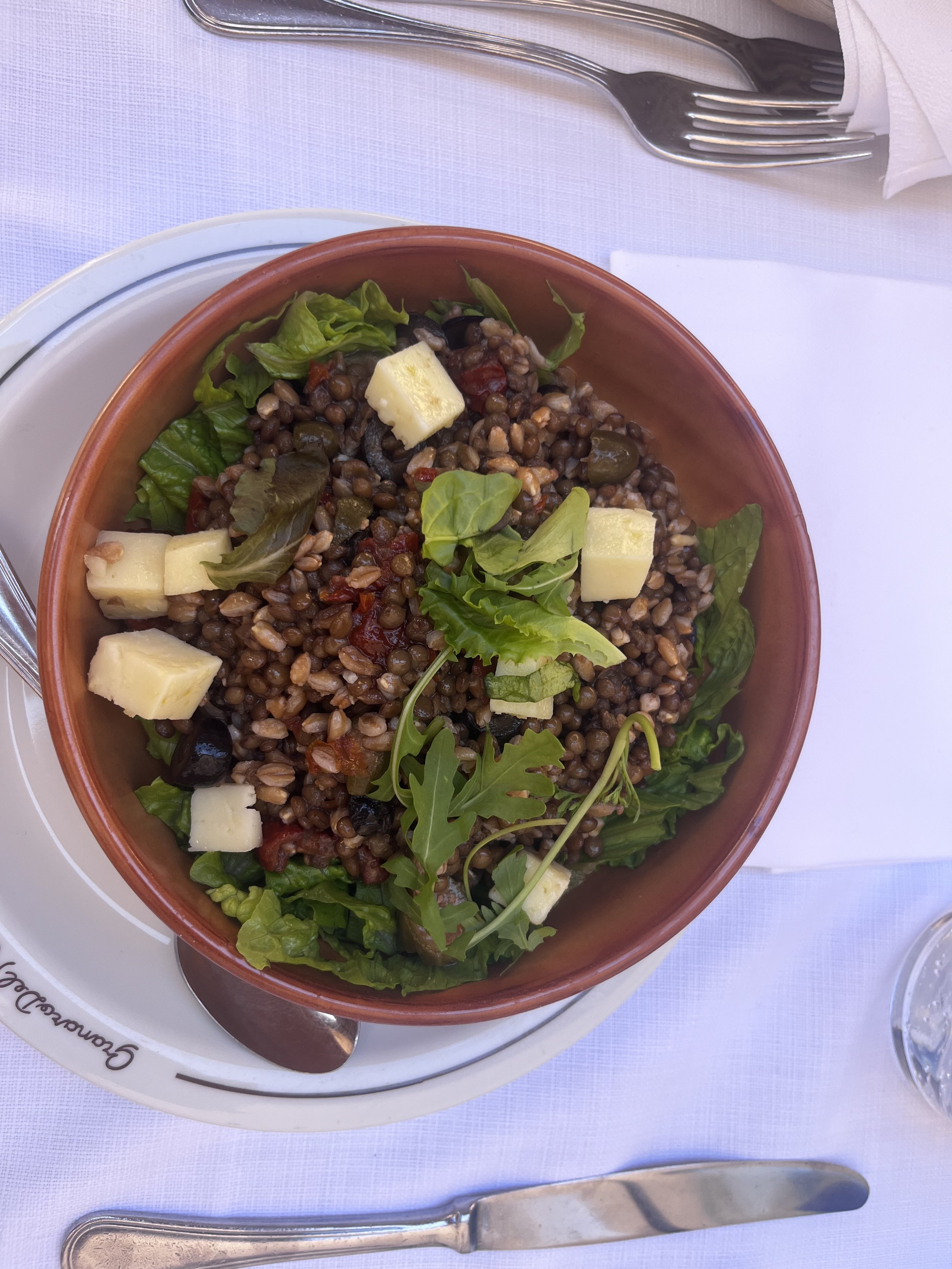
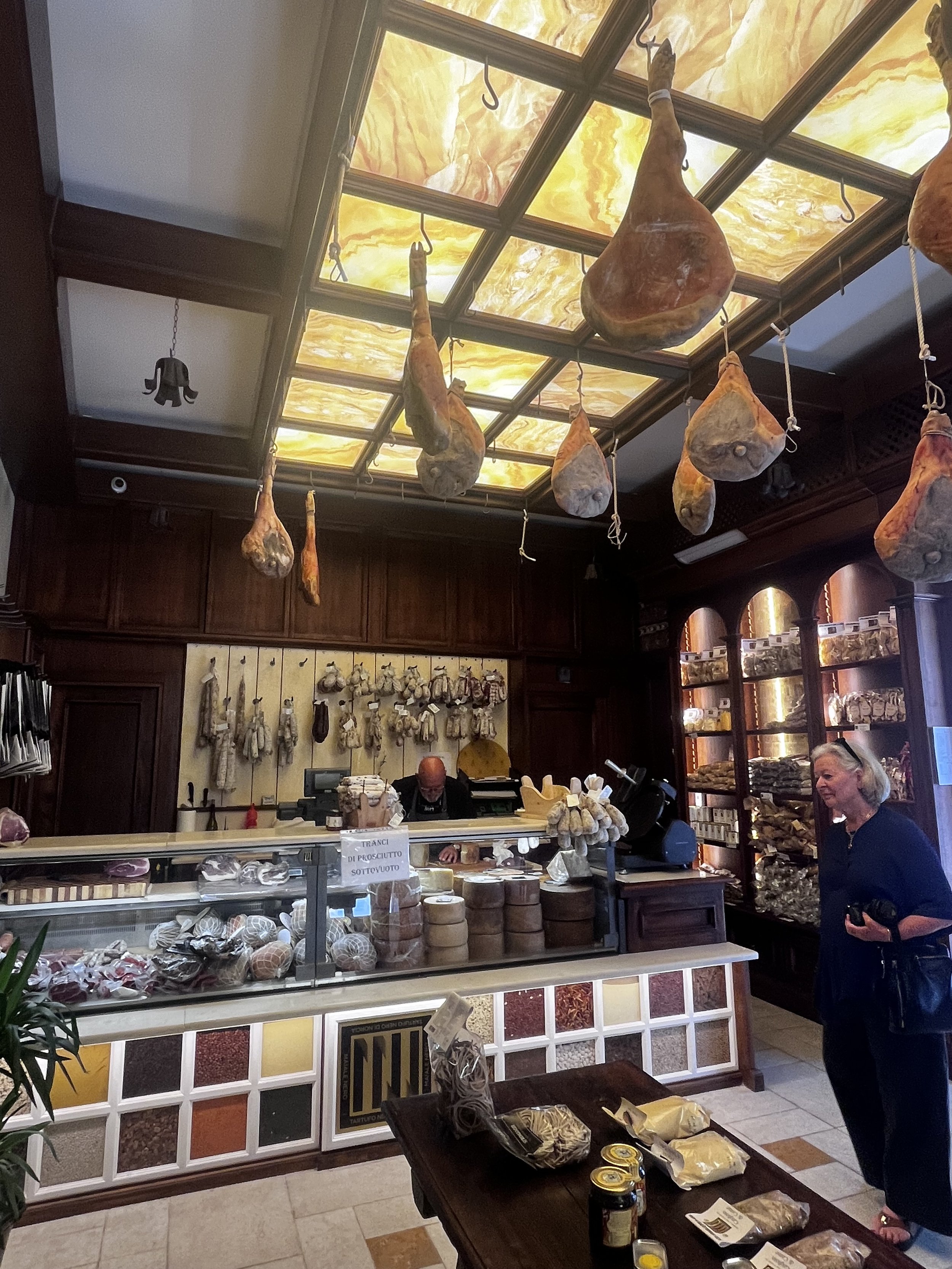
Renowned for its pork products, I have never seen so many shops selling cured meats, cheeses and truffles in one small town. Our lunch of locally grown lentil salad was entirely appropriate and proved to be a perfect choice.
My tours are all about the food, wine, gardens and culture of a region. Consequently, the restaurants choices, and visits I have researched and chosen showcase a variety of experiencesin each region.
XX Judith