
The Joy of experiencing a Spanish Lifestyle
The Spanish coastline known as the ‘Costa del Sol’, stretches for over 150 km from Nerja to beyond Marbella. The drive doesn’t exactly take you through the coastal towns and cities and as much as we thought we wanted to do that, it would have taken forever. Spanish motorways are amazing, and I have found driving on them not nearly as bad as I first imagined. The mass of apartment blocks and densely populated cities of Nerja, Malaga and Marbella sprawled out between the road and the Alboran Sea, while above, the hillsides were layered with terraces covered with more orange trees.
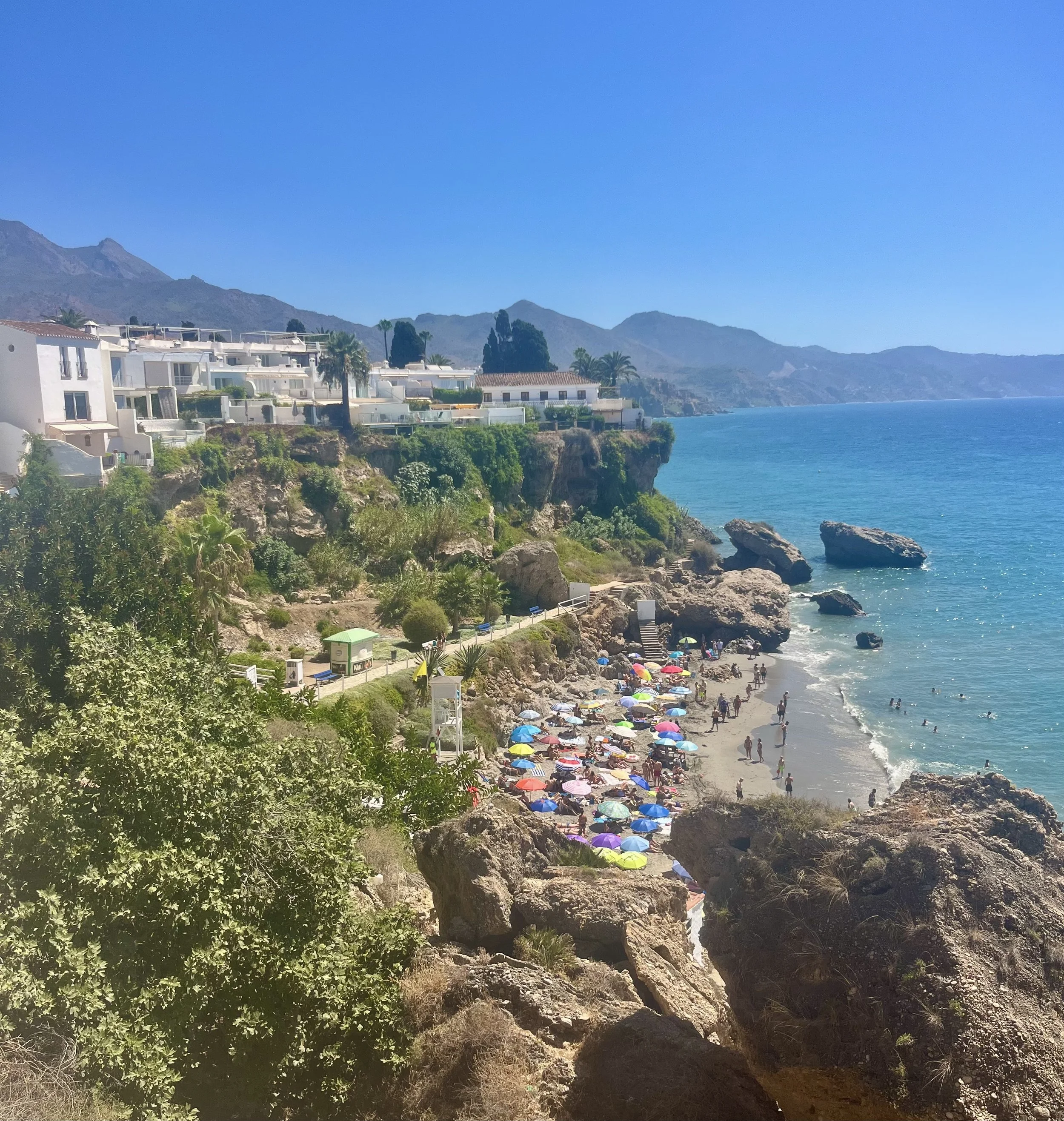
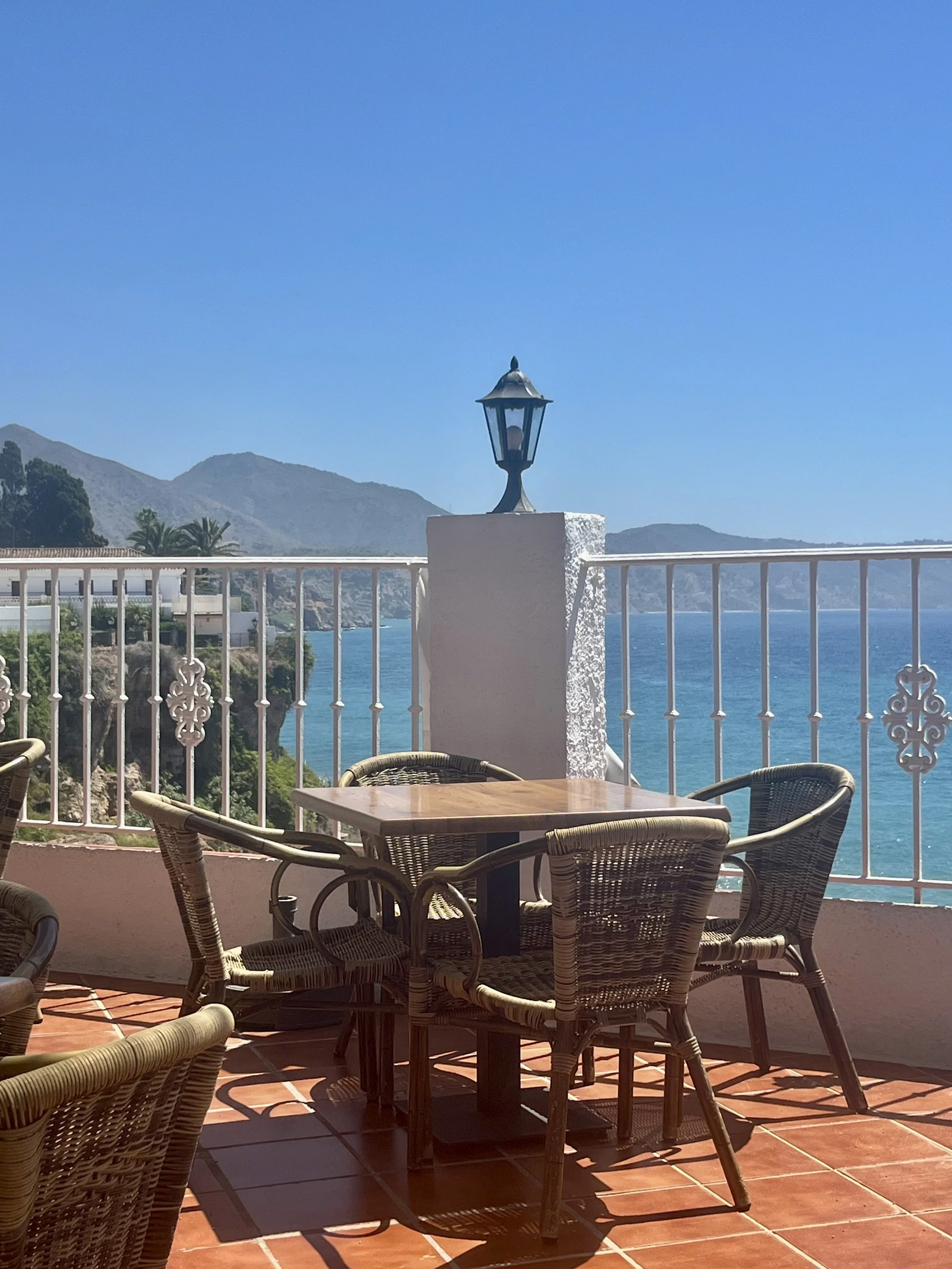
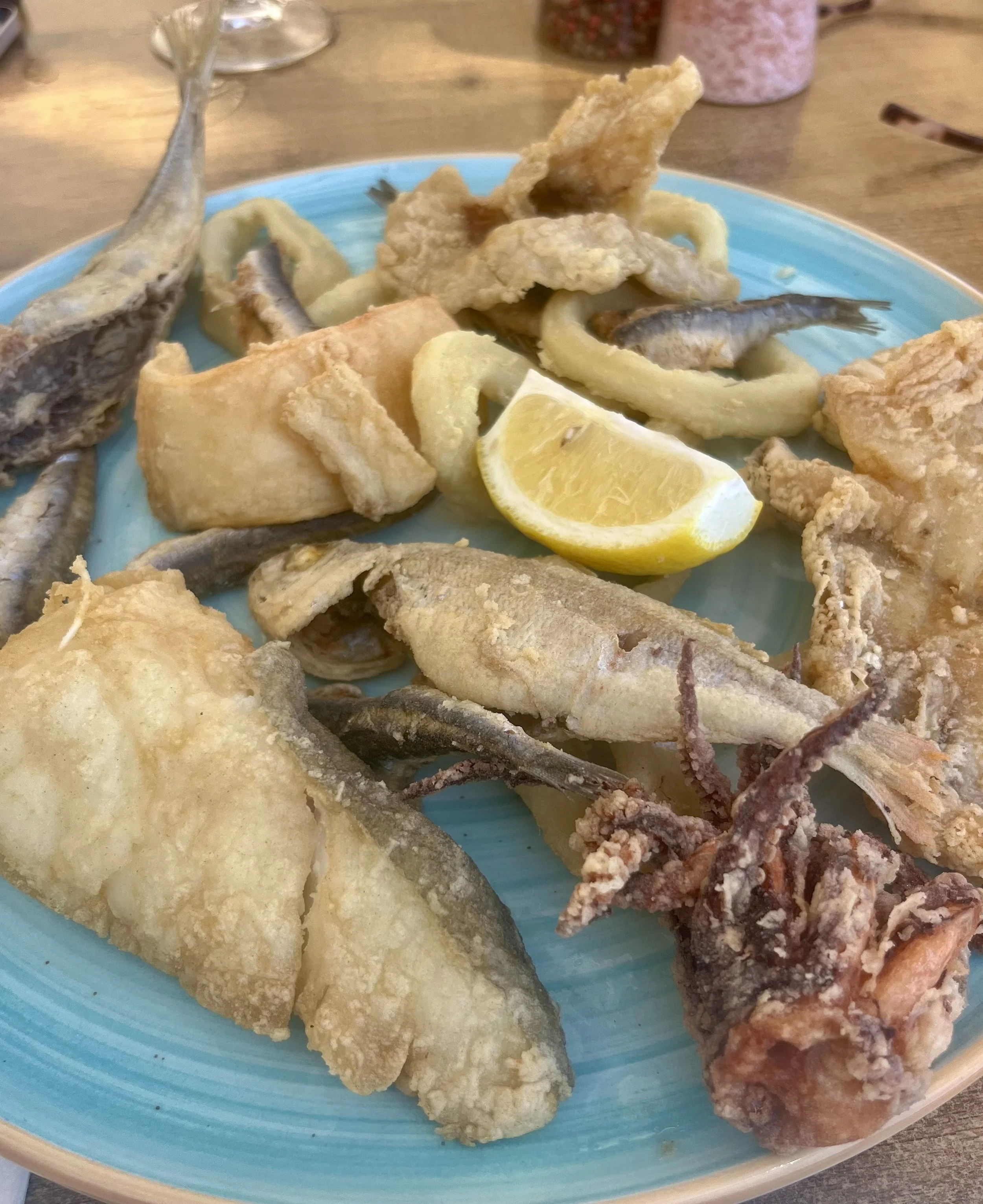
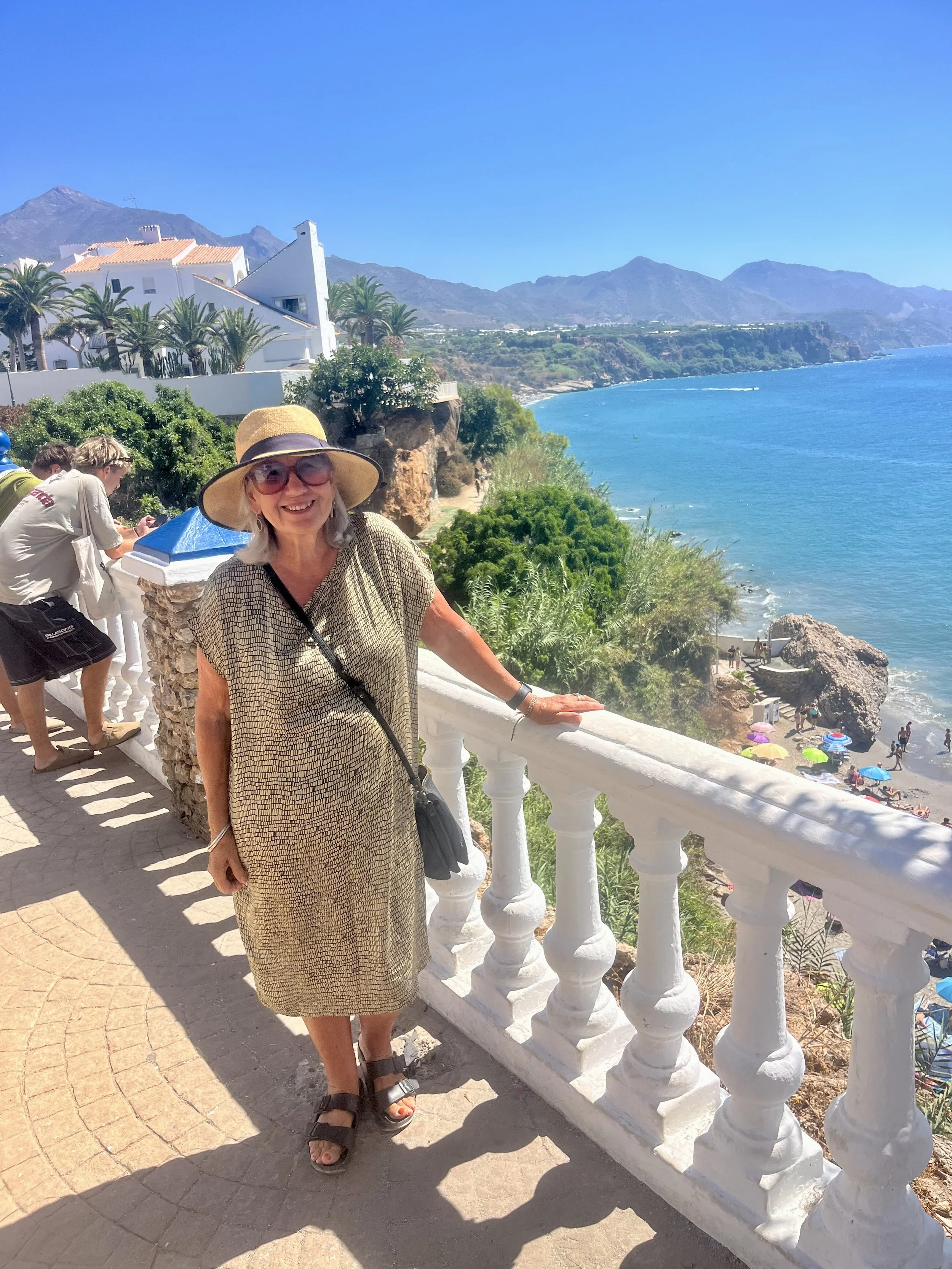
Over 10 million tourists come here each year to enjoy the sun, sand and lifestyle, of whom over 20% are British. We did ‘pop’ into Nerja, which, surprisingly, was easy. Our daughter-in-law Holly’s British grandparents lived here for 10 years, and she talks fondly of her holidays with them as a child. Our lunch overlooking the beaches on either side was a plate of mixed fried fish and a beer—a perfect spot to take in the beach atmosphere.
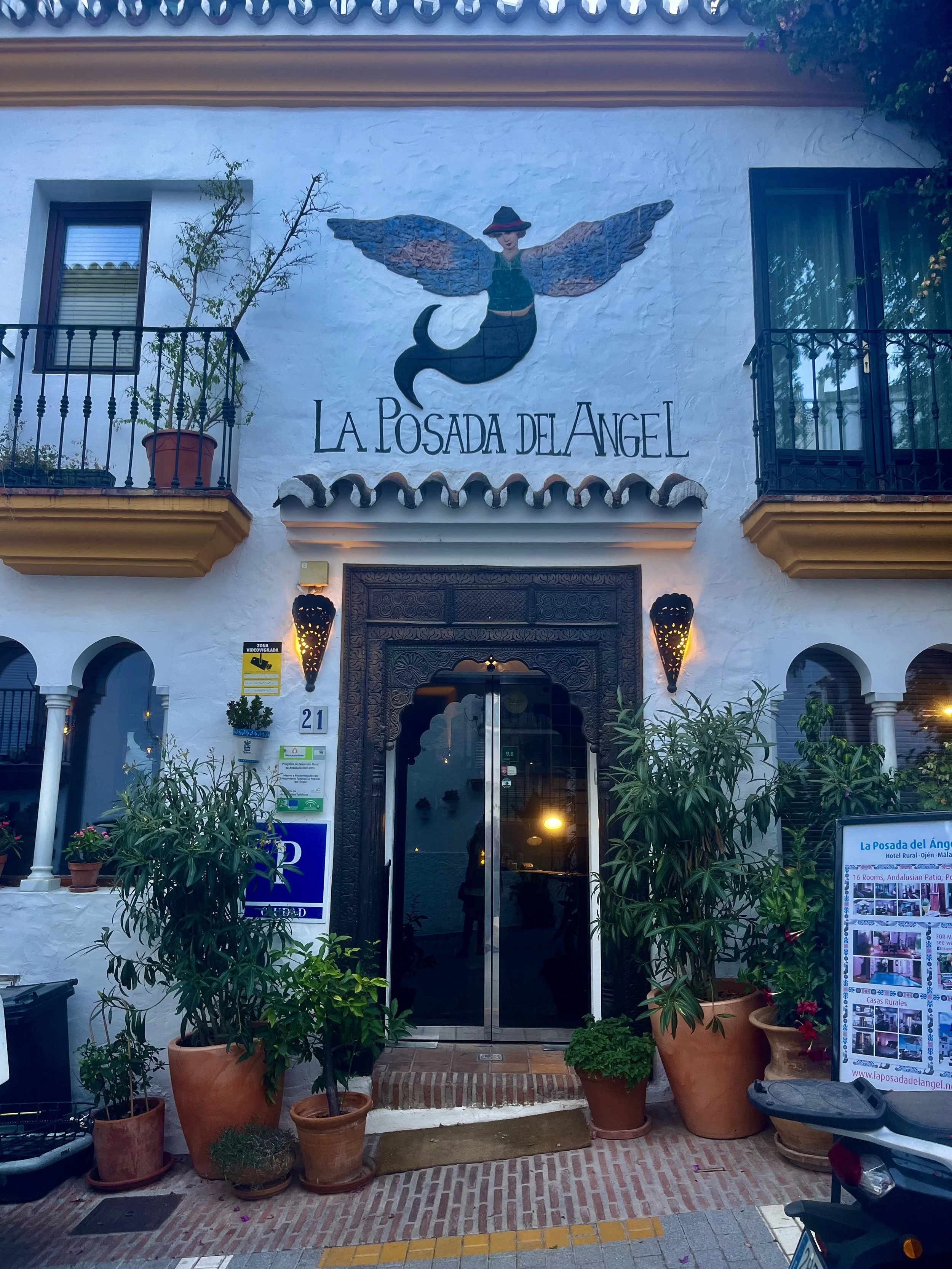
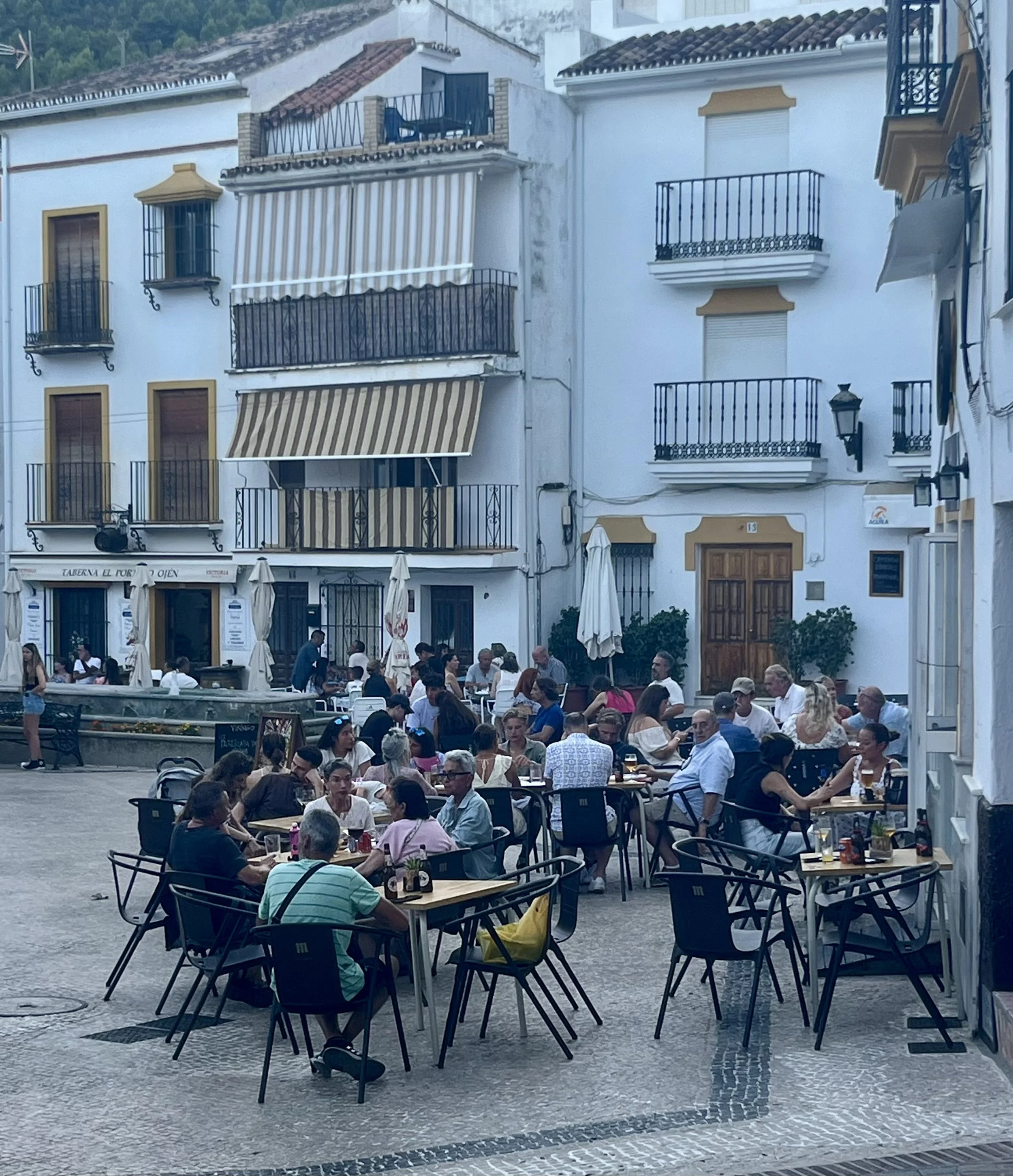
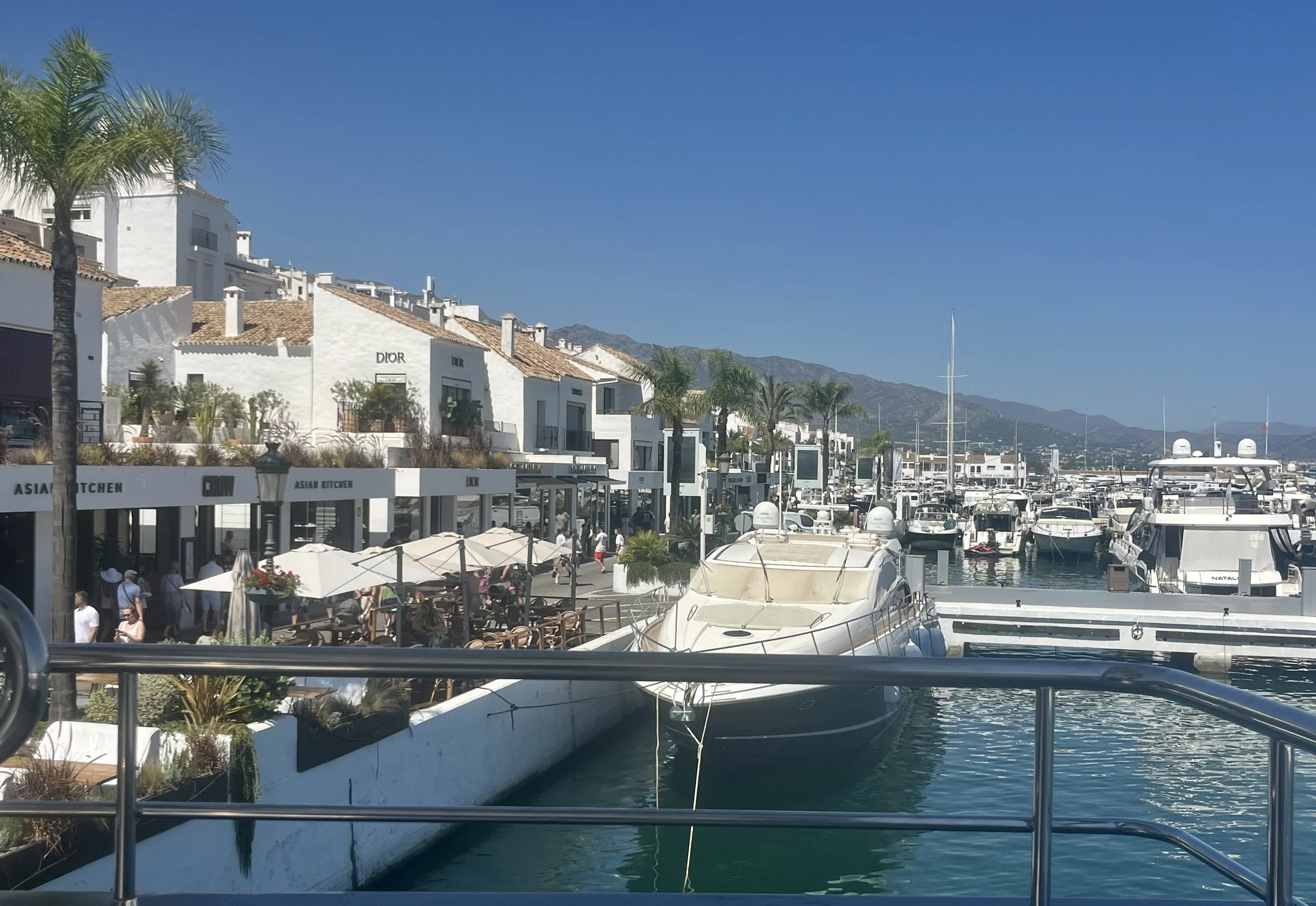
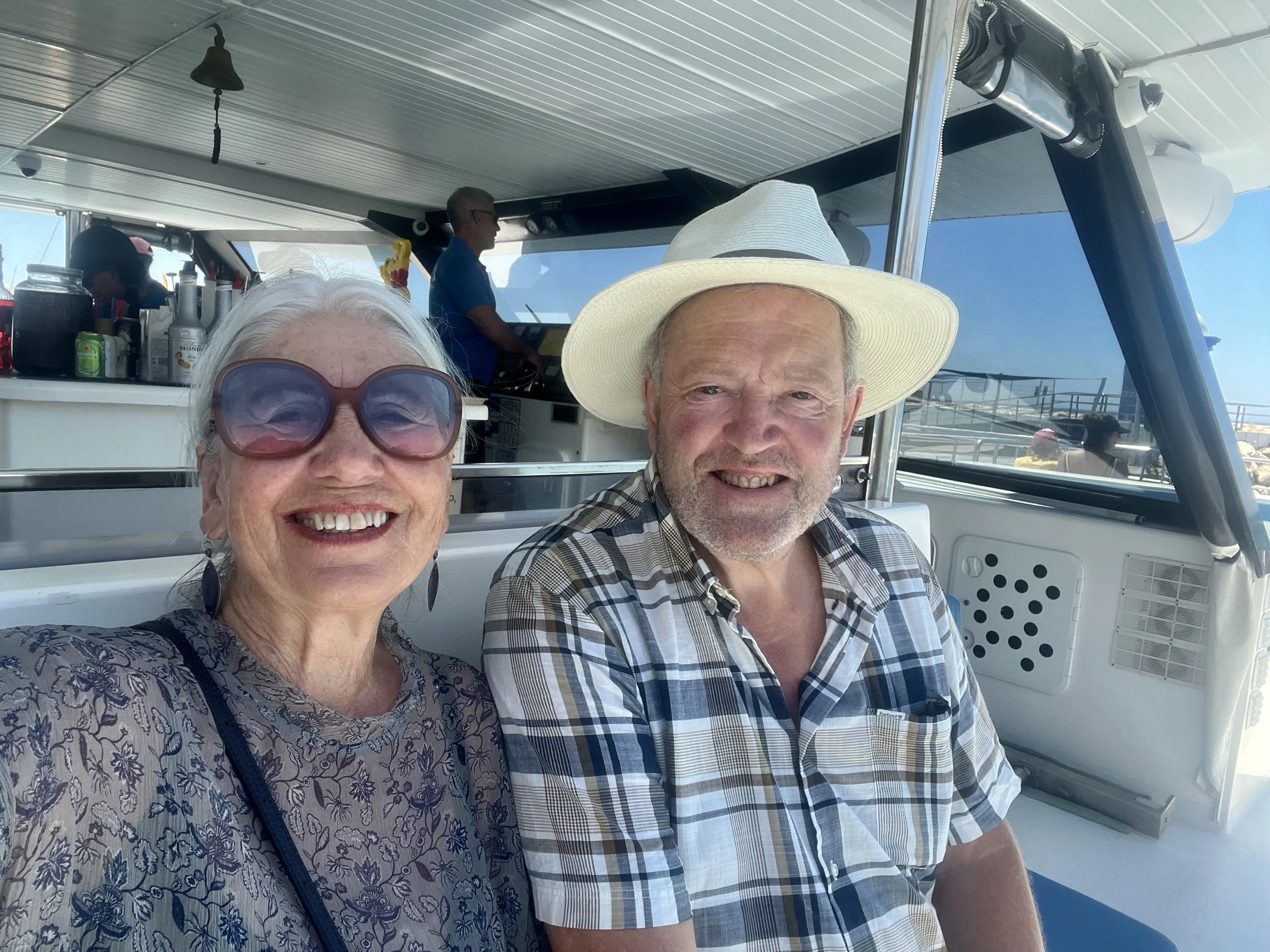
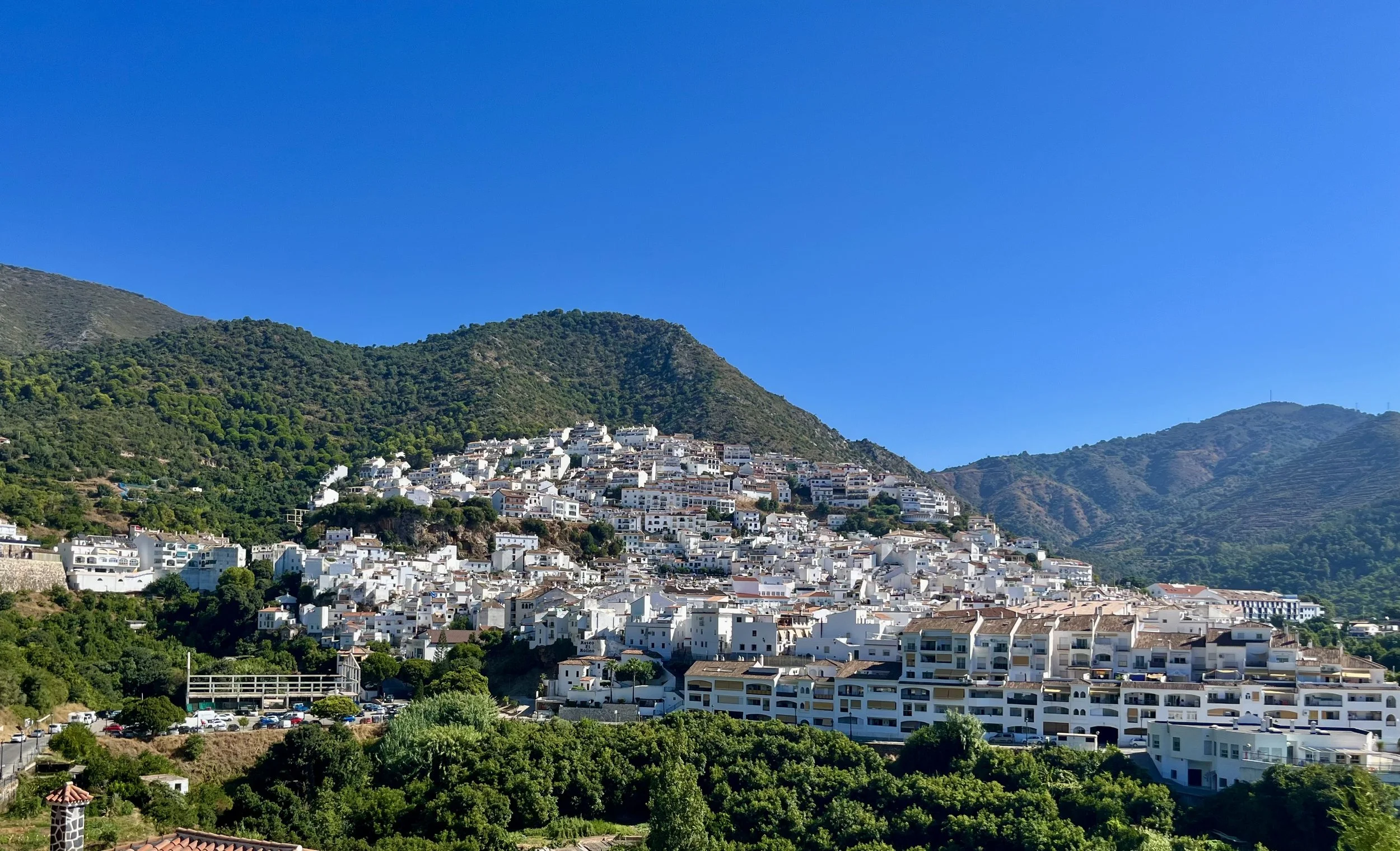
My hotel choices are always away from the busy tourist spots, and the steep hillside white village of Ojén was a darling. We were collected with our luggage from the car park by the hotel receptionist, driving an oversized golf cart. For three nights, we ate with the locals in the plaza, watching children play in the cooler evenings. By day, we could visit Marbella and, instead of sitting on the beach, we caught the regular catamaran to Puerto Banús. It was perfect for avoiding the heat and, at the same time, seeing the coastline from the water. We knew Puerto Banús had high-end shops and lots of restaurants, but the packed marina was lined with so many Lamborghinis, Ferraris and even a ‘Mansory’—new to me, but apparently a heavily customised high-end luxury car. It was fun to look at, not only the cars, but also the people!
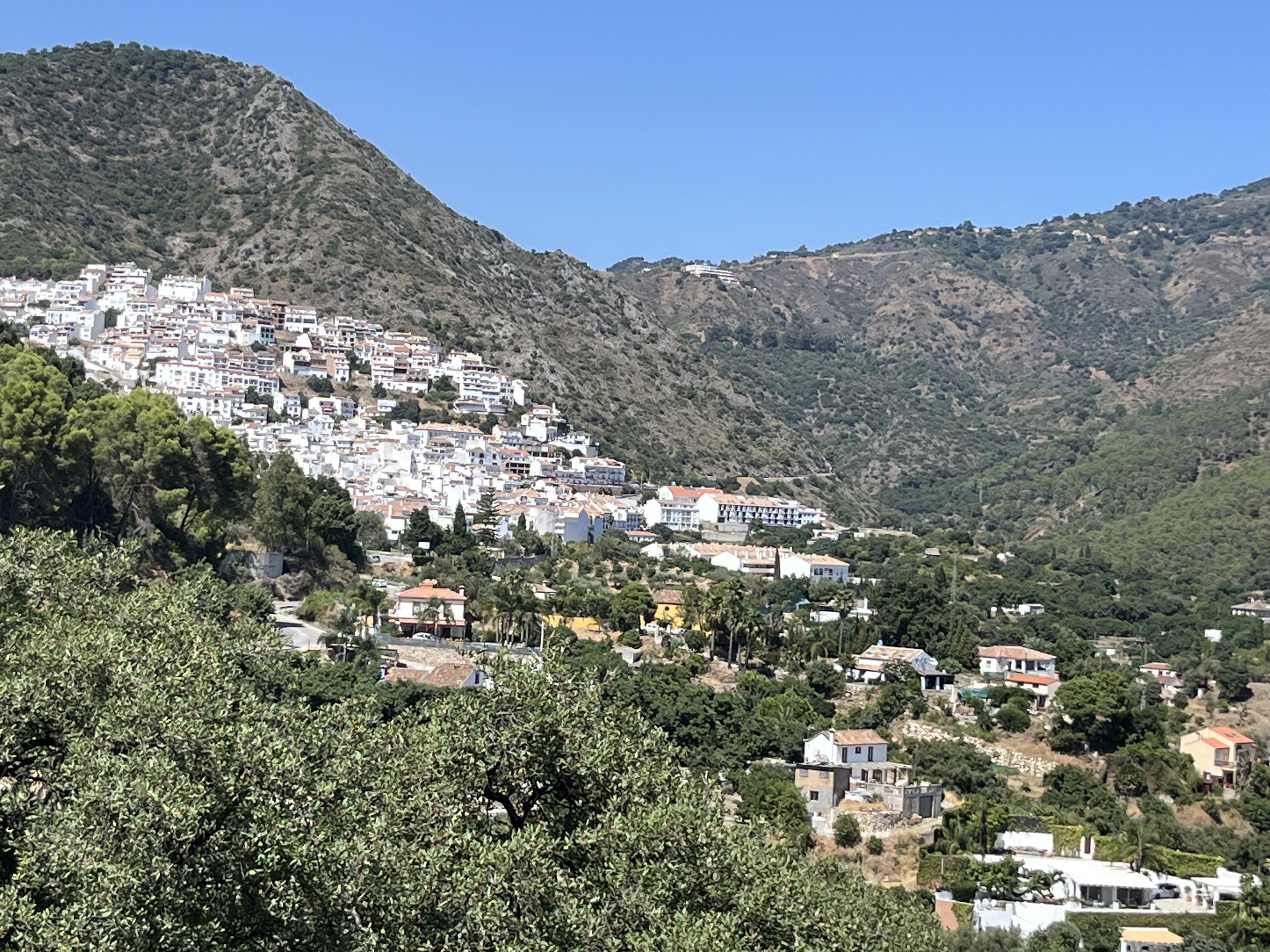

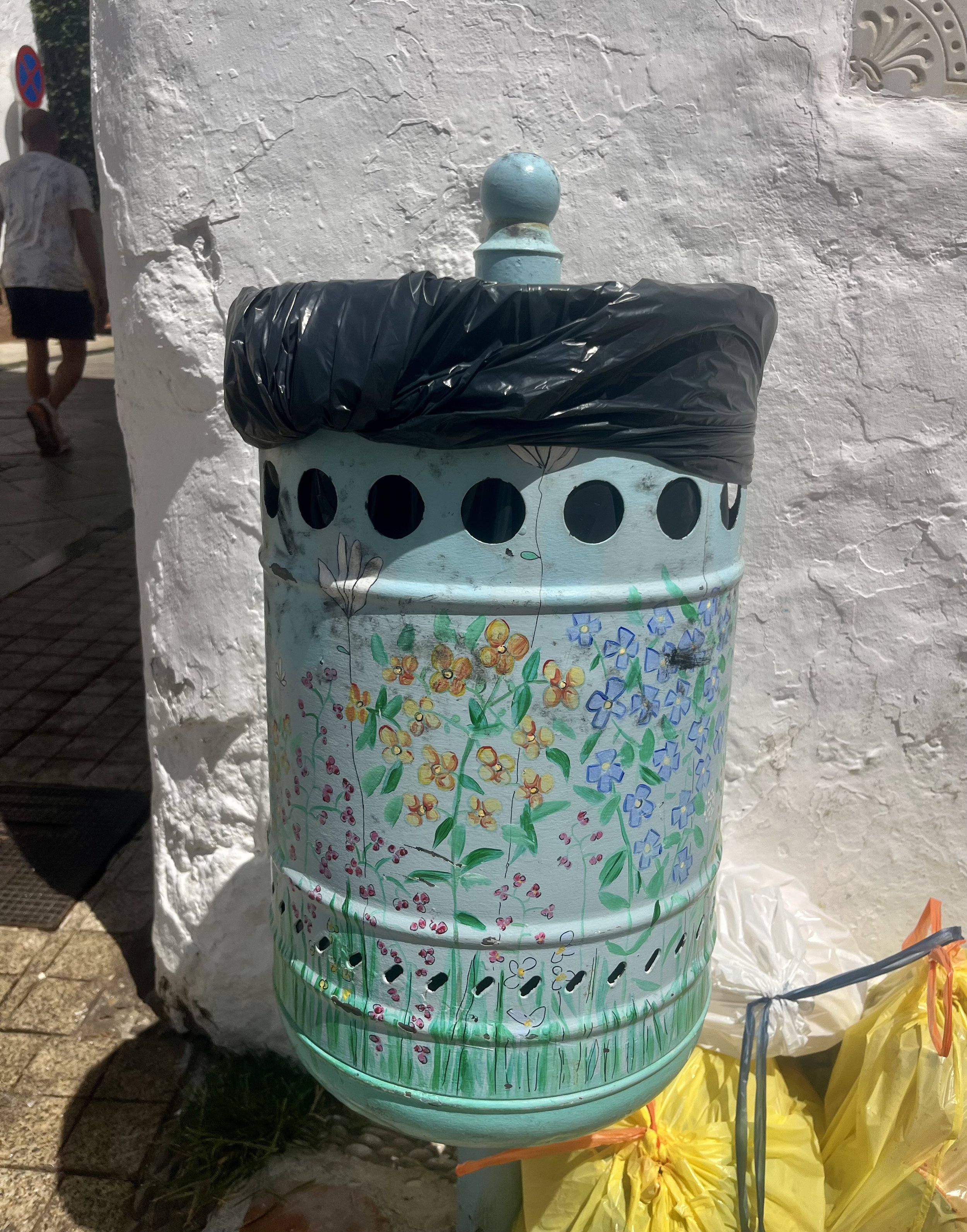
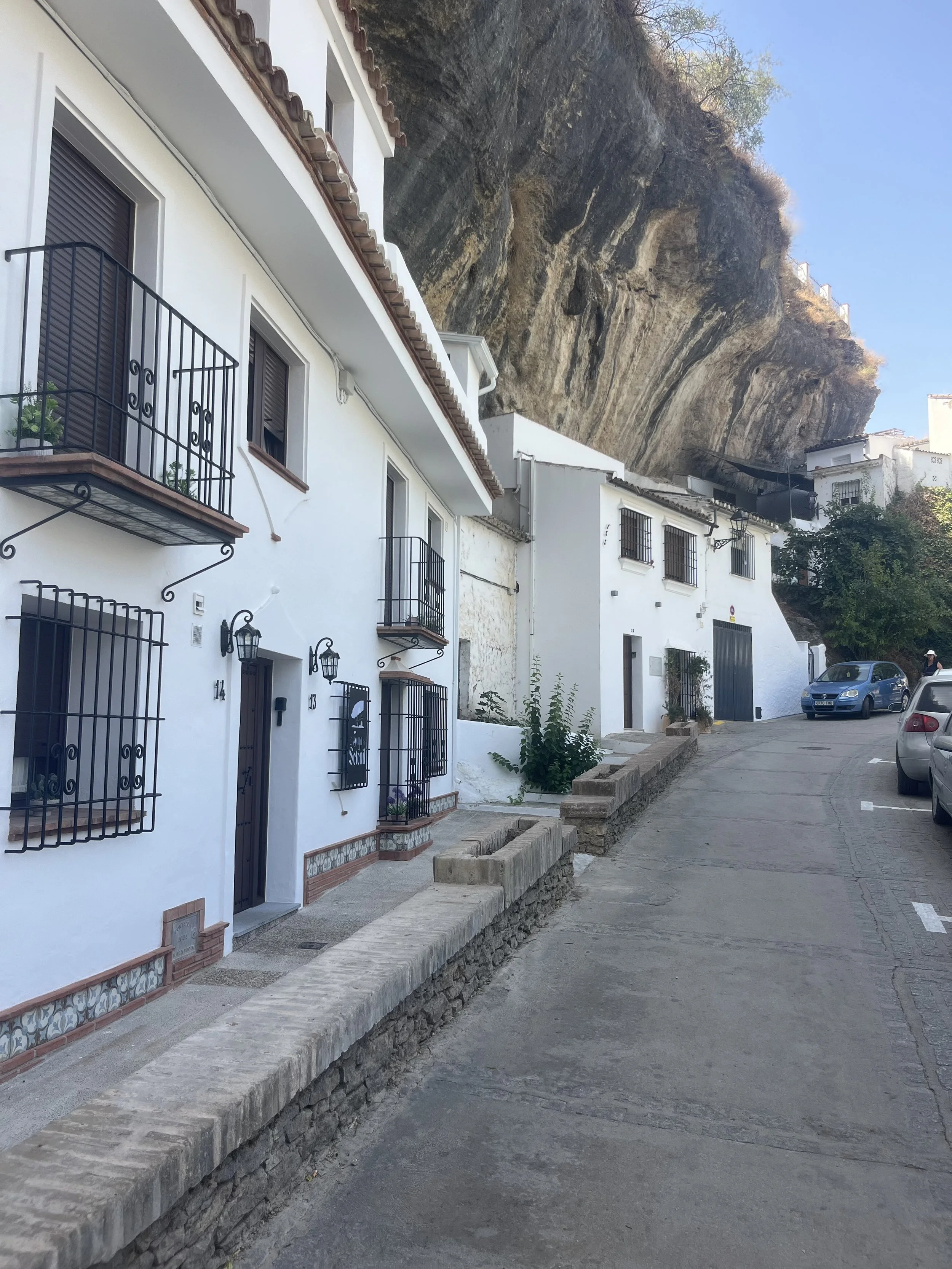
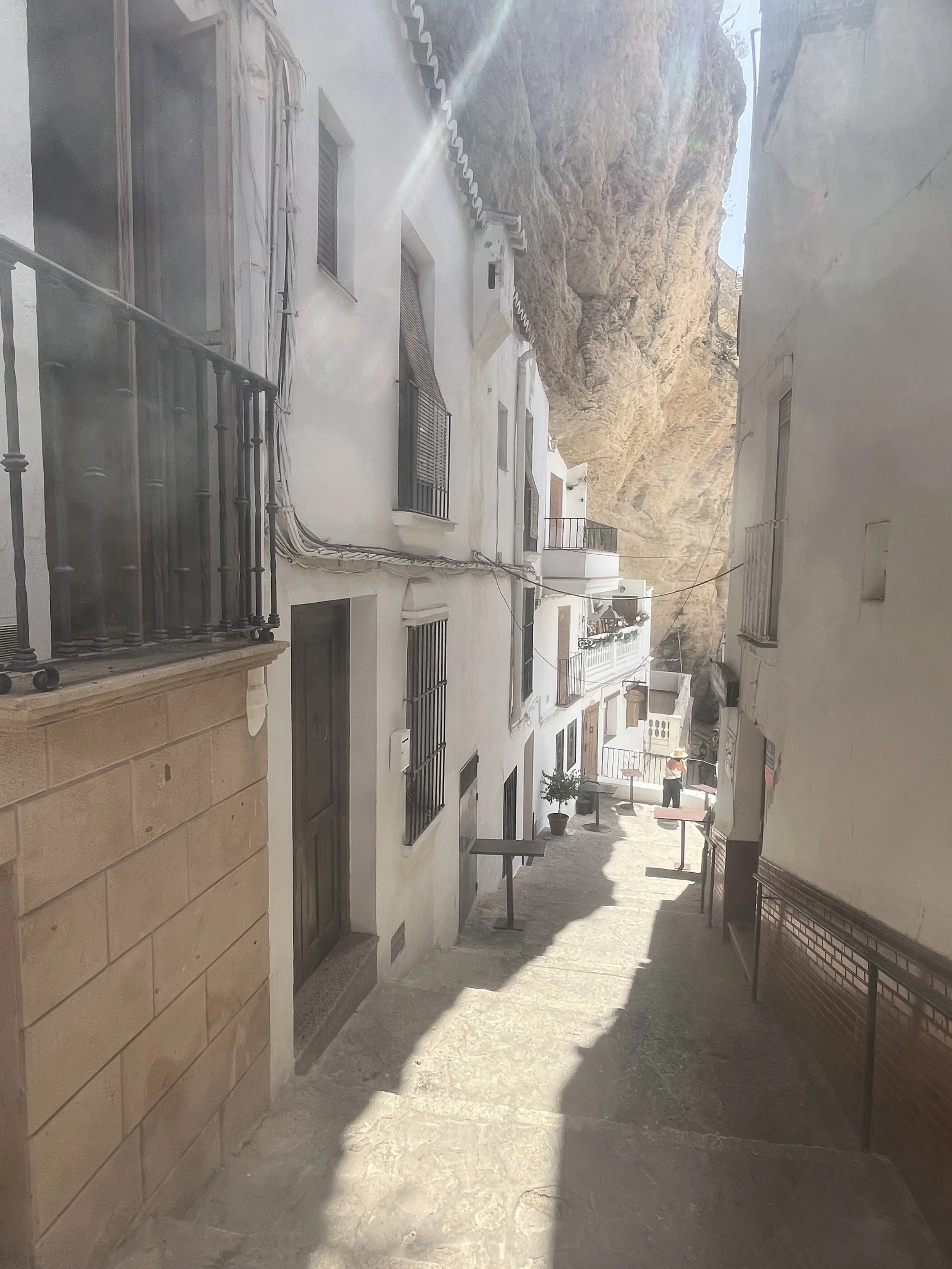
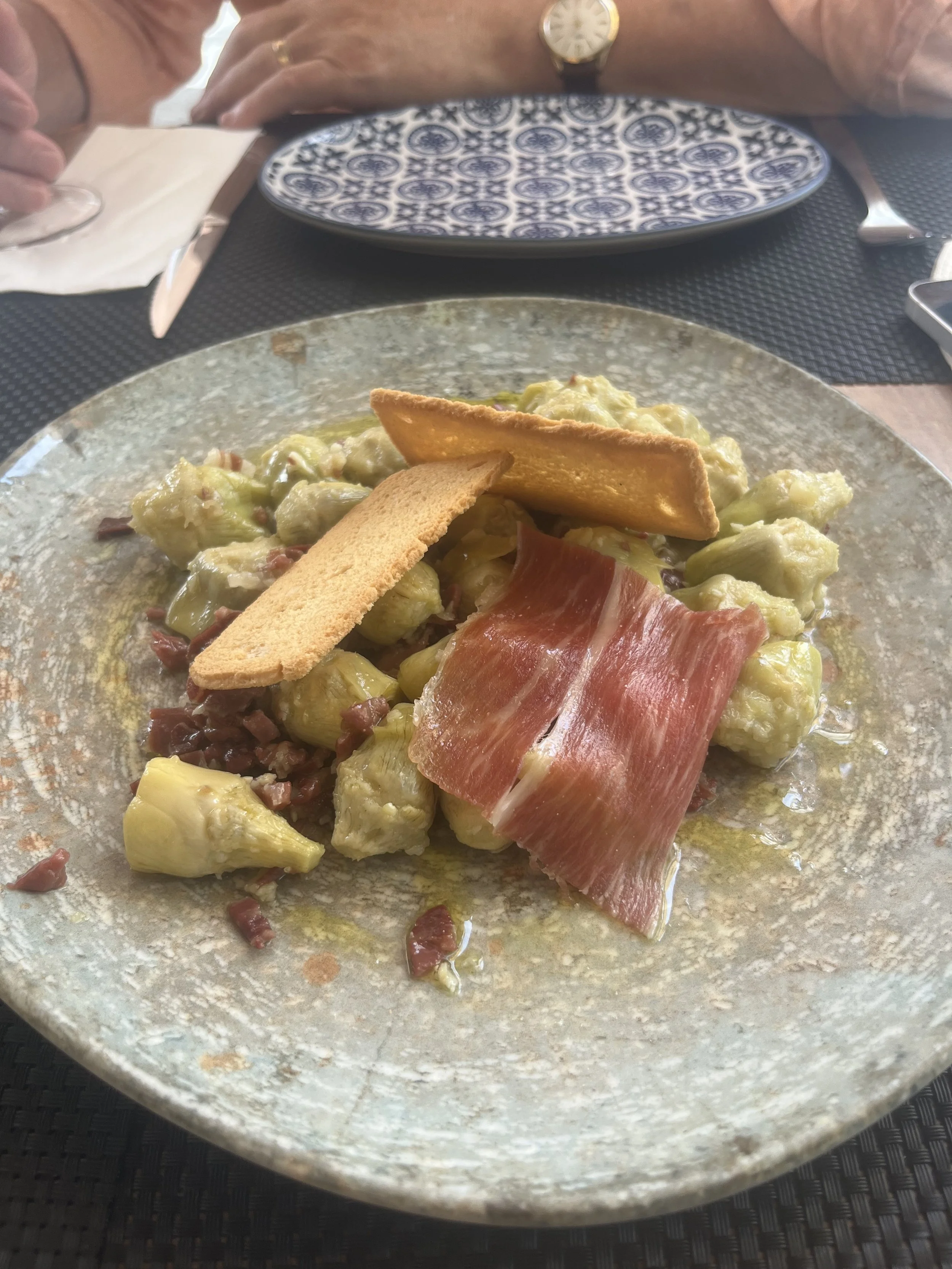
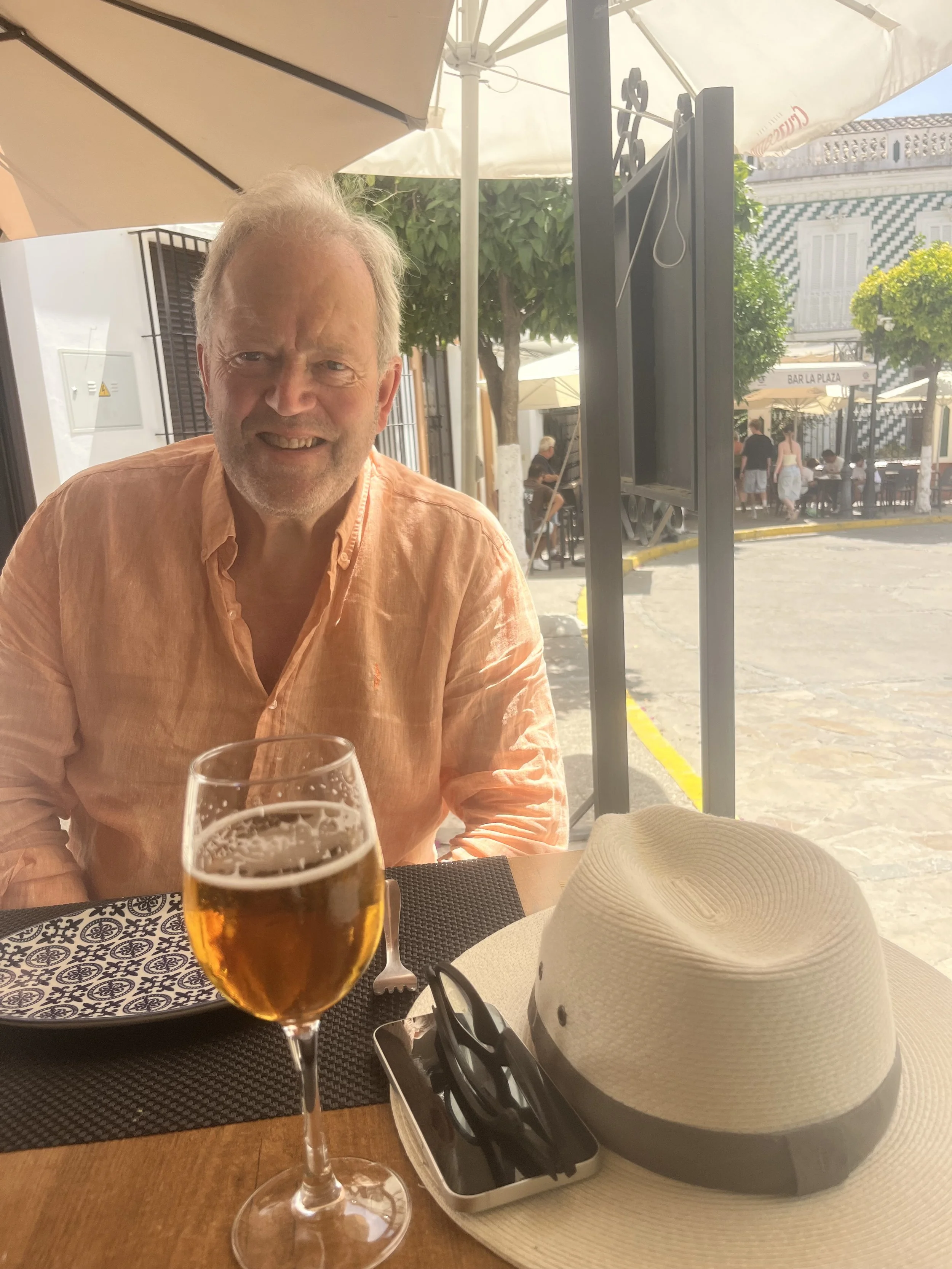
However, our highlight has been travelling inland through many gorgeous white villages and the stunning landscape, patchworked with olive and almond trees. From Ojén to Ronda, we stopped at the village of Setenil de las Bodegas and, in 38°C heat, walked the steep streets past cave houses built into the hillside. Not leaving until we had one of our many sangrias and a fabulous shared salad of artichokes and Iberian ham which was extraordinary and delicious.
Our terrain changed from rolling hills to the mountain pass of Puerto del Monte. I would love to come here in spring and see the wildflowers. Instead, the roadside now is filled with interesting seedheads.
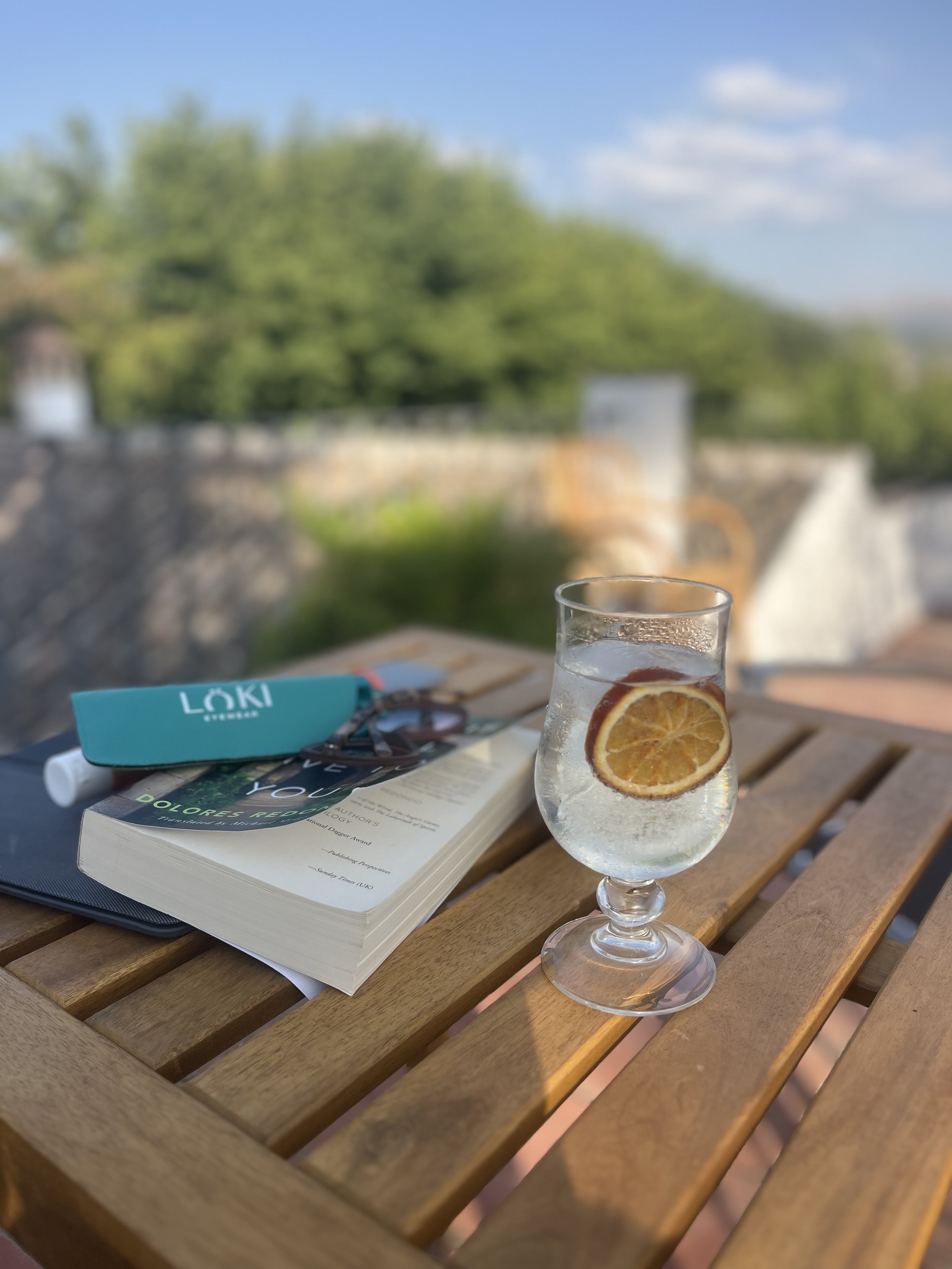
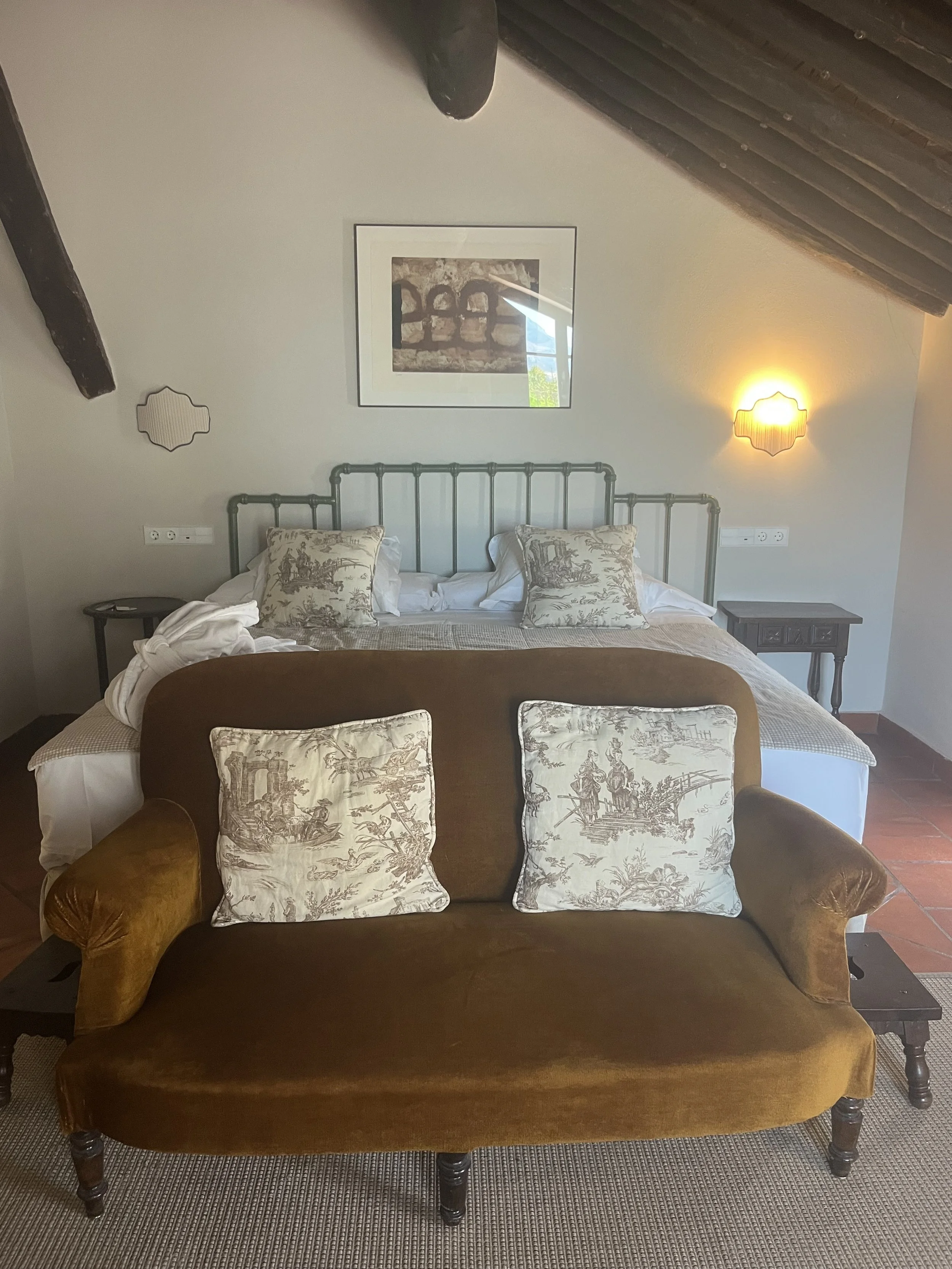
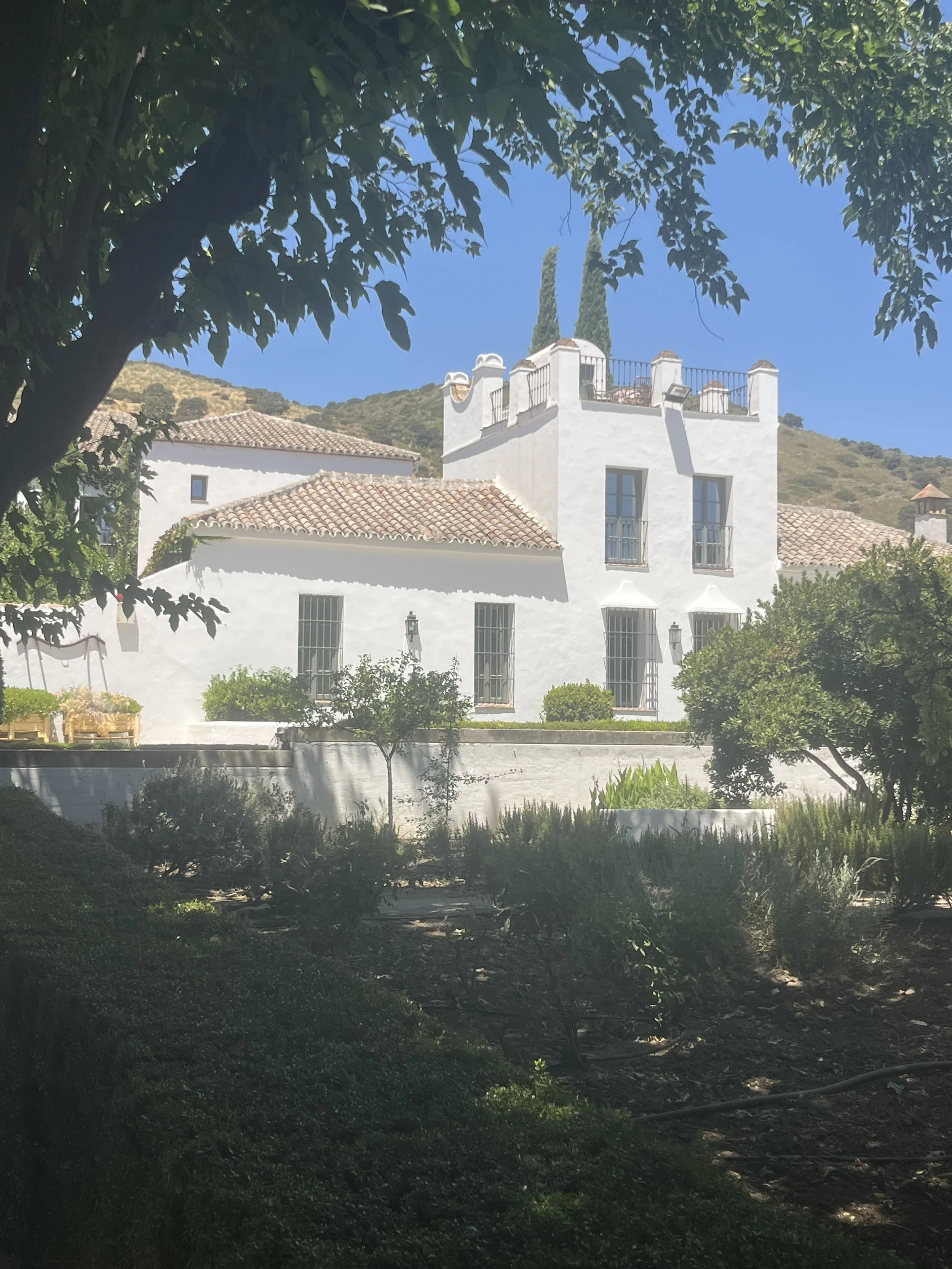
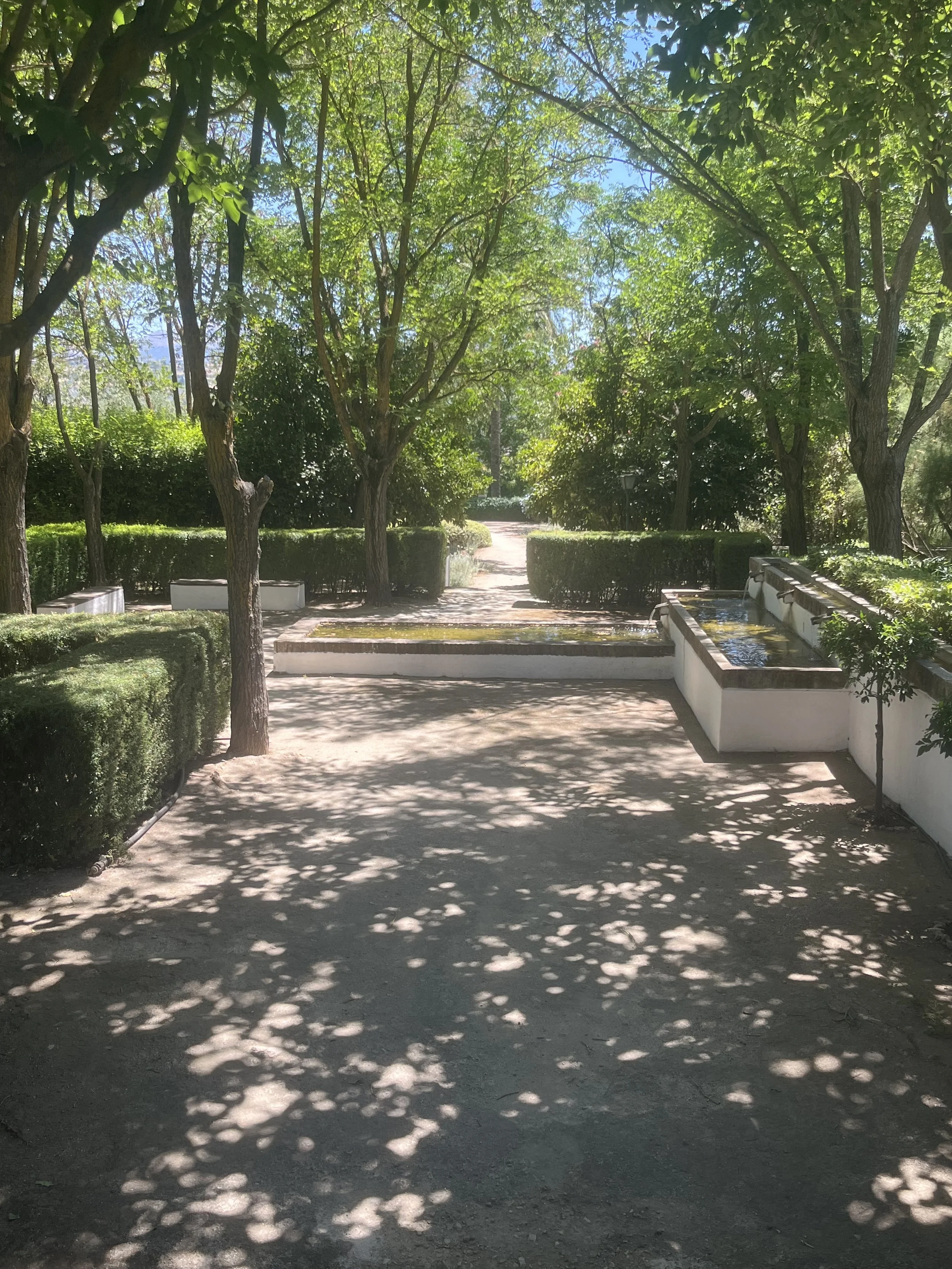
Ten kilometres outside the famous town of Ronda, along another narrow, one-way road, was our accommodation, ‘Hotel Molino del Arco’. Oh gosh—and it was only for two nights! This beautiful old farmhouse has been preserved and renovated and sits within the original extensive gardens. It continues the tradition of olive production, producing its own olive oil. We ate here each night, enjoyed a small swimming pool that no one else had obviously found and read books on our deck.
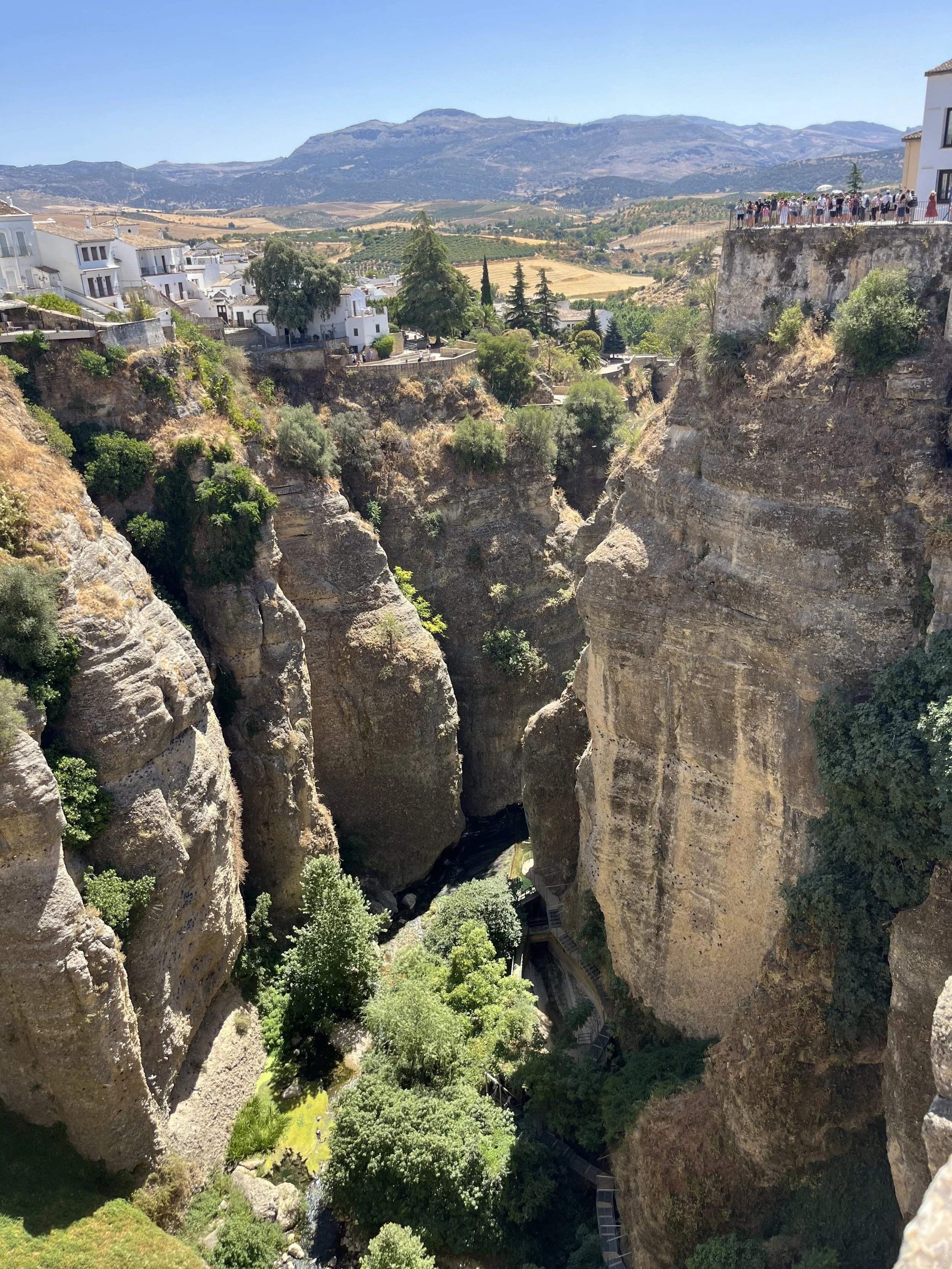
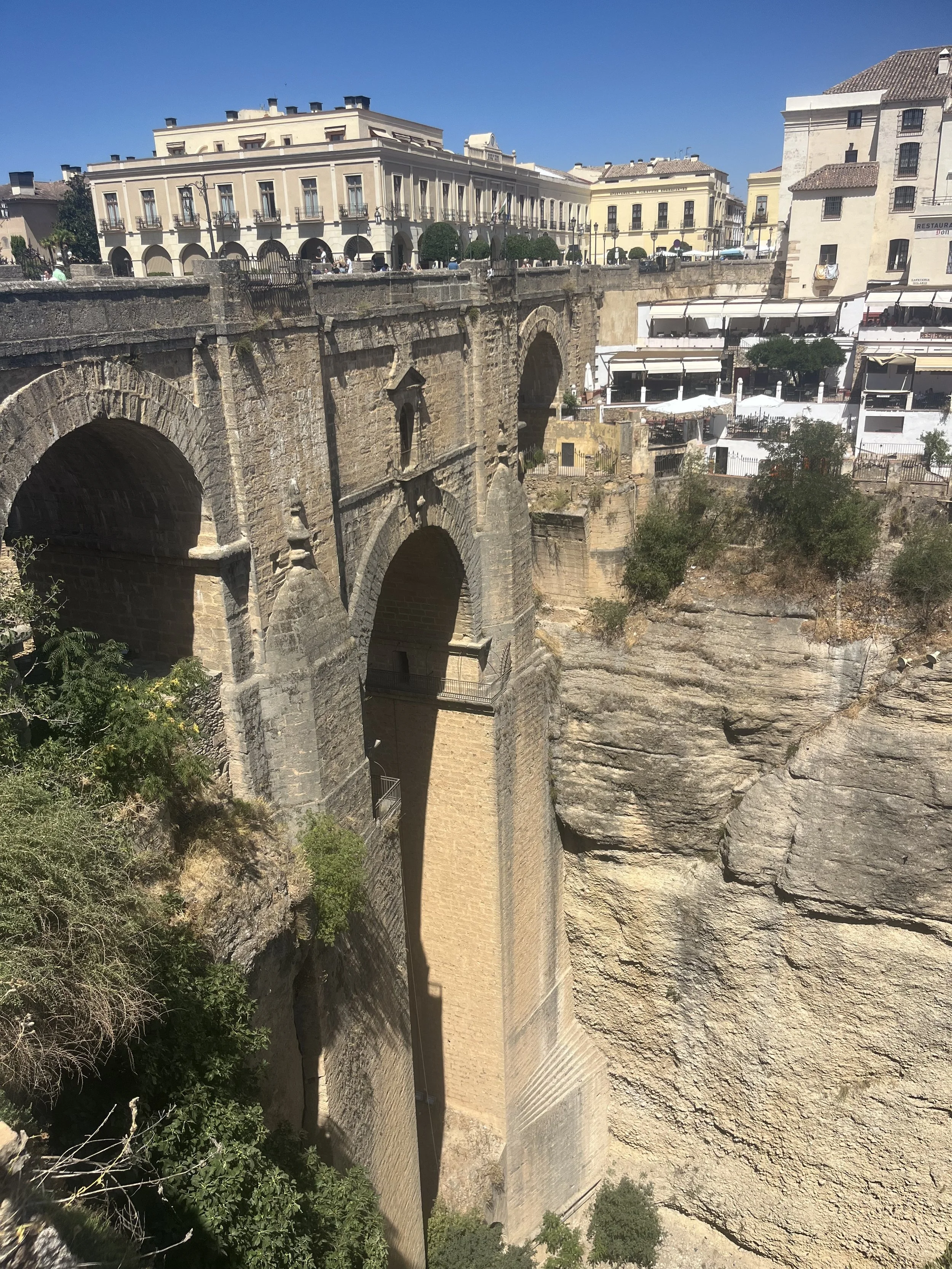
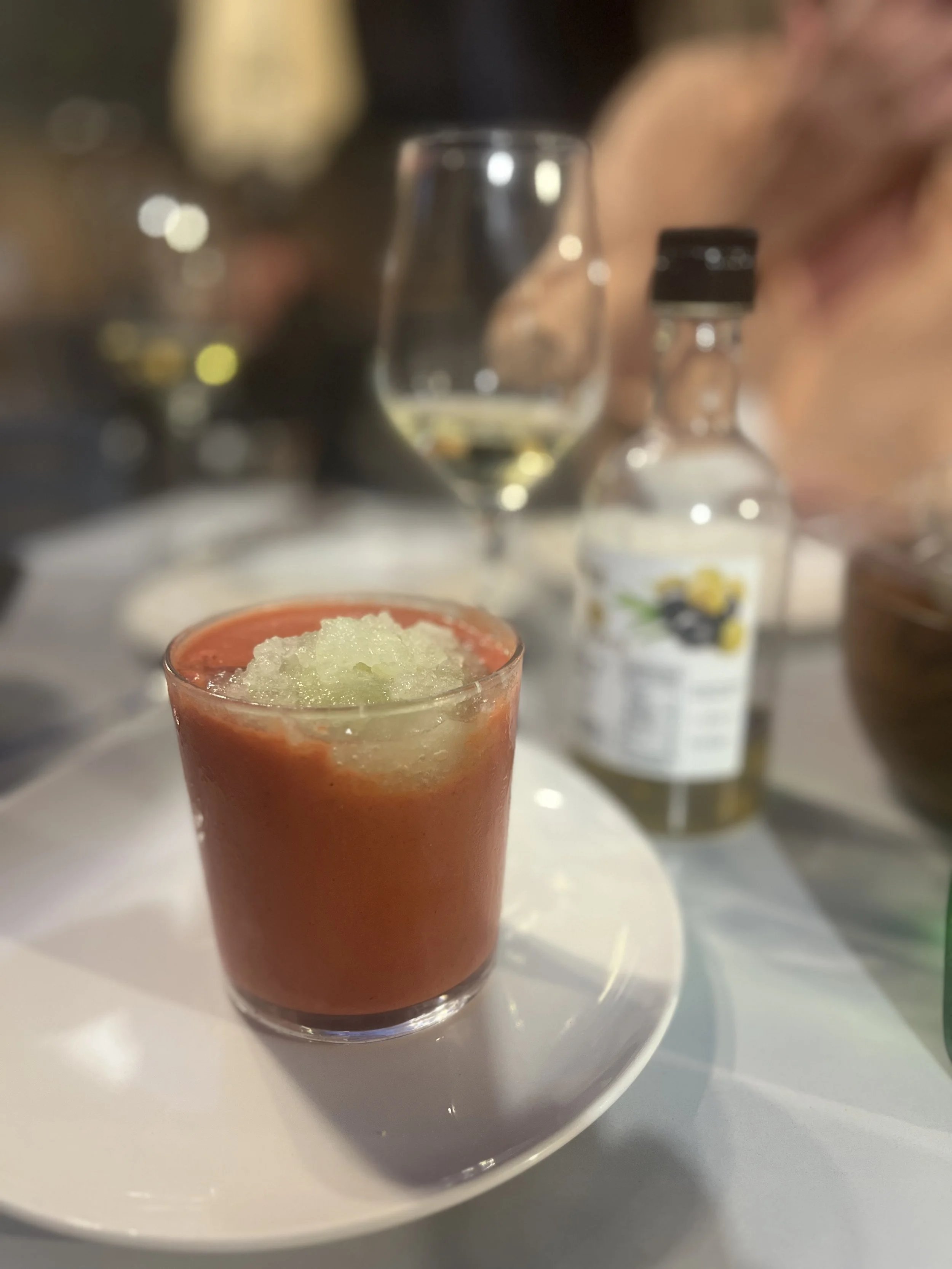
Consequently, our walk in Ronda was rather brief. We certainly walked over the famous bridge that spans the deepest gorge, which gave Ronda its natural defensive ravine and was a must. Then wandered through the narrow streets, and what has now become a ‘must’ at every meal was two bowls of the most delicious gazpacho. So simple, so tasty and so good for you.
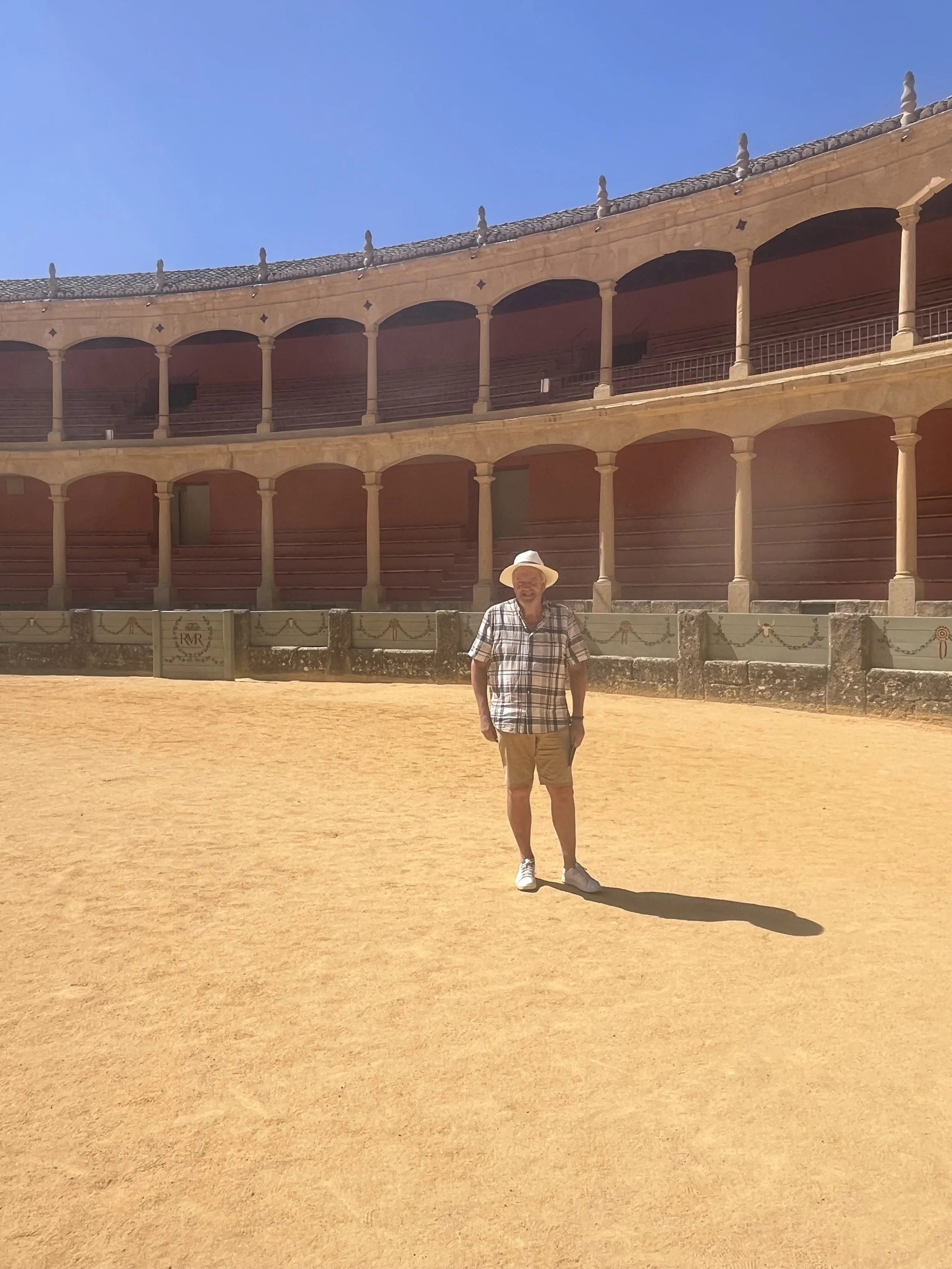
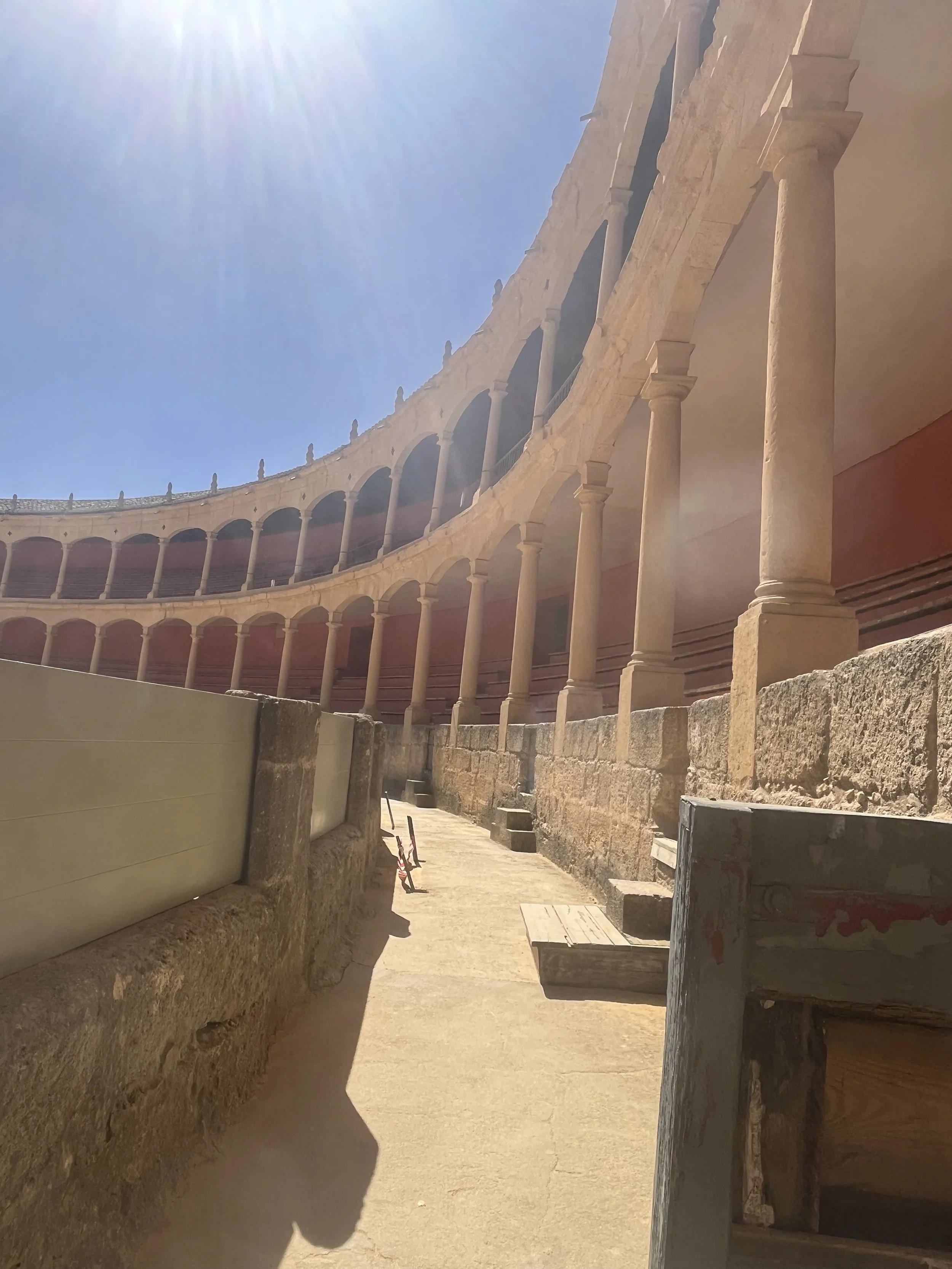
Before leaving, a visit to the bullring and museum was insightful. Bullfighting still goes on, and we are here during the season. We feel rather ambivalent about this tradition, and I am not sure whether I feel pleased or disappointed that the dates don’t coincide anywhere with our time left in Spain.
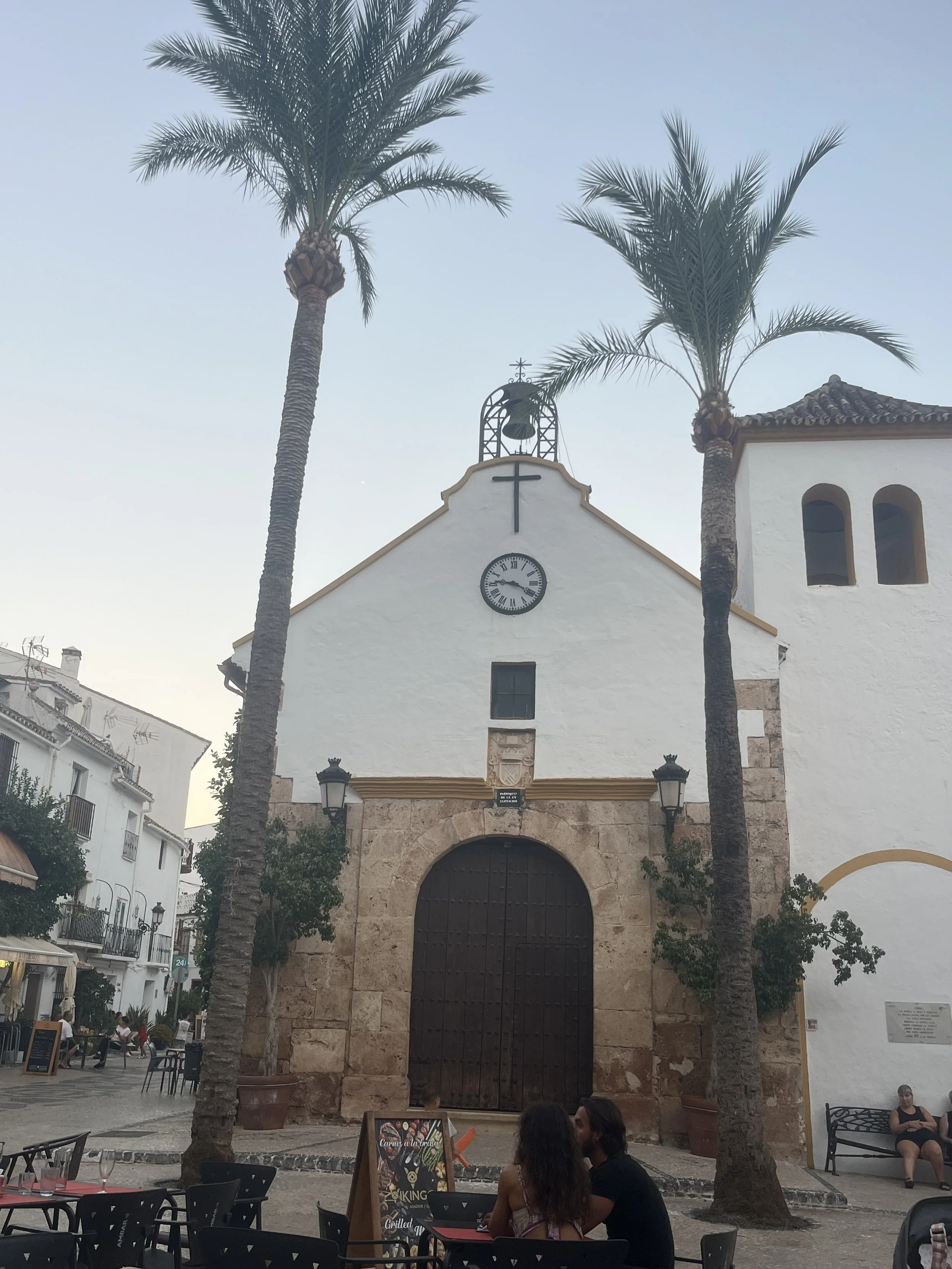
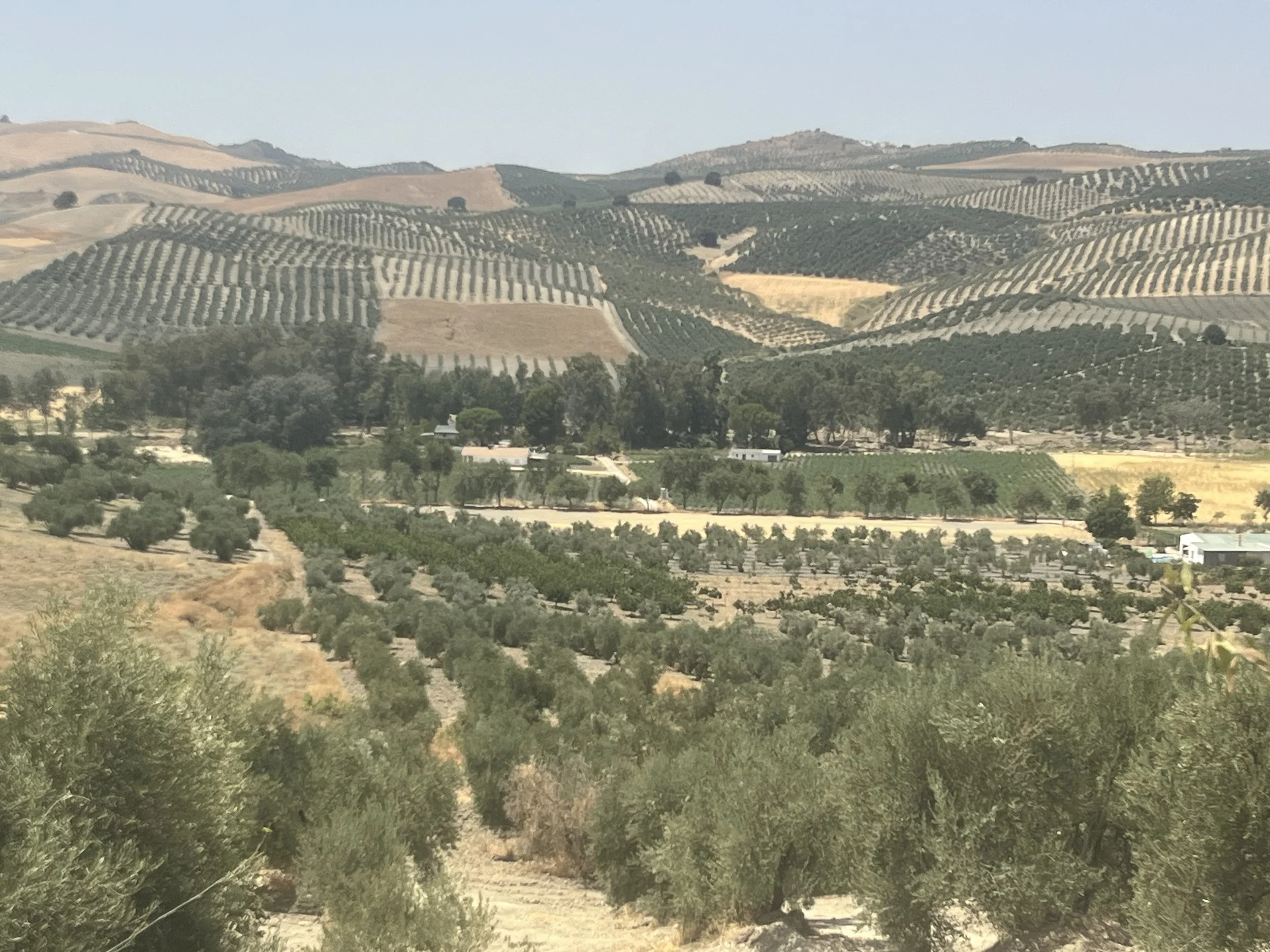
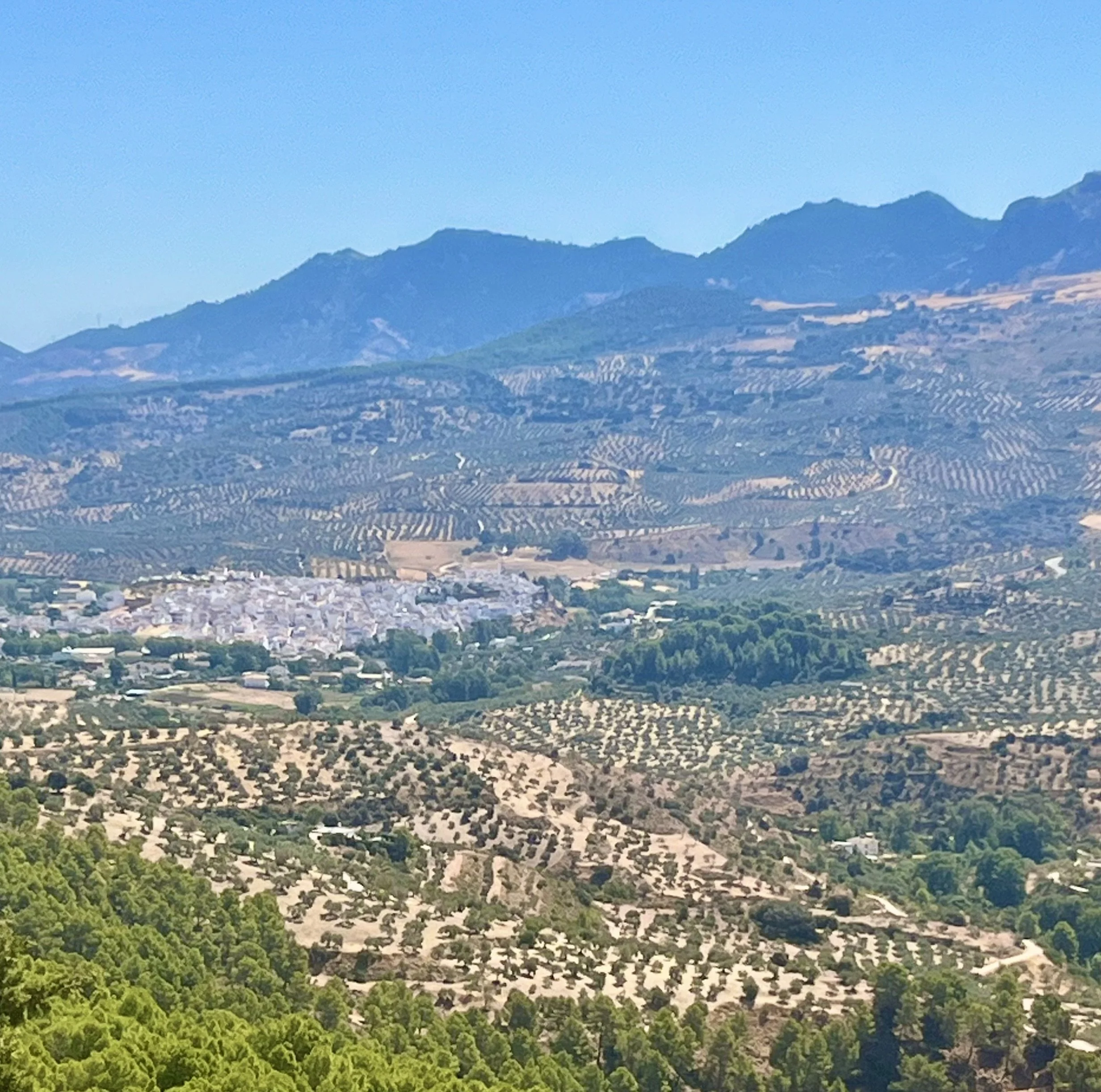
Two hours away is Jerez, passing through more exquisite white villages and masses of olive trees and also sunflowers. In fact, there are over two million olive trees in this area alone. Wild fig trees are dotted along the roadside and, since it is Sunday, it was very quiet.
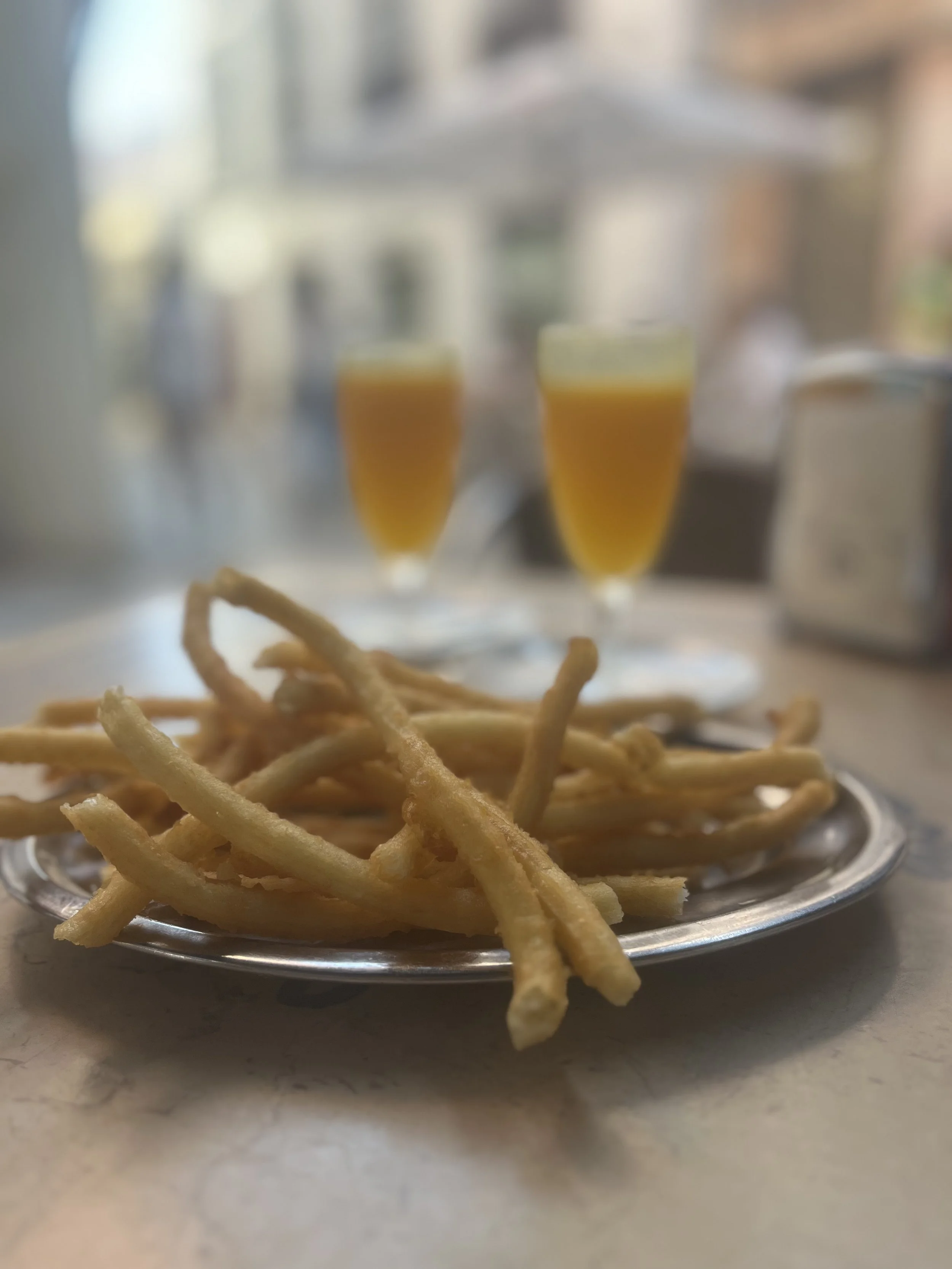
I have been to Jerez before. Bill Nichol – my Dunedin photographer who I worked with for years doing food styling and producing my two books. He lived here with Jen and learnt Spanish guitar and loved this lifestyle. So in 2014 I came to visit with my daughter Hannah and her friend Georgia. I remember the Orange juice and Churros, the wonderful guitarists, flamenco dancing and drinking Sherry in small bars.
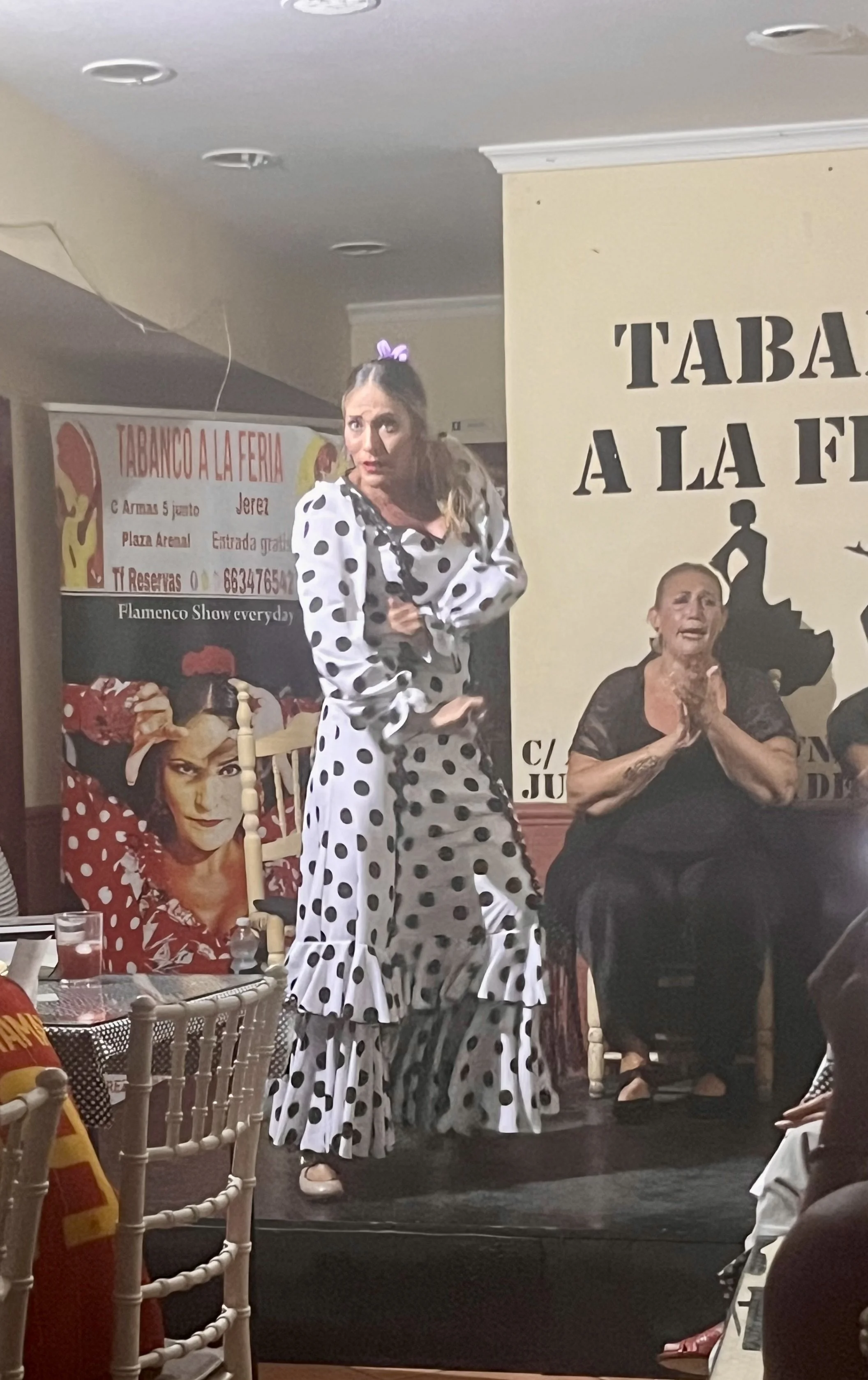
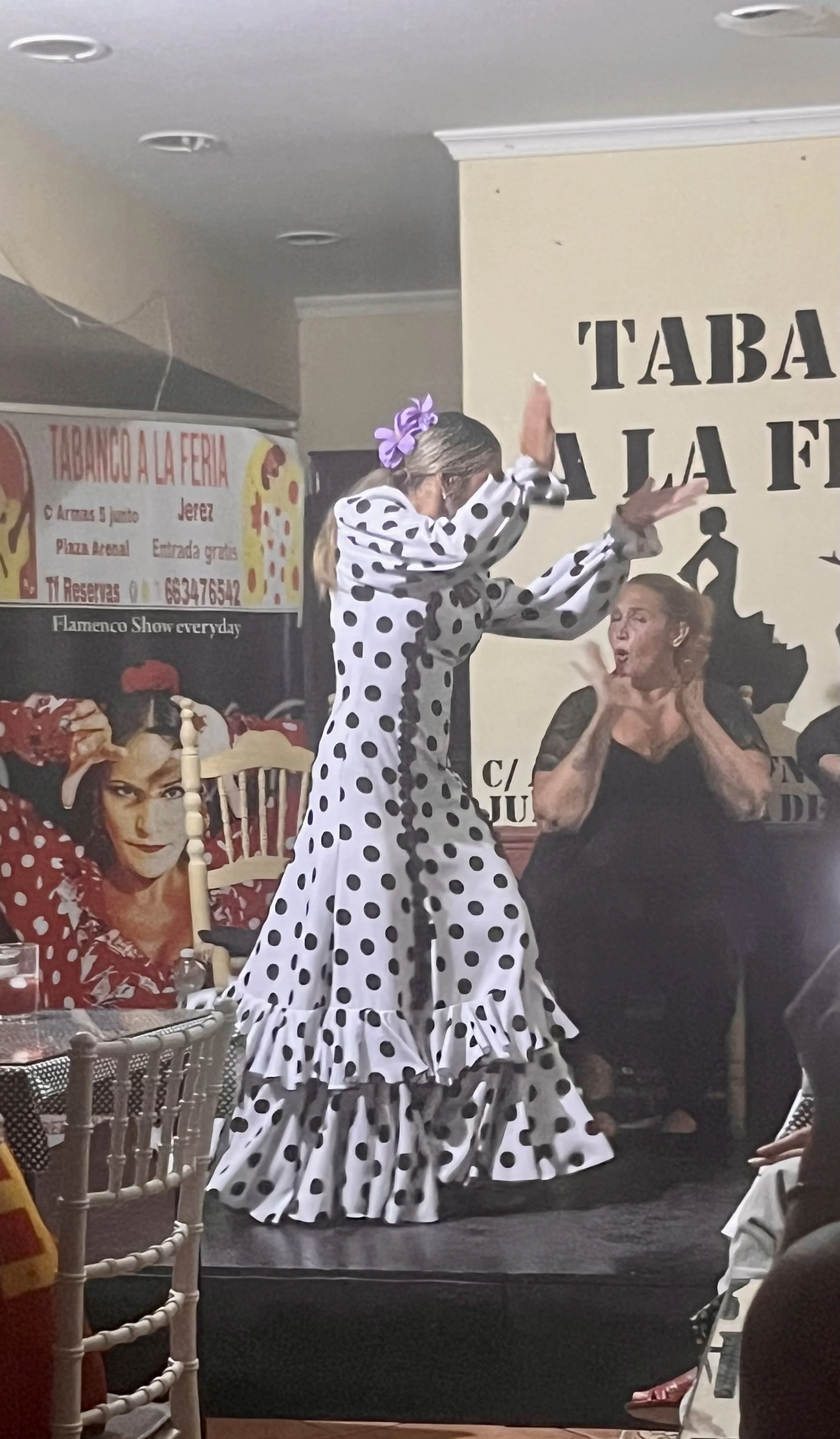
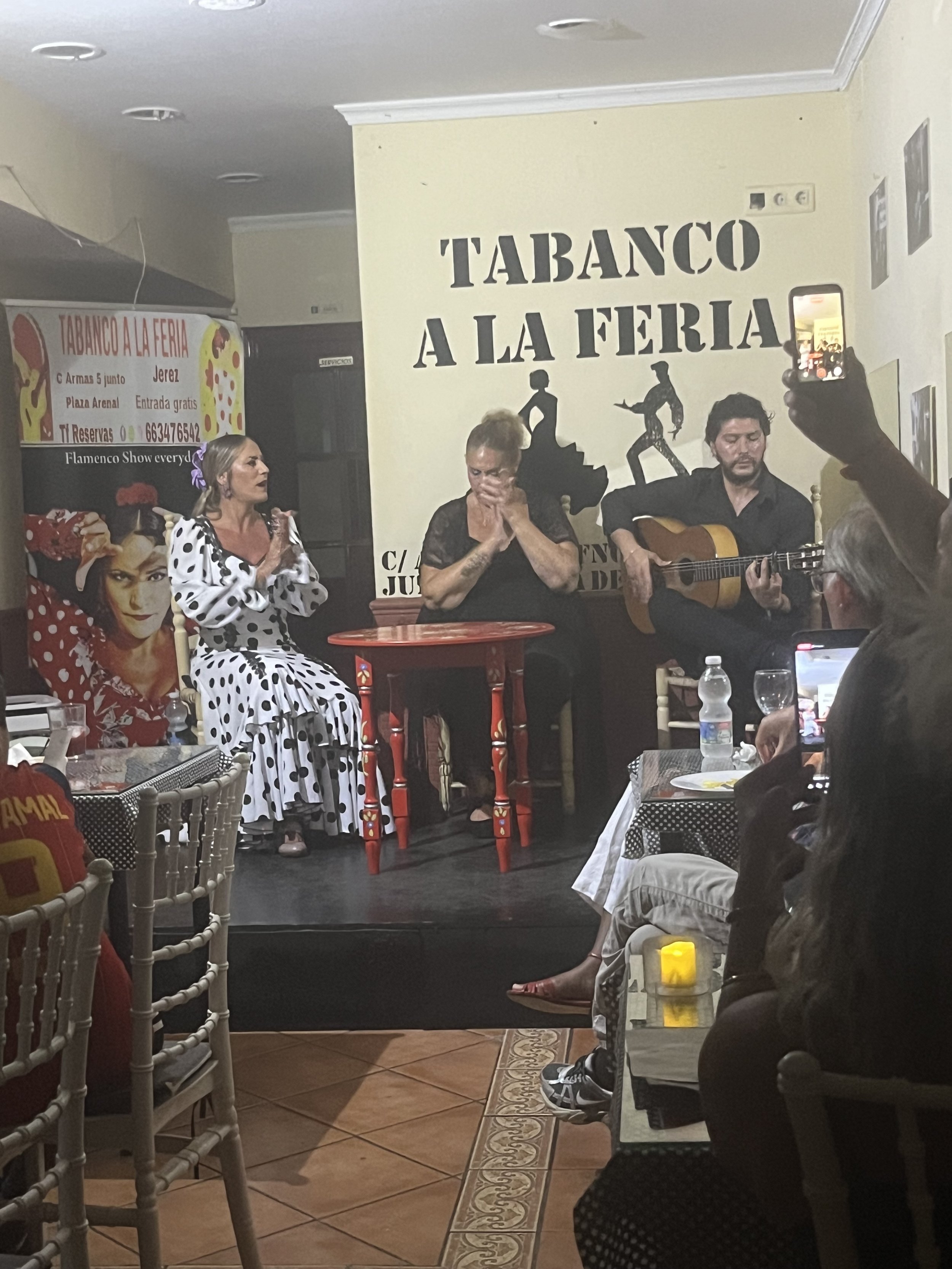
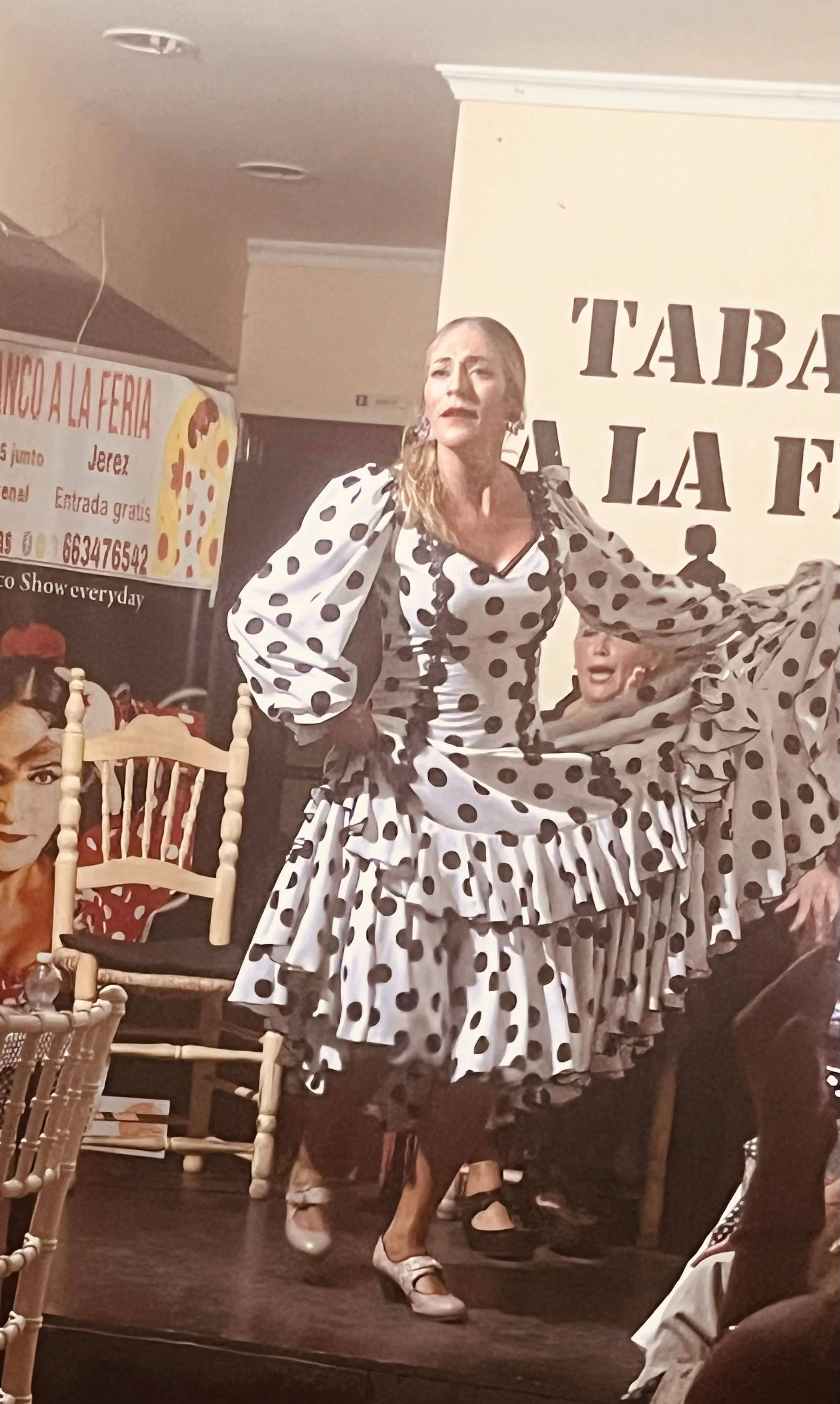
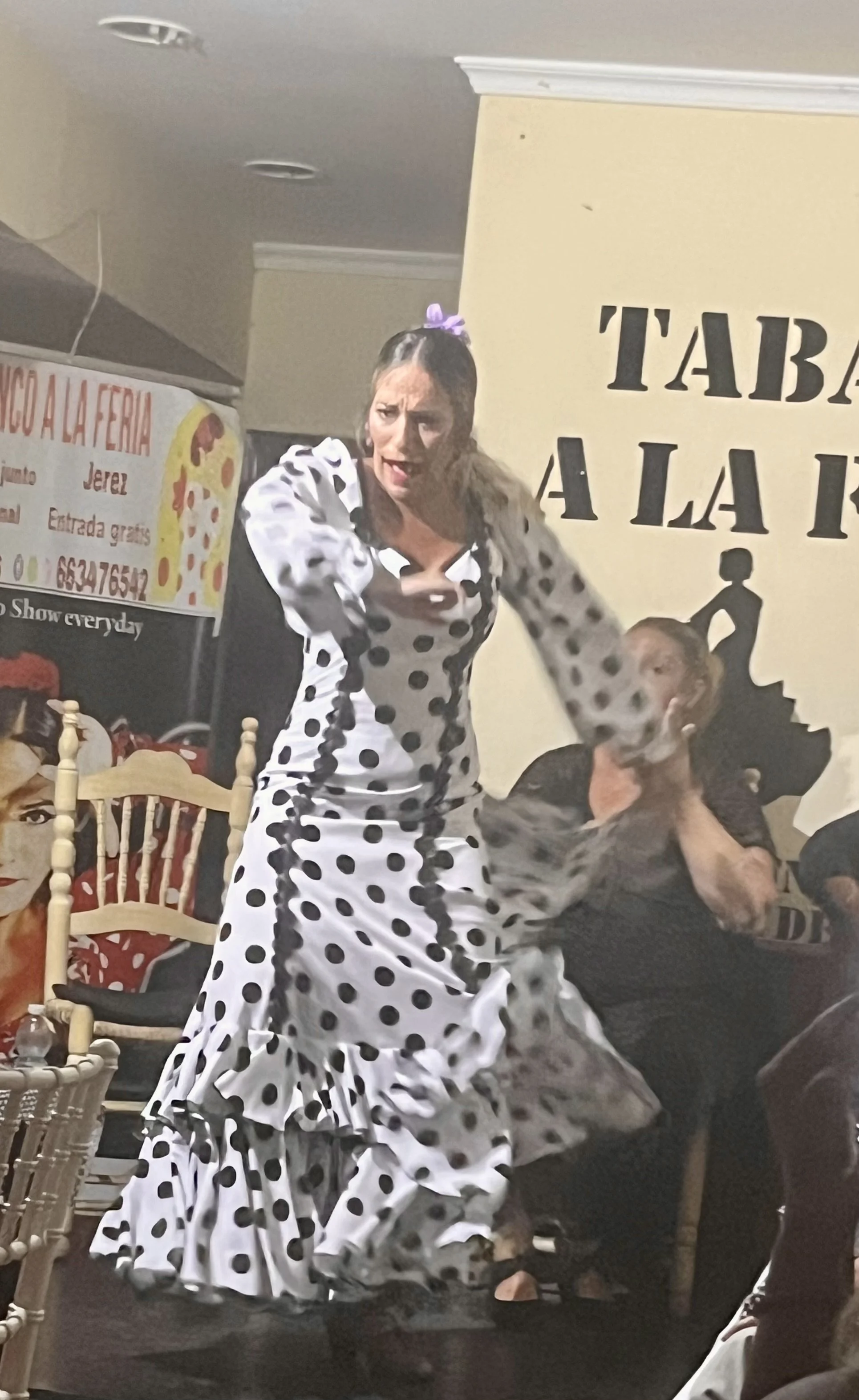
I am so glad we came back. Our first evening we managed a booking to a Tabanco for an hour of Spanish music, flamenco and palmas - the clapping that’s characteristic and provides rhythmic patterns which is part of the performance.
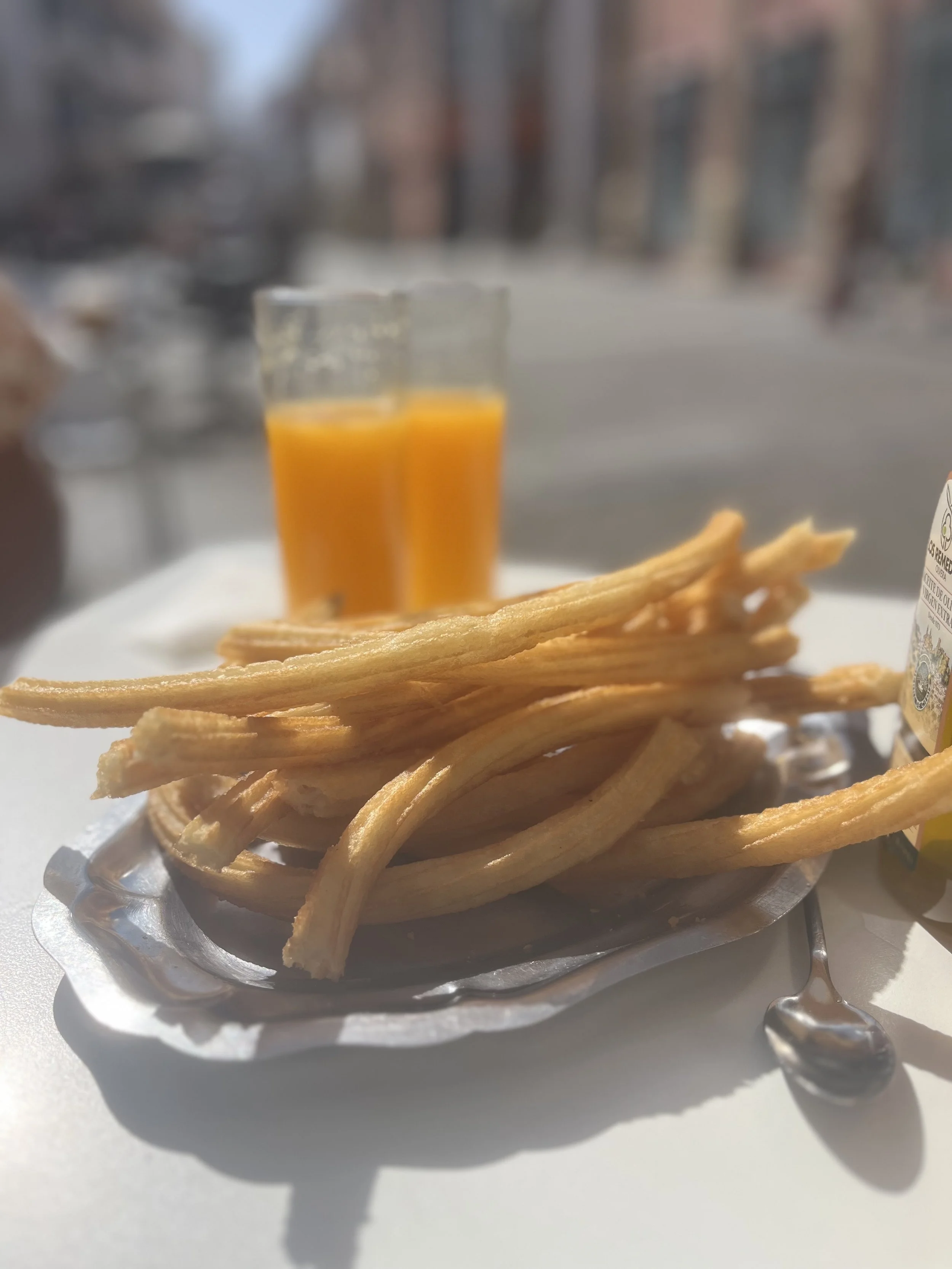
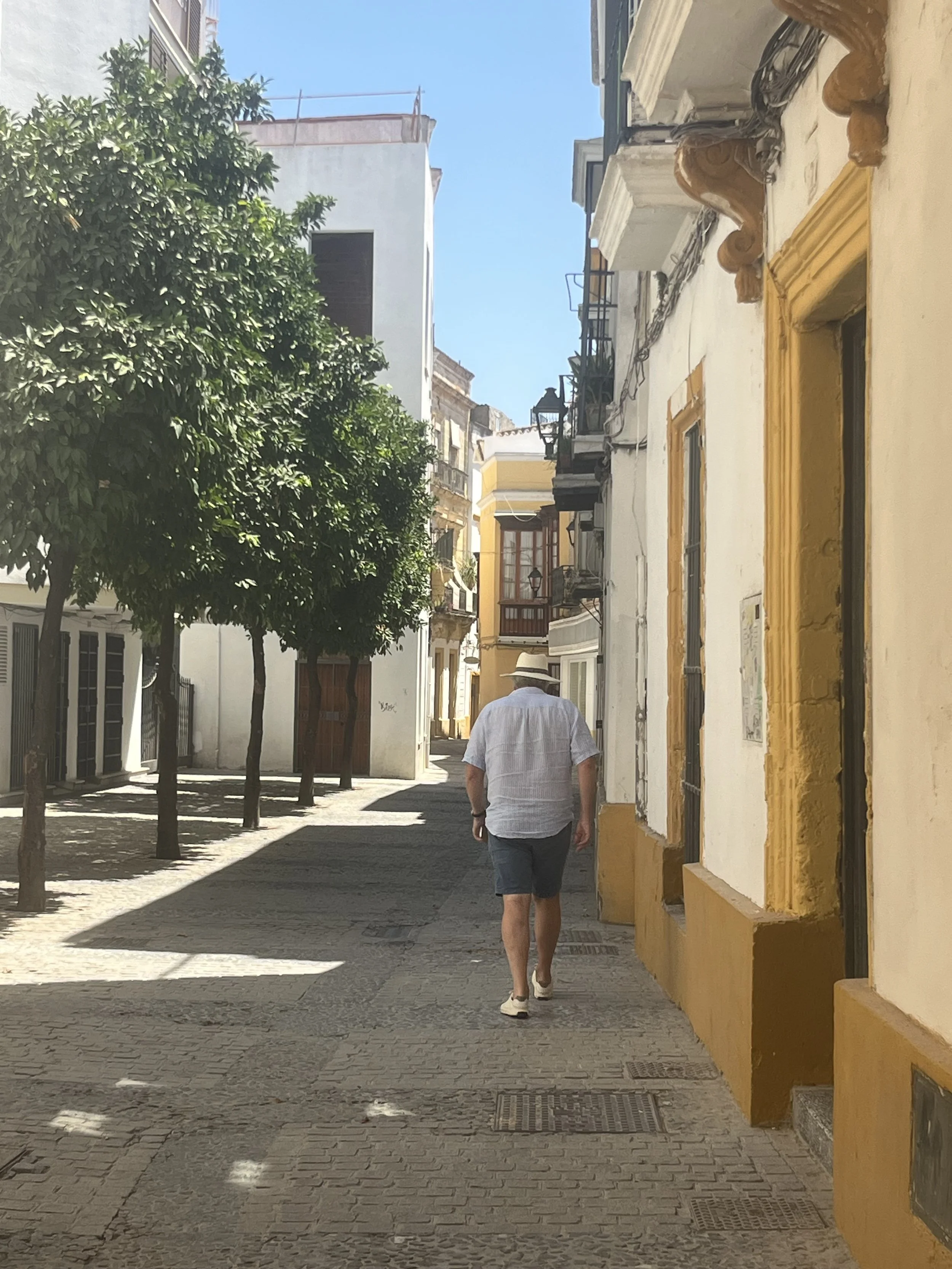
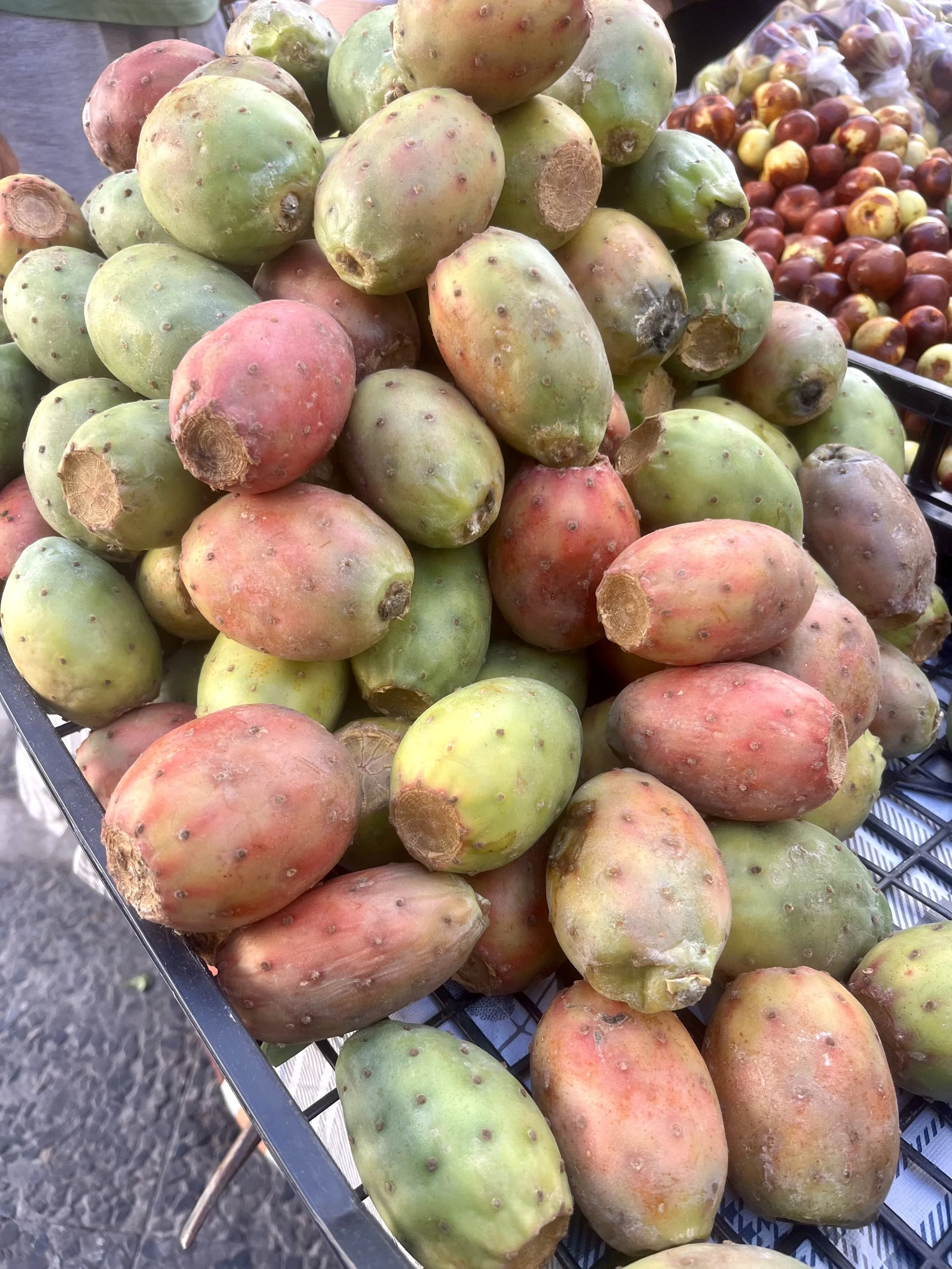
It was been mandatory to go out each morning and try and get a table at the many cafes in the Mercato plaza for orange juice and churros. The town is so busy in the mornings and tables are full of groups of older people all out chatting, women pulling trollies full of produce from the wonderful market on the Plaza and men all together socialising in the morning before the heat of the day. Its 38 deg most days and the streets are deserted until 5pm.
Jerez has a wonderful traditional feel about it and we were so glad we chose to stay here rather than at its nearby neighbour Cadiz. This is also an historic port city, with its own iconic narrow streets and wonderful beach. However, two of the biggest cruise ships I have ever seen were parked up and the obvious crowding that they create makes the atmosphere very different.
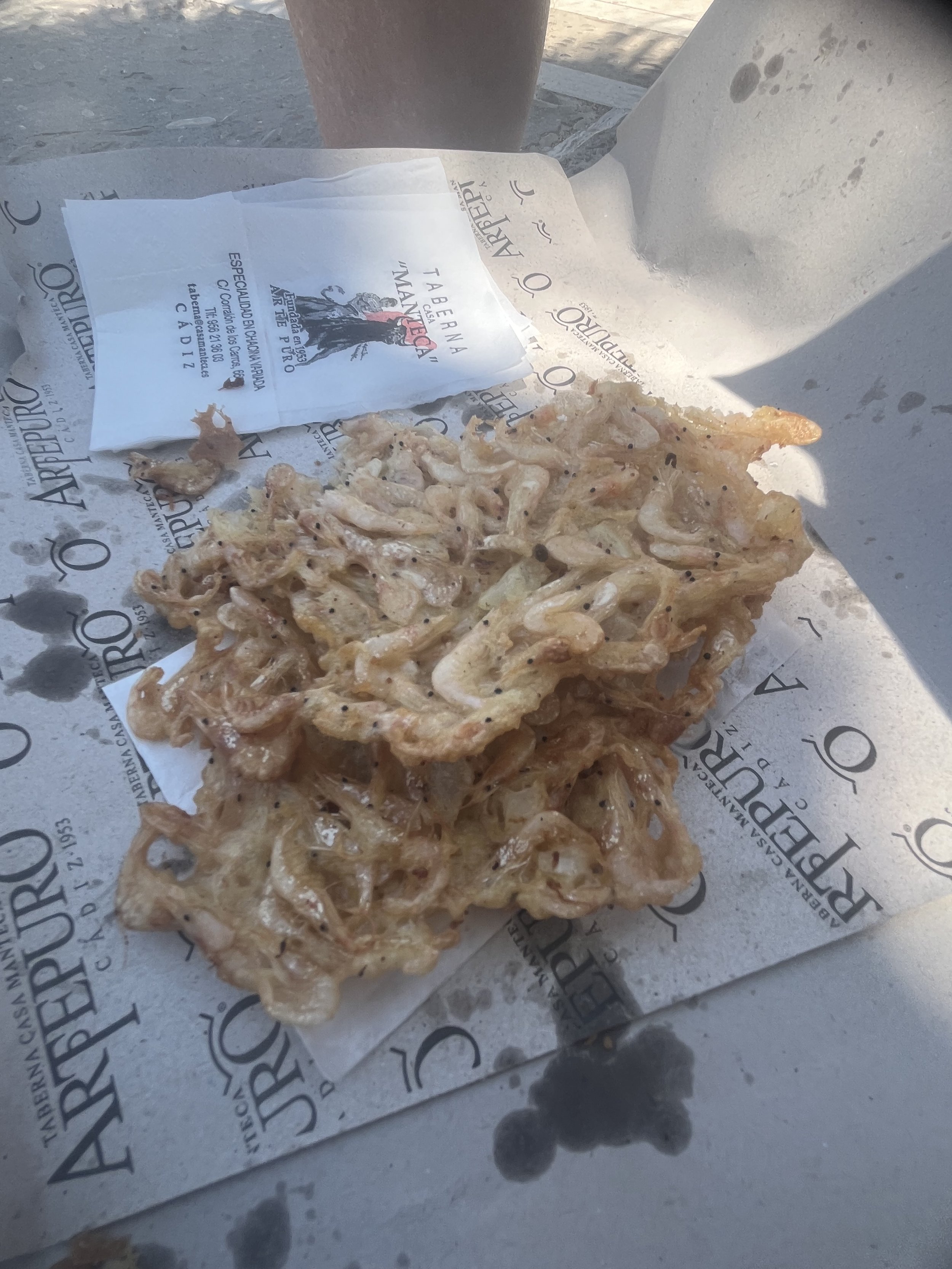
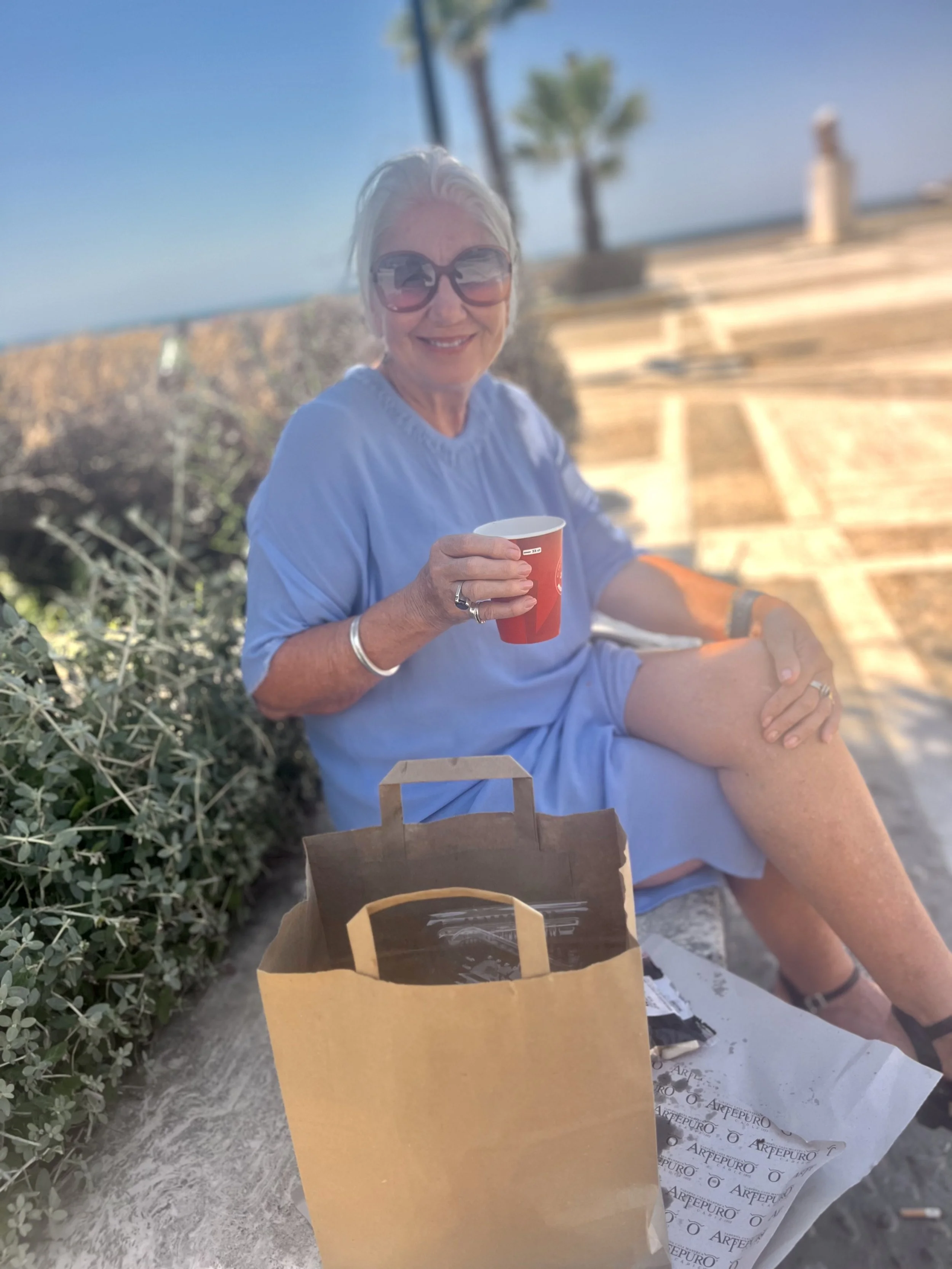
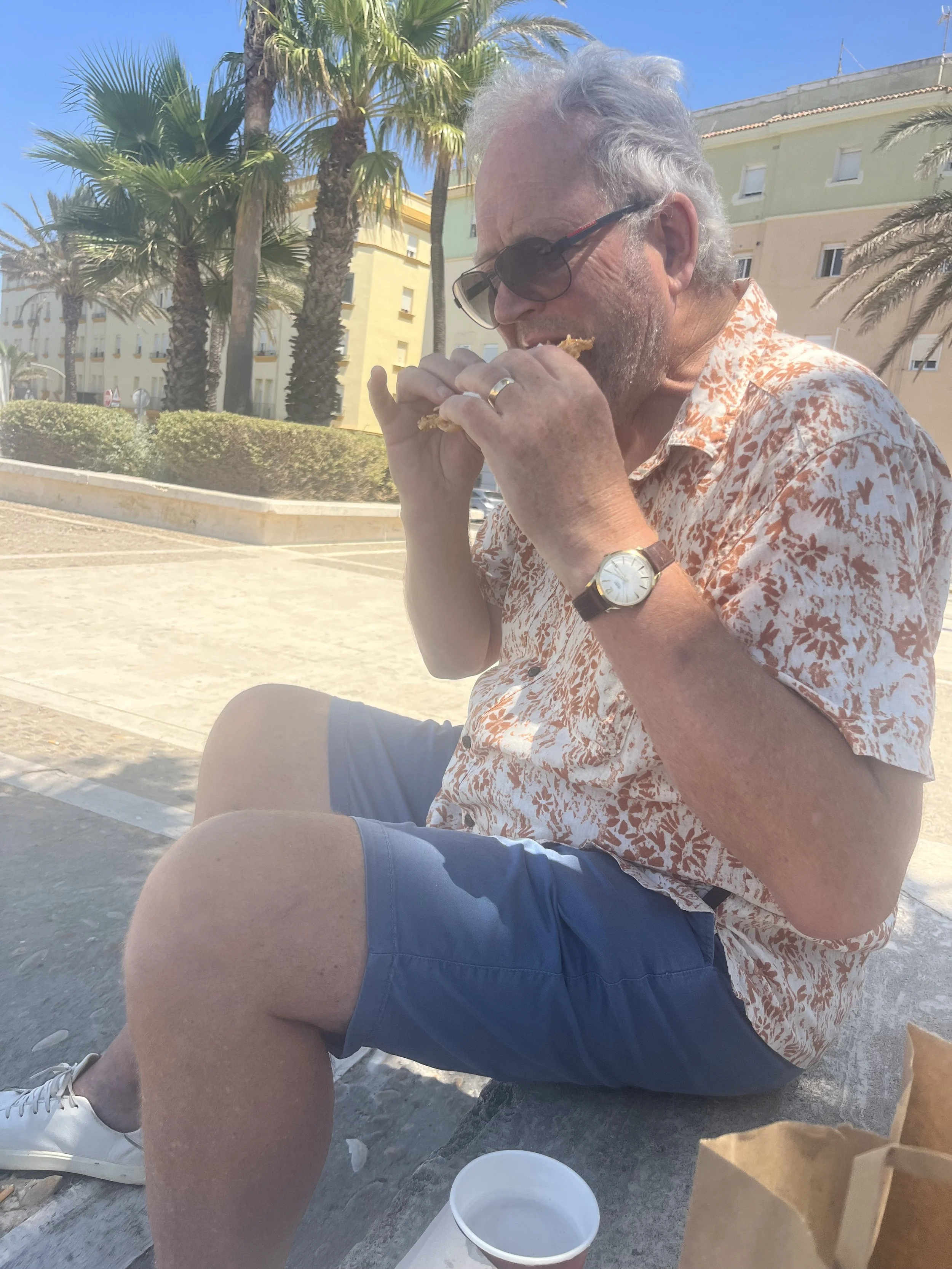
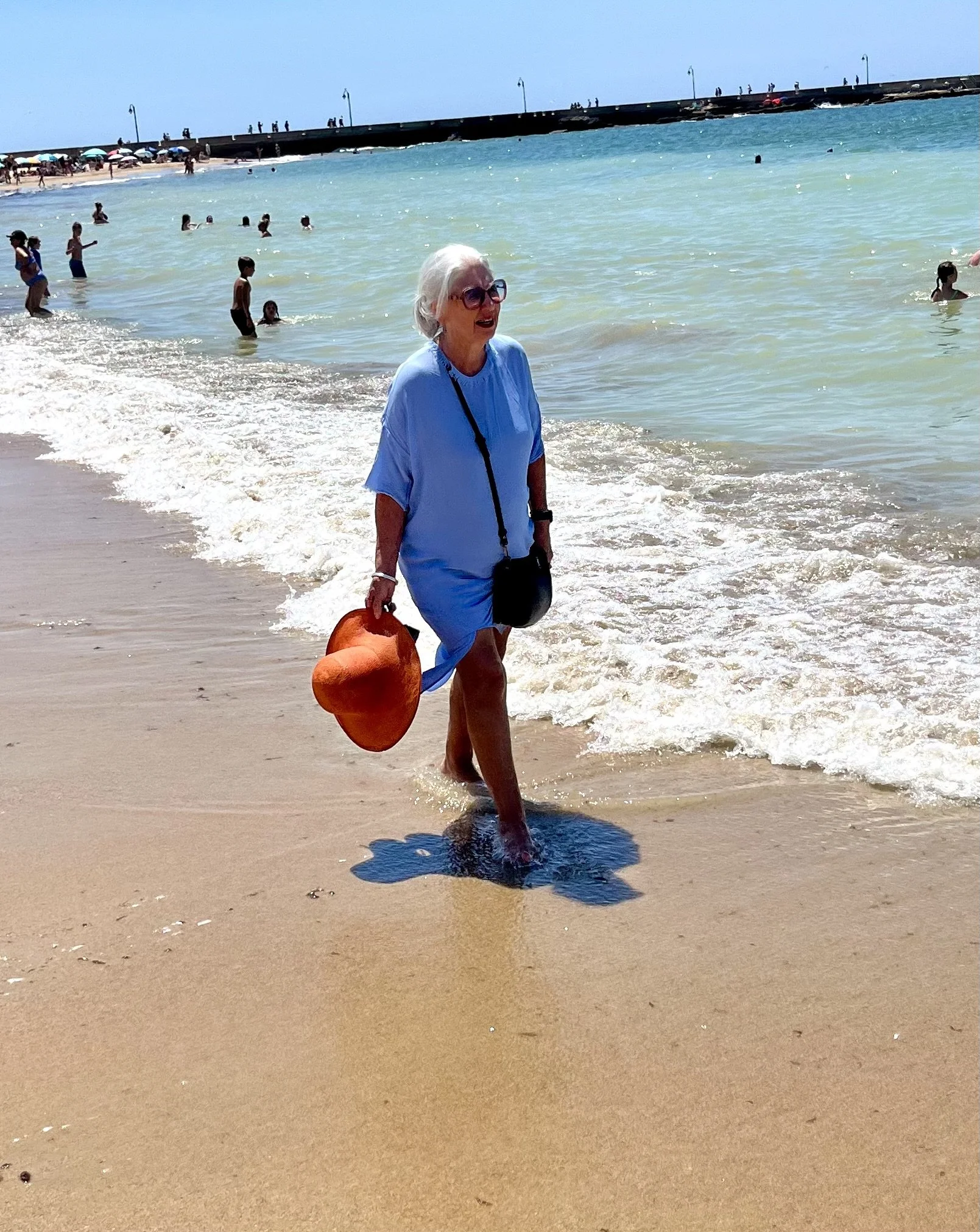
We did have a great picnic lunch by the beach, since Bills reccommended tapas bar Mantica was overflowing . However they did to takewaways !!! Two beers, 2 of Cádiz’s signature shrimp patties which are called ‘tortillitas de camarones ‘ and 2 chicharrones de Cádiz which are thinly sliced pieces of seasoned pork. Perfect out of a paper bag, followed by a walk along the beach.
The lifestyle here is all centred around the heat and the evenings in Jerez are once again full of people - shops are open until 8 and dining doesn’t get into full swing until 9.30 -10 and goes on well after midnight. Families are out with little children and the elderly. But, what a joy to see the Spanish lifestyle which is so different from ours in New Zealand.
We felt like ‘ Mad dogs and Englishmen ‘ walking through the narrow streets at 2.30 in the afternoon ,by ourselves in the searing heat, after attending the rather wonderful Andalusian horse show – where the highly trained magnificent horses literally dance and perform in strict unison. With riders dressed in regional costumes, it was impressive.
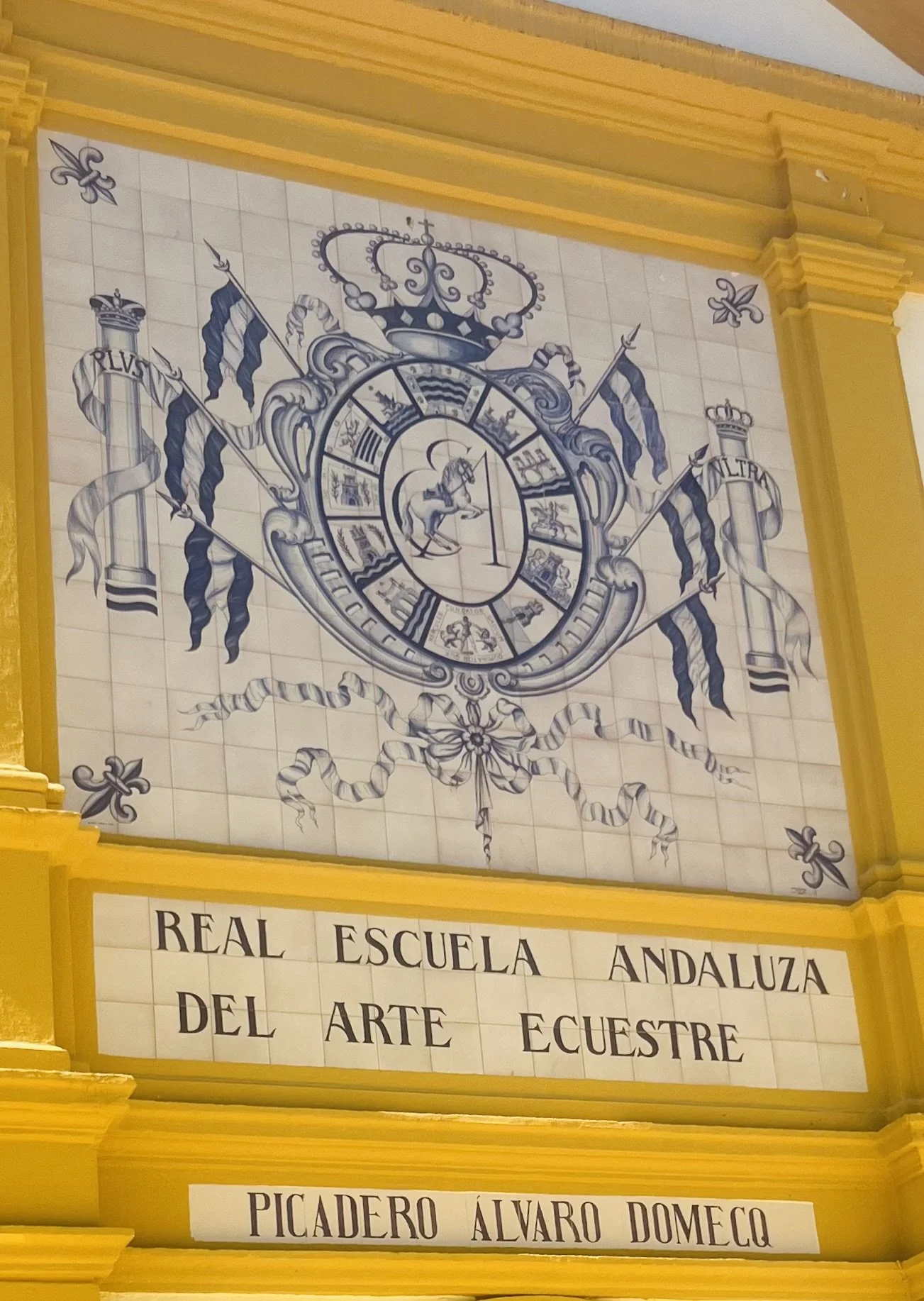
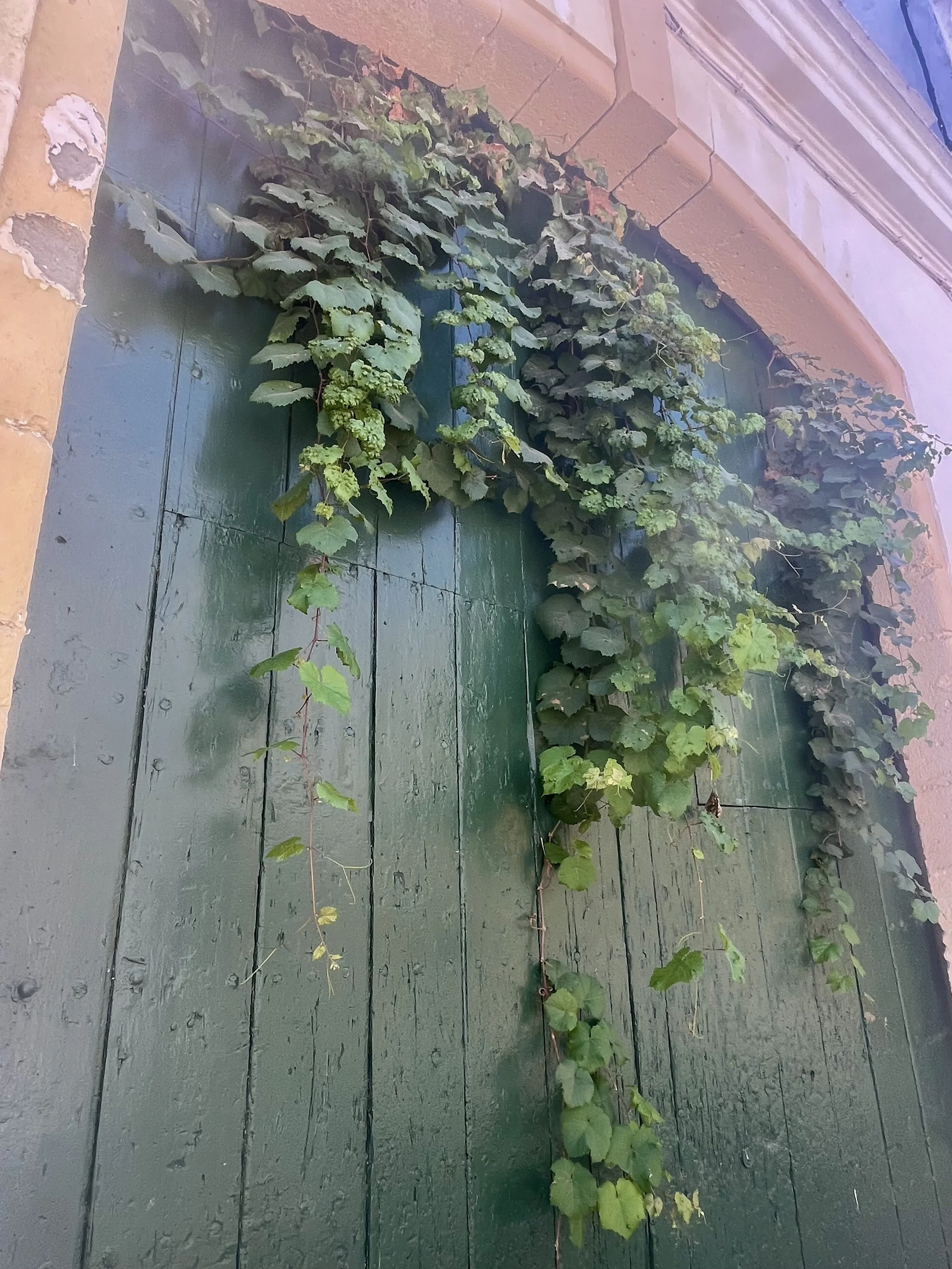
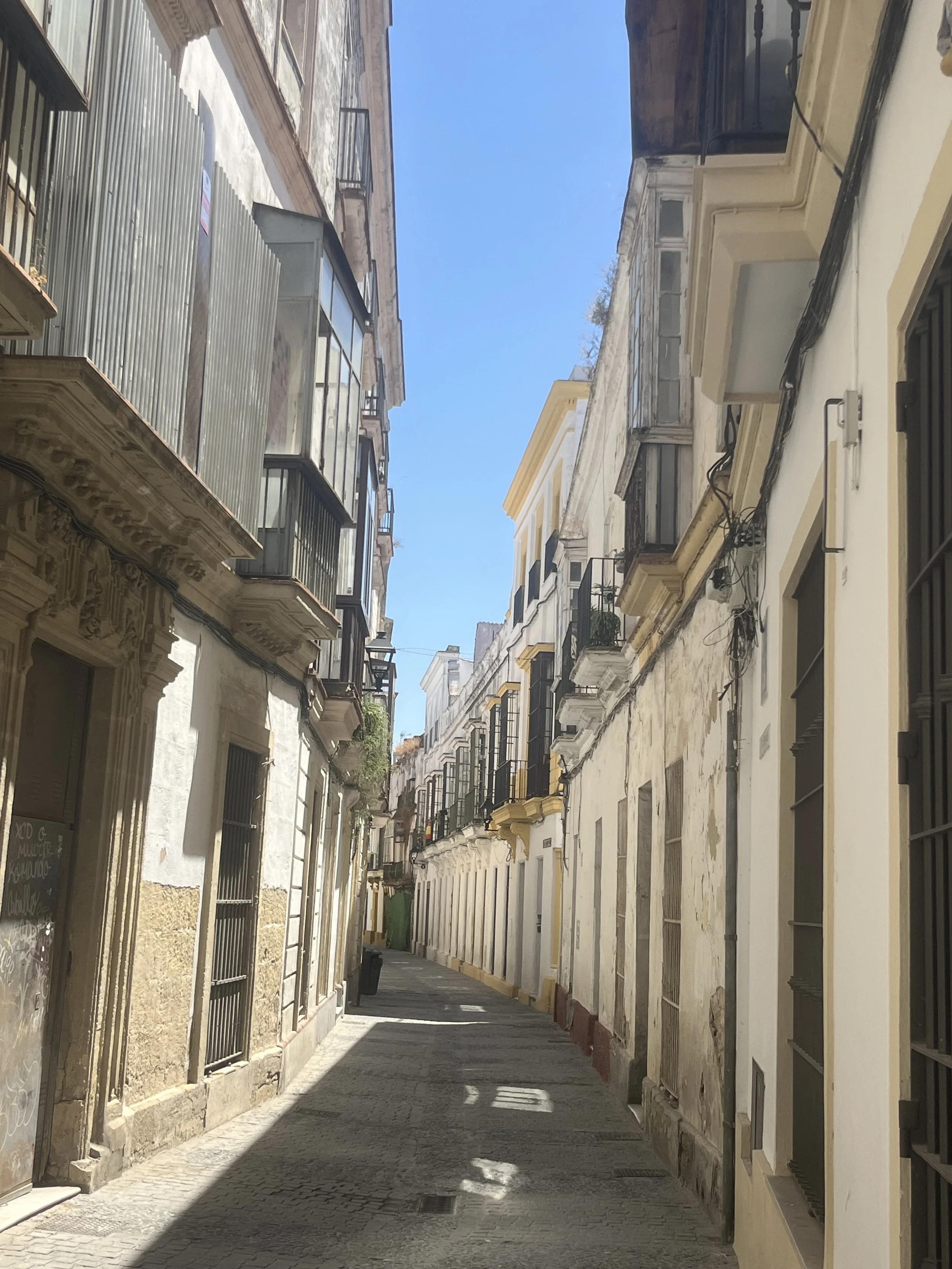
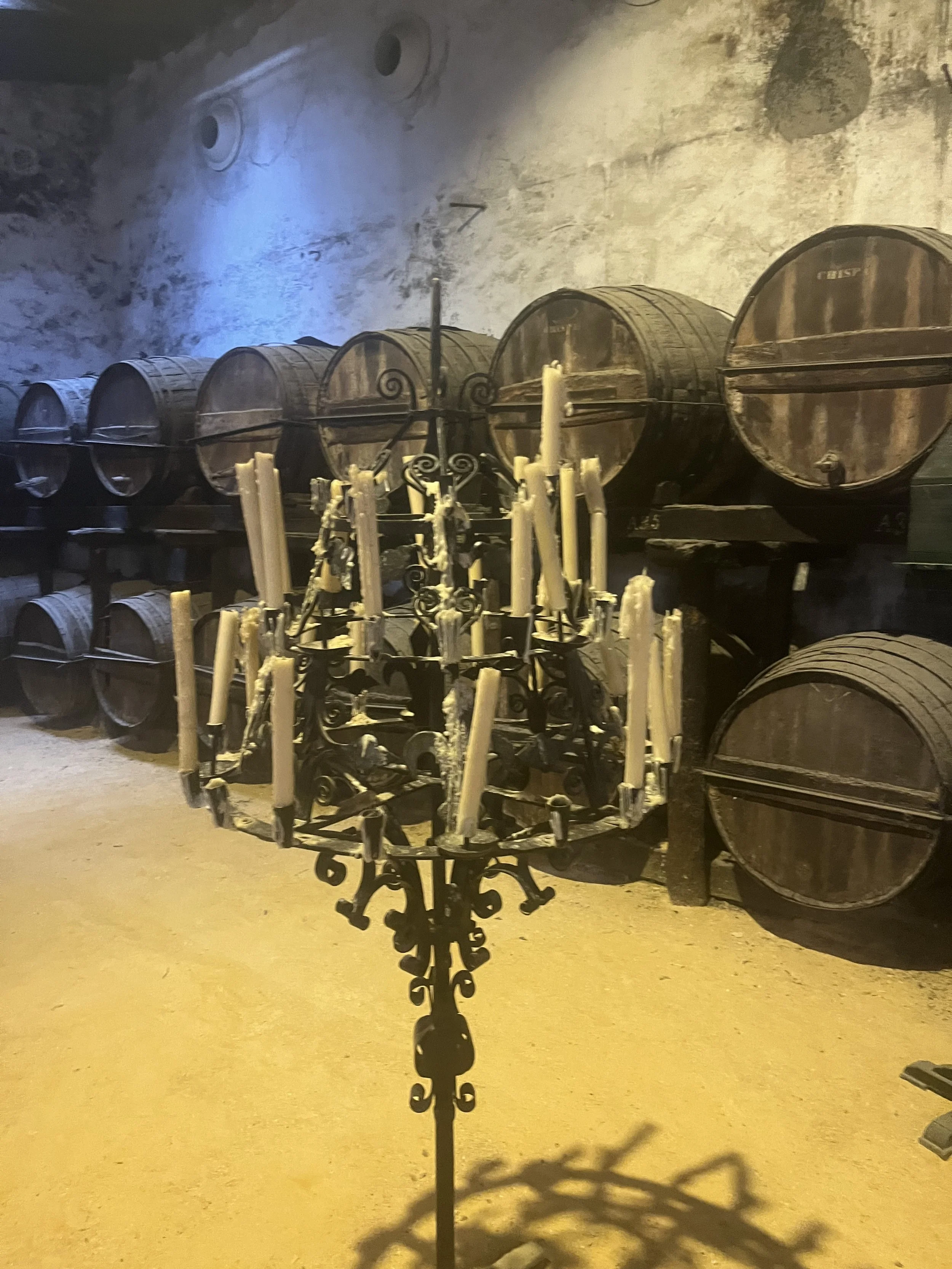
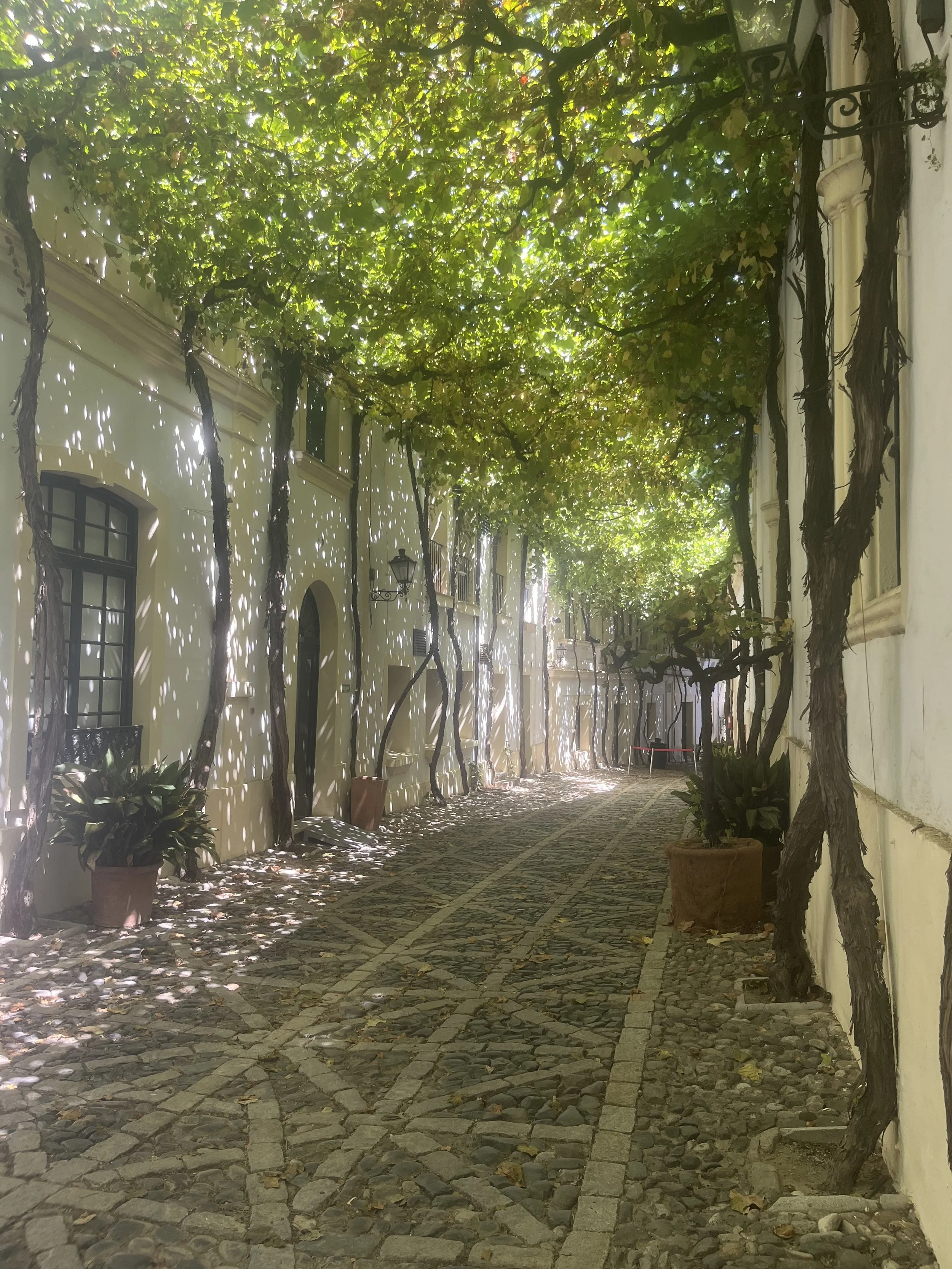
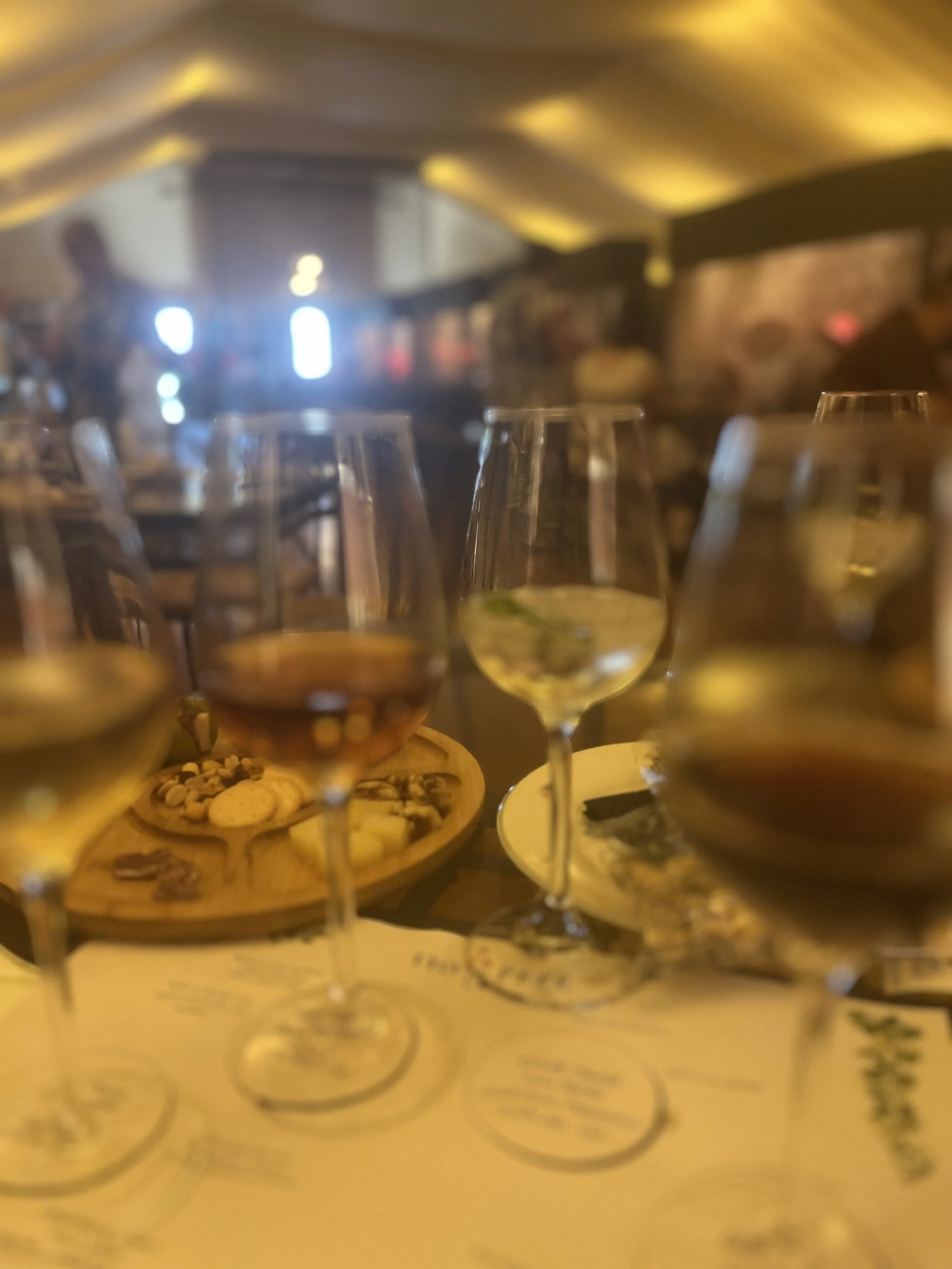
Sherry is part of the DNA of Jerez -although, the protected production area includes Jerez and surrounding towns. There are many Sherry producers - bodegas, in the Jerez Sherry region to visit . We chose one of the most famous and 3rd oldest called - González Byass famous for Tio Pepe. It was an interesting walk through the vast cathedral like vaults storing the sherry and of course ending with a tasting of 4 sherry’s - Fino, Amontillado, a cream sherry and the delicious thick syrupy raisin flavoured Pedro Ximénez
Jerez is so famous for the combination of its Sherry, flamenco and Andalusian horses. And we think we ticked those boxes. Along with two fun local restaurants and mornings with orange juice , churros and coffee we have loved it here.
XXX Judith