
The Final Chapter:Our Spanish Journey
I have generally been pretty pleased with my driving in Spain, and the distances between Granada, Ojén, Ronda, Jerez, Seville and Córdoba have been a maximum of two hours, although much of that was on highways travelling at 120 km per hour. However, the extremely narrow streets in Seville almost tested my limits.
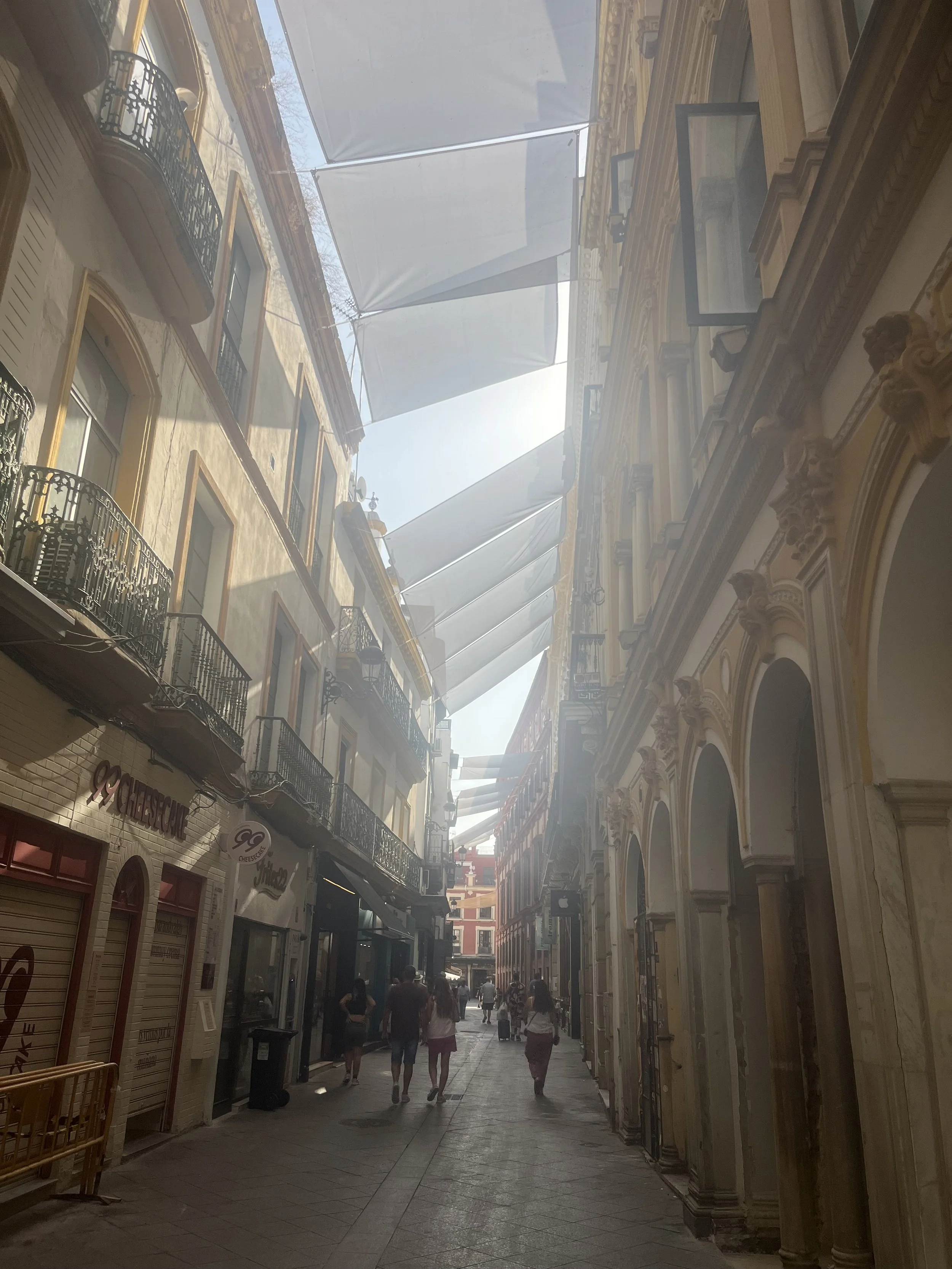
Unbeknownst to us, the street outside our hotel was under repair. Of course, Mr Google didn’t know that, and I swear, as we seemed to go around in circles and he kept taking us back to the same spot, we had to breathe in on some corners and often do a three-point turn. We were then outdone by some of the parking buildings, which are underground, where the parking spaces are incredibly narrow. Phil usually had to get out before I squeezed the car in, since both doors couldn’t open. It was always with great relief that we left the car in the car park and walked.
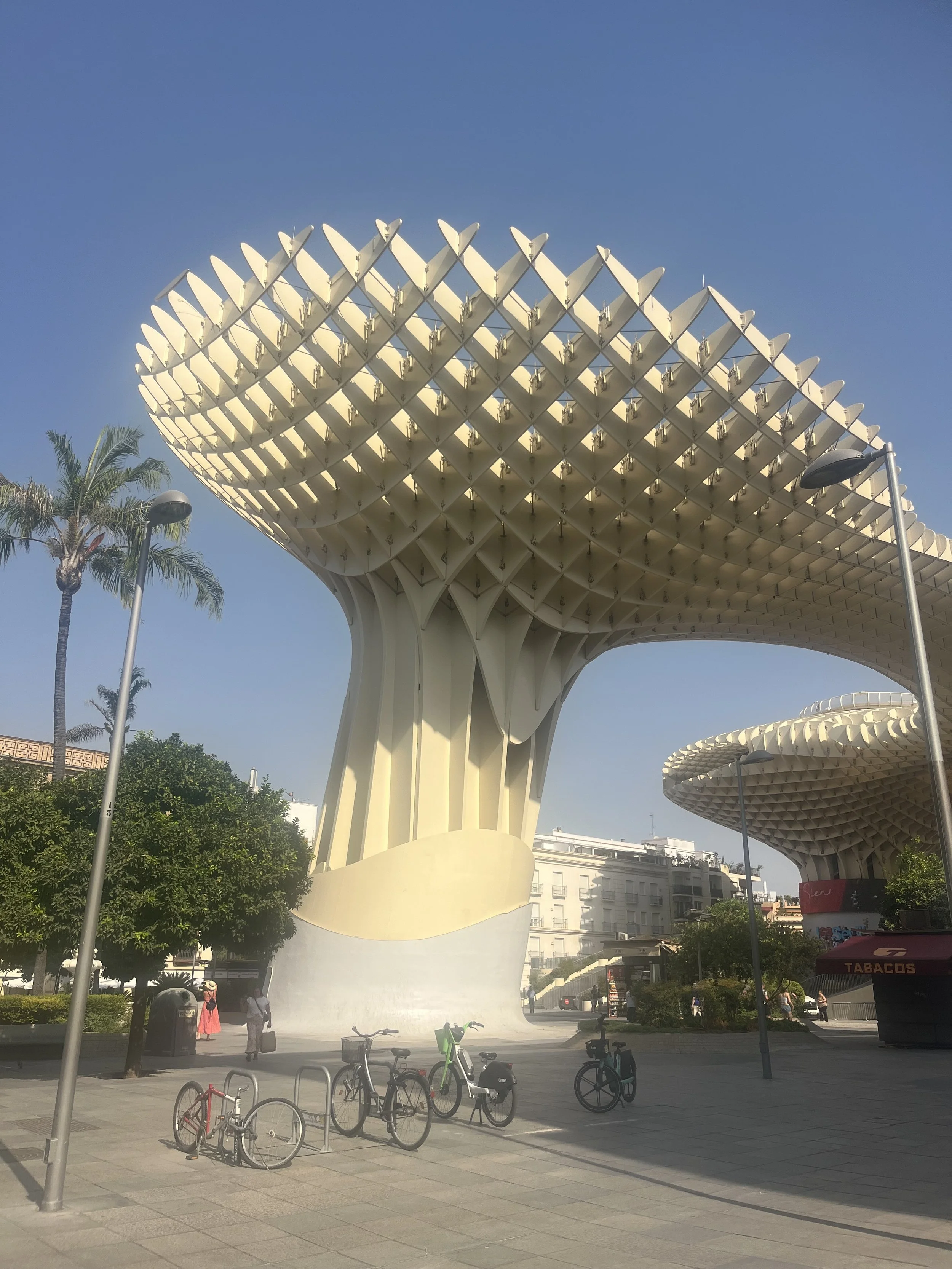
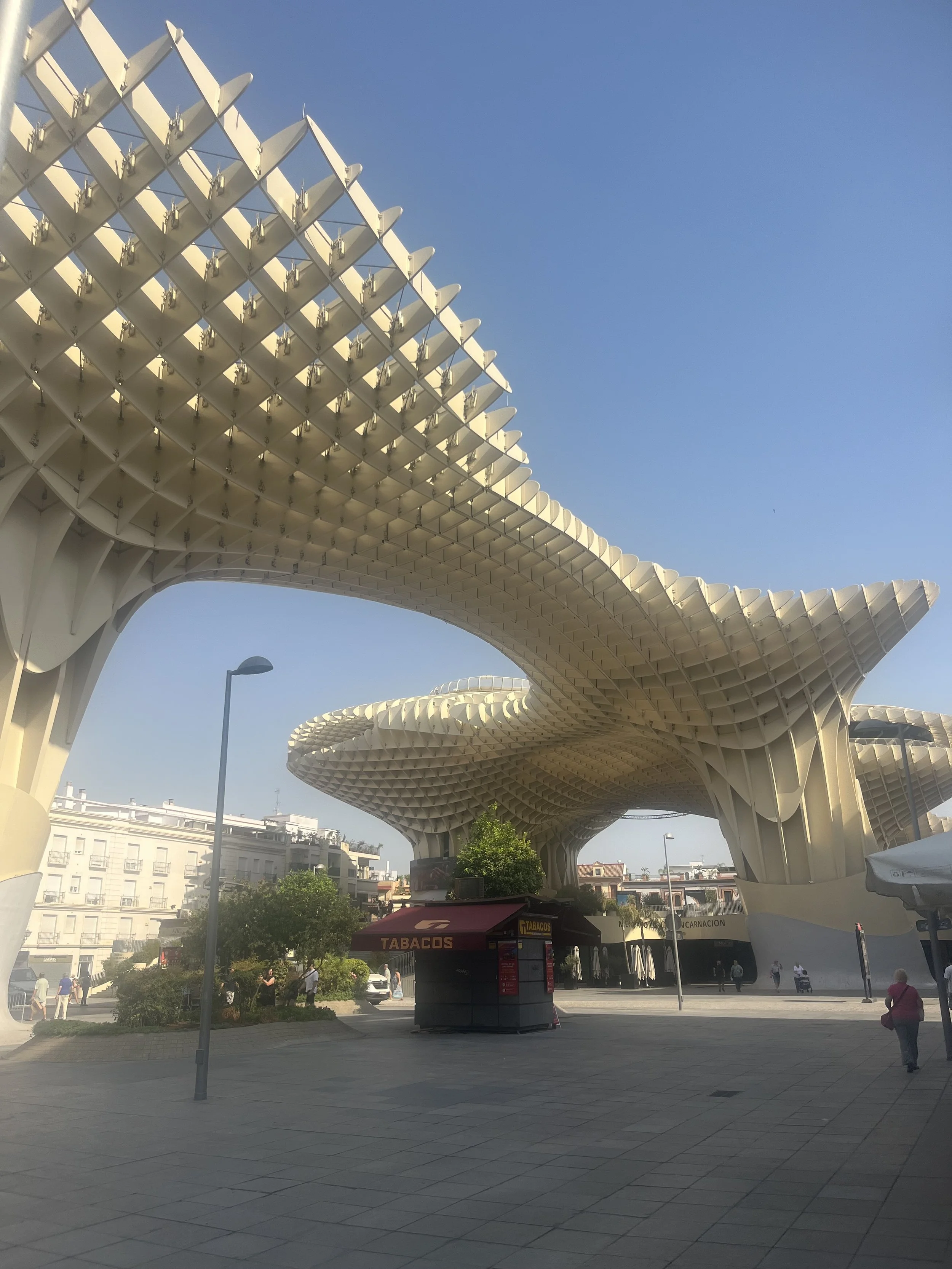
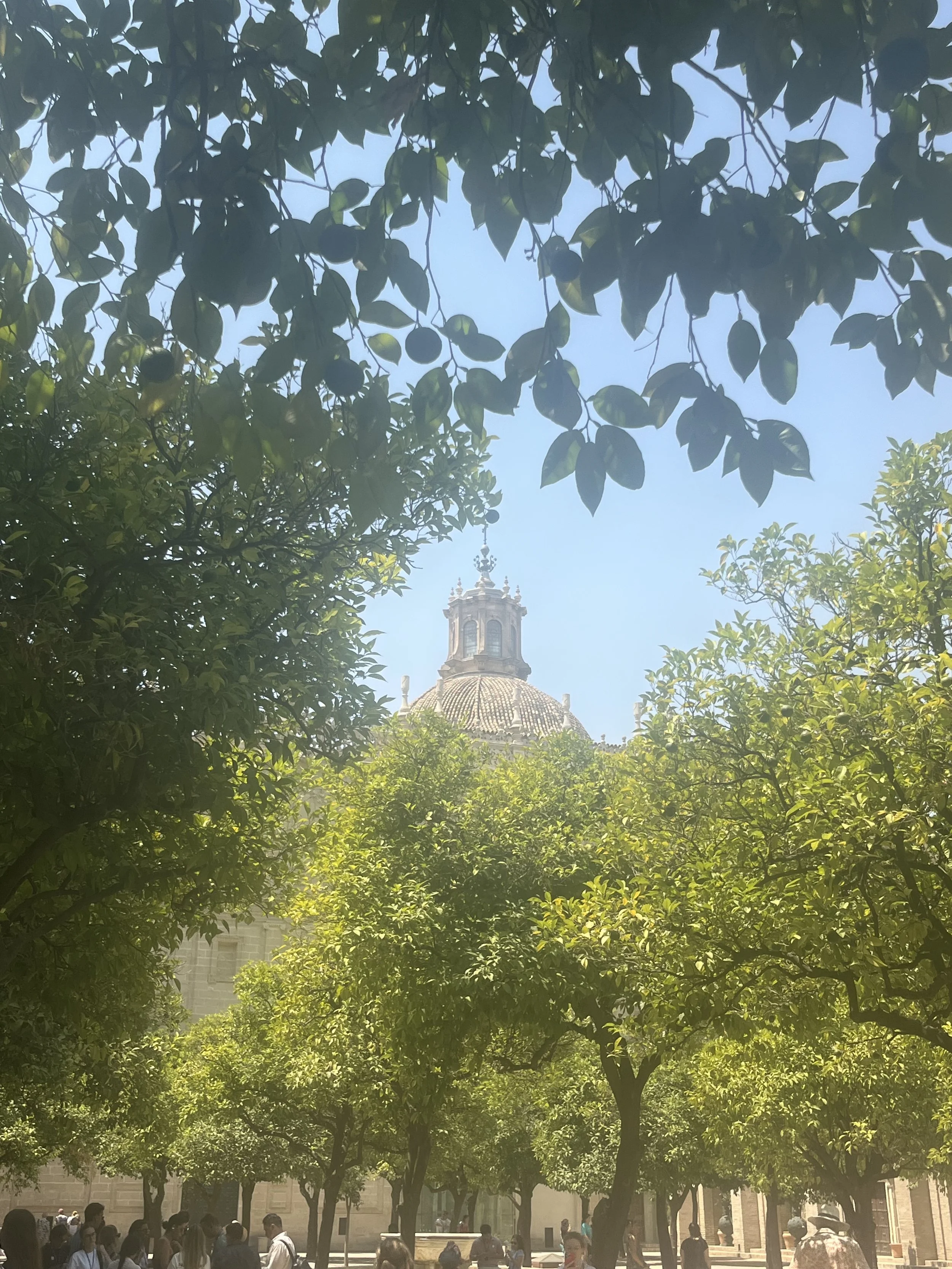
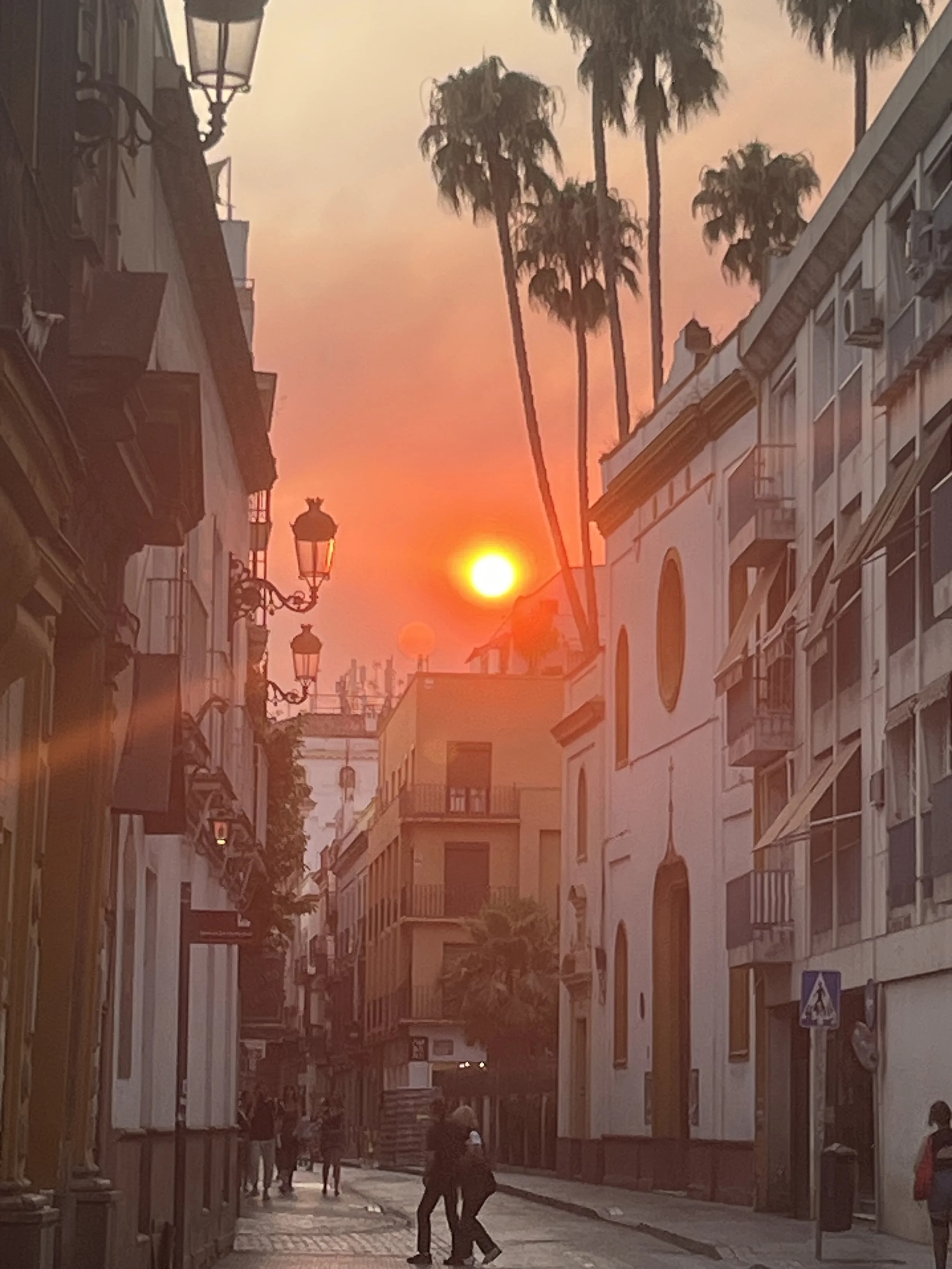
Seville was amazing, and the hotel gave us some excellent suggestions for dinners. On the whole, we never have breakfast and instead stop for a coffee and fresh orange juice later in the morning. We staggered our must-see visits, since walking in 35-degree heat was tough and it was no trouble exceeding 10,000 steps a day.Walking to the cathedral on our first day took us past the ingenious mushroom, Las Setas de Sevilla. Built above Roman ruins, the extraordinary mushroom-shaped structure provides shade and shelter within a large open space and was obviously a favourite place for many people to sit and relax amongst the vast containers of trees and lush plantings.
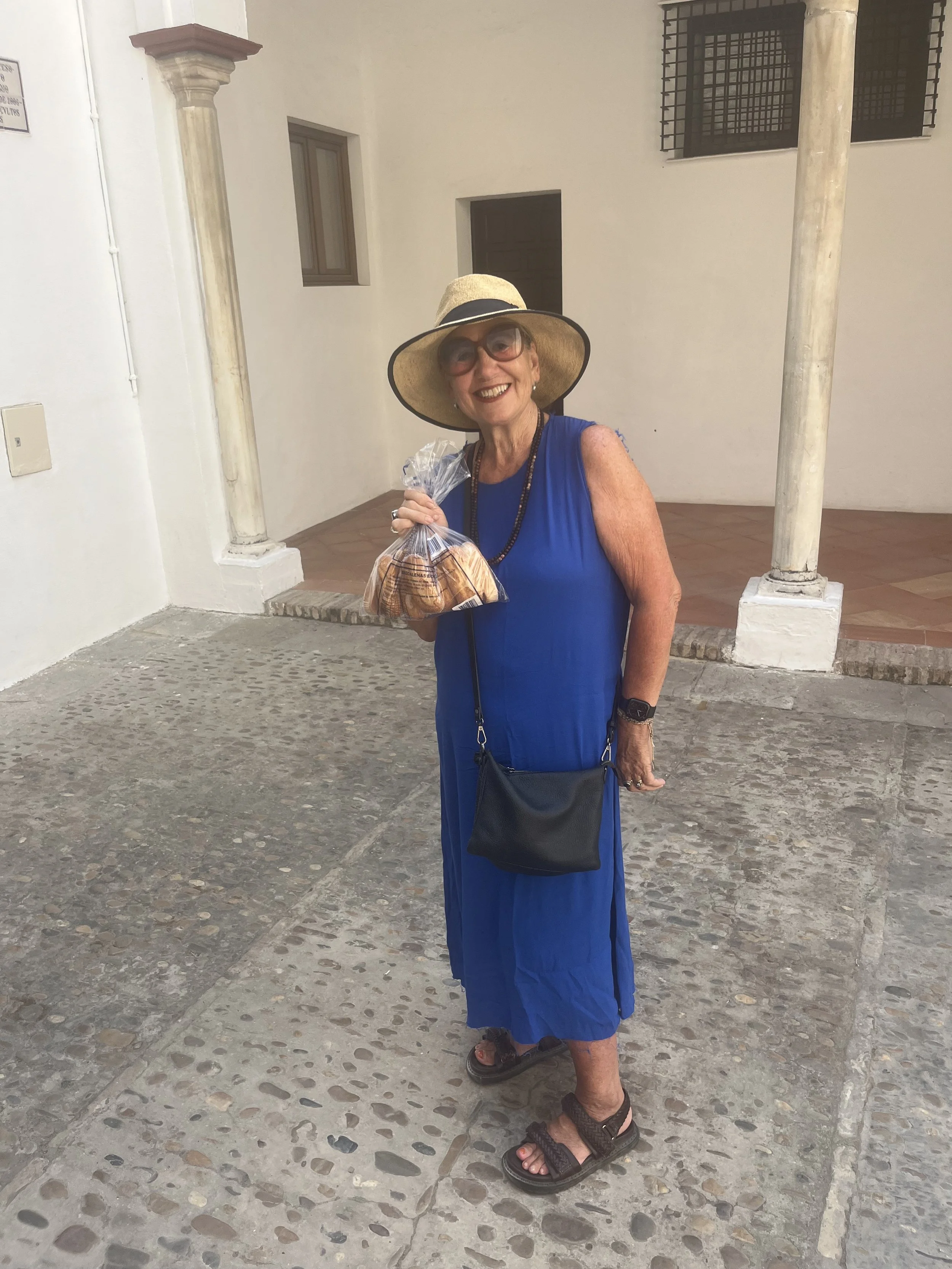
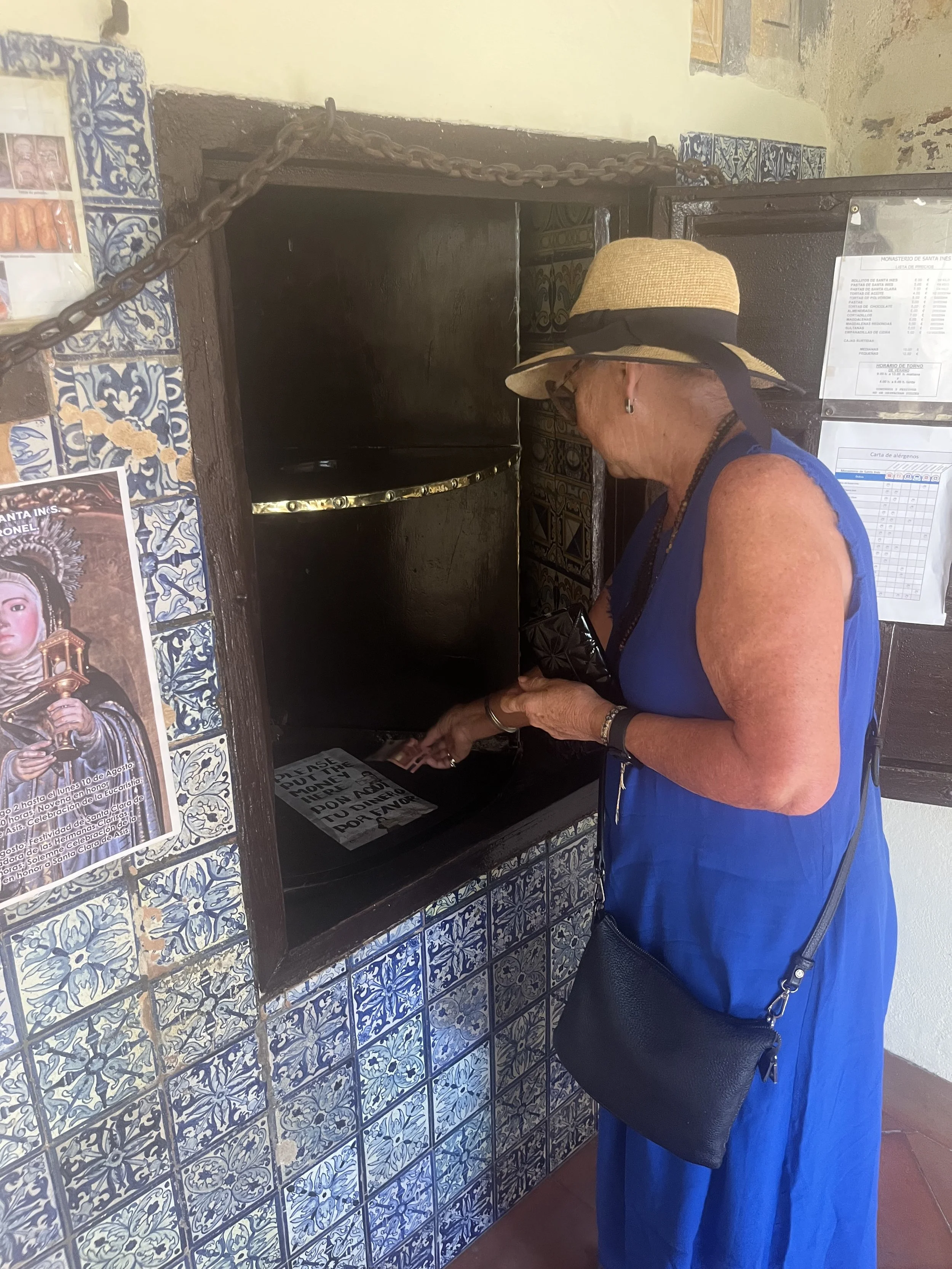
Coming acrss The Convento de San Leandro was one of Seville’s quieter treasures. It is a historic cloistered convent of Augustinian nuns, For centuroes they have been baking and making sweets . First you ring and bell, then buying is rather charming: You firrst choose from a selection off a board, then purchase through the turno, a rotating wooden cabinet or serving hatch that allows the nuns to sell their sweets without breaking the convent's tradition of enclosure.
We have been to many cathedrals and huge churches that are vast spaces full of towering columns soaring up to vaulted ceilings and voluminous rooftops. Many are Gothic, lots are full of Baroque grandeur and some are austere, but all have splendour and magnificence in their size alone.
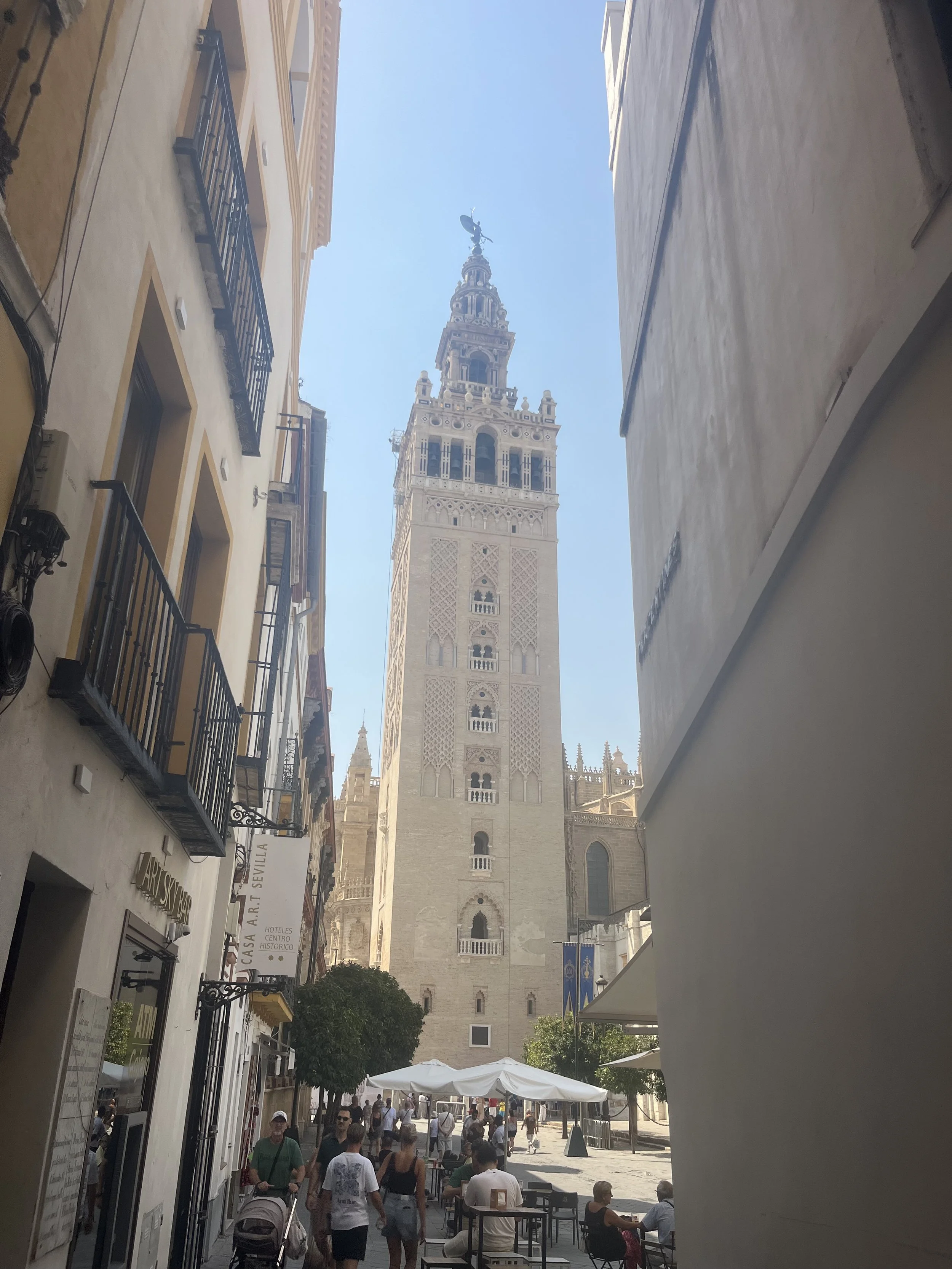
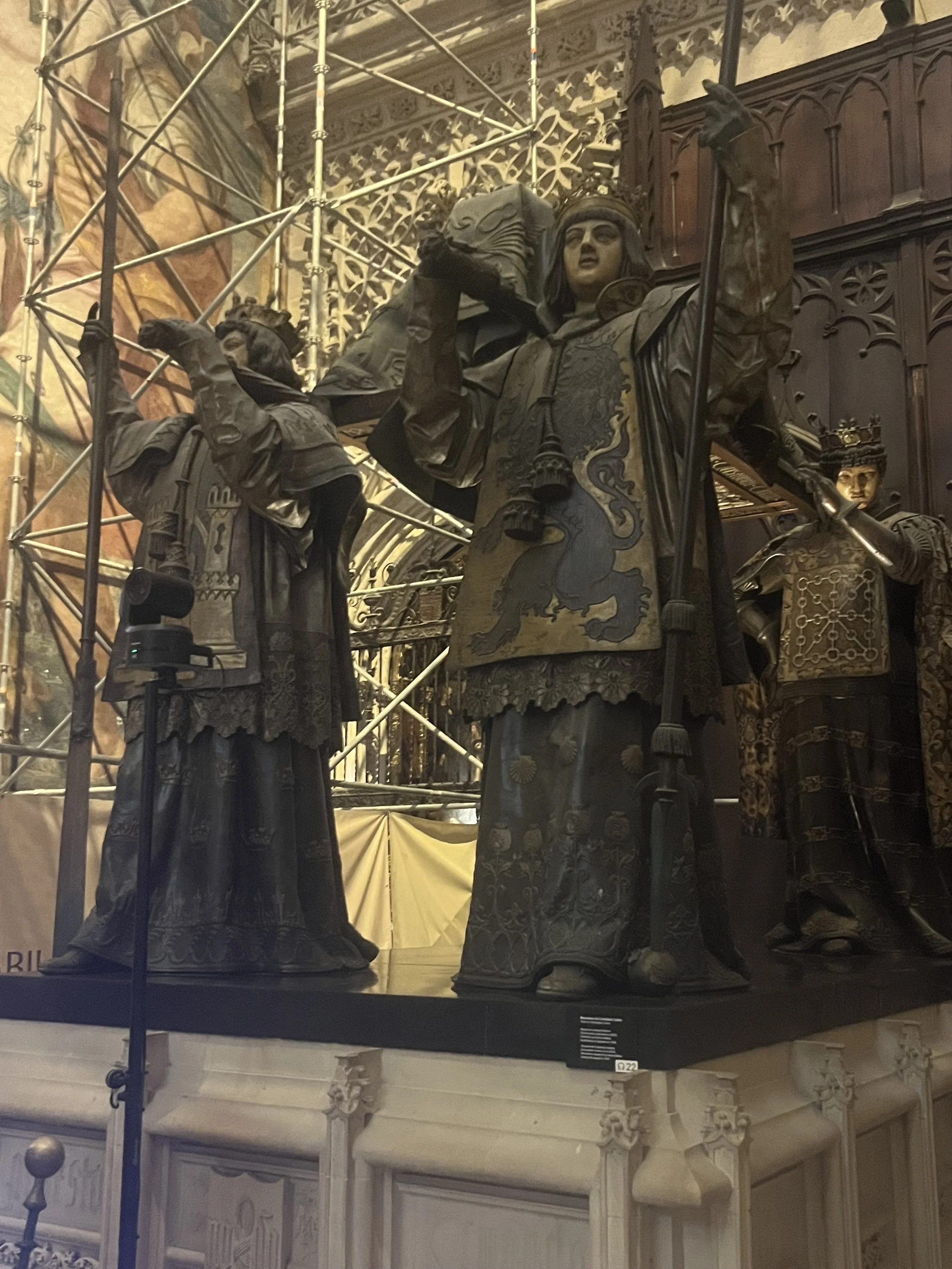
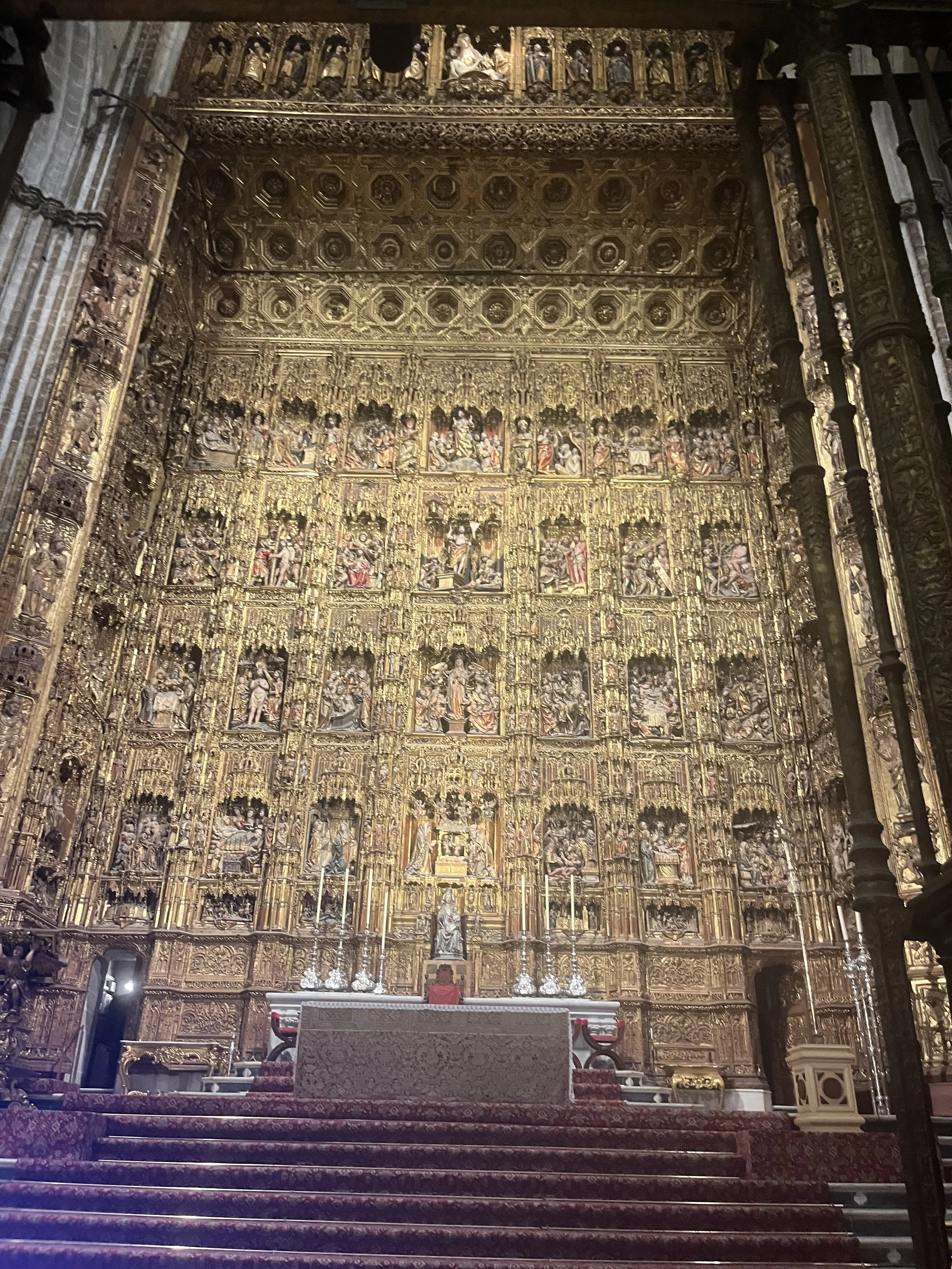
Seville has one of the biggest and most impressive cathedrals we have seen. Built on the site of a former mosque, it was always going to be enormous. It contains the tomb of Christopher Columbus, the Spanish explorer whose voyages helped launch Spain’s great age of exploration. The Giralda Tower is the remaining former minaret of the mosque, and we did walk the 35 ramps to the top — somewhat slowly and with a few stops. Obviously, the view was spectacular, and you could easily see the large bullring in the distance.
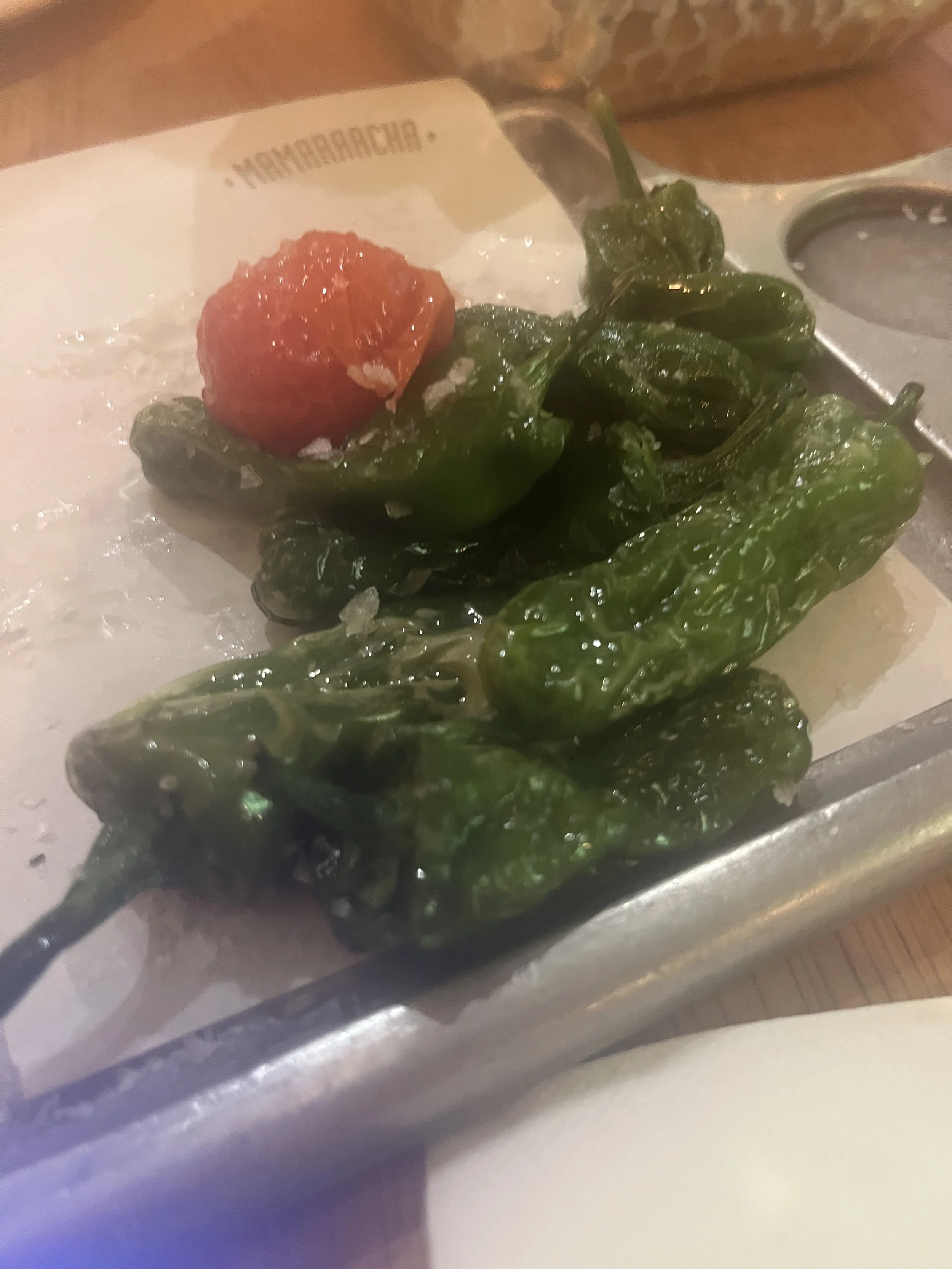
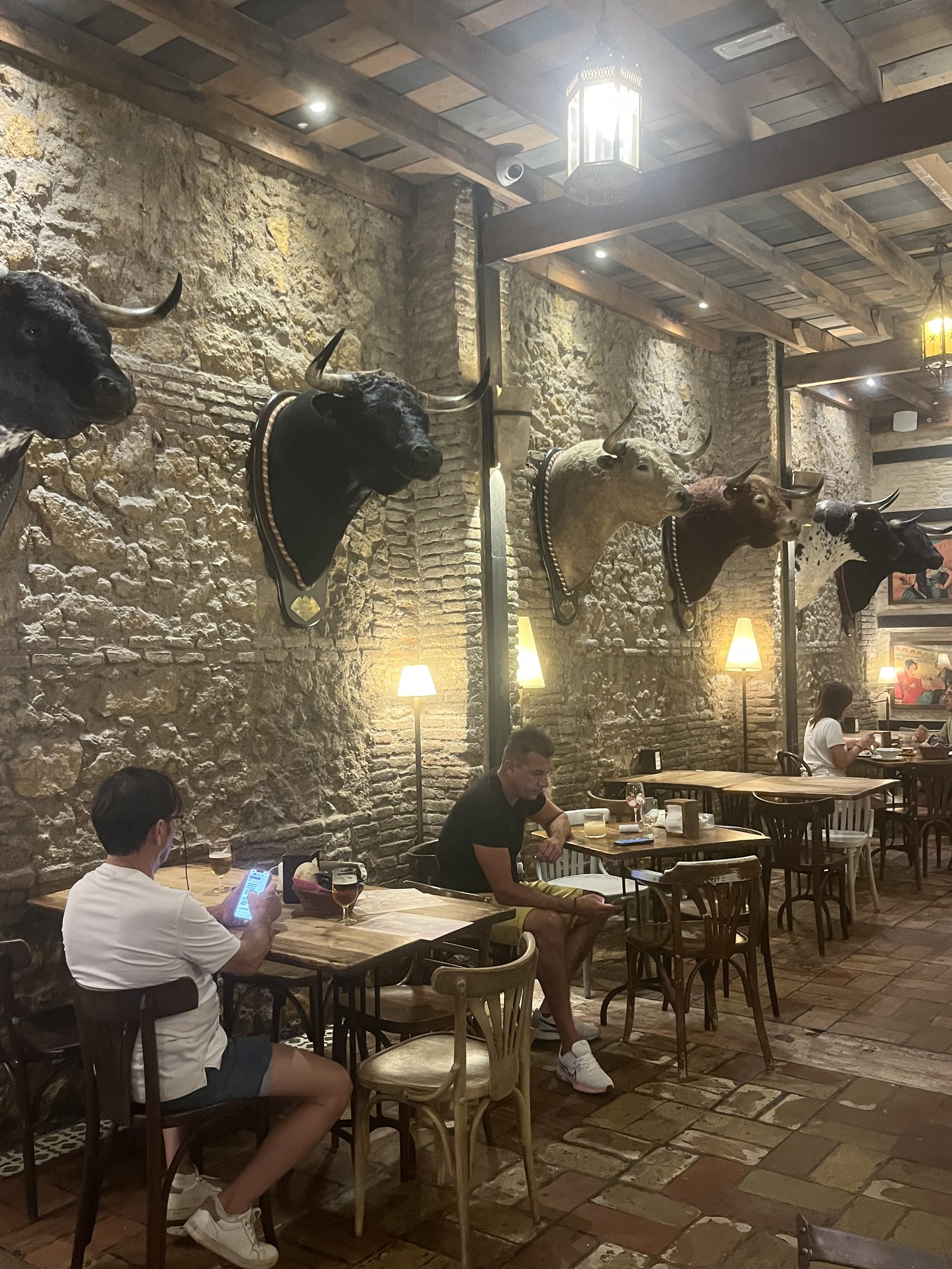
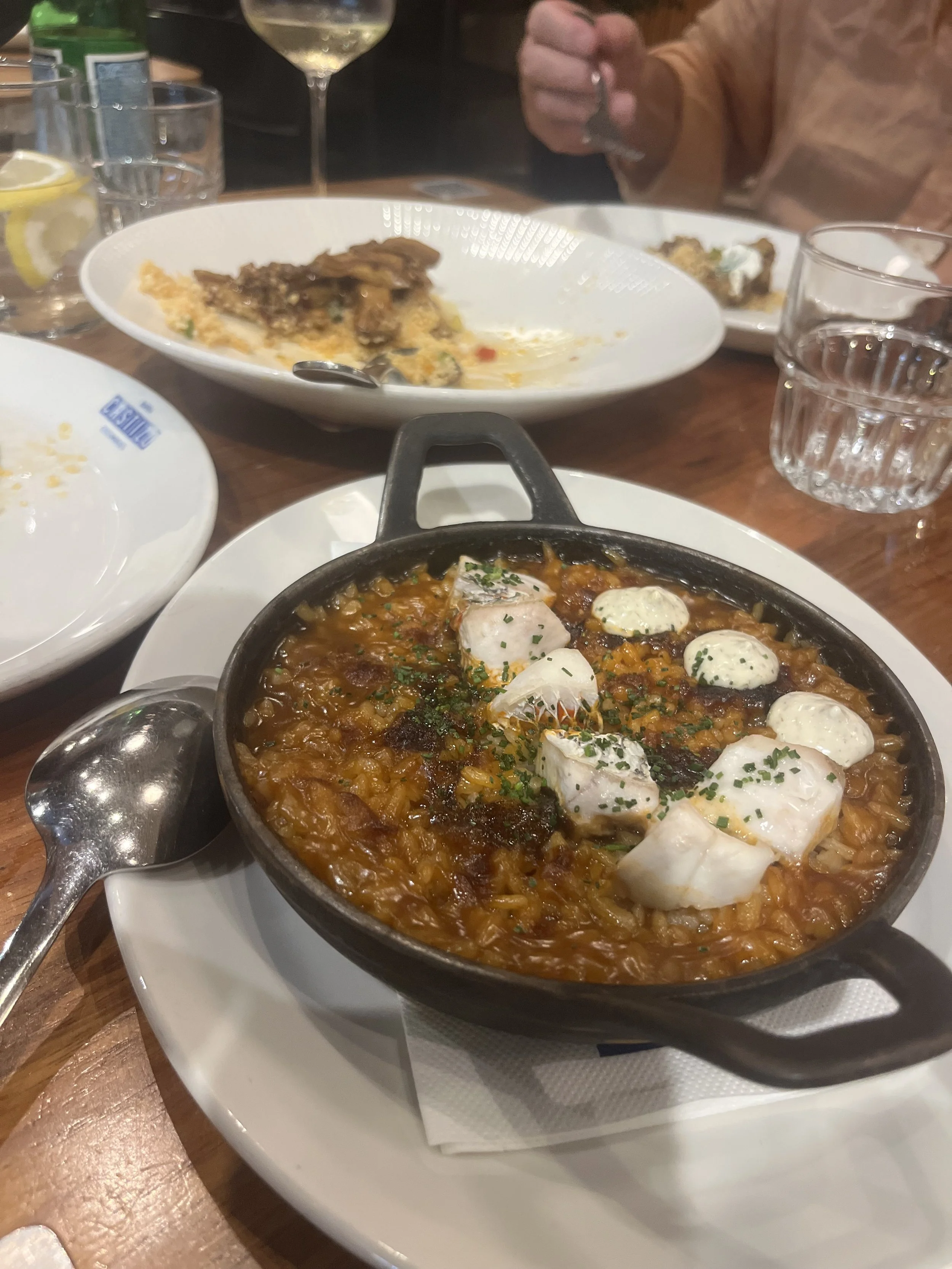
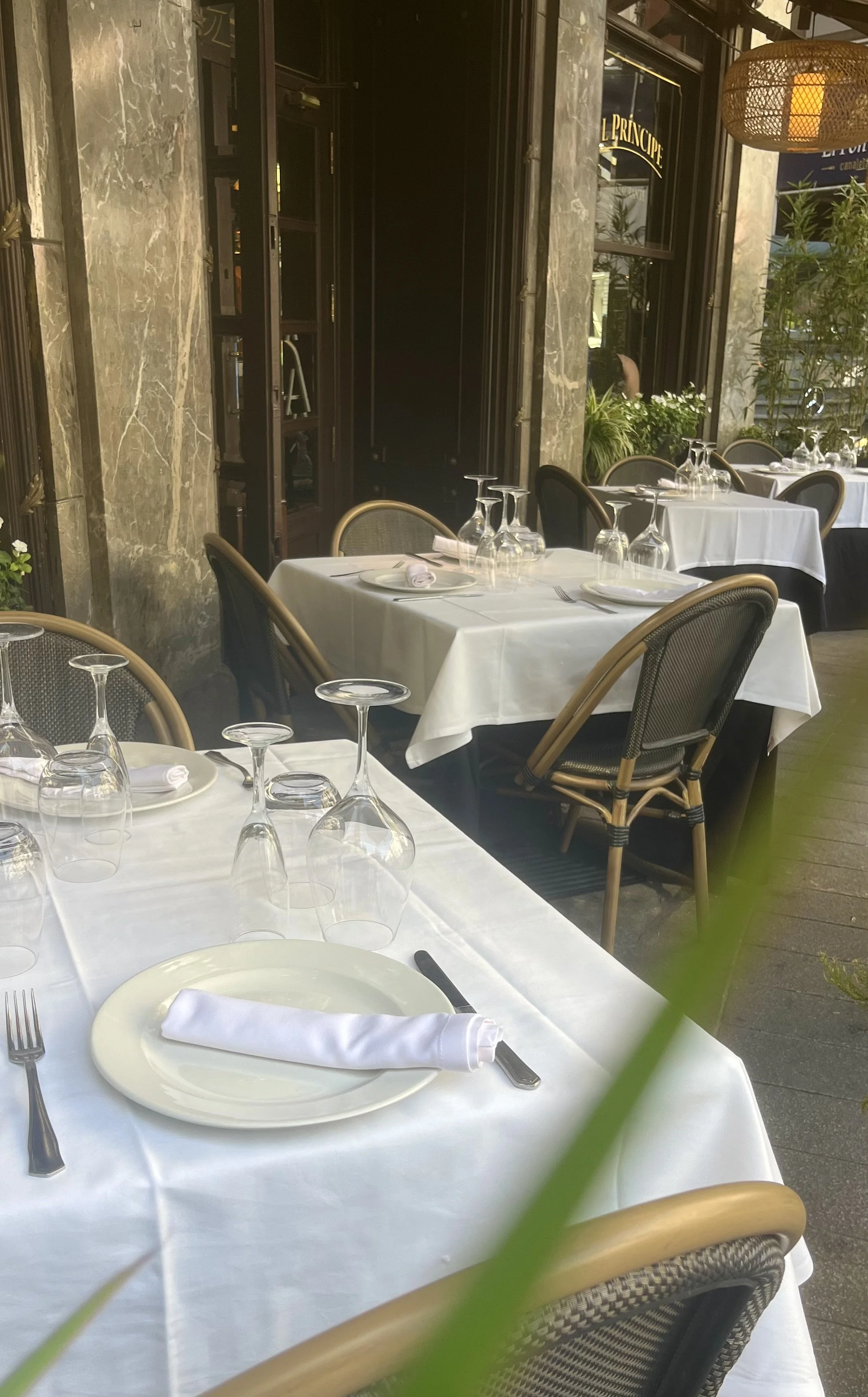
Our days have fallen into a pattern of walking and exploring in the mornings: the ritual of coffee and fresh orange juice, and then around 2 pm, a couple of tapas and usually a sangria. We then head back to the hotel as the temperatures climb to between 35 and 40 degrees. Time to read — usually with my legs up the wall — which then turns into a siesta. Restaurants don’t open until 8.30 or 9 pm, so we head out in the evenings. I either get suggestions from the hotel or do my own research and always book. Sometimes it’s a 30-minute walk, which gives us an insight into the busy evenings, since the shops also don’t close until 8.30 or 9 pm. We have had many fabulous dinners, and the Spanish food has been delicious, especially the variety of tapas.
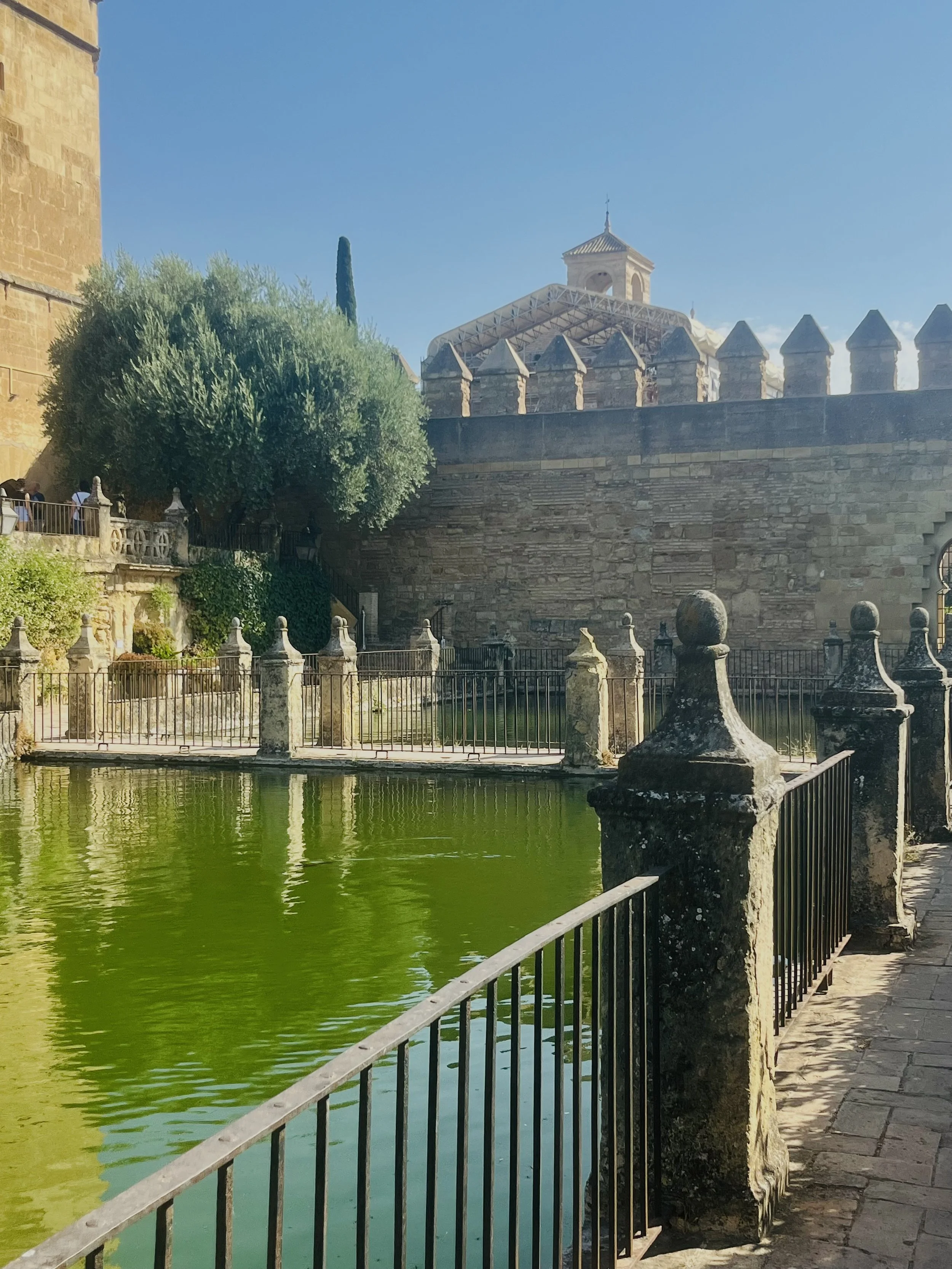
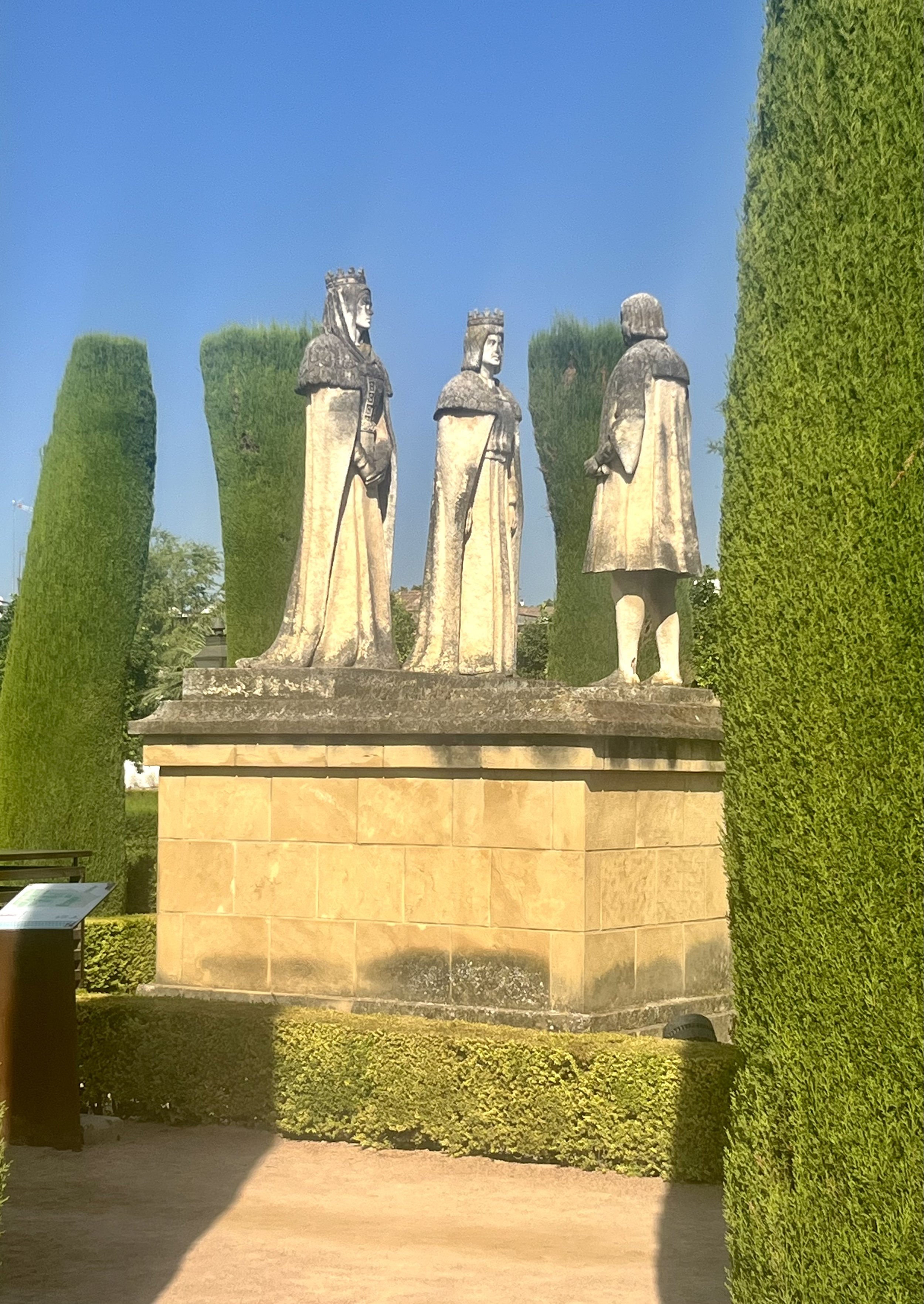
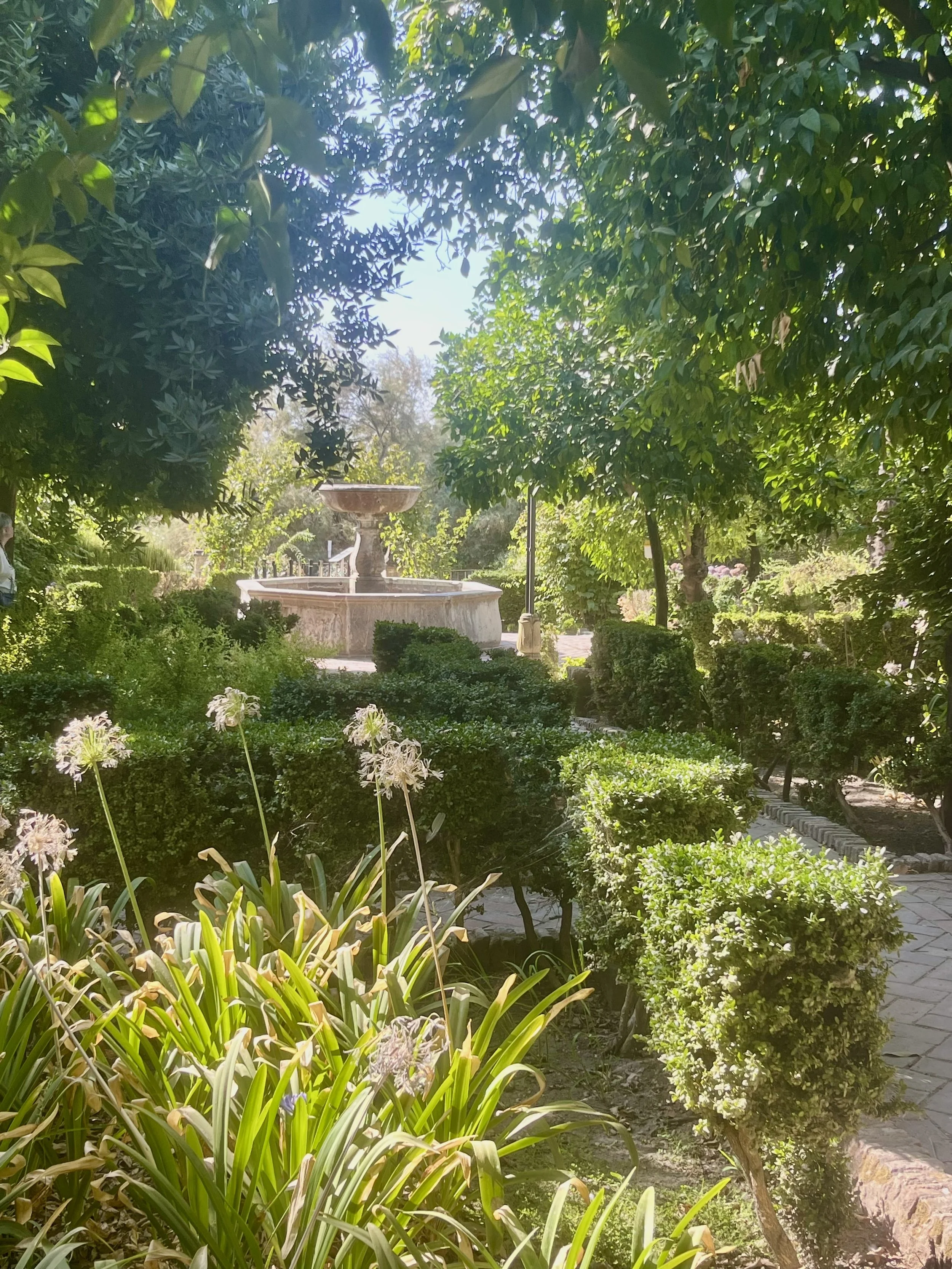
The Moors from North Africa ruled parts of Spain for over 750 years. They came after the Roman rule and the Goths and Visigoths, and built vast alcázars and other incredible architectural masterpieces, many of which can still be seen in places such as Granada, Seville and Córdoba. Their intricacy and detail make them a must-see for tourists, and many have extensive, beautifully planned gardens with water running through rills or filling huge ponds with fountains. Most were formal in design, with enormous hedges and massive trees.
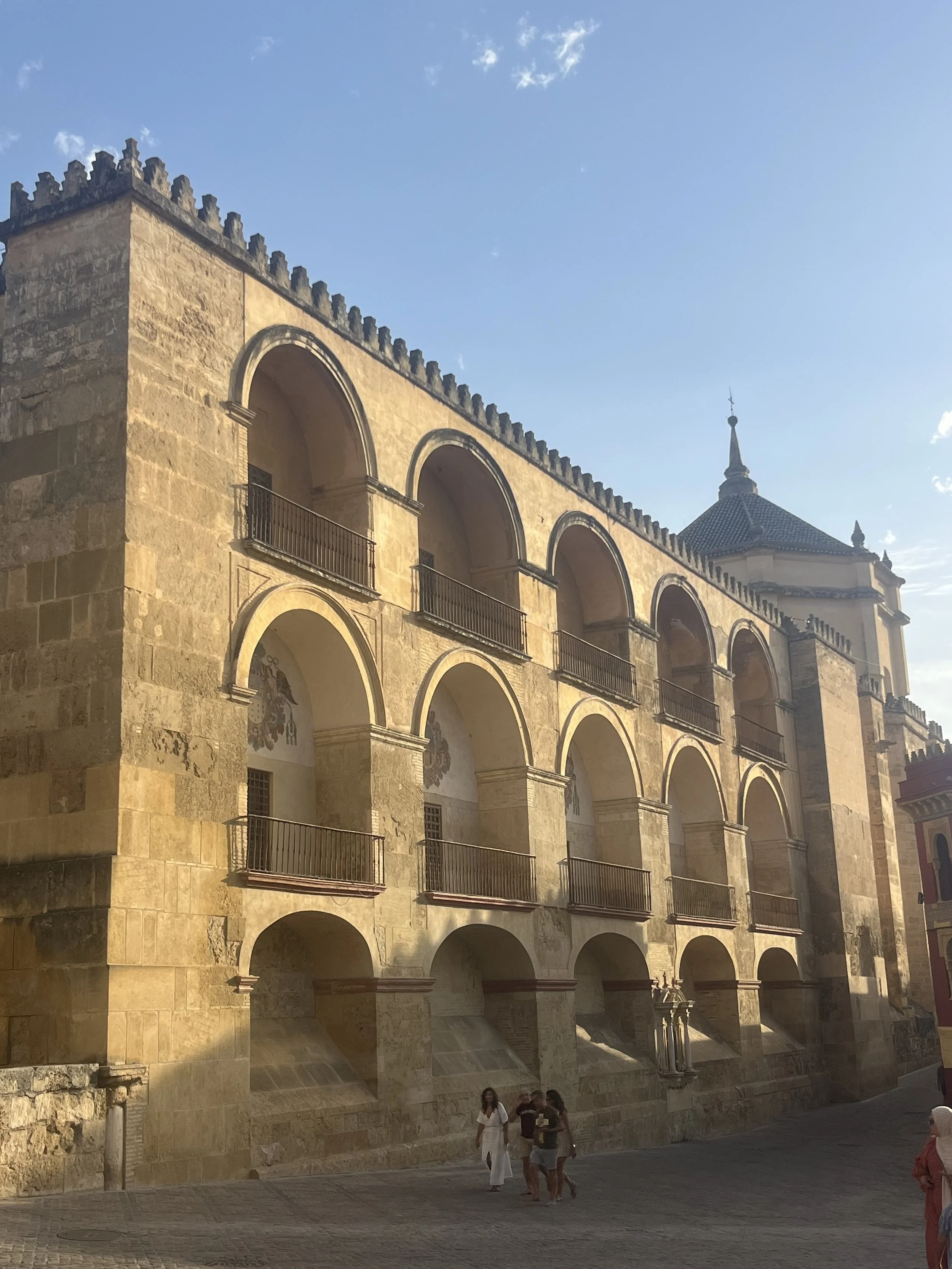
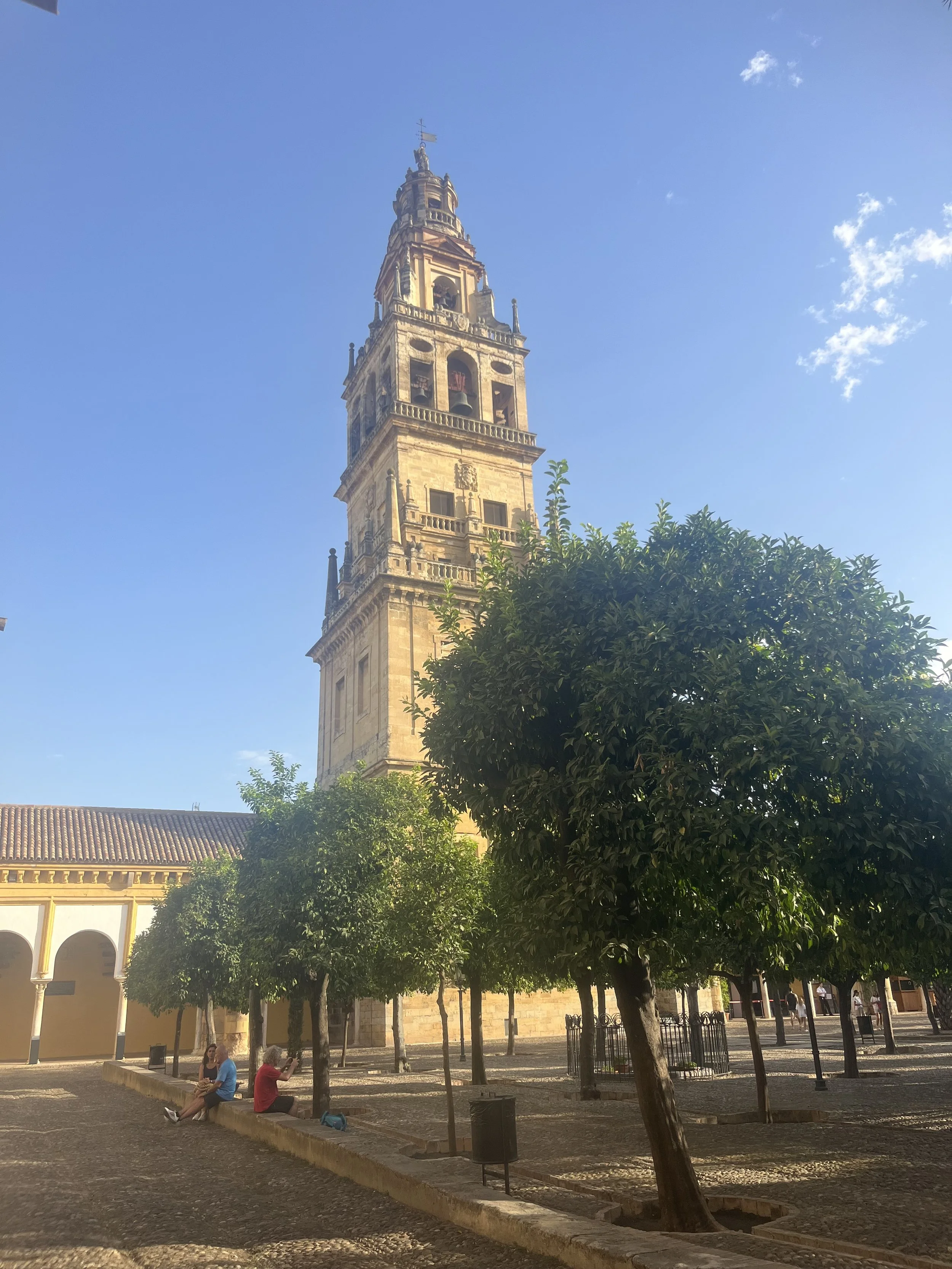
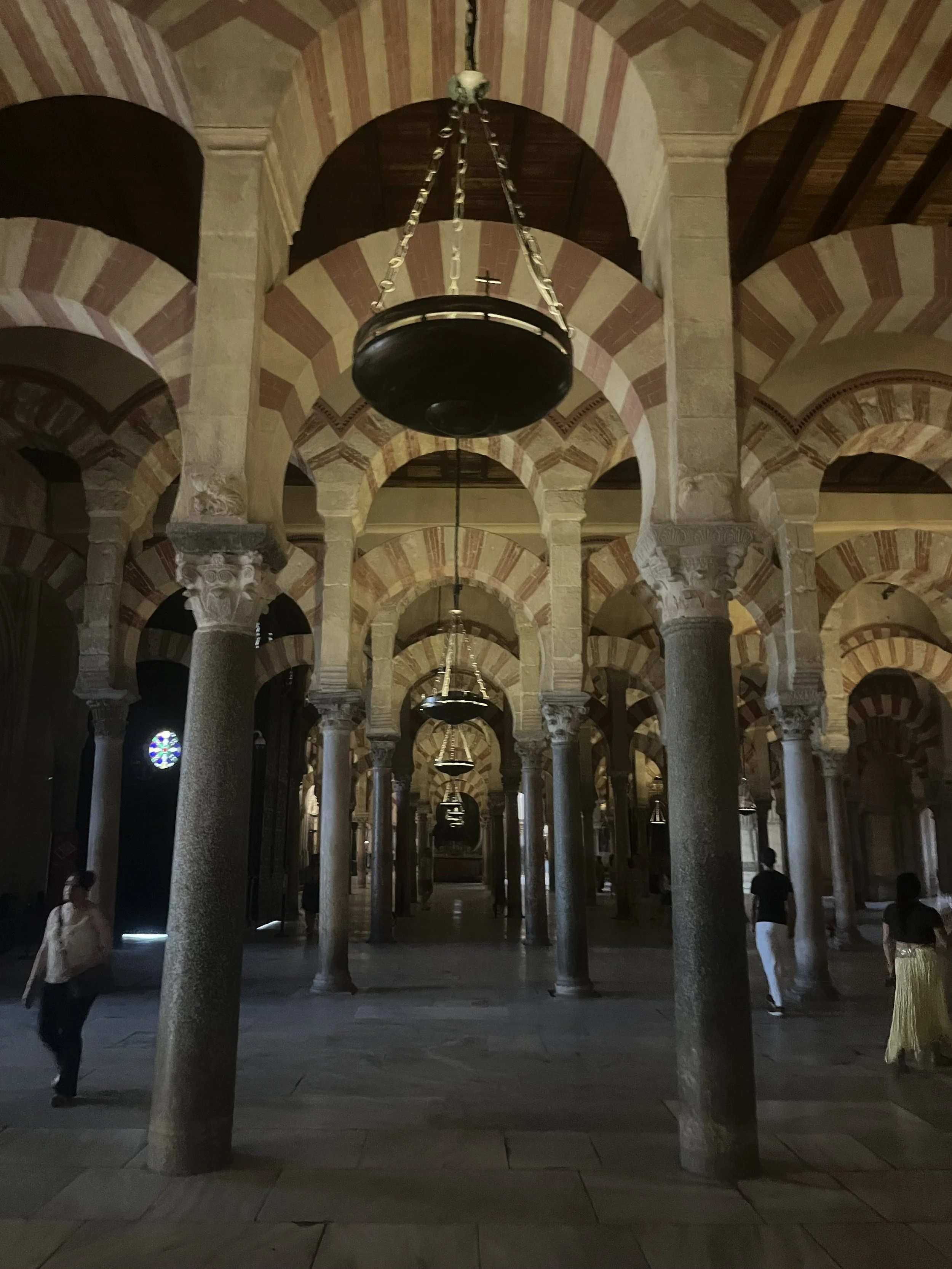
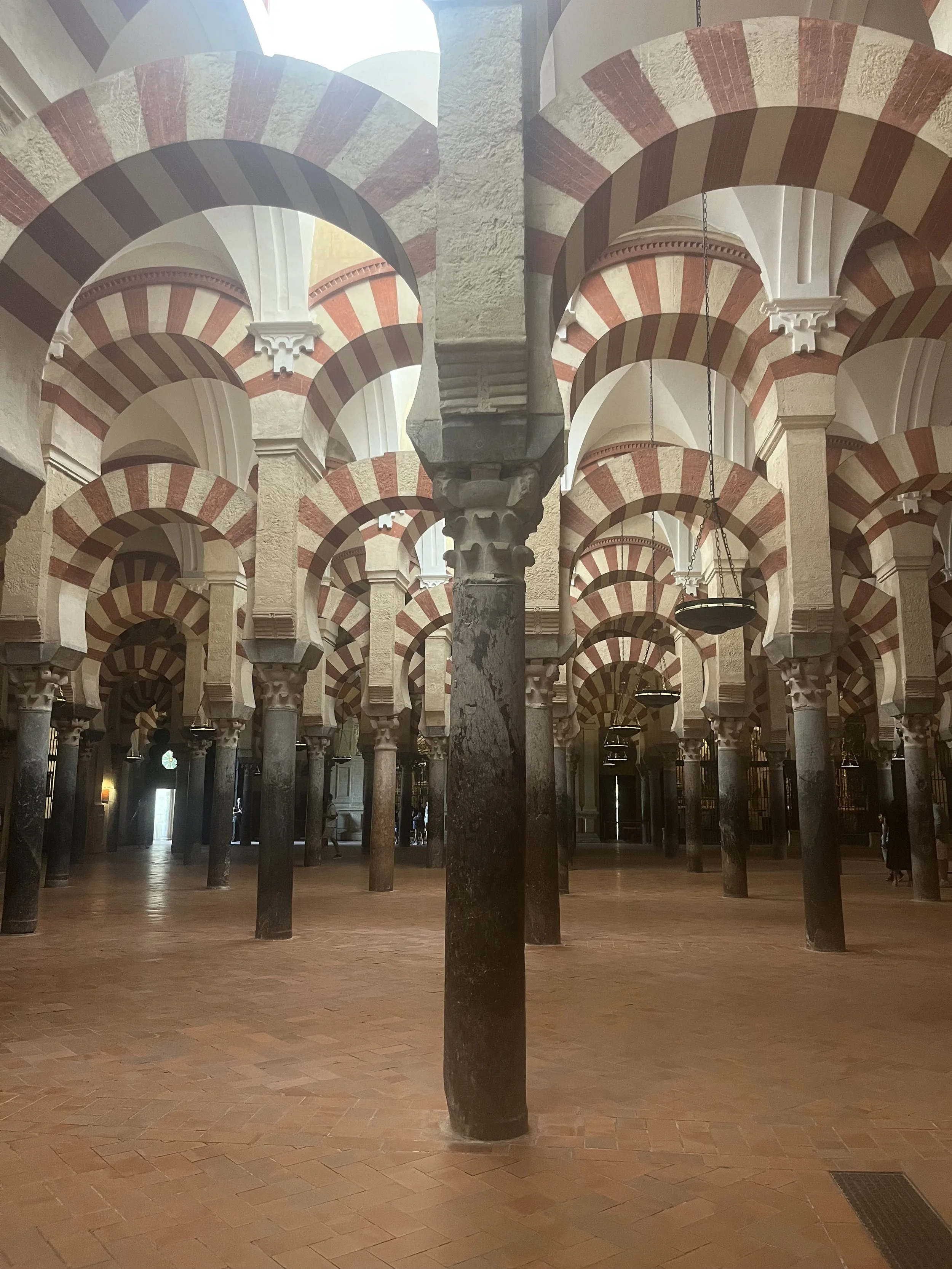
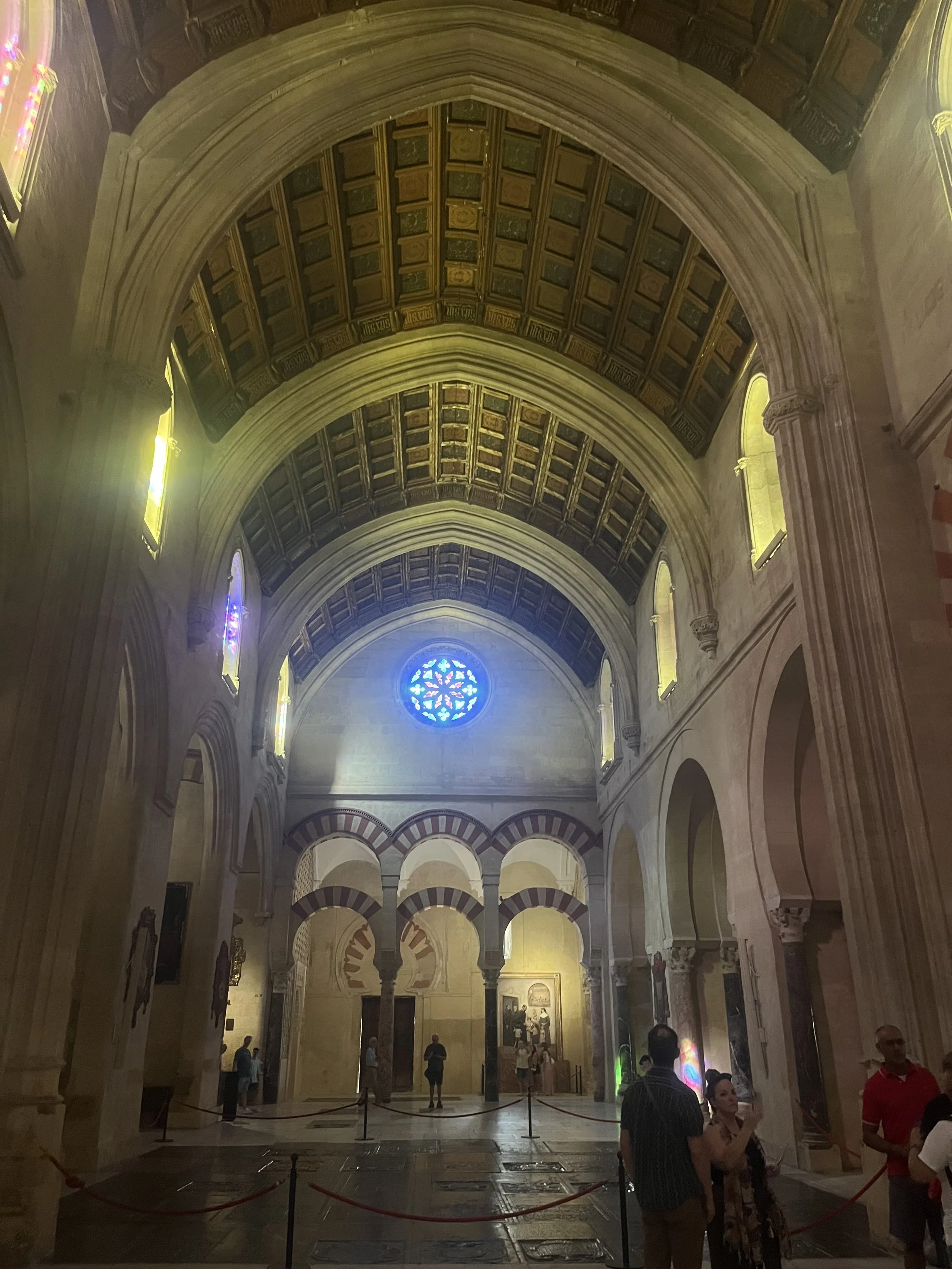
The Mezquita in Córdoba was simply extraordinary. Originally built as a vast mosque during the period of Muslim rule, it is now a Christian cathedral, and the combination of the two cultures and religions makes it unlike any other building we have visited. From the moment we entered, we were overwhelmed by the seemingly endless forest of columns and the distinctive red-and-white arches stretching in every direction. We wandered through the maze of archways, from one side to the other and back again, constantly discovering another beautiful view. It was enormous, yet there was something almost peaceful and mesmerising about the repetition of the columns and arches. Then, almost unexpectedly, in the middle of this great Islamic mosque stands a Christian cathedral, complete with soaring ceilings, chapels and elaborate decoration. The contrast between the two architectural styles was extraordinary and told the story of Spain itself — a country shaped by centuries of Roman, Muslim and Christian history. The Mezquita was not just a beautiful building; it was a journey through time. We both found ourselves wandering slowly through its vast spaces, trying to take in the scale and the history. At it’s peak of Moorish power Cordoba became one of the biggest , most advanced cities in Europe. Of all the remarkable places we visited in Spain, this was undoubtedly one of the most memorable.
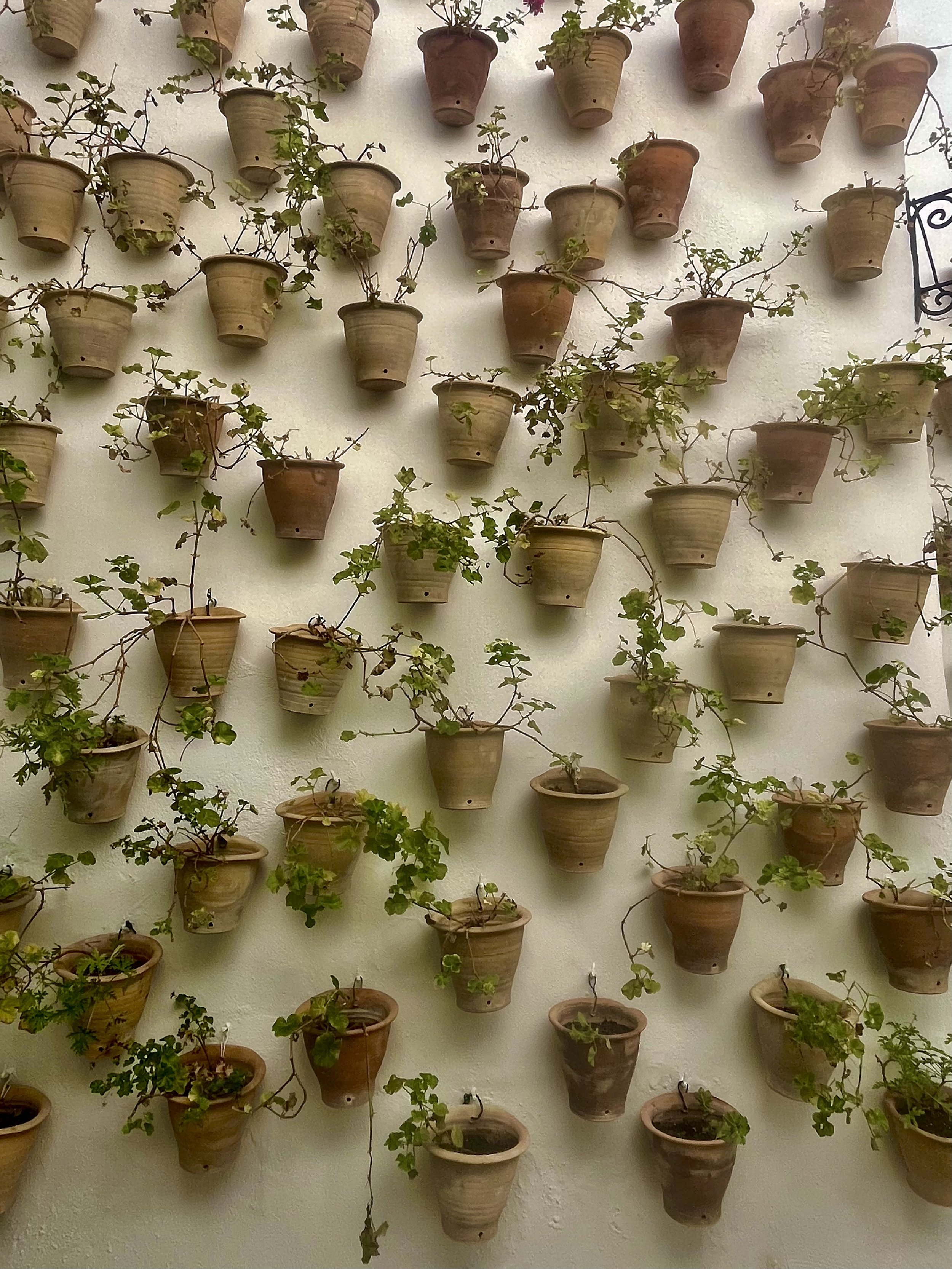
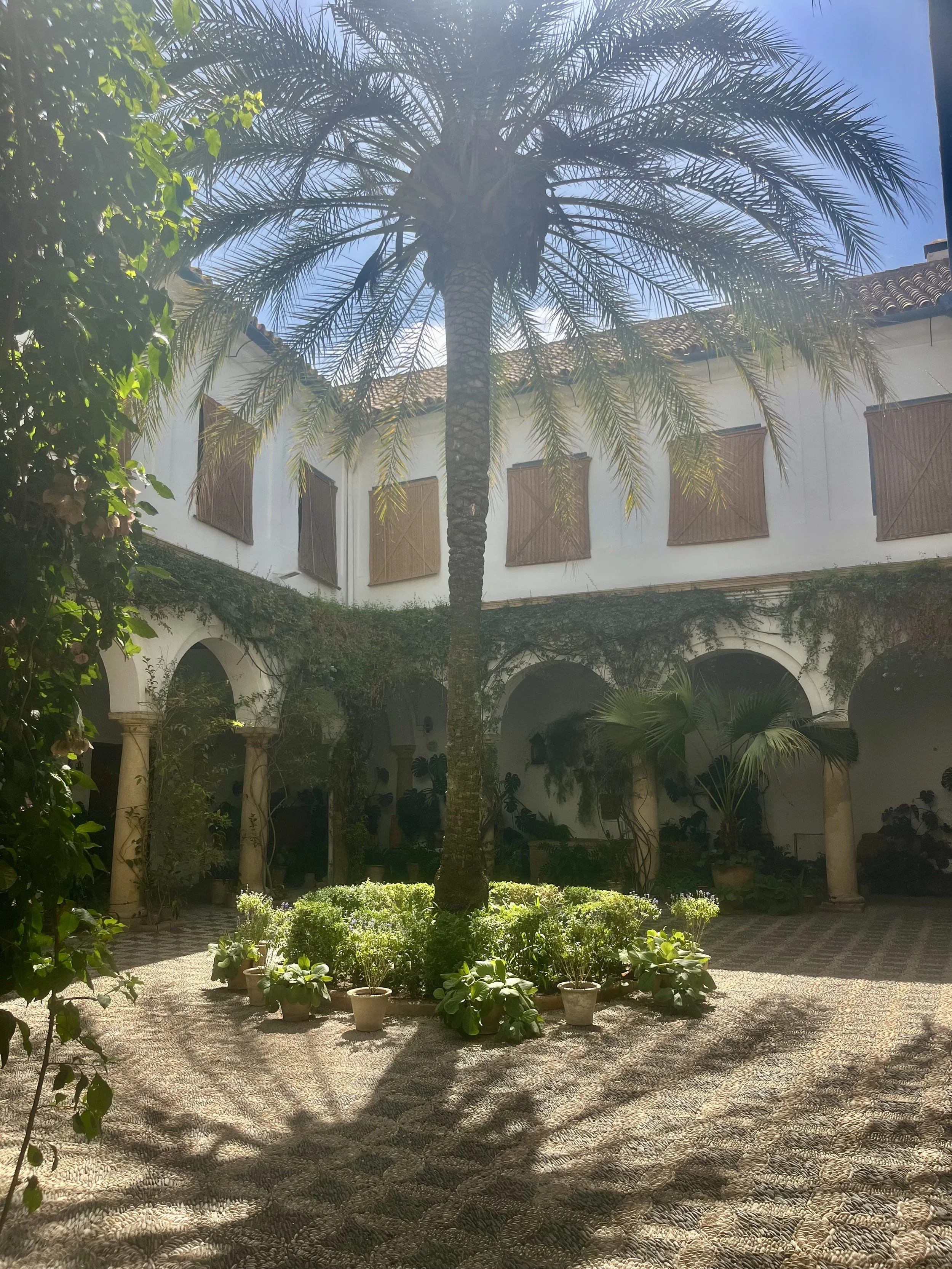
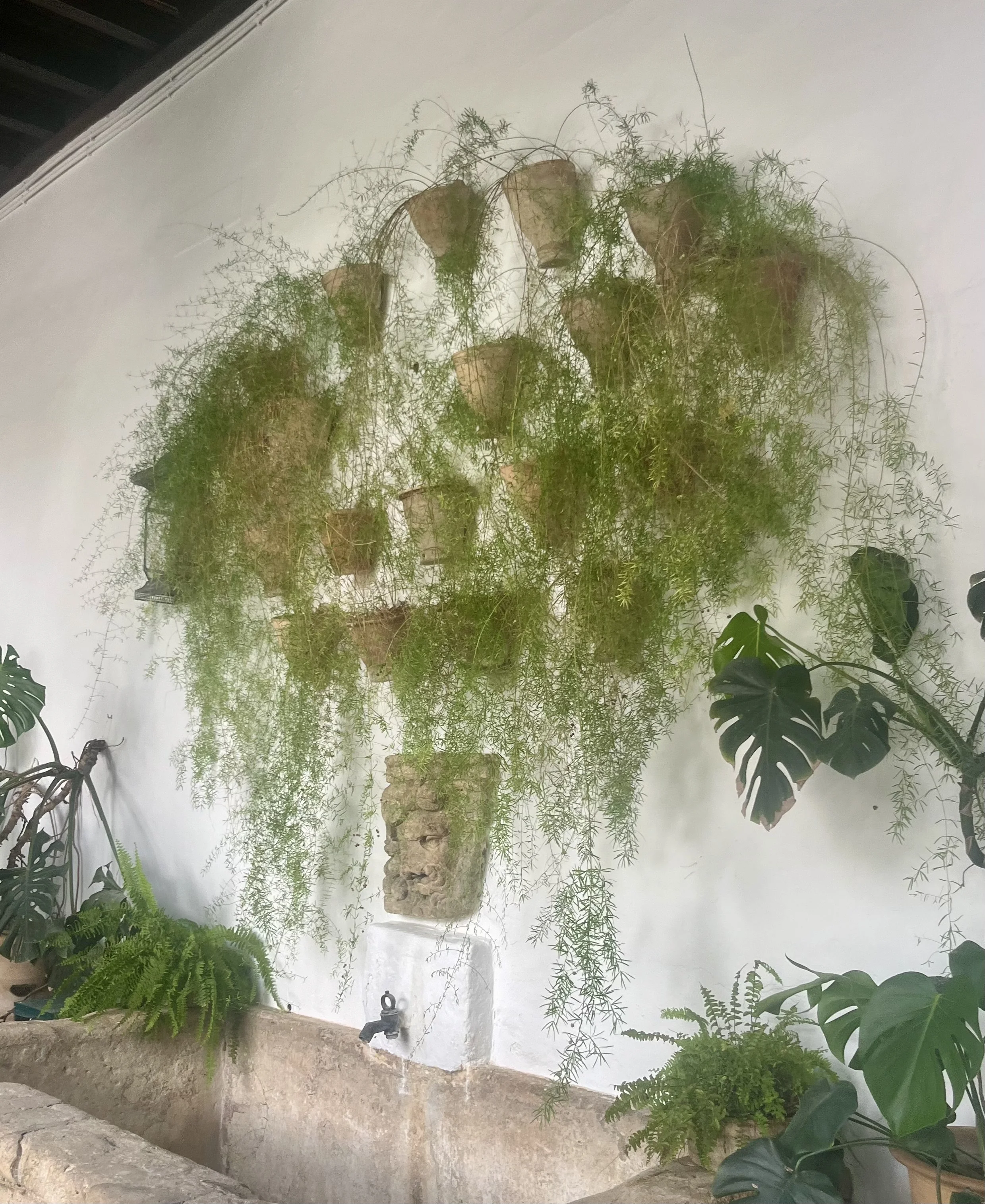
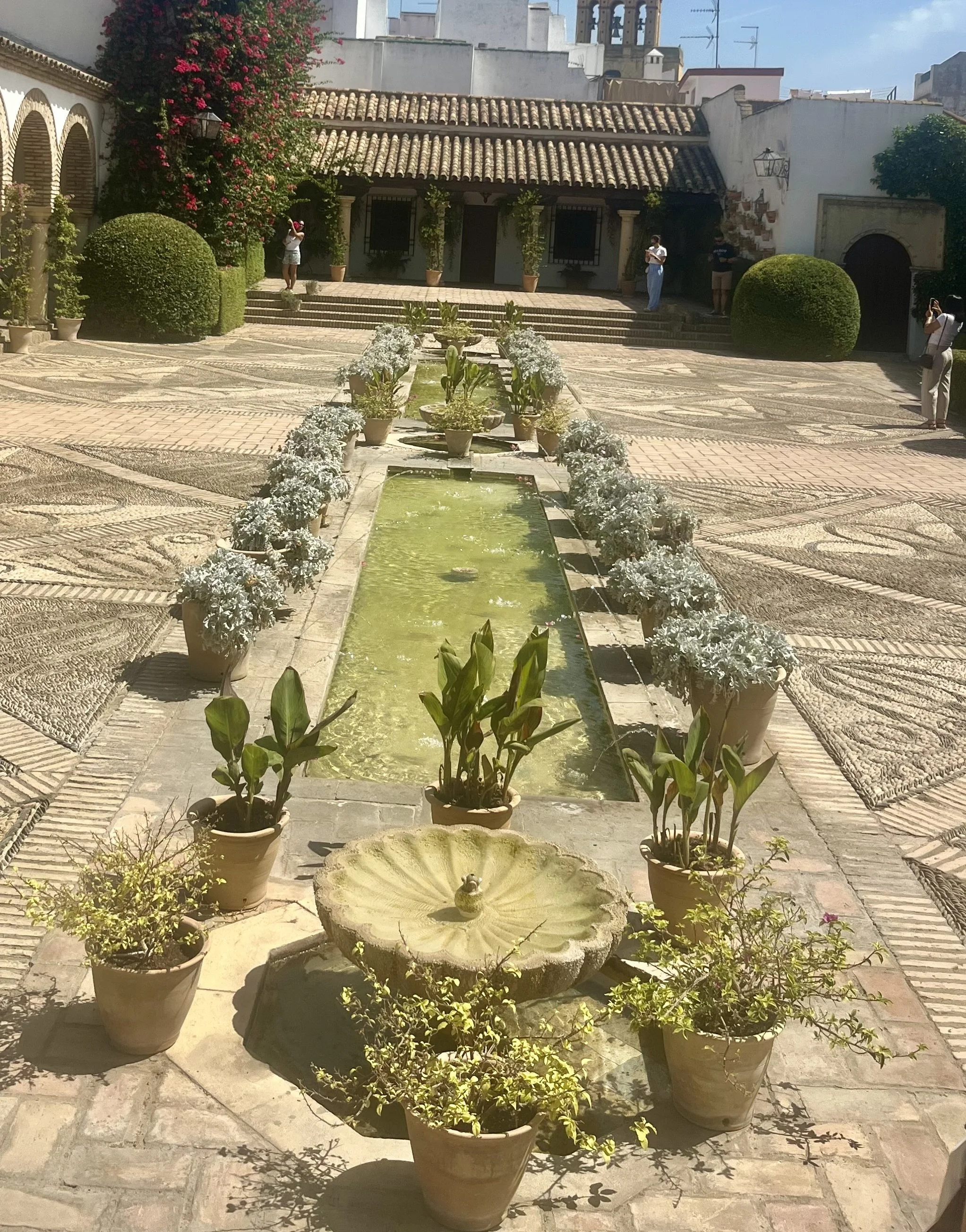
Córdoba today has over 300,000 inhabitants. The narrow streets of the old Jewish Quarter lead towards the Mezquita, and tourists can enjoy many great restaurants and plenty of shopping. The heat had become quite demanding, and we treated ourselves to an afternoon at the hammam. We were spoilt with the many baths, ranging from hot to very cold, followed by a sauna, a traditional scrub-down and then a massage. After nearly three months away, it was completely restorative, and we both felt great. Our second day was another Sunday in Córdoba, and the streets were quiet as the Spanish took time out, with many enjoying a family lunch. Our plan to visit a traditional and beautiful house called the Palacio de Viana was a good one. We loved the beautiful courtyards of the property and touring through the upper floors, which were full of art, ceramics, books and beautiful furniture. However, it was further than we expected, and we ended up once again — just the two of us in the narrow streets, overheated and desperate for another sangria!
Finally, it was time for my last four-hour drive to Madrid, and we surprised ourselves by finding the rental car return in an underground car park with ease.
We have returned to Madrid after enjoying the city so much last year and missing out on the Prado and Reina Sofía museums. We actually picked up a private guide going into the Prado while queueing for tickets, and lordy, was that money well spent. Lola had us enthralled with her hour-long tour, and we both felt that we appreciated what we were looking at rather than aimlessly walking through the vast galleries without understanding many of the important pieces, of which there are many, including the “other” Mona Lisa.
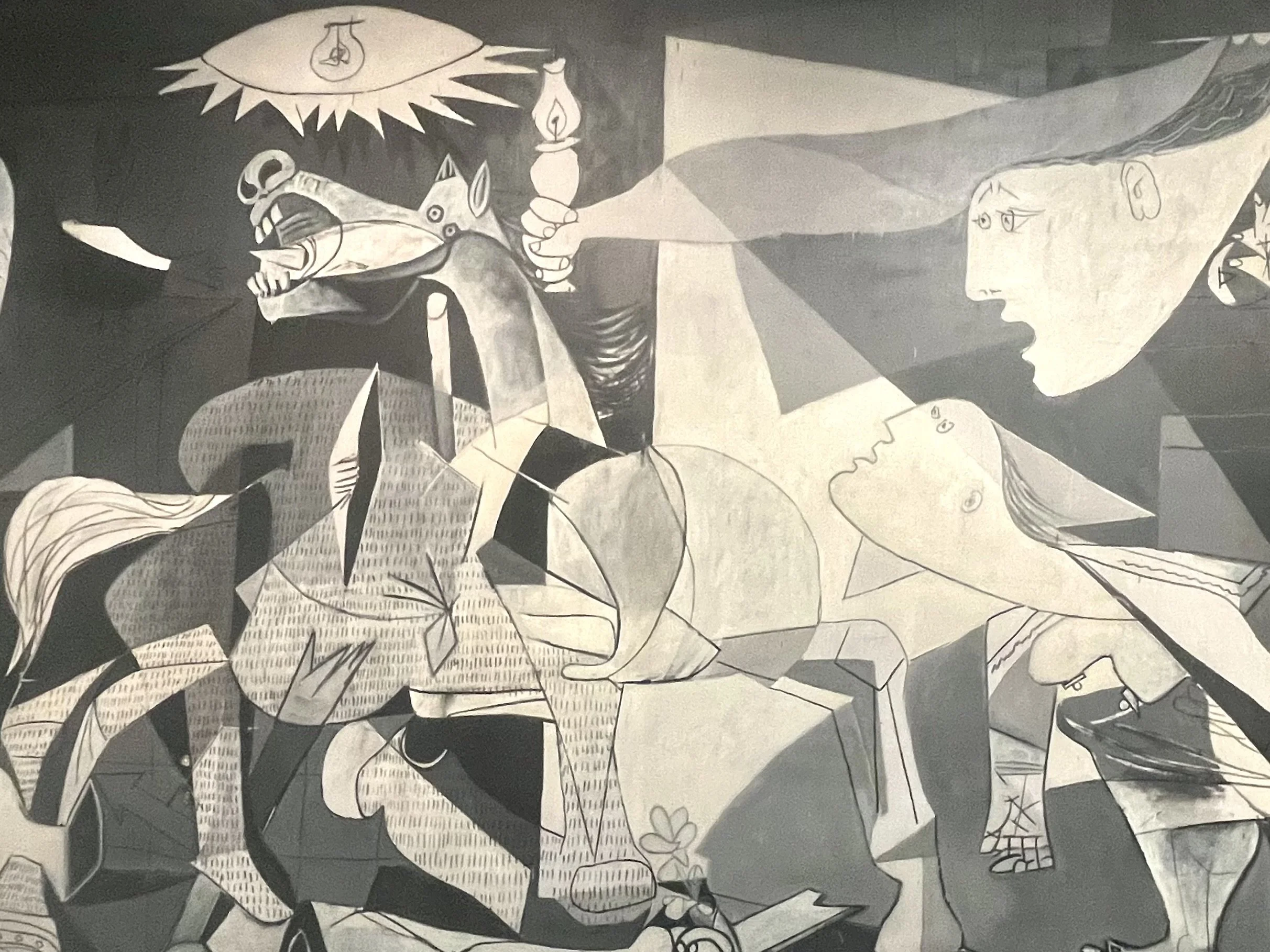
Although we only had two nights here, our flight didn’t depart until 10.15 pm. Consequently, we had time to visit the Reina Sofía gallery, which houses works by many Cubist artists and, of course, Picasso and his famous Guernica painting, along with modern art from the last 50 years.
The Retiro Gardens in Madrid are a beautiful oasis in the middle of the city. Originally created as part of a royal retreat, the enormous park is filled with wide, tree-lined avenues, formal gardens, fountains and quiet green spaces. There is also a large lake where visitors can hire rowing boats and the magnificent Crystal Palace, a beautiful glass building that now houses art exhibitions. Our planned bike ride through the Retiro Gardens sadly didn’t eventuate, but after days of walking Madrid’s busy streets, it was lovely to wander through such a peaceful and beautiful space in the heart of the city.
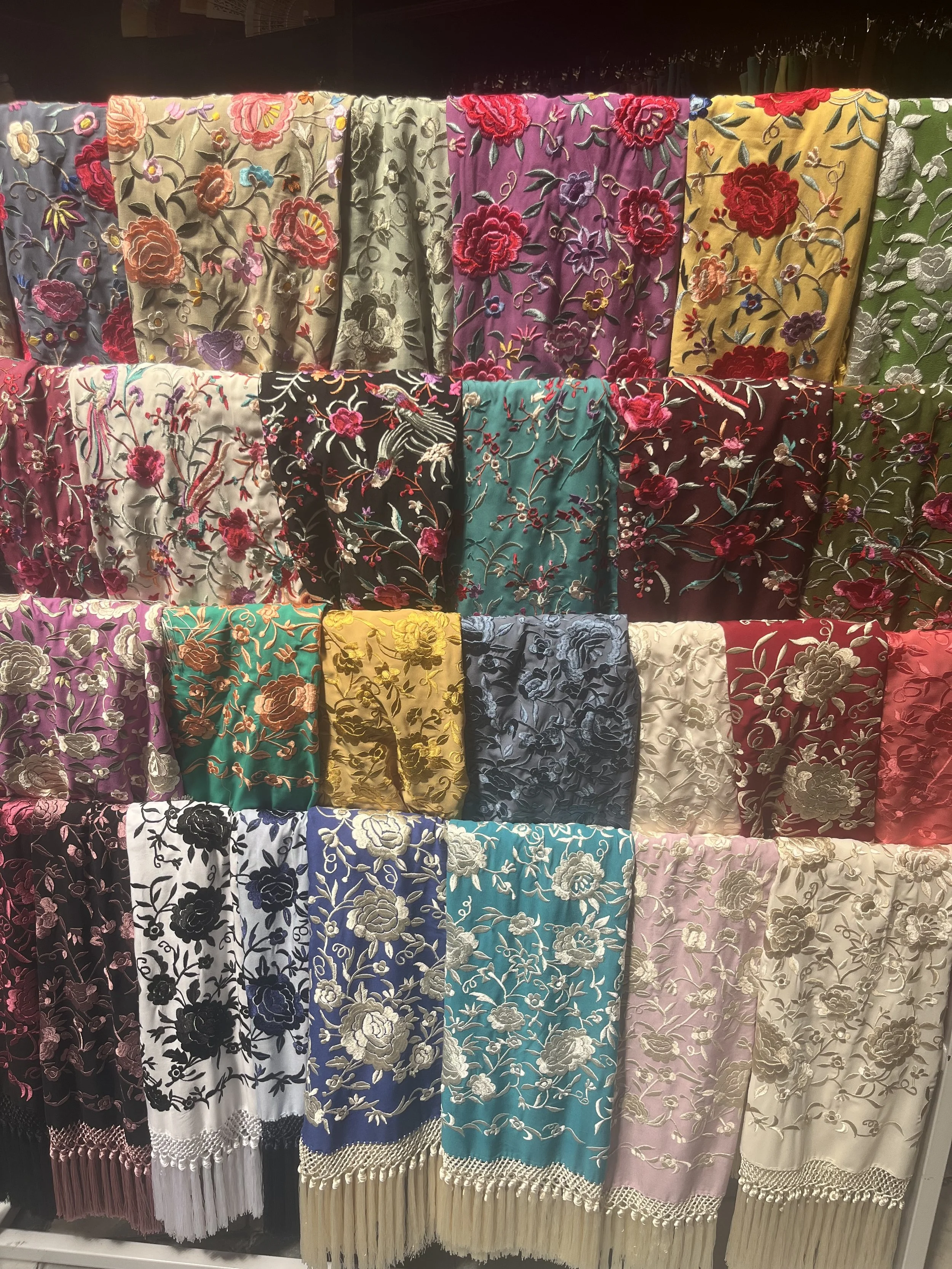
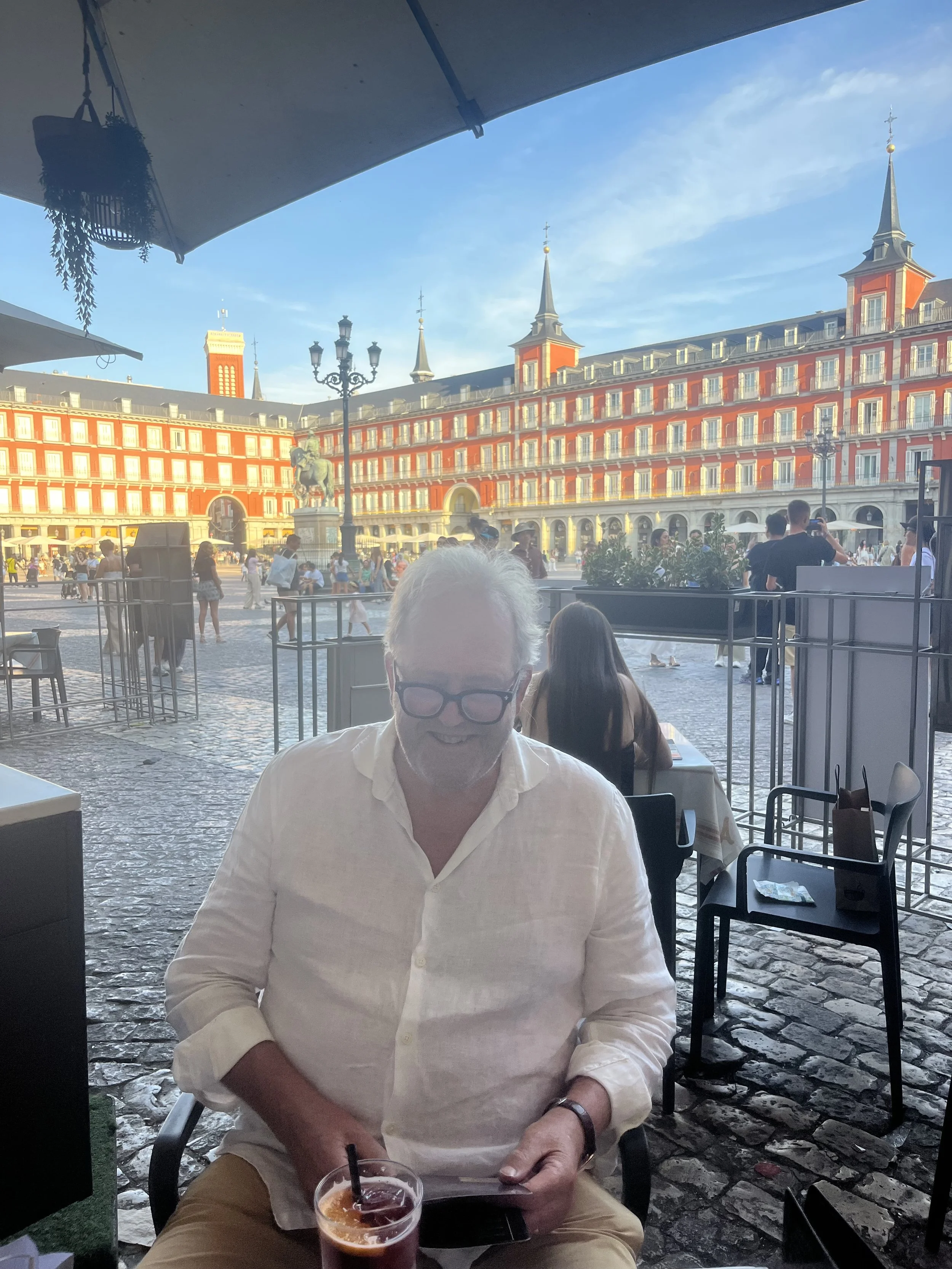
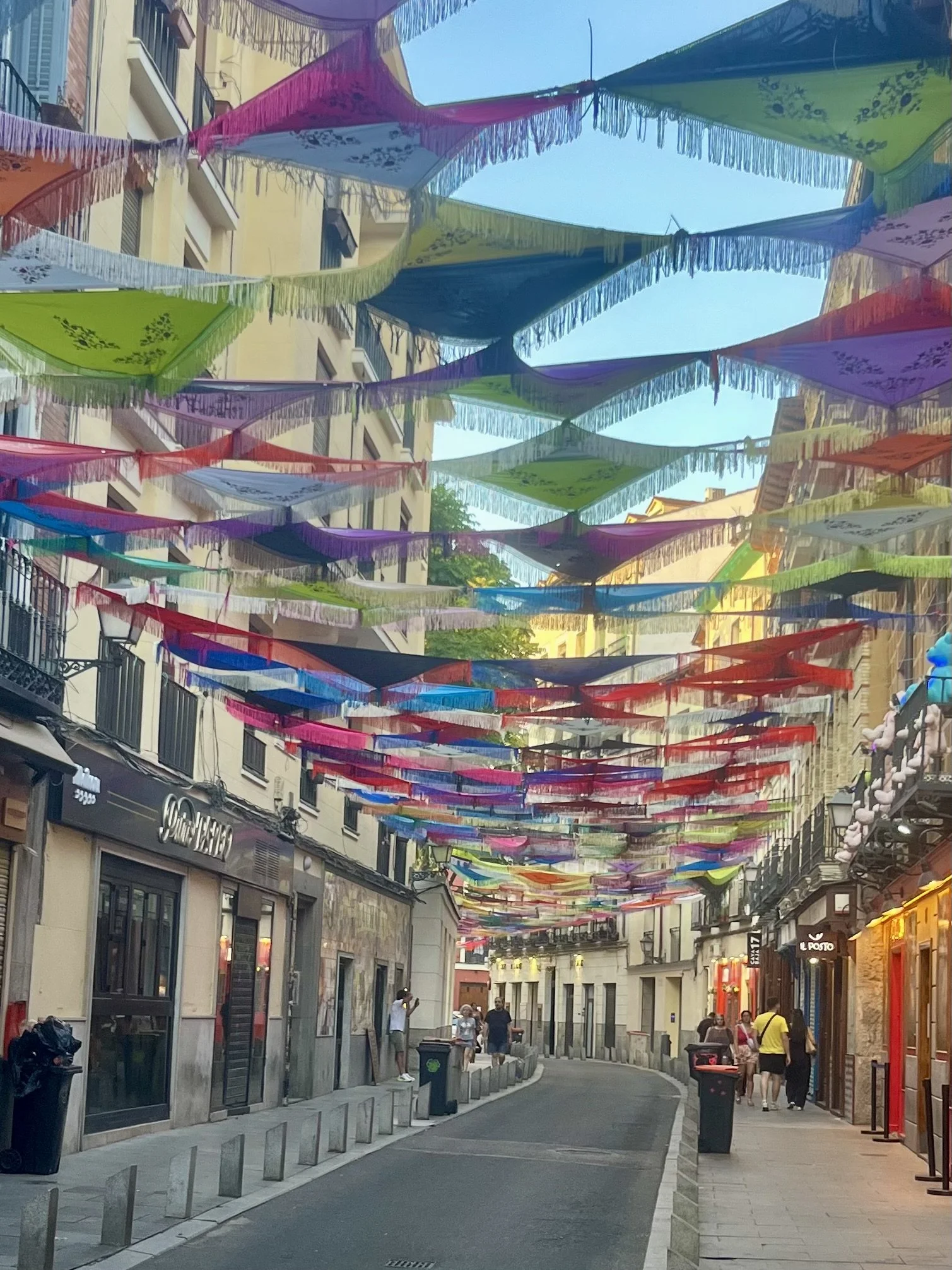
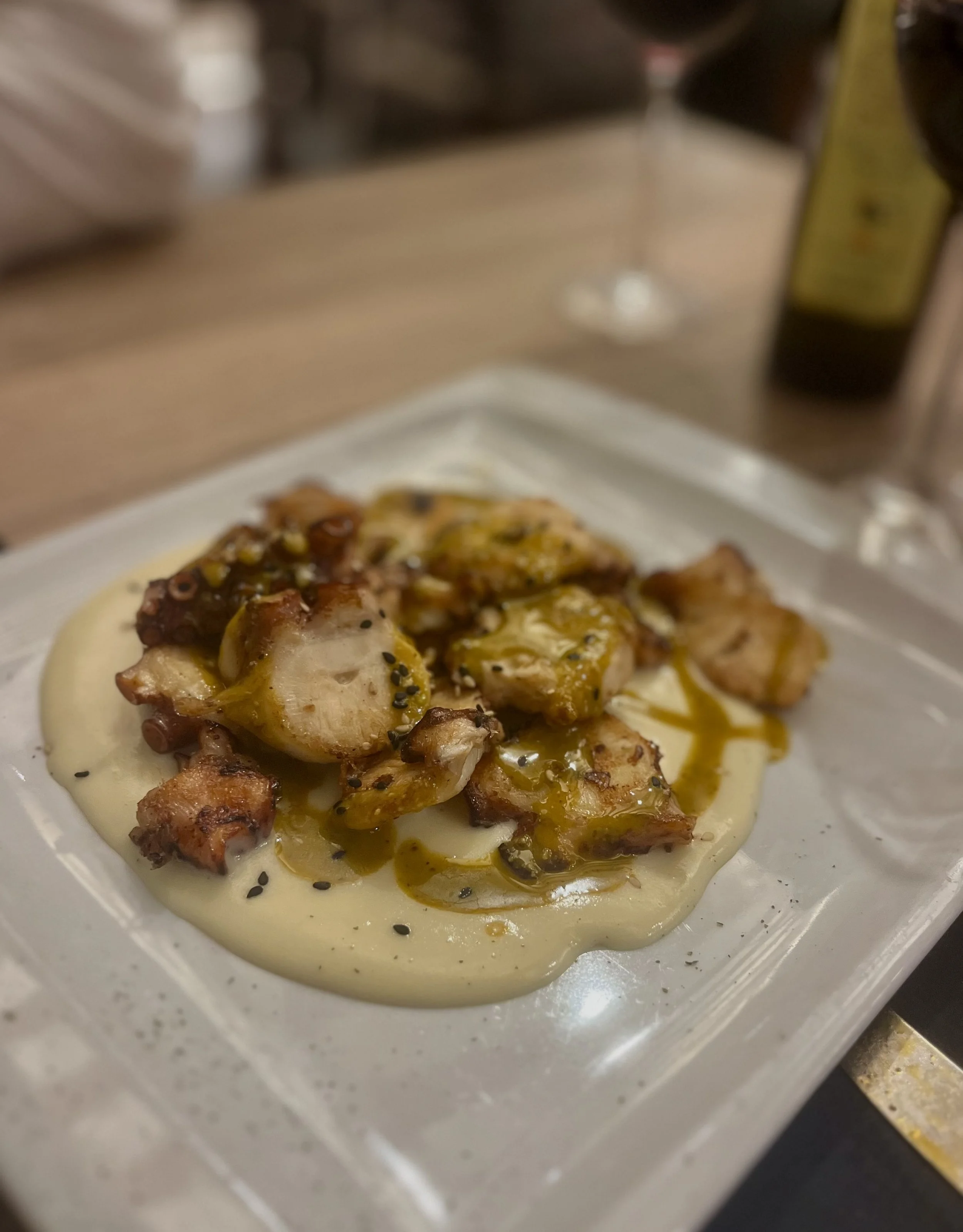
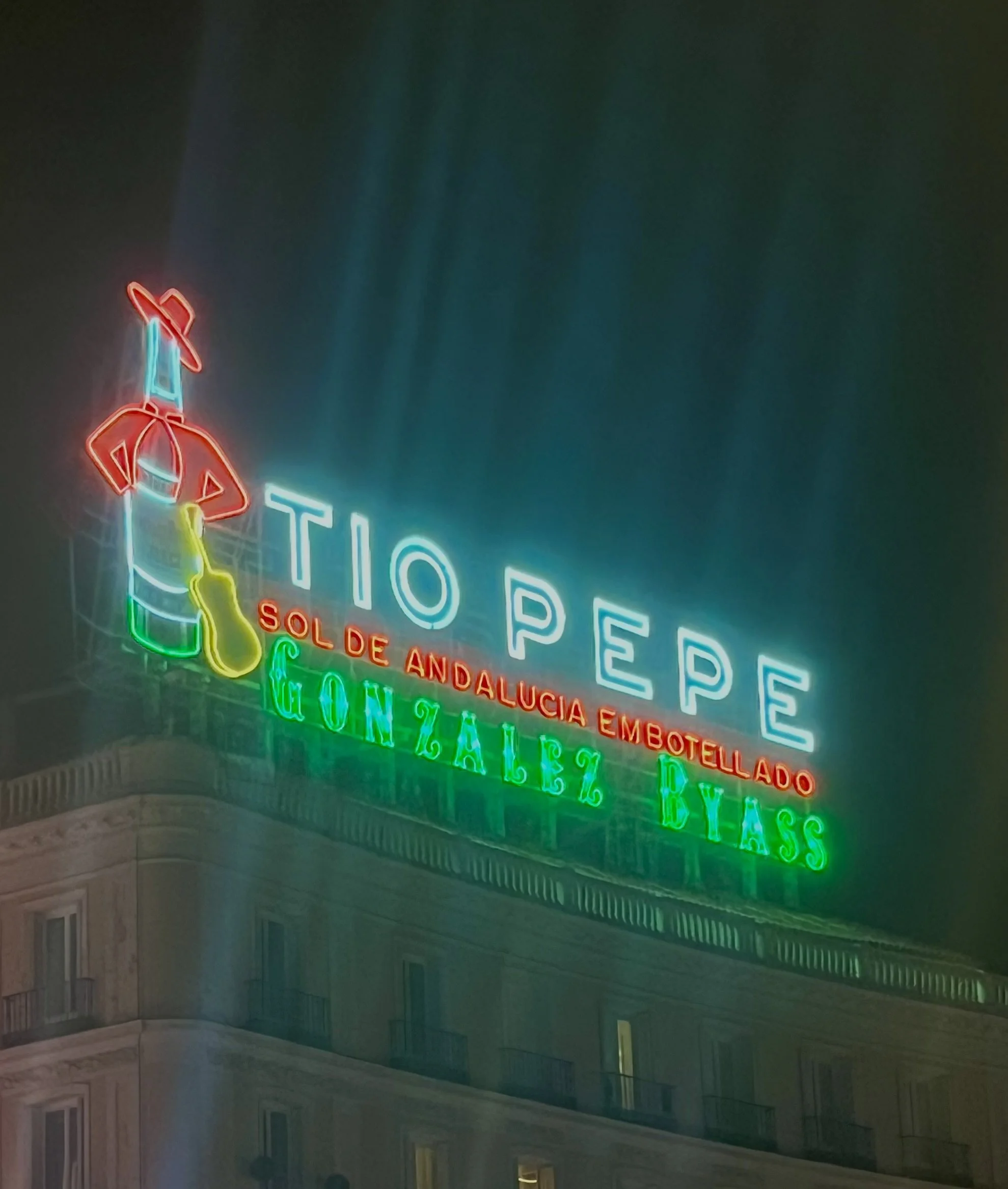
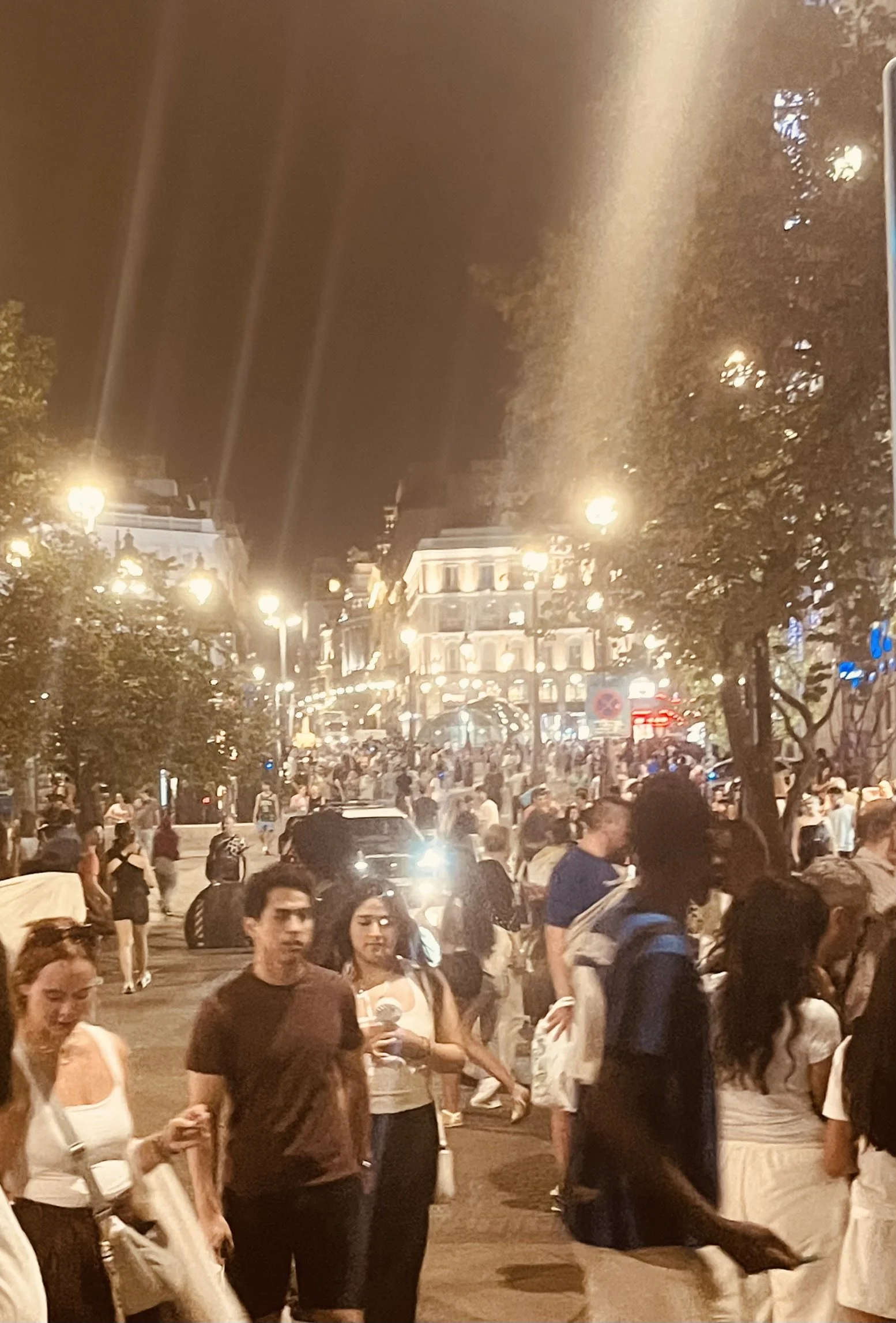
Madrid once again thrilled us, and we certainly walked and walked its city streets and galleries. Dinner in a local restaurant, where a Spanish family was having birthday celebrations, was fun. Walking through many plazas packed with people to Bodega de los Secretos, in a street with Spanish scarves tied together above us, was wonderfully atmospheric. Dinner was terrific, and we had the best black pudding and pulpo — octopus.
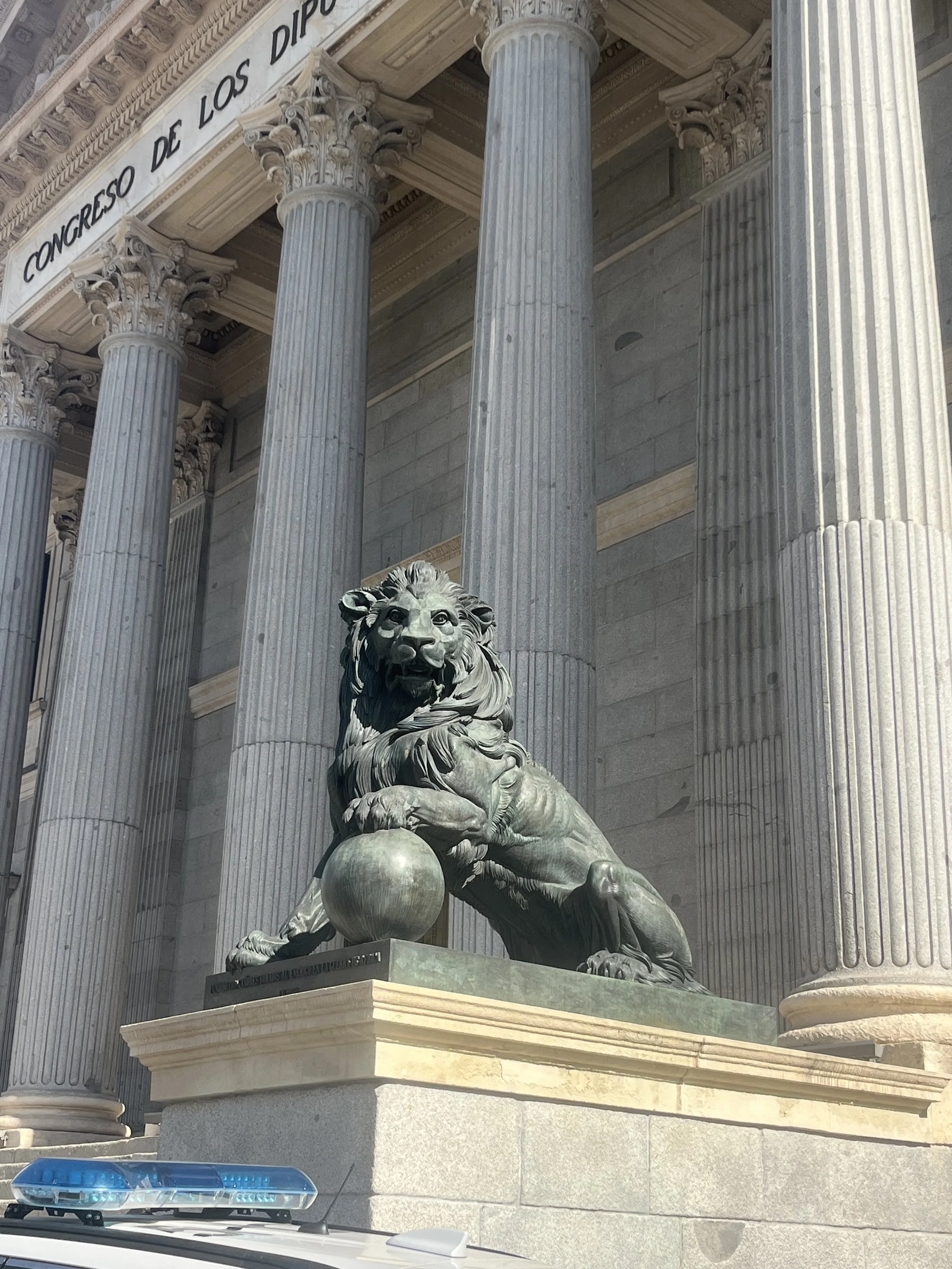
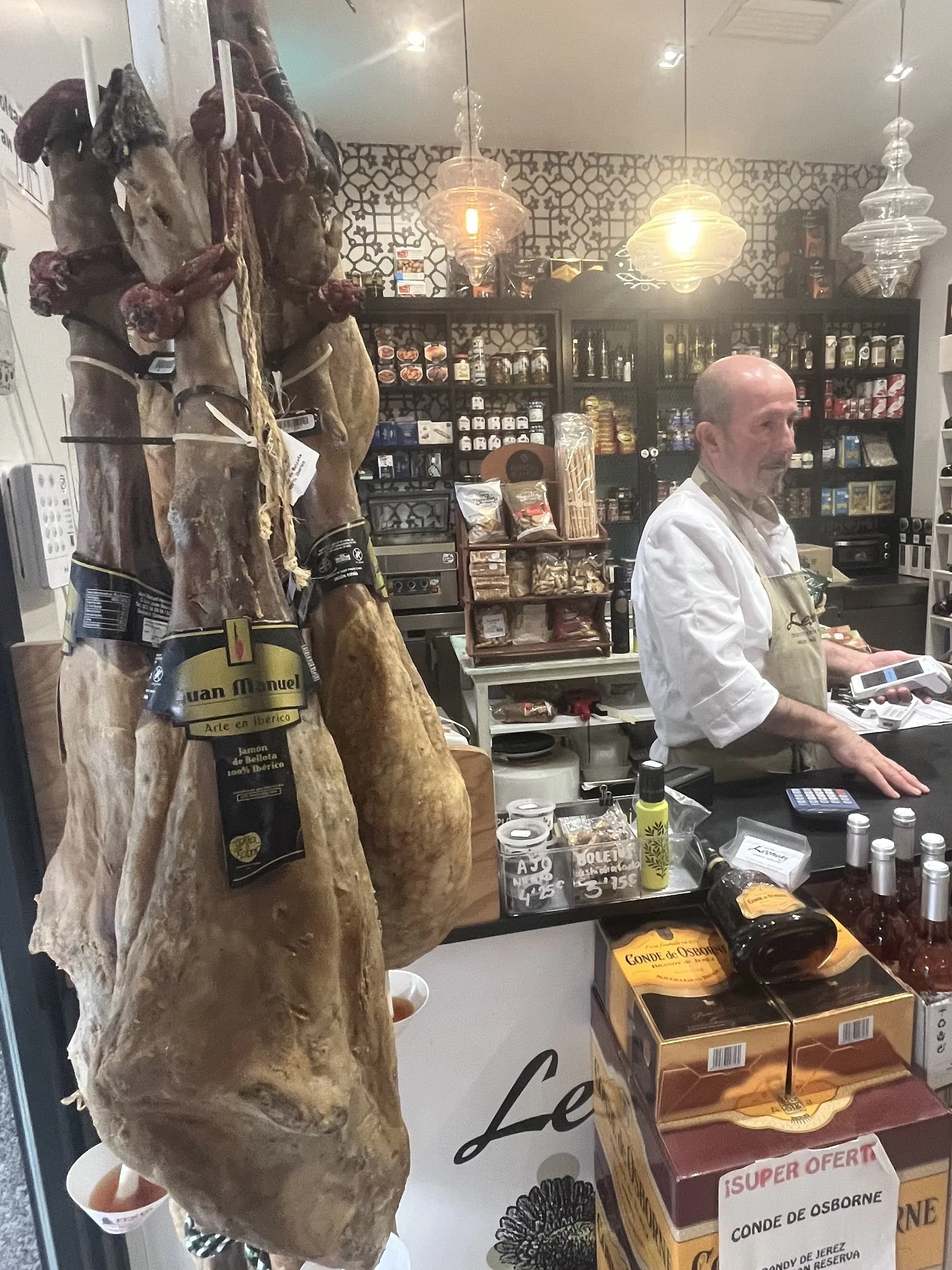
Our month travelling through Mallorca and then from Valencia, Benissa, Granada, Ojén, Ronda, Jerez, Córdoba and Seville to Madrid has been enlightening. We not only immersed ourselves in the landscape and the incredible crops it produces, but also in the food and history of Spain.
Oranges, olives, almonds and, more recently, pistachios carpeted the hillsides, while the flatter lowlands were golden with harvested wheat and barley. The food was a daily treat, and traditional favourites were offered everywhere — fresh grated tomato with bread, patatas bravas, gazpacho, Iberian ham, sheep’s and goat’s cheese, croquettes, oxtail, whole baked squid — and on it went.
We both became intensely aware not only of the local favourites but also of Spain’s long history and how it has influenced the Spanish lifestyle.
Three months away through Italy, France, England and Spain. We undoubtedly count ourselves fortunate and need to thank our wonderful tour groups, who were so amazing to travel with.
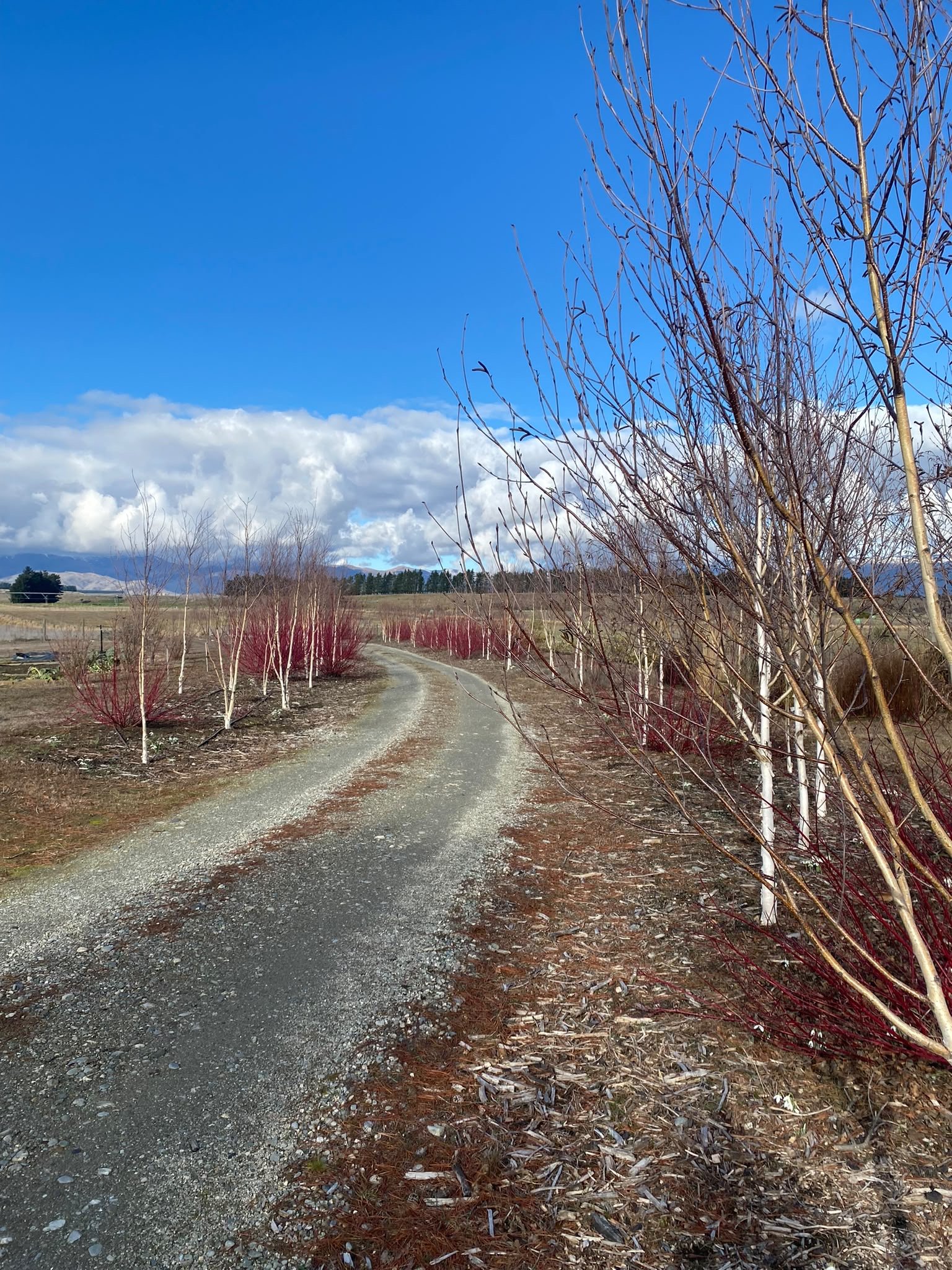
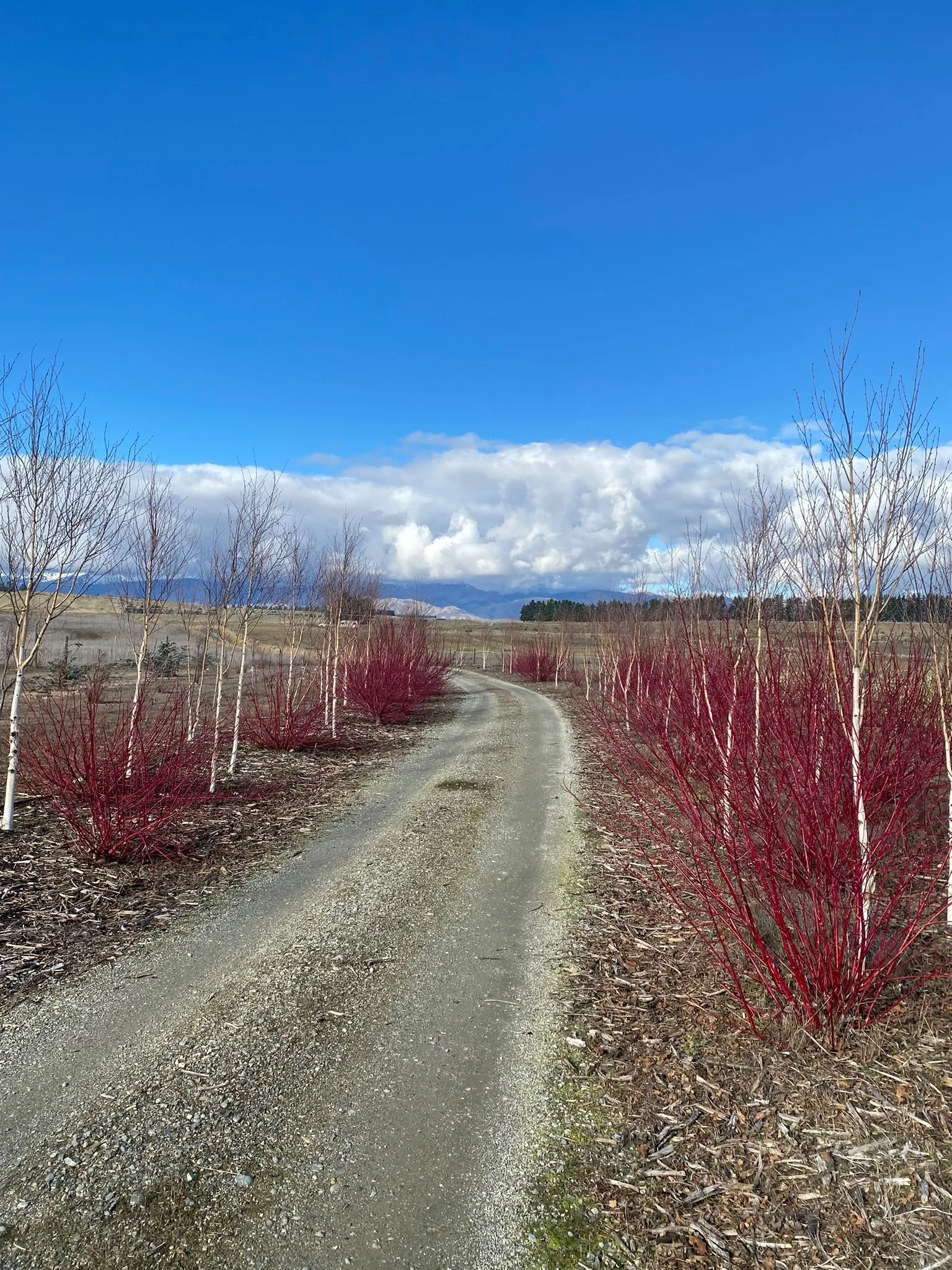
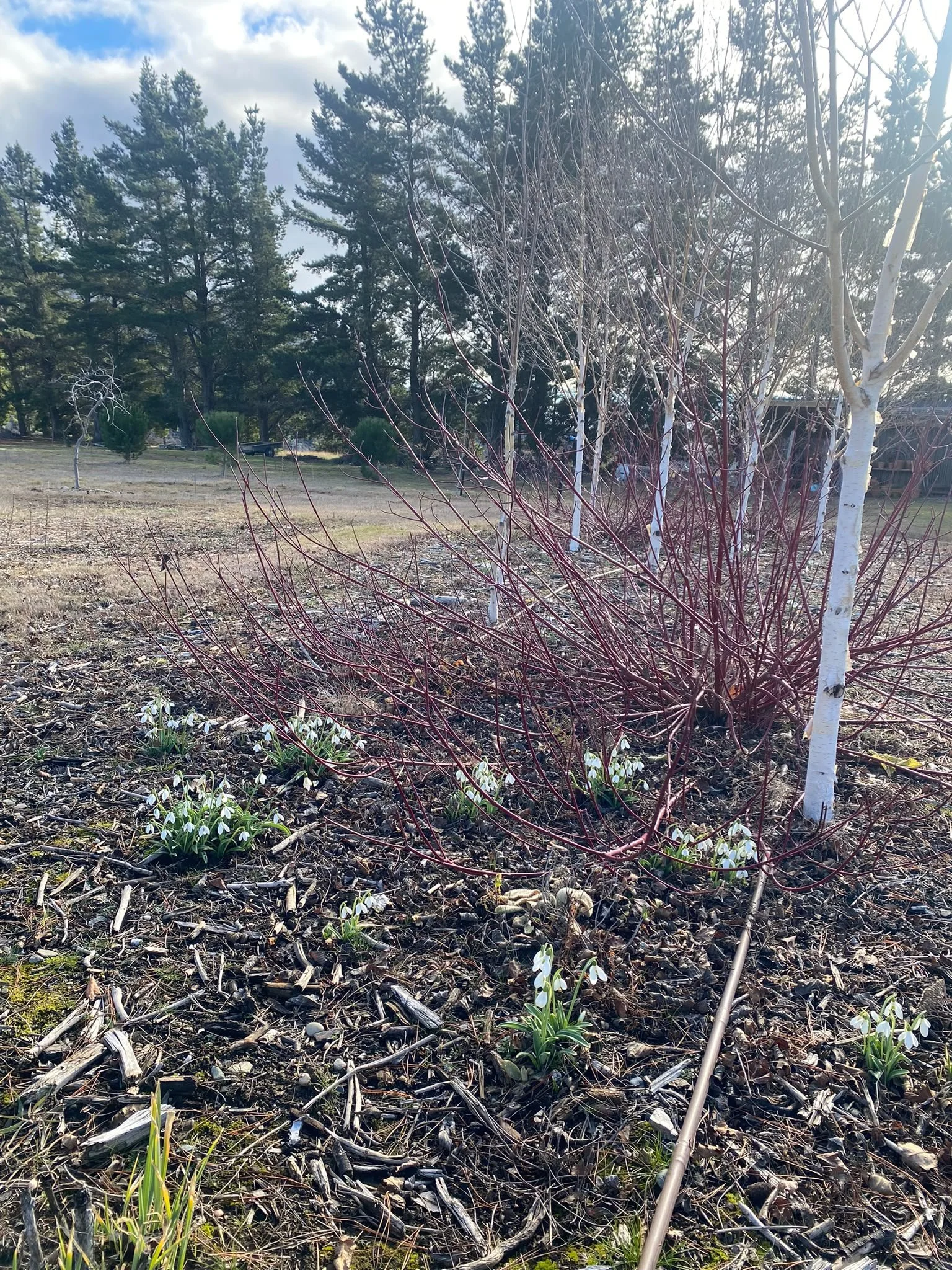
We will be arriving back in Central Otago at the end of winter and the start of spring. We are both eager to get out in the garden and be in time to enjoy all the bulbs we planted before we left, as well as catch up with our children and grandchildren.
xxx Judith