
Discovering Mallorca, One Slow Day at a Time
Mallorca for six days had been one of those places sitting quietly on the travel radar. We had heard plenty about the party island, the mass tourism and endless rows of condominiums stretching for kilometres along the coastline. However, I had read about a small hotel called Yartan in a magazine some time ago, and it had stayed in my mind. After accidentally booking for May, while we were still in Taras, the hotel very kindly changed our non-refundable reservation.
Arriving at Bristol Airport at 4 a.m. was an eye-opener. It was almost a traffic jam getting into the terminal, which was swamped with holidaymakers heading for Spain, Portugal, Tenerife and all the popular summer resorts. People were tucking into full English breakfasts with jugs of beer at 5 a.m., while finding a spare table for our espresso proved almost impossible.
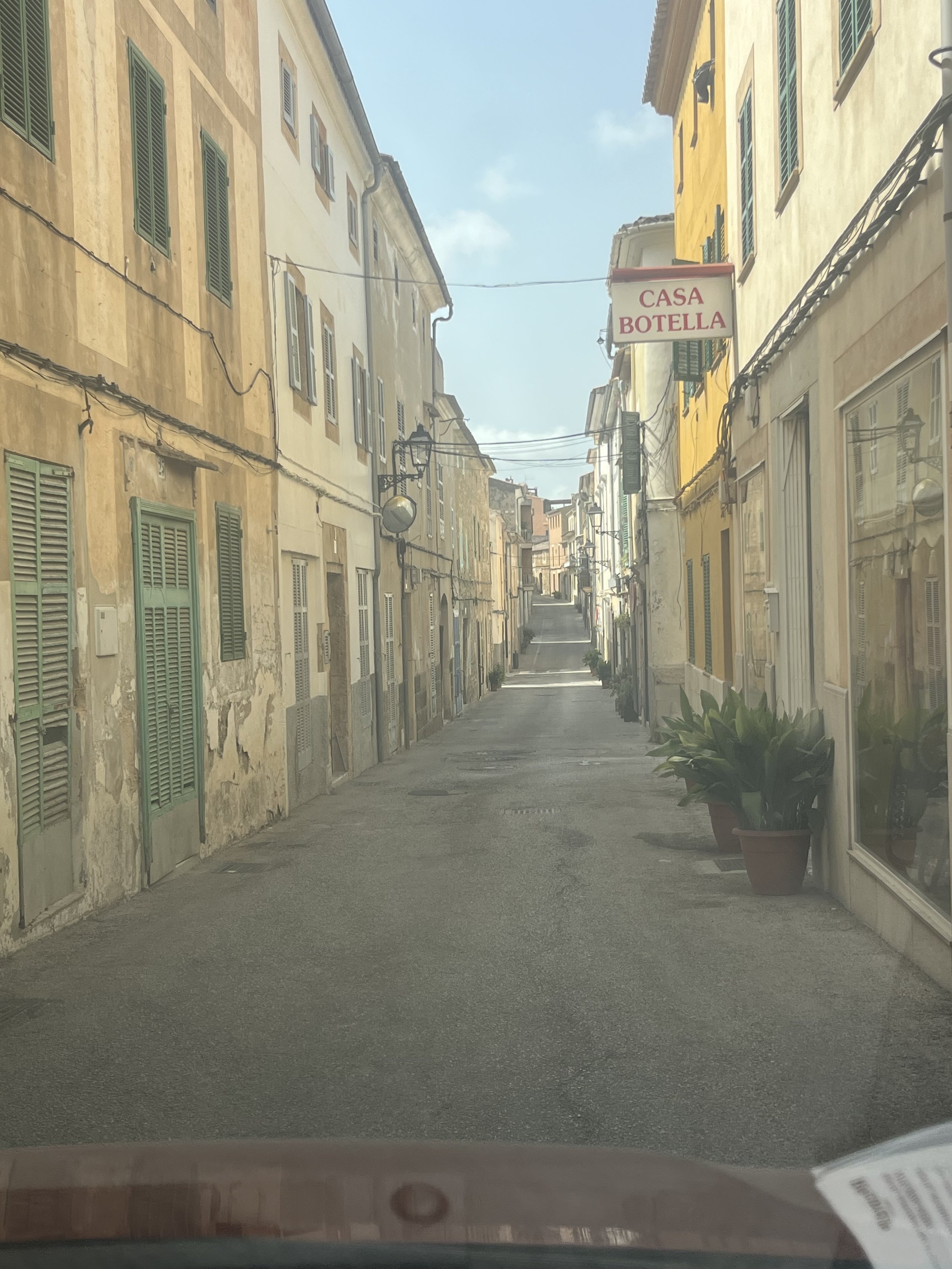
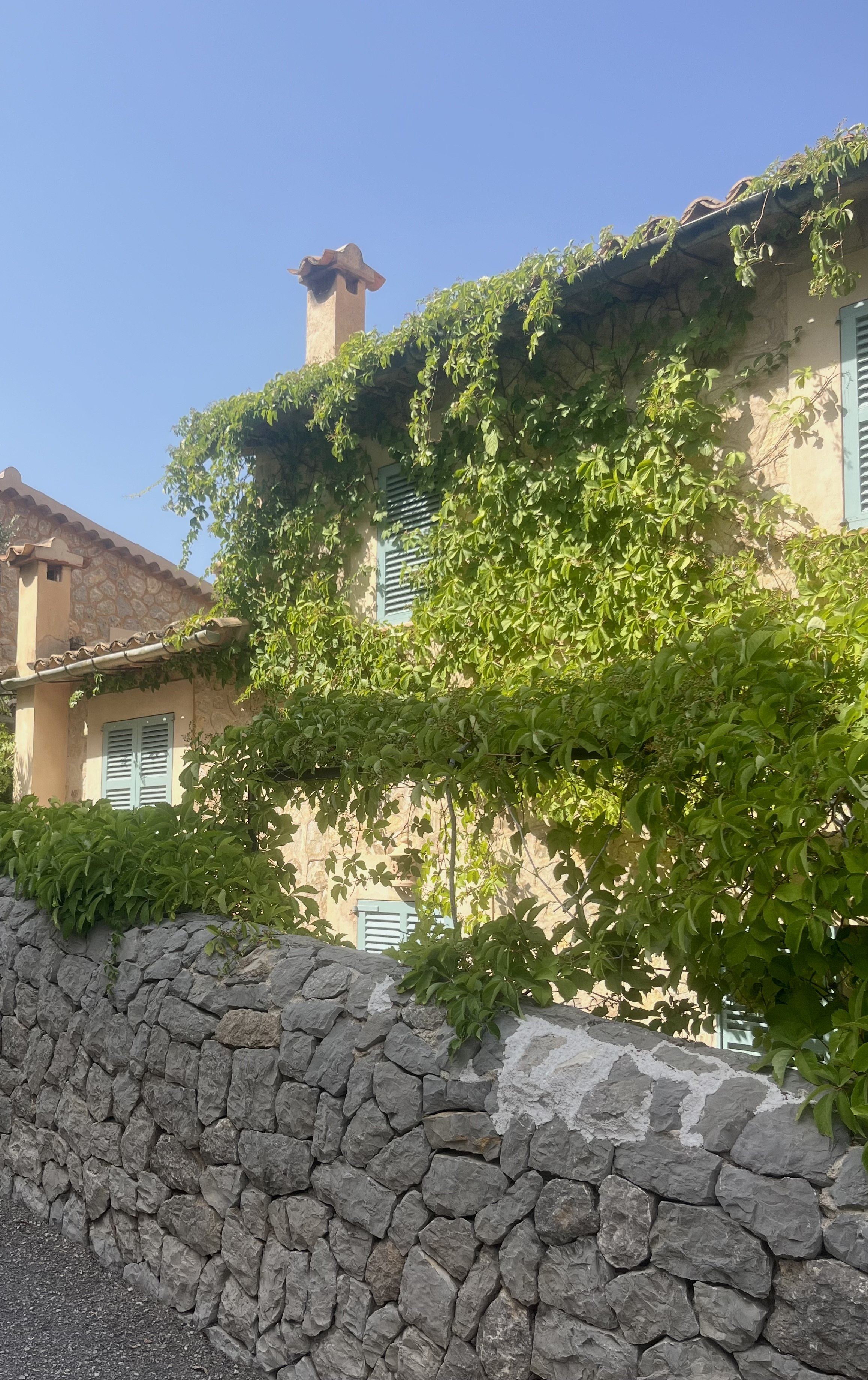
Collecting our rental car was straightforward, and the drive to our little village of Artà was easy enough. Finding the hotel, however, was another story. We navigated a maze of narrow one-way streets, sometimes having to reverse just to make it around a corner.
Miraculously, the Yartan Hotel was an oasis. It had a beautiful garden and pool, and our room was cool, spacious and opened onto a private deck. By late afternoon we realised we hadn't eaten all day, so a snack, a glass of wine and a swim suddenly became the highest priorities.
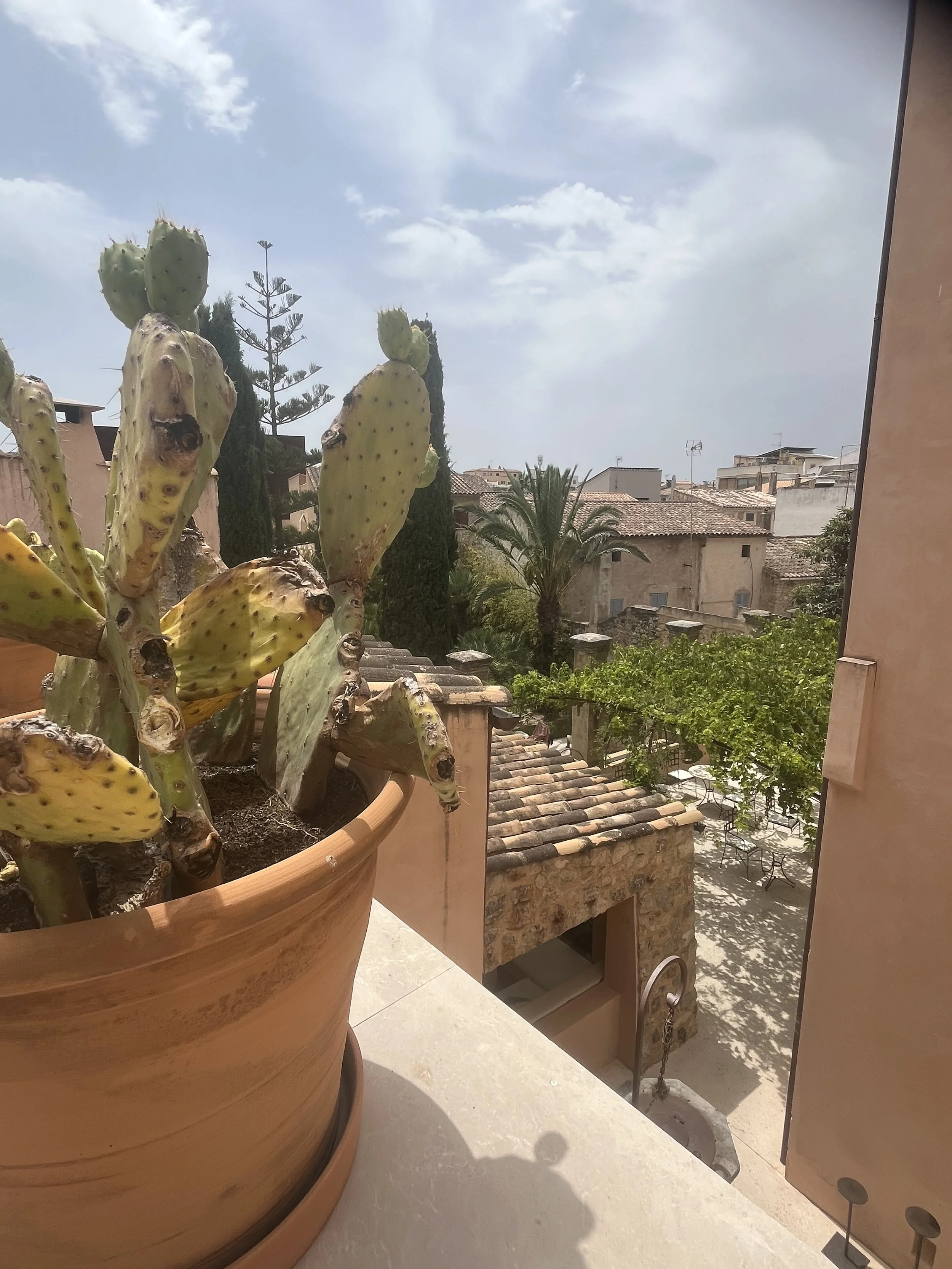
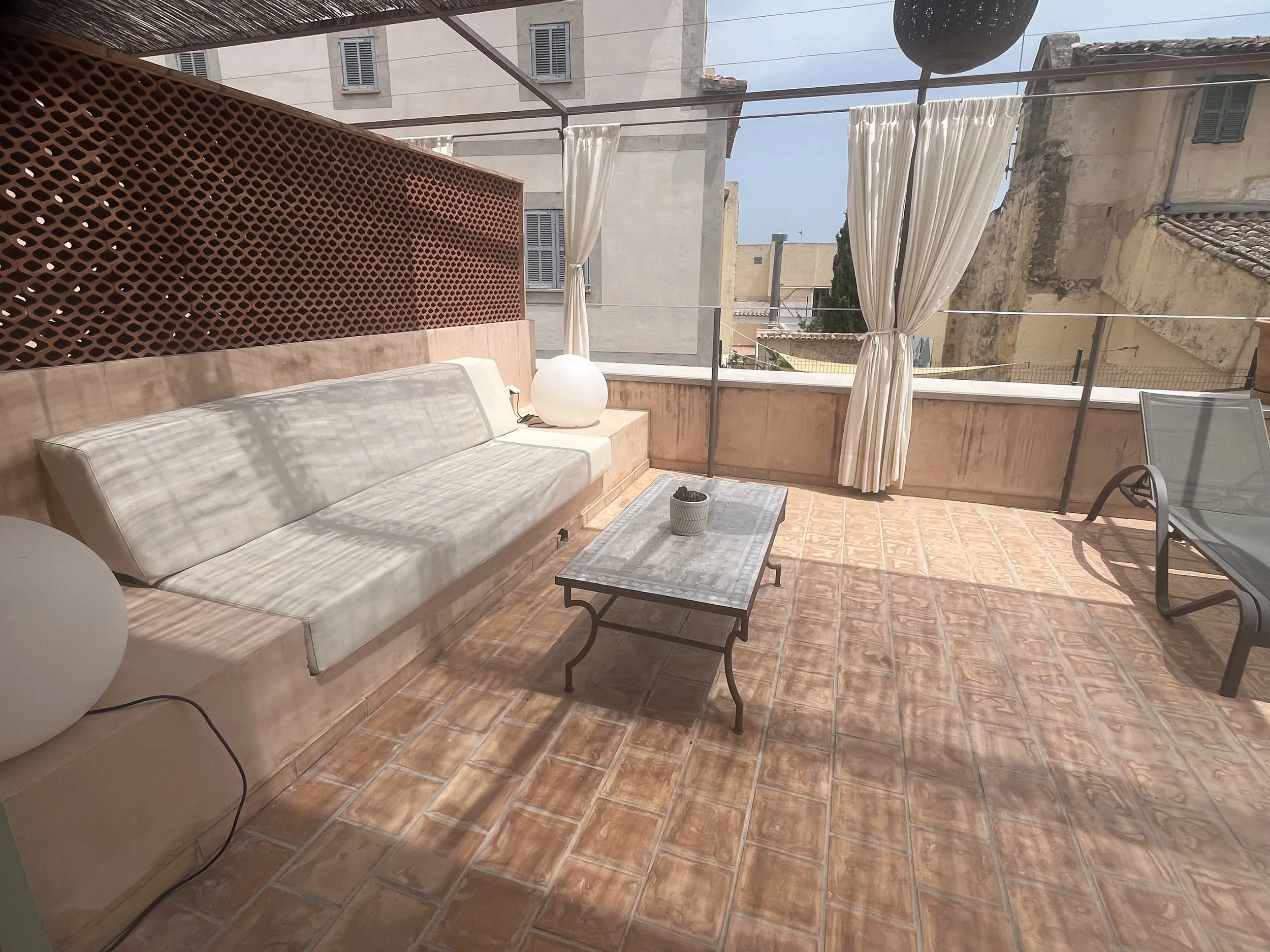
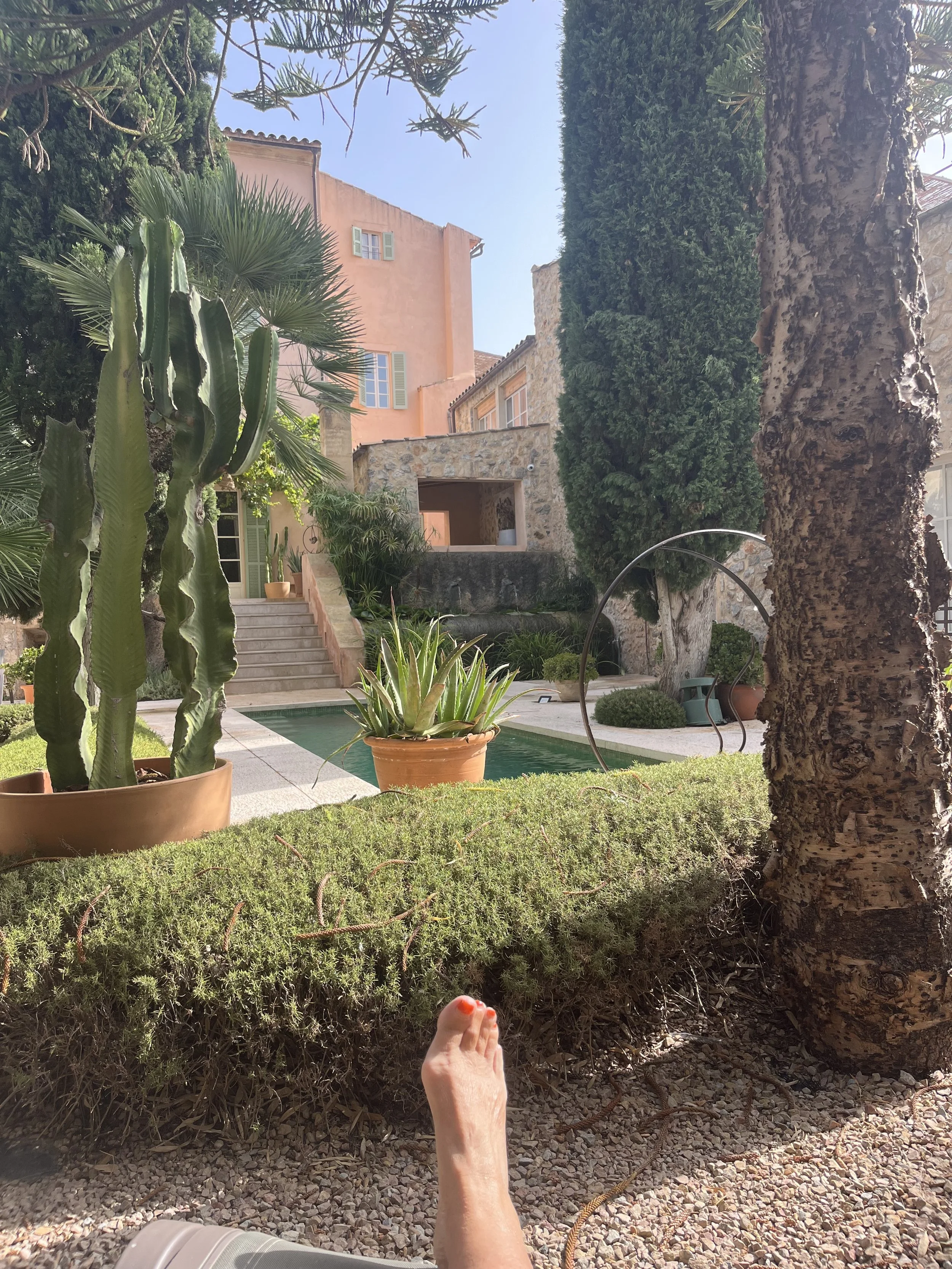
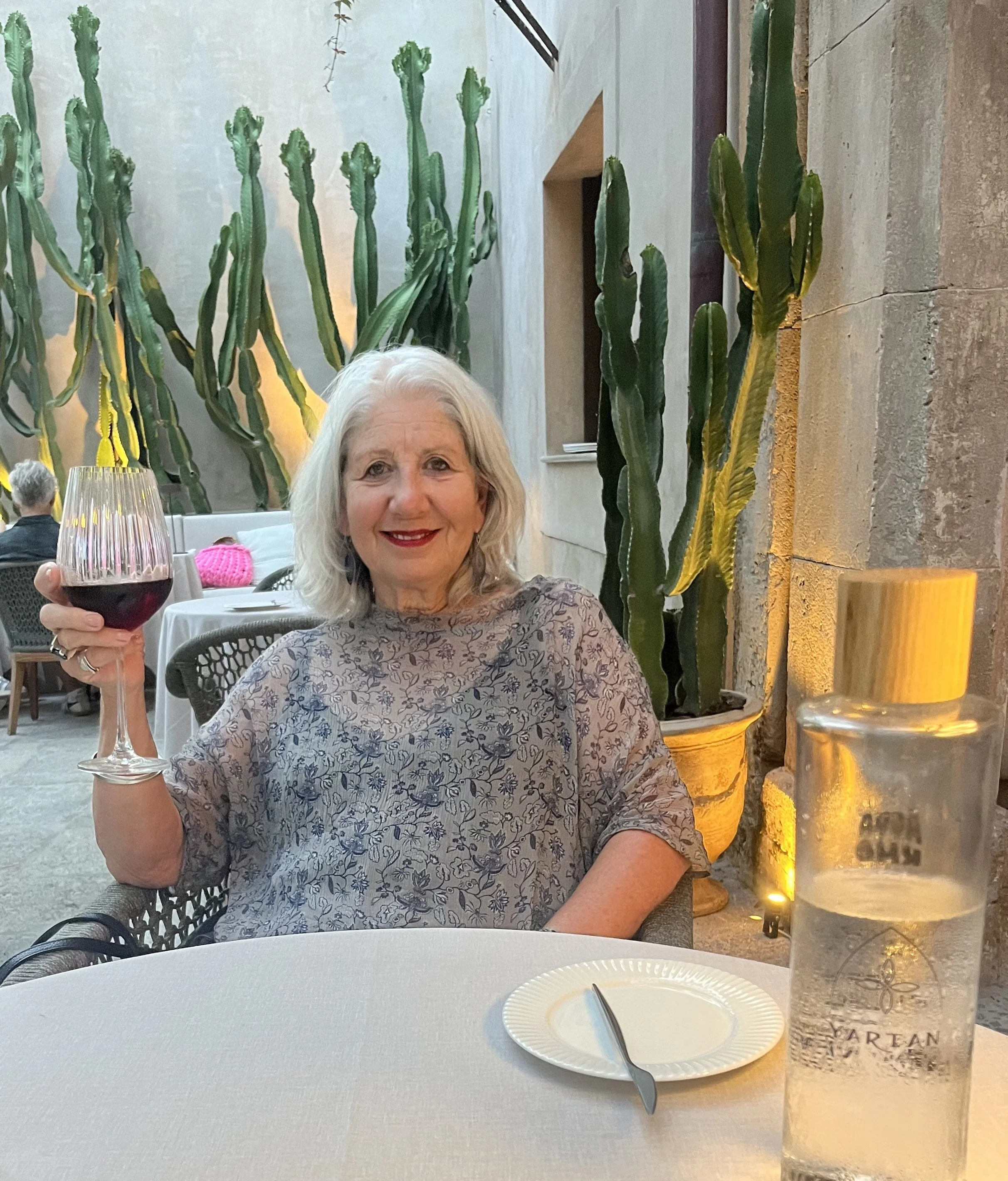
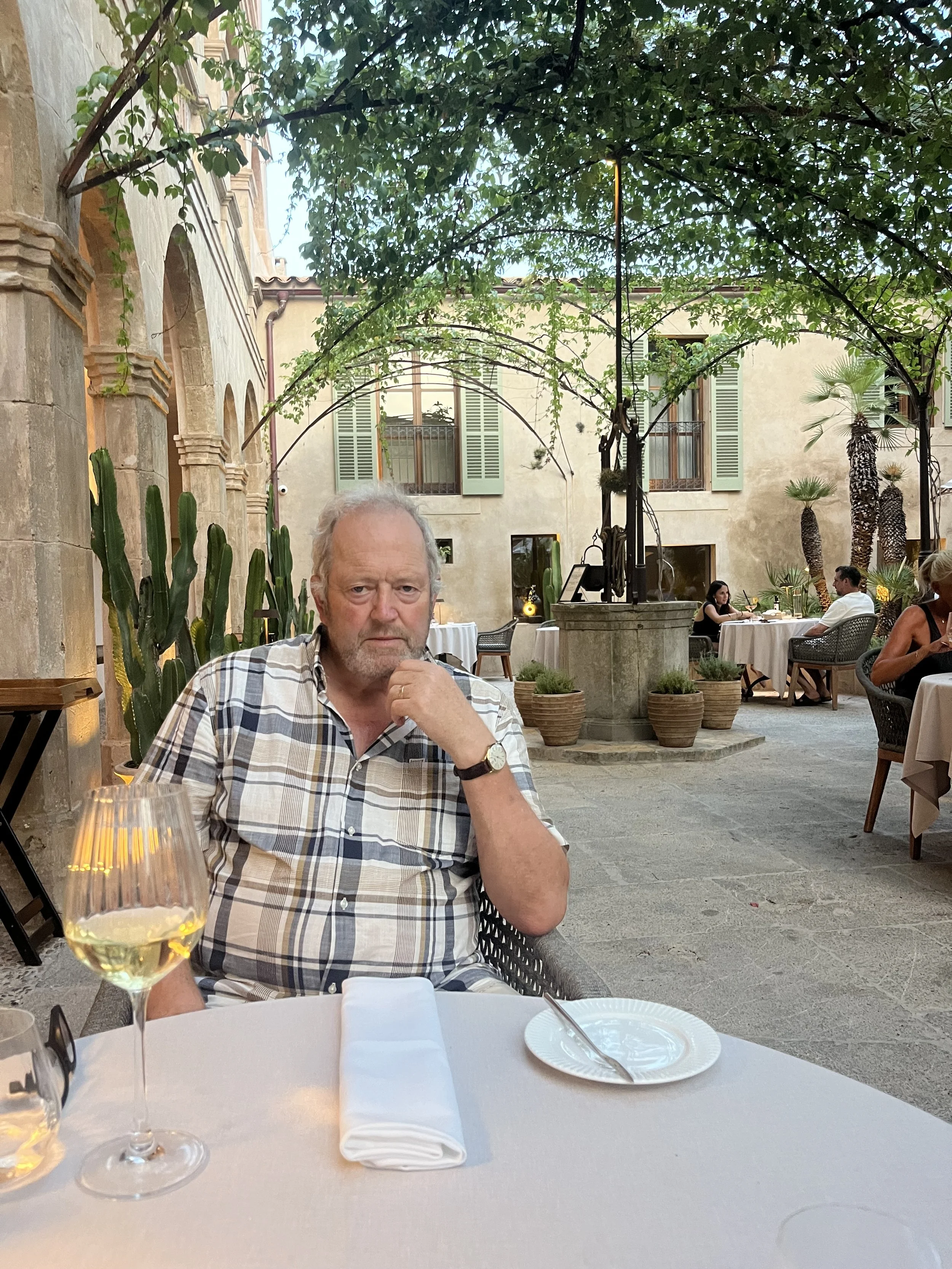
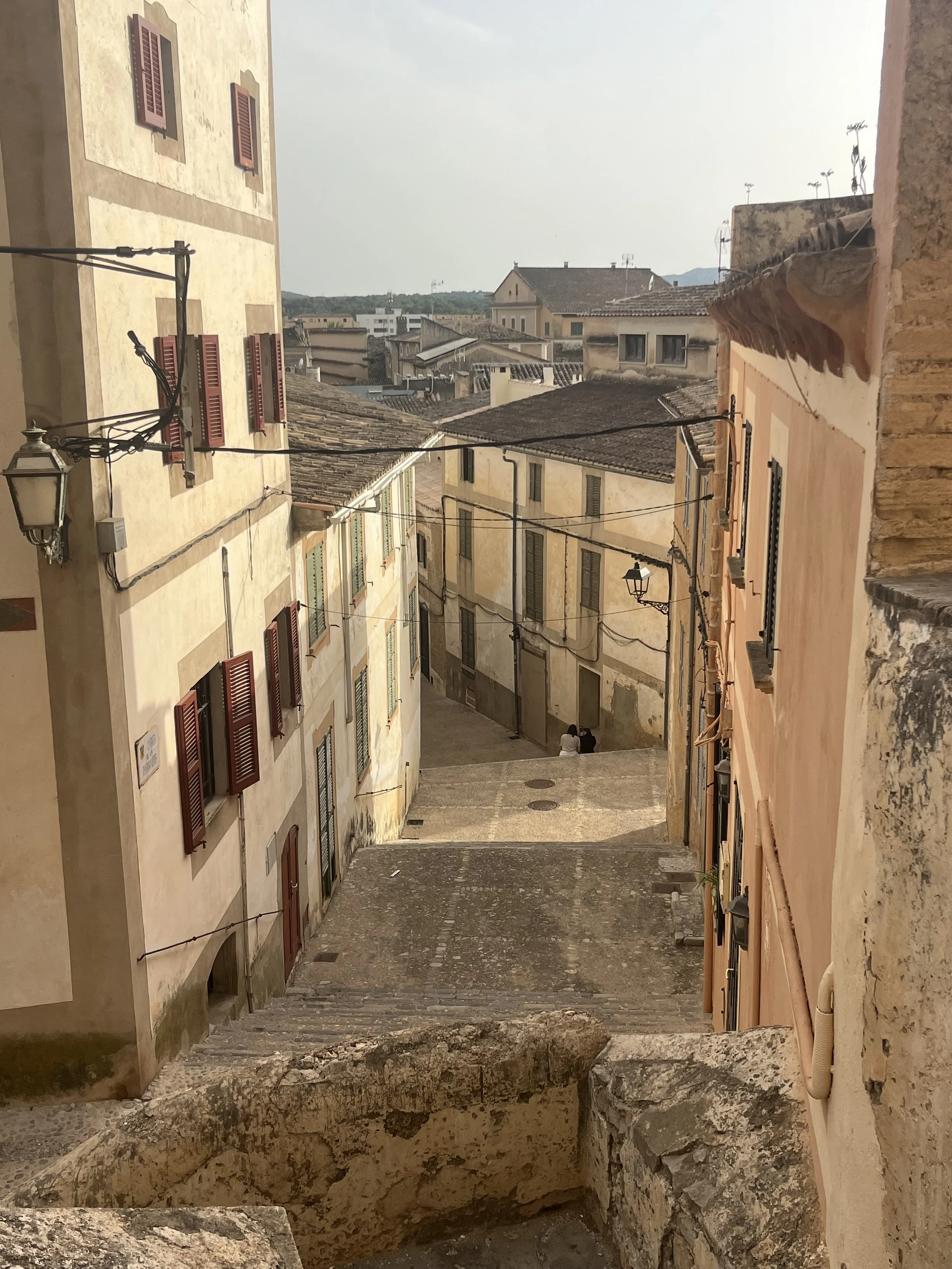
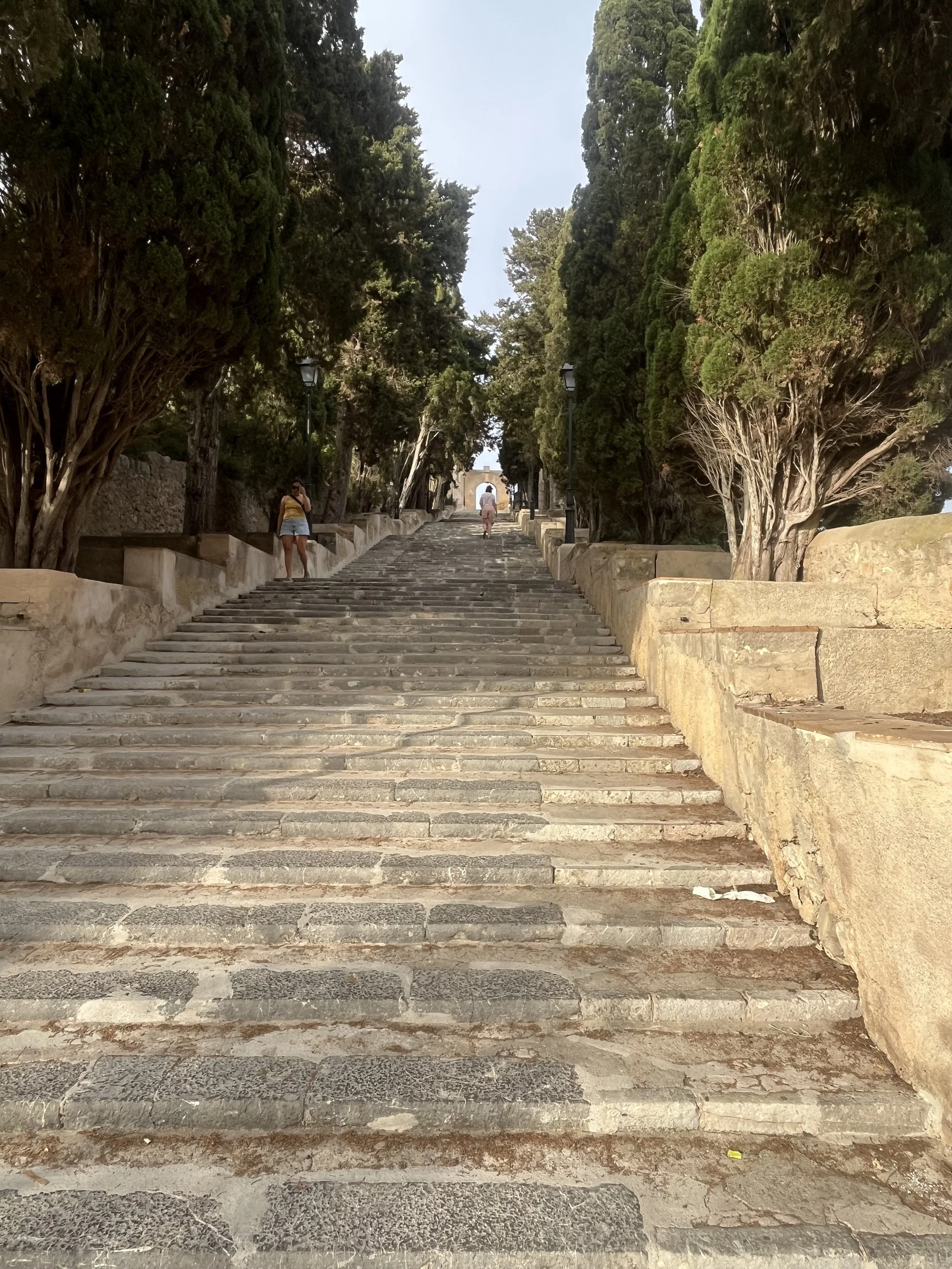
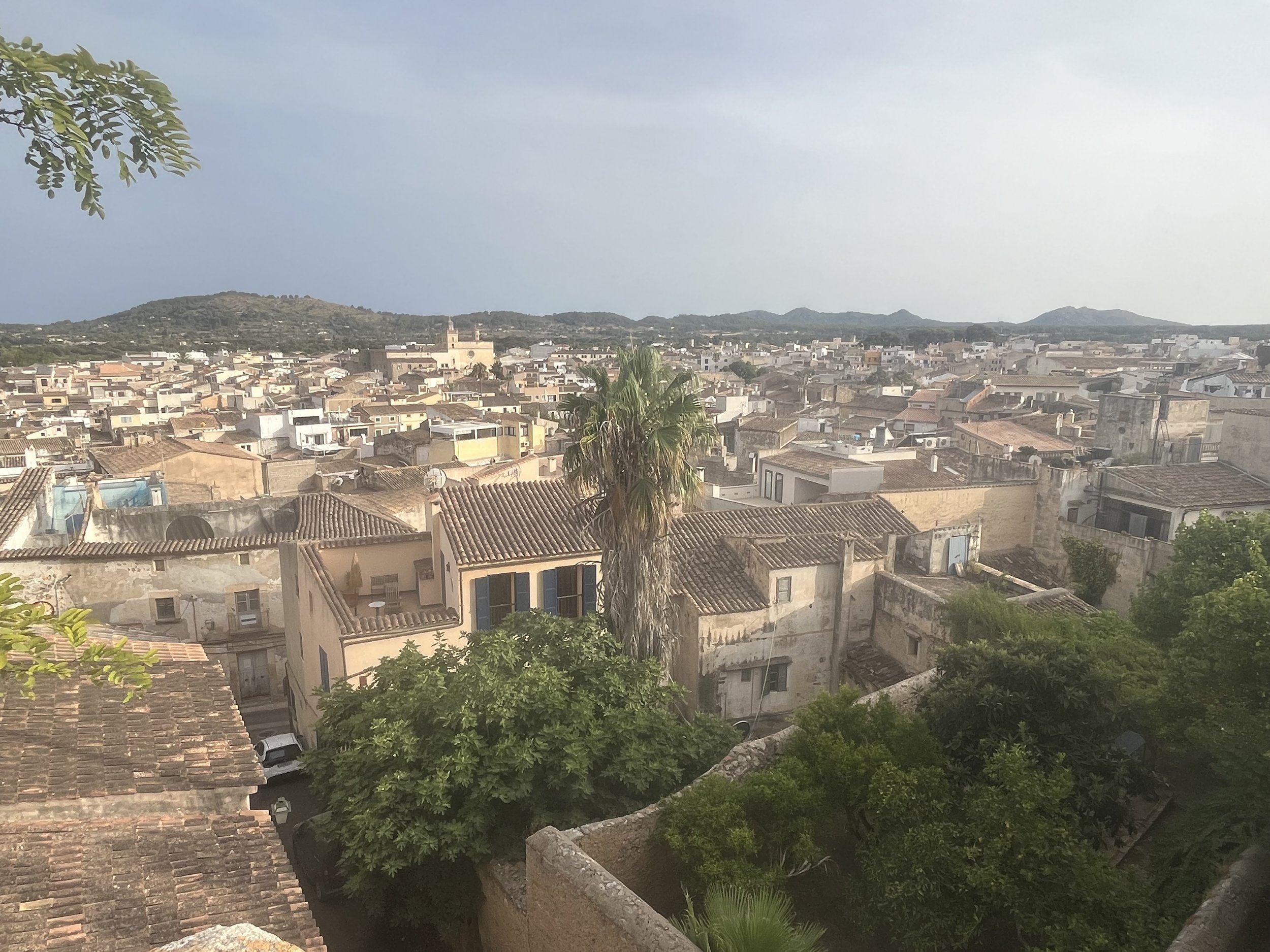
Finding a good restaurant is usually the first challenge. If I haven't already done my research and made reservations, reception staff are invariably the best source of local knowledge. Within an hour we had dinner bookings for the next three nights.
Thanks to Rae on the French tour, I also had an 800-page novel—Something to Hide by Elizabeth George. Detective fiction isn't normally my choice, but it was absolutely riveting, and I learnt so much along the way.
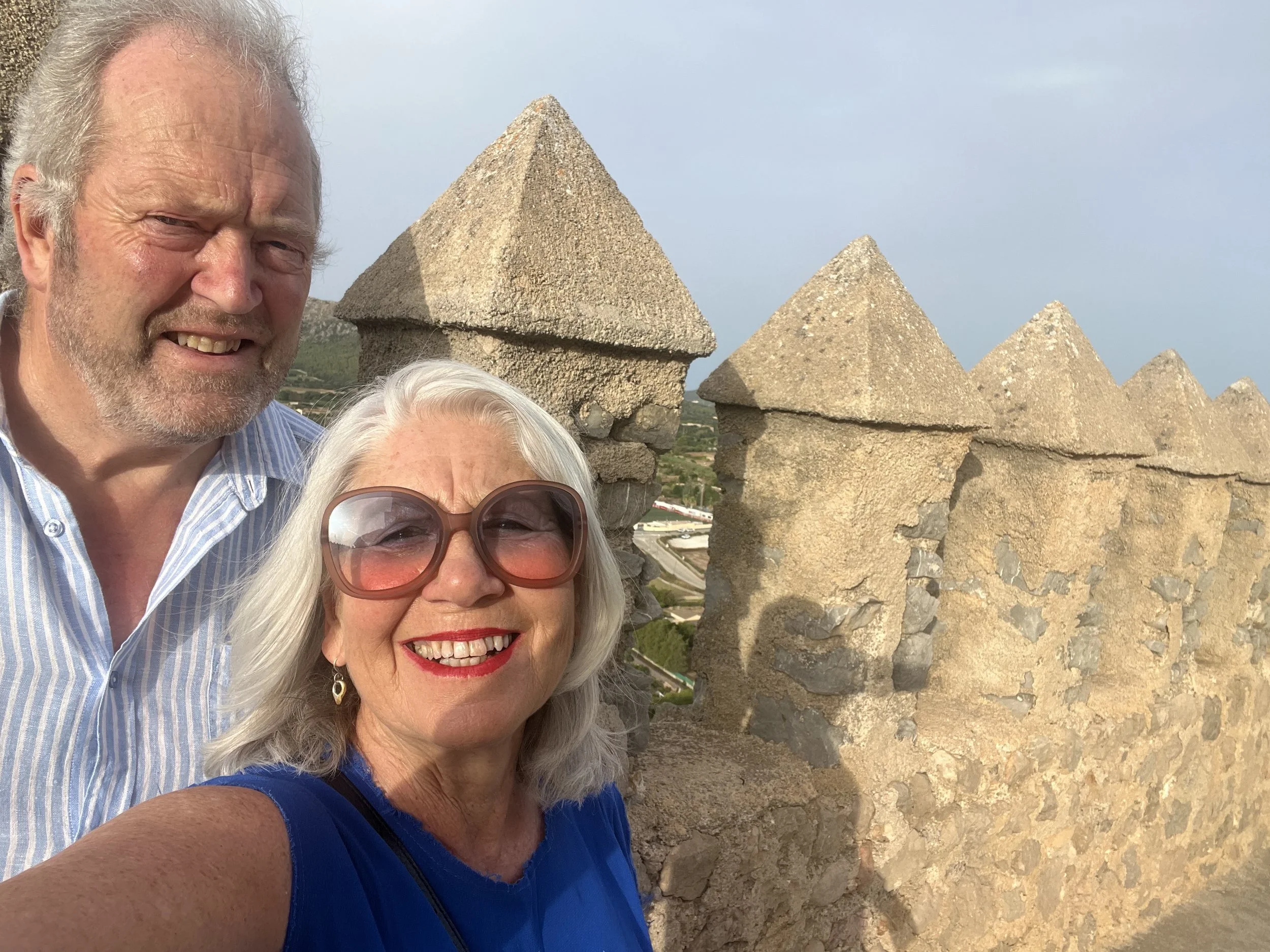
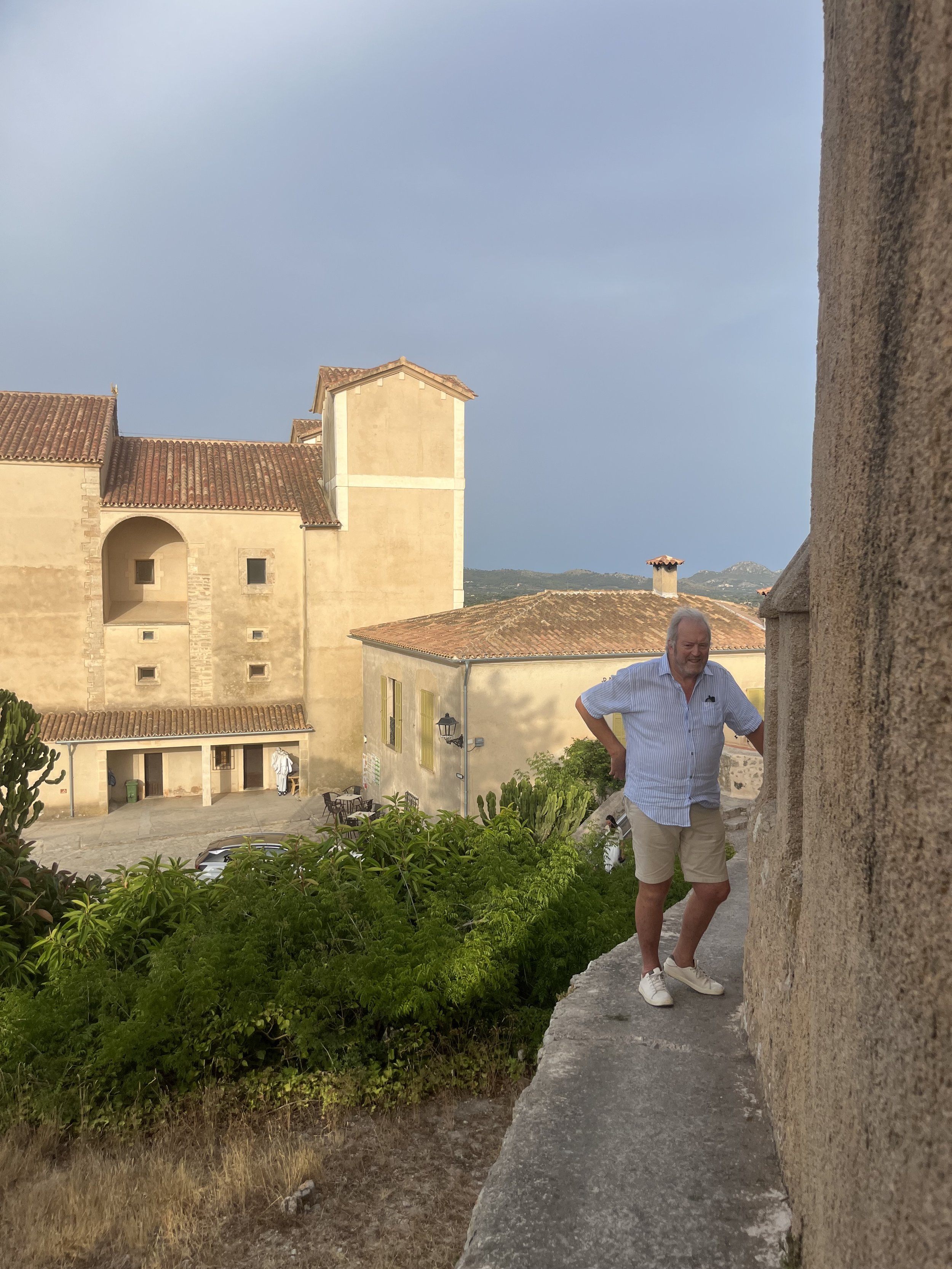
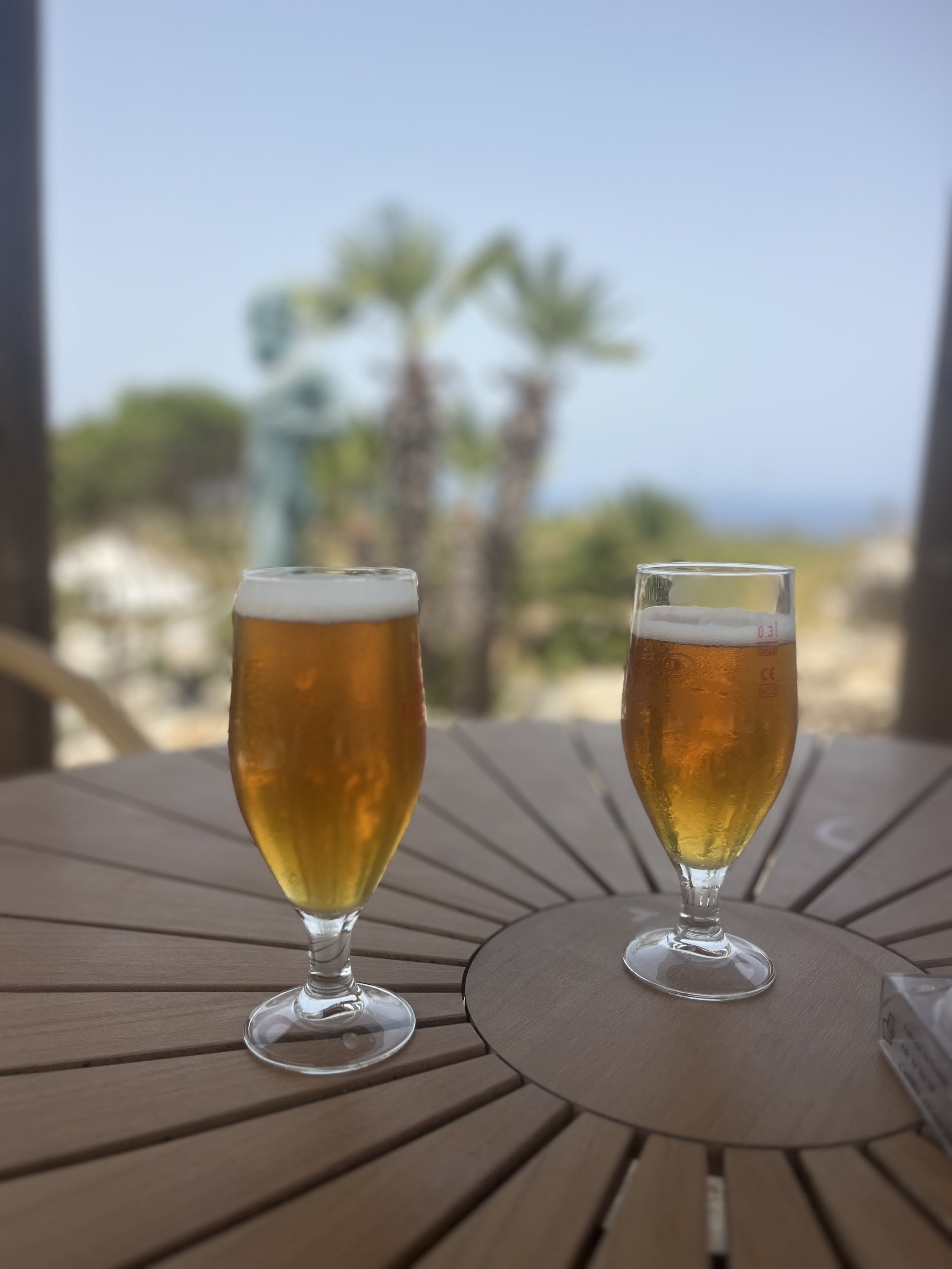
We didn't leave the pool on our first full day. After finishing the tours and then spending ten busy days in the UK, slowing down felt wonderful. Early that evening we wandered up to the Gothic sanctuary high above Artà before dinner. The following day unfolded in much the same way, although we did venture to the coast, driving past a stunningly green golf course that seemed oddly out of place in such a dry landscape. Towering hotels and apartment blocks lined the beaches, and we had little enthusiasm to stop. Instead, we found a park, walked around the port of Cala Ratjada, endured some rather dreadful fried calamari, drank a beer, and happily returned to our sanctuary in Artà.
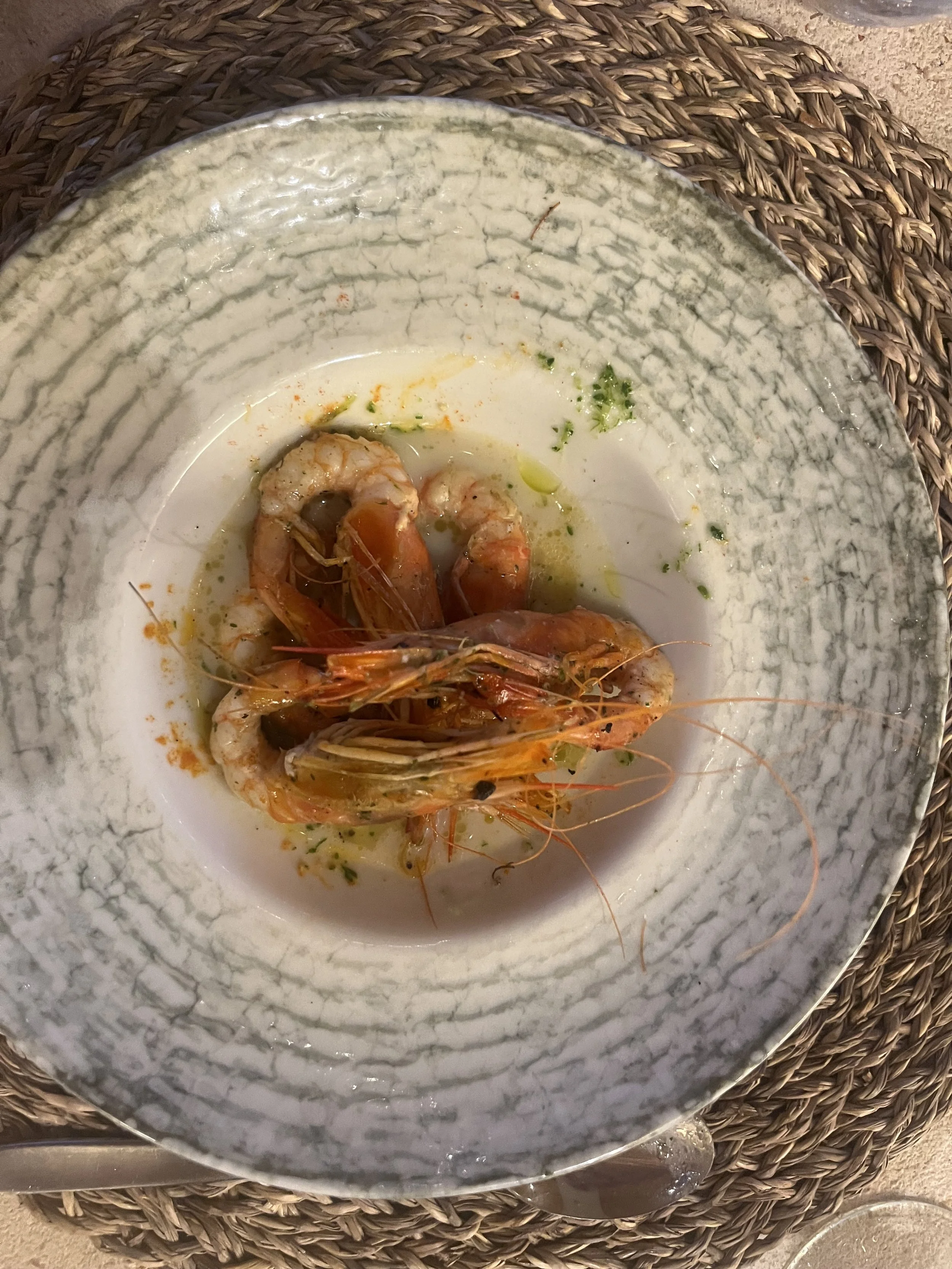
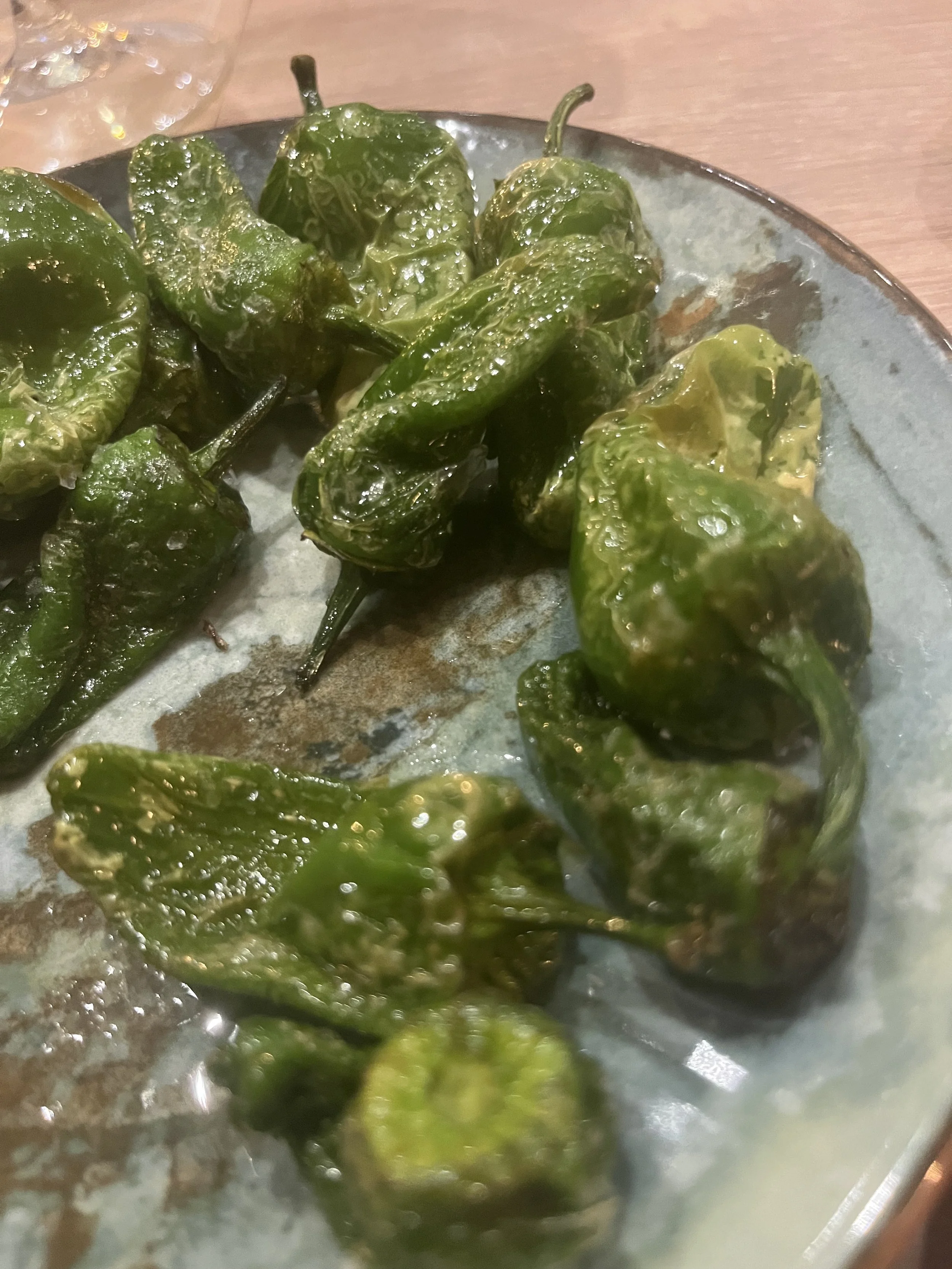
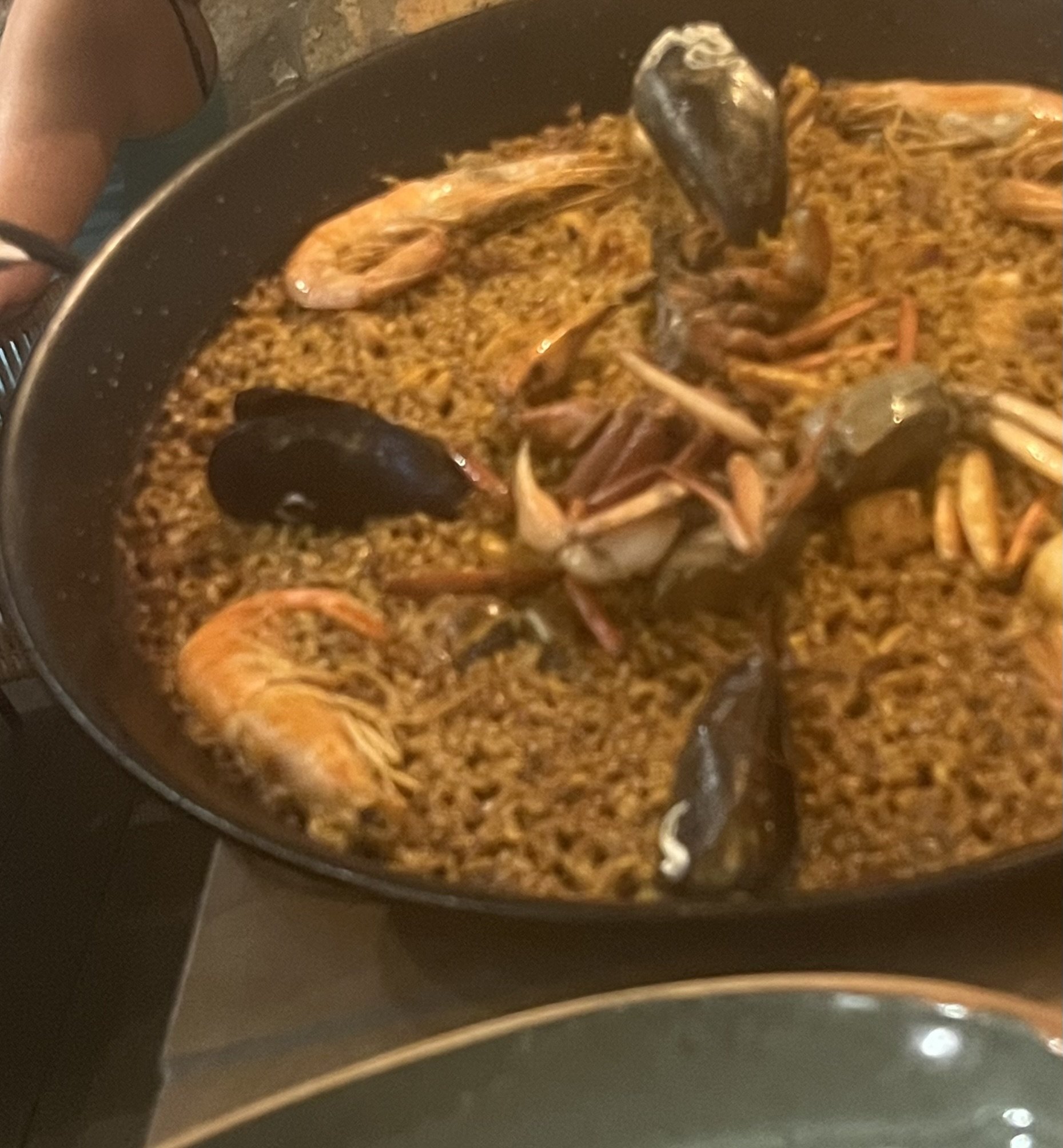
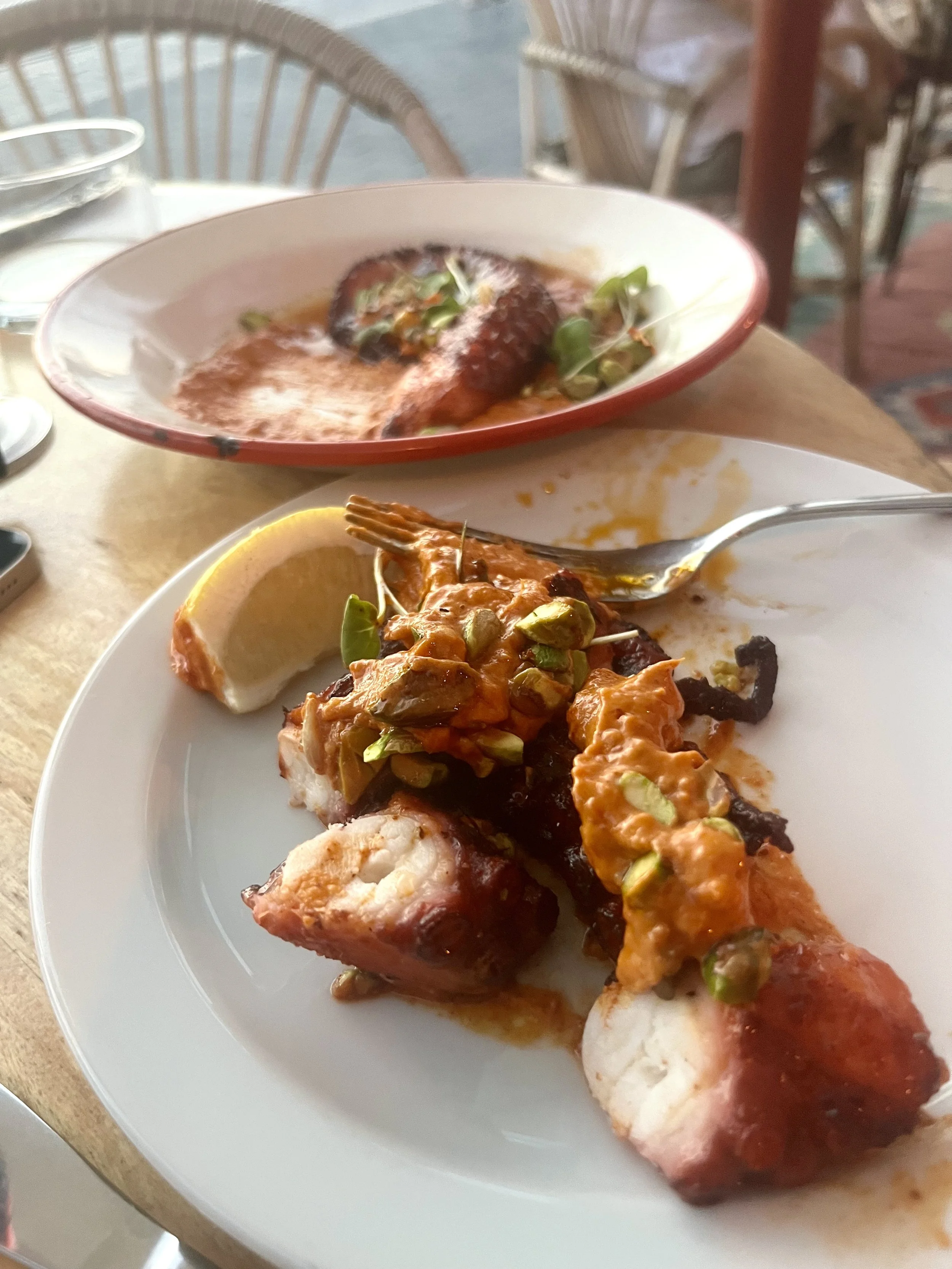
Seafood dominates most menus, as does pork. Rice dishes, especially paella, are a staple, and they're almost always served for two.
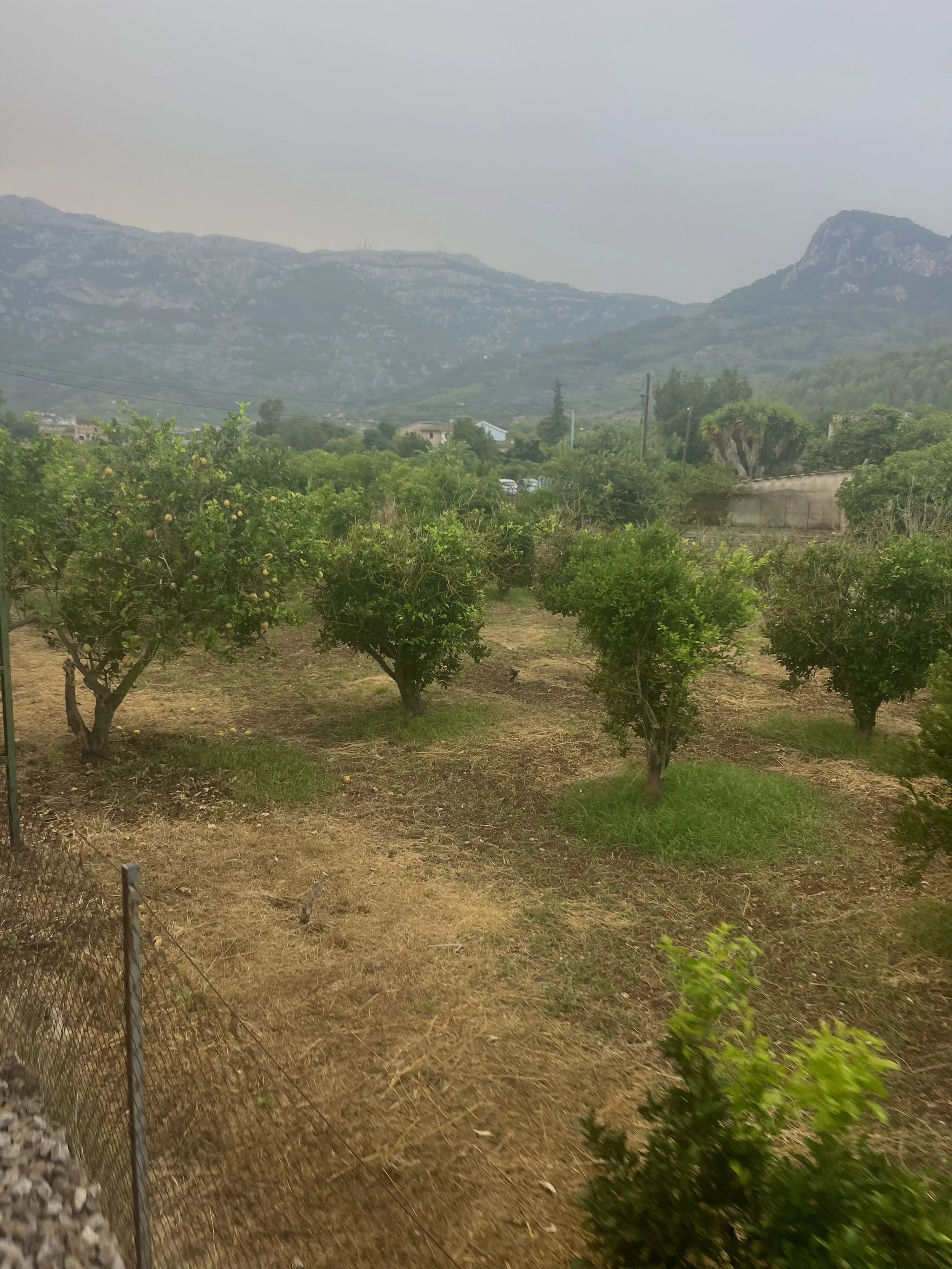
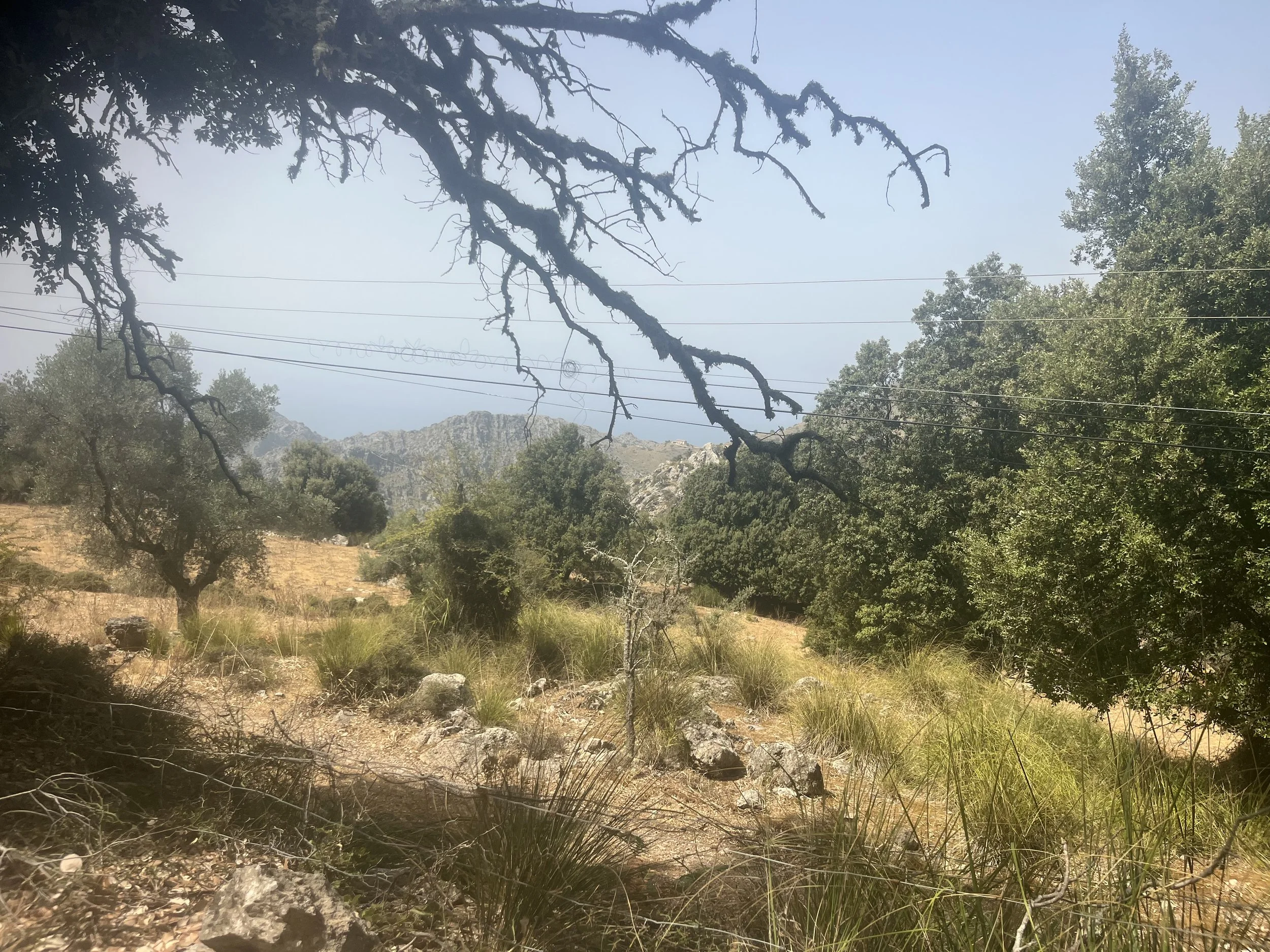
We became fascinated by what thrives in Mallorca's dry landscape. Stipa gigantea grows everywhere, as do holm oaks—the wonderful evergreen trees that flourish in arid conditions. Olive trees, of course, are abundant, but it was discovering unfamiliar species that intrigued us most.
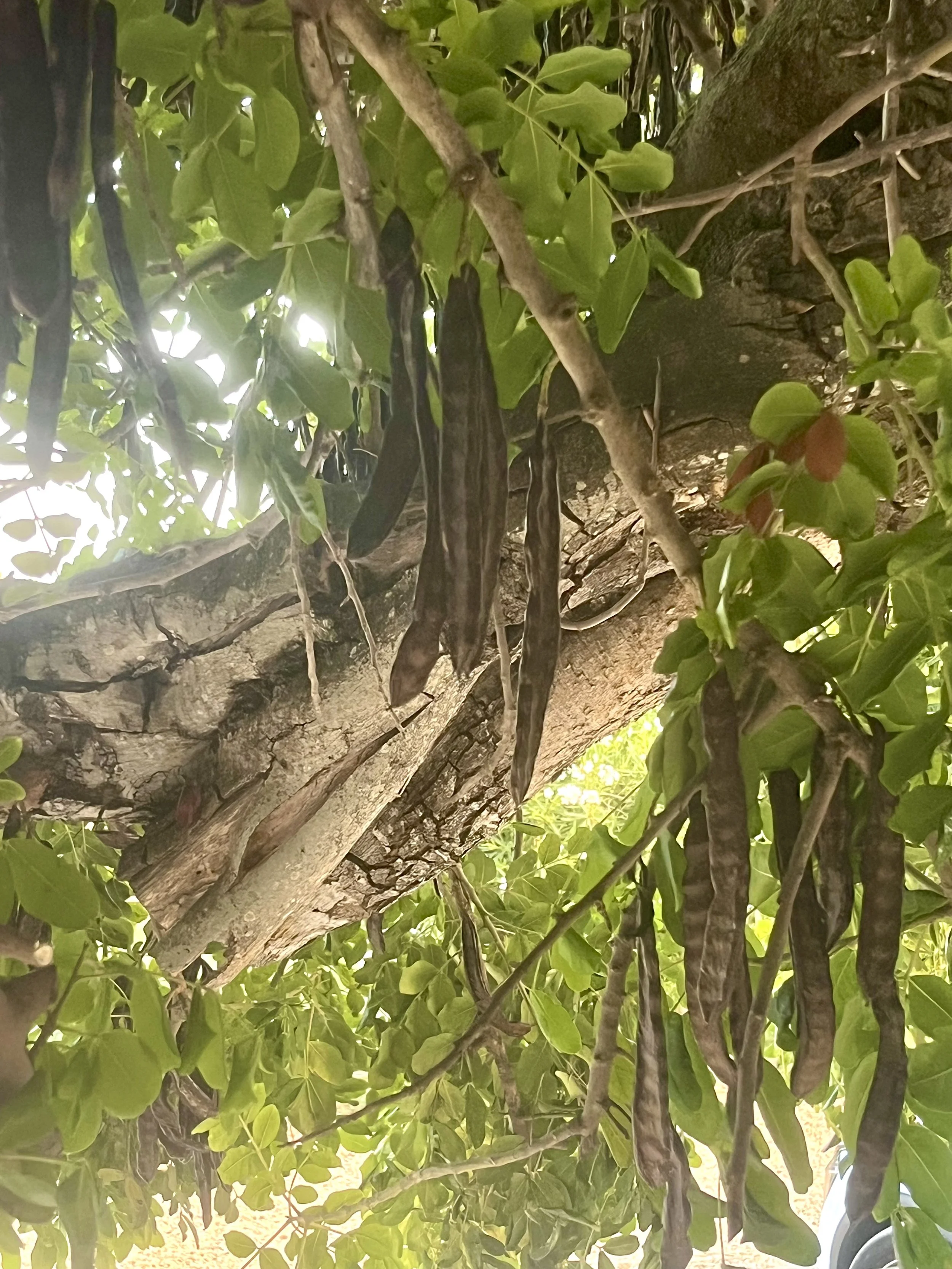
One was the carob tree, with its long brown pods filled with a sweet, chocolate-flavoured pulp surrounding hard seeds. The pods are ground into carob powder as a chocolate substitute, while the seeds were once used for weighing gold, which is where the word carat originates. Carob trees love dry, rocky soil and need very little water, making them perfectly suited to Mallorca.
Driving around the northern part of the island meant passing through the frenetic holiday resorts of Alcúdia and Pollença. Honestly, they seemed to continue for more than twelve kilometres, and it took over half an hour to crawl through the traffic lights.
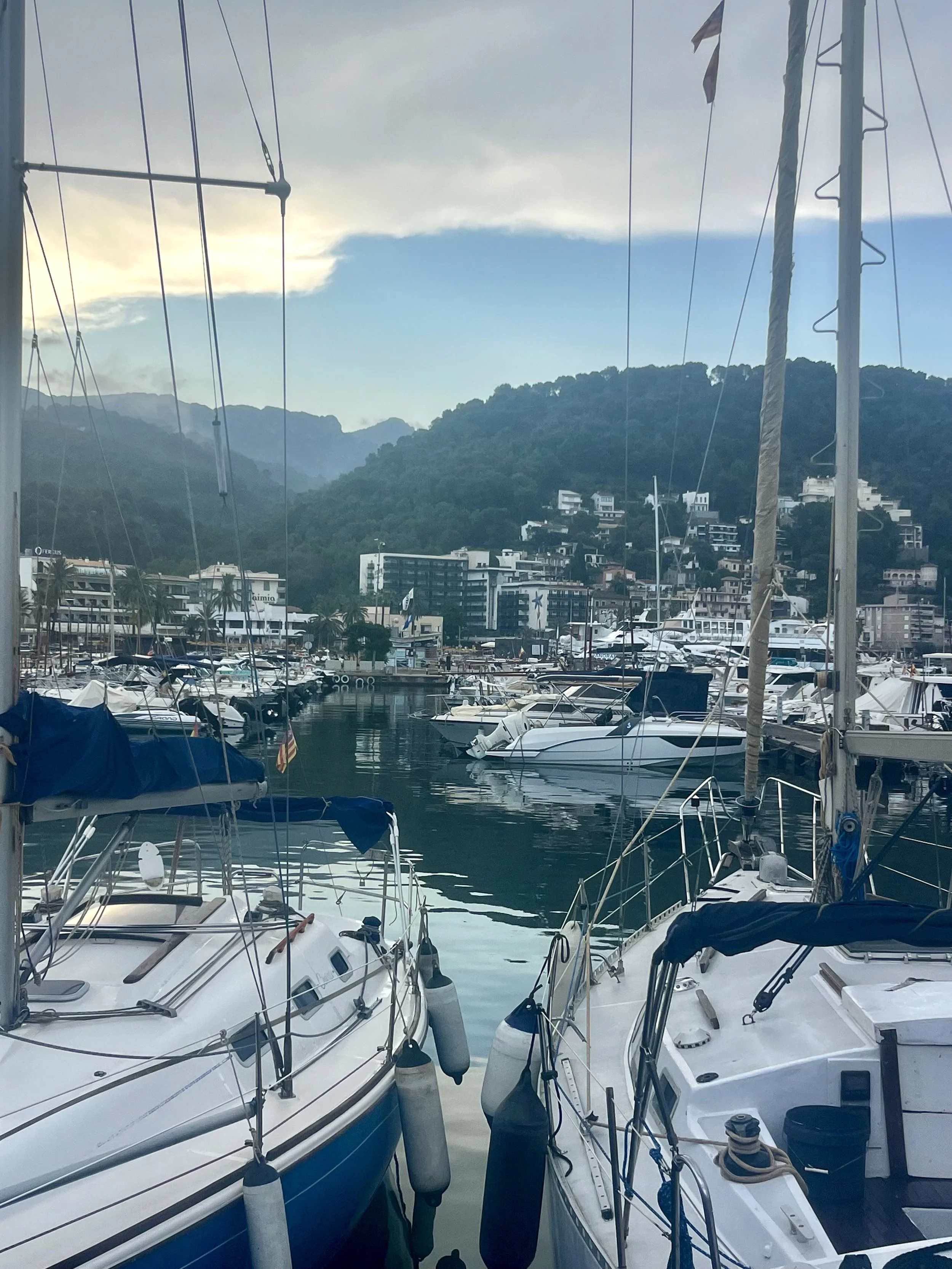
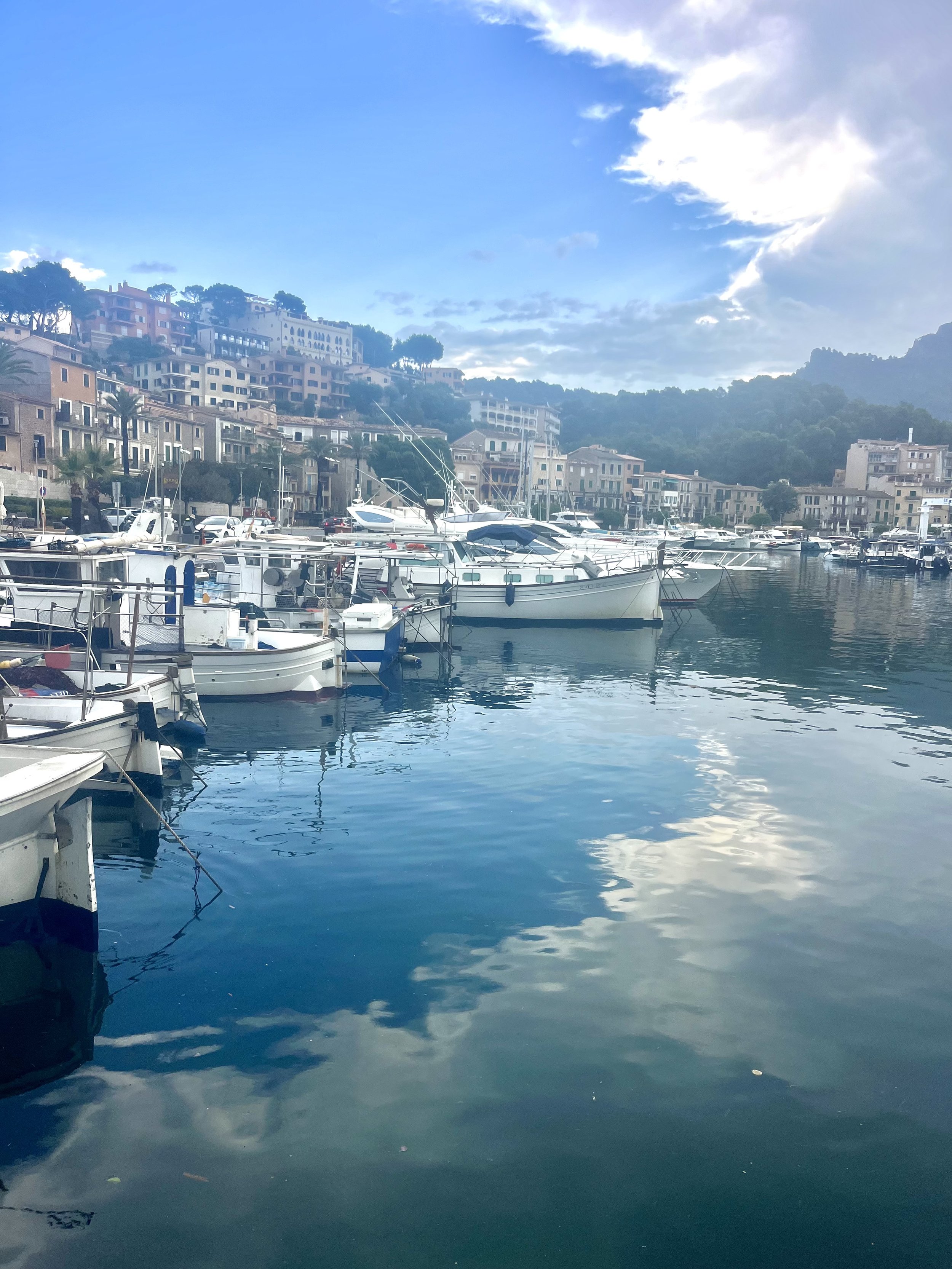
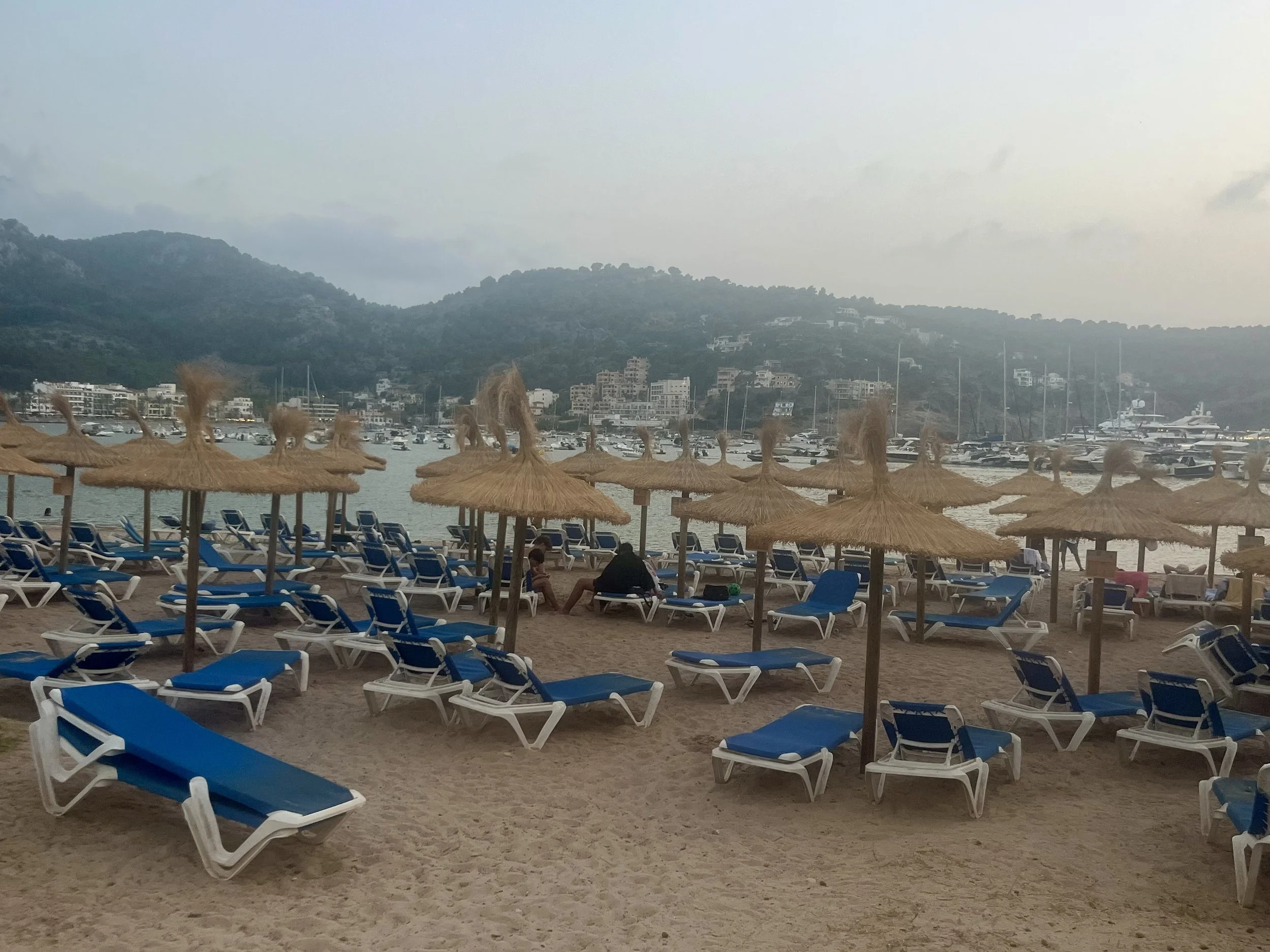
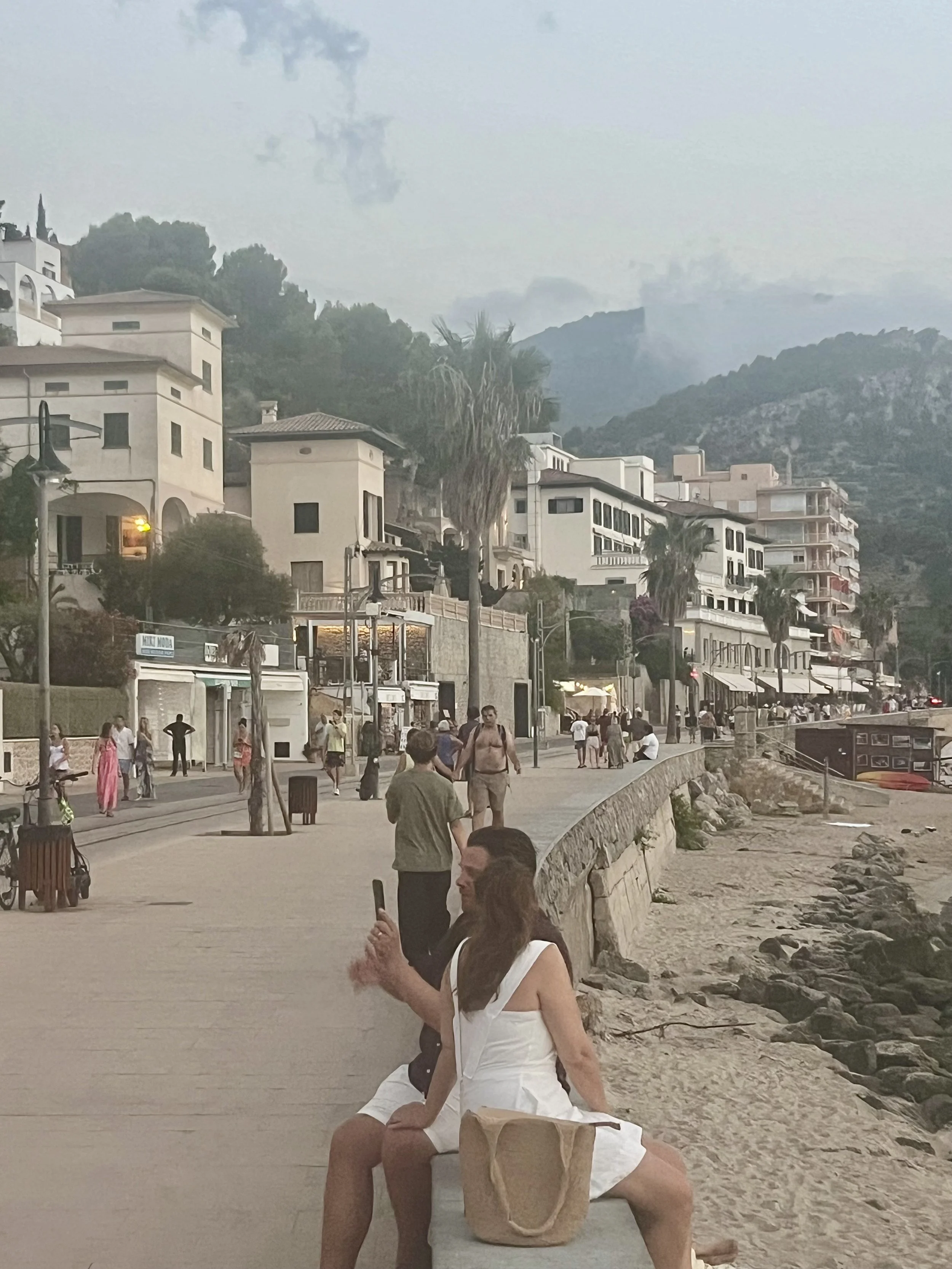
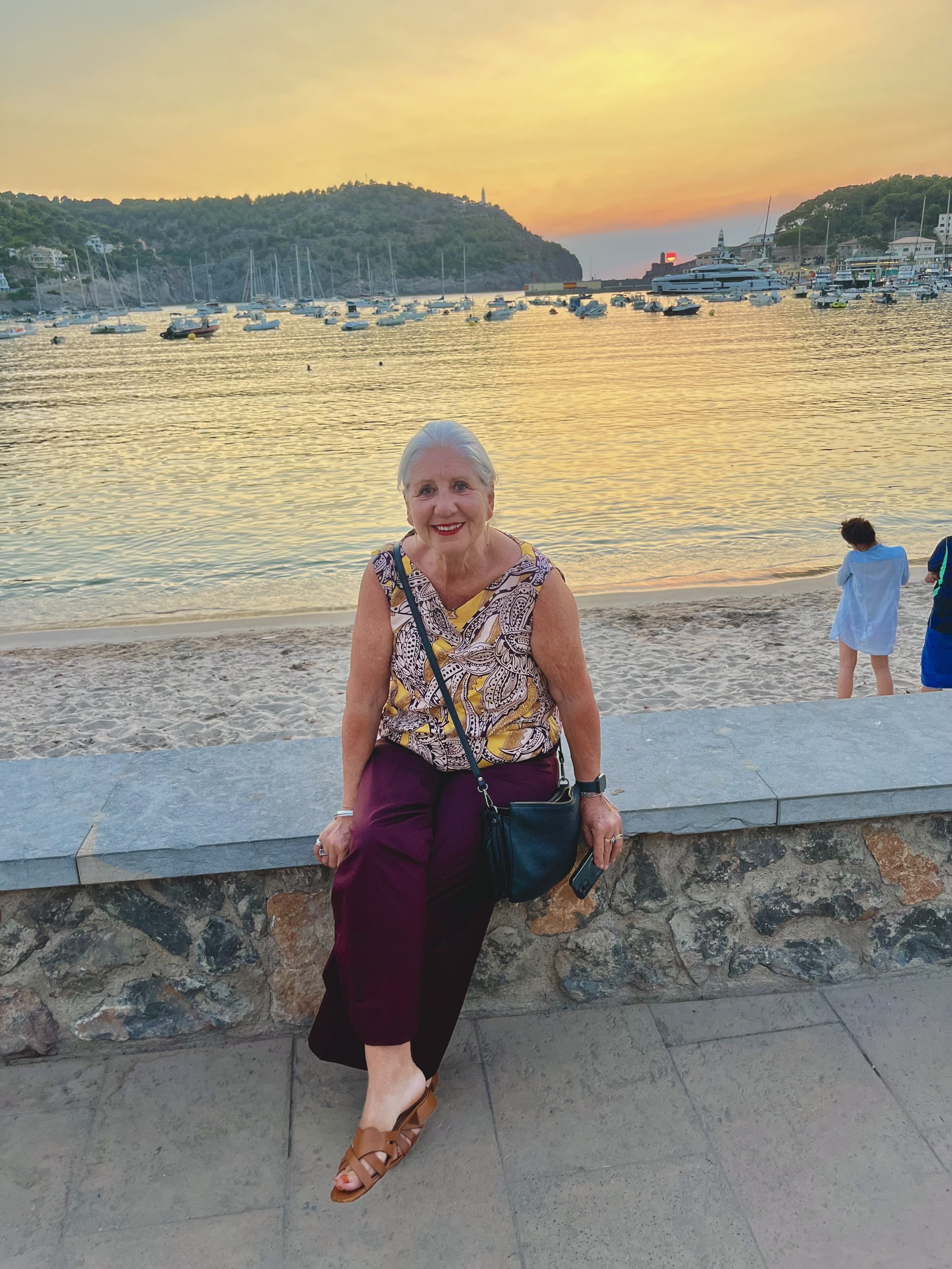
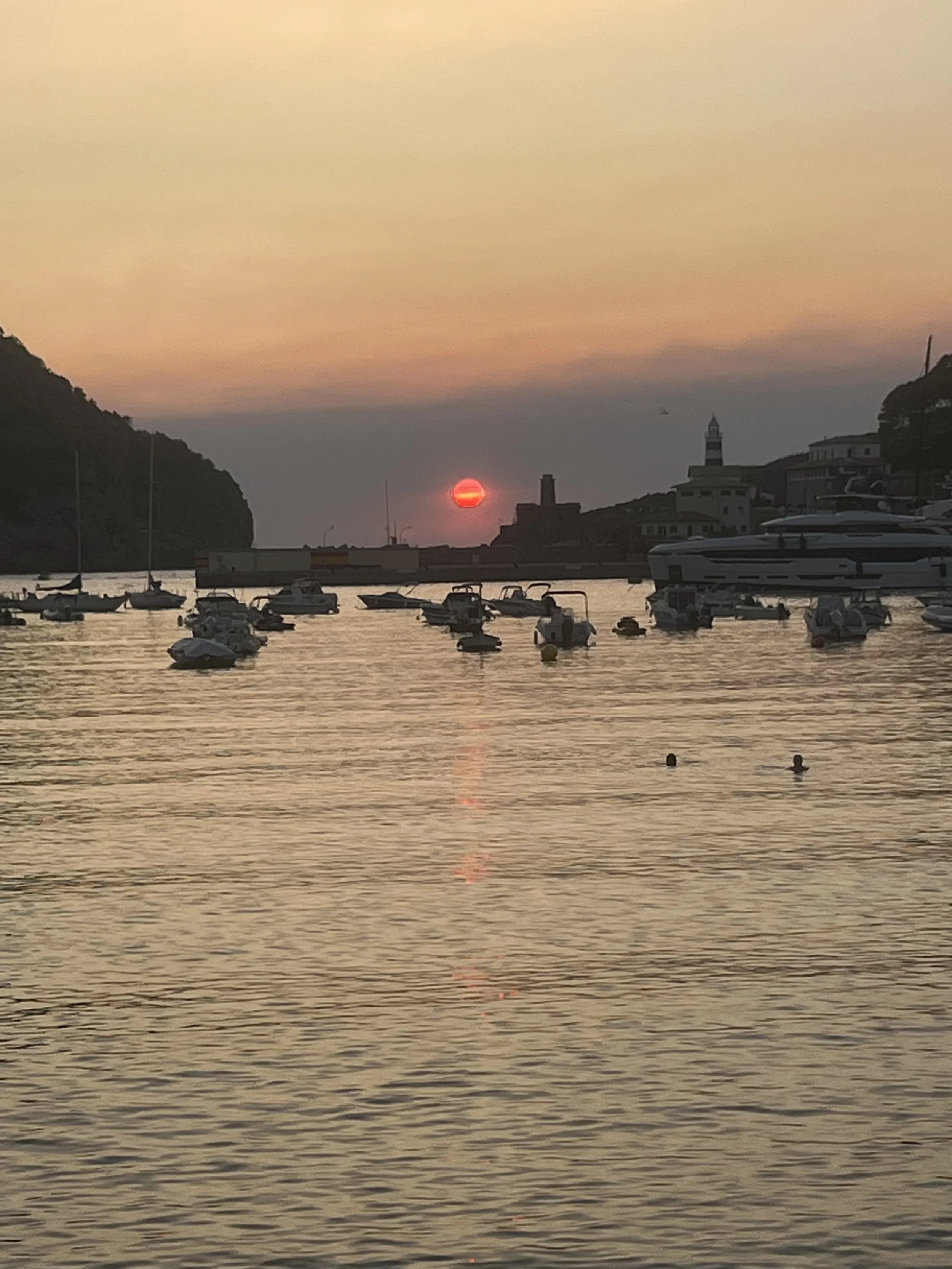
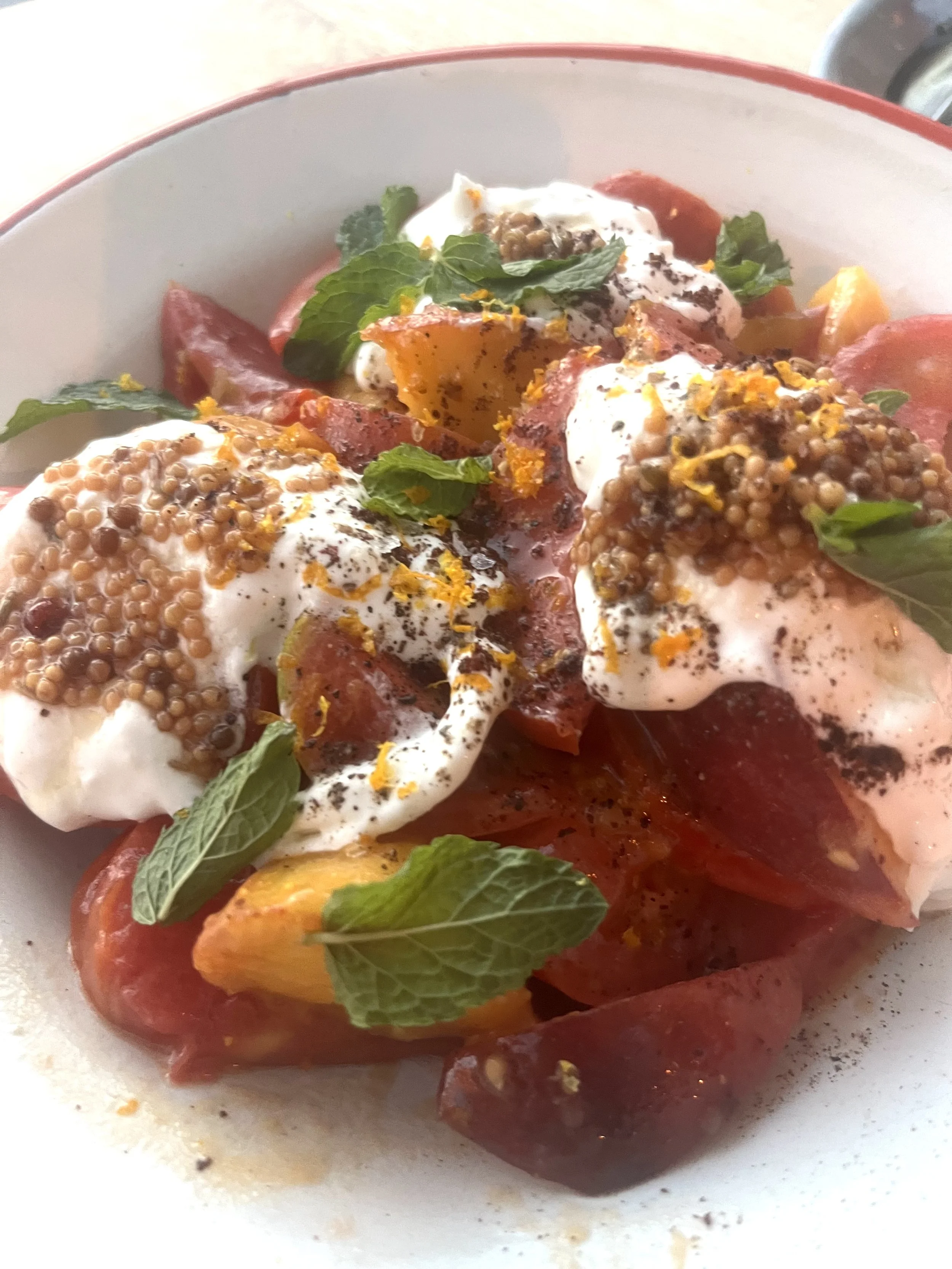
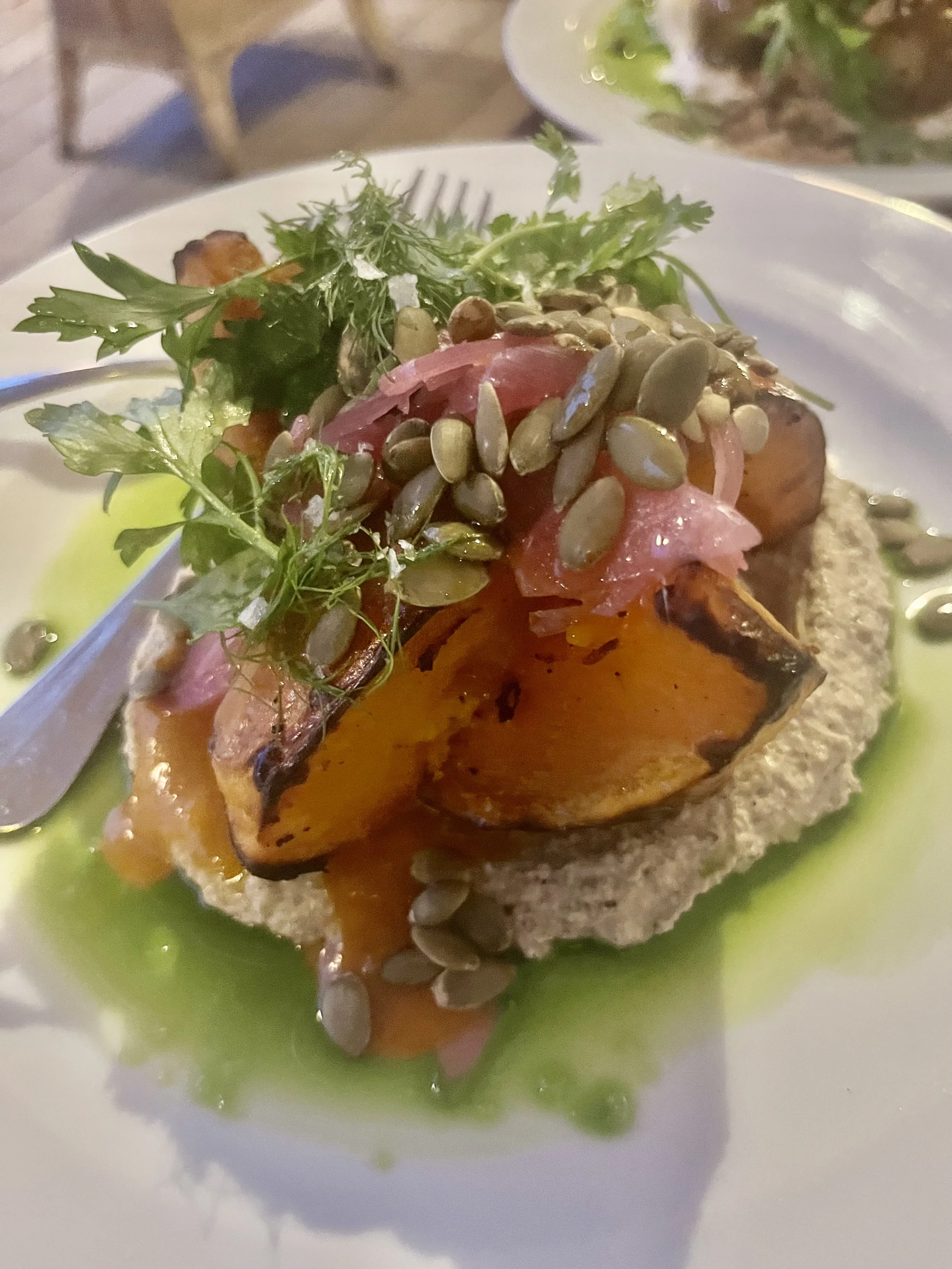
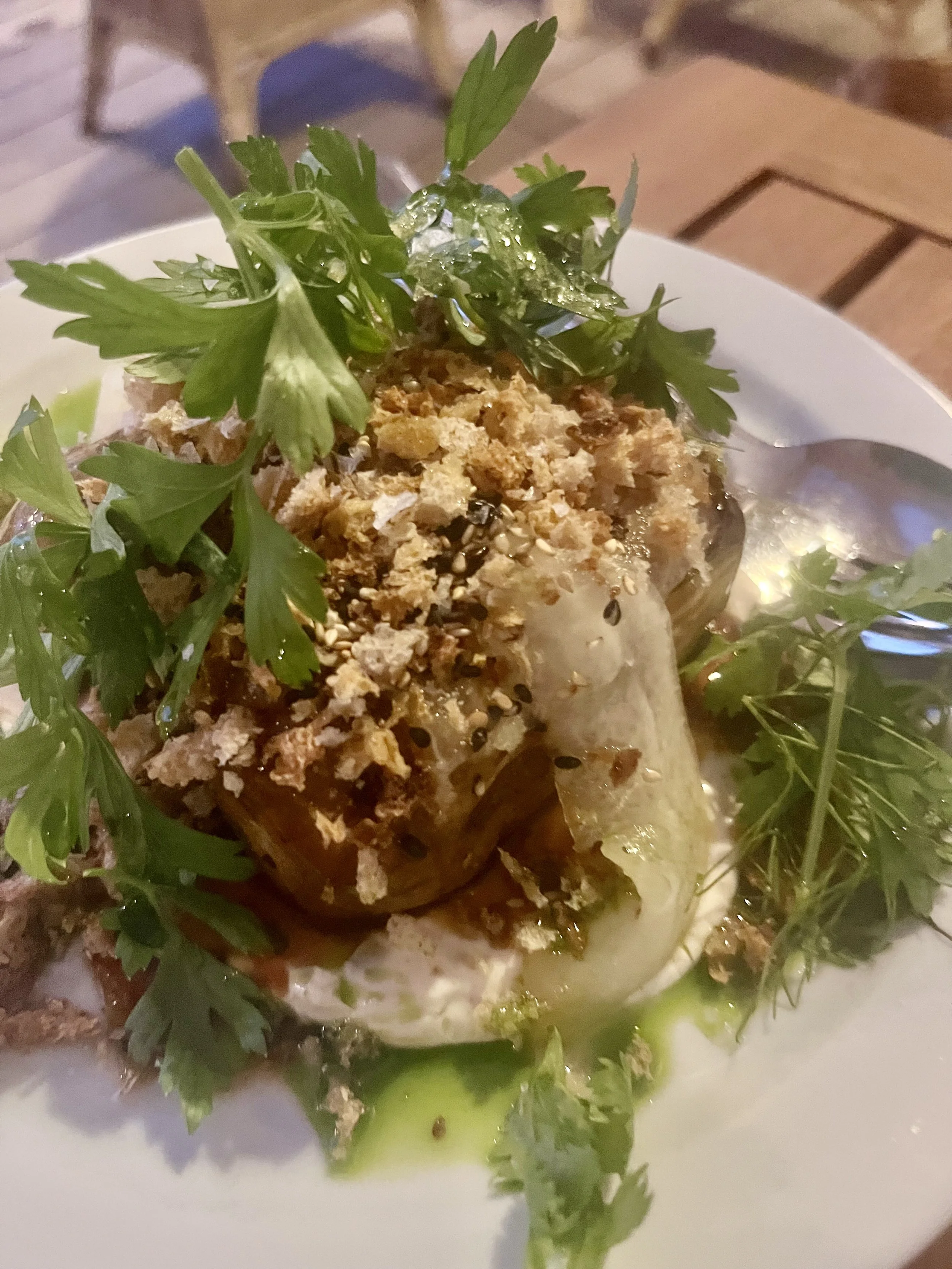
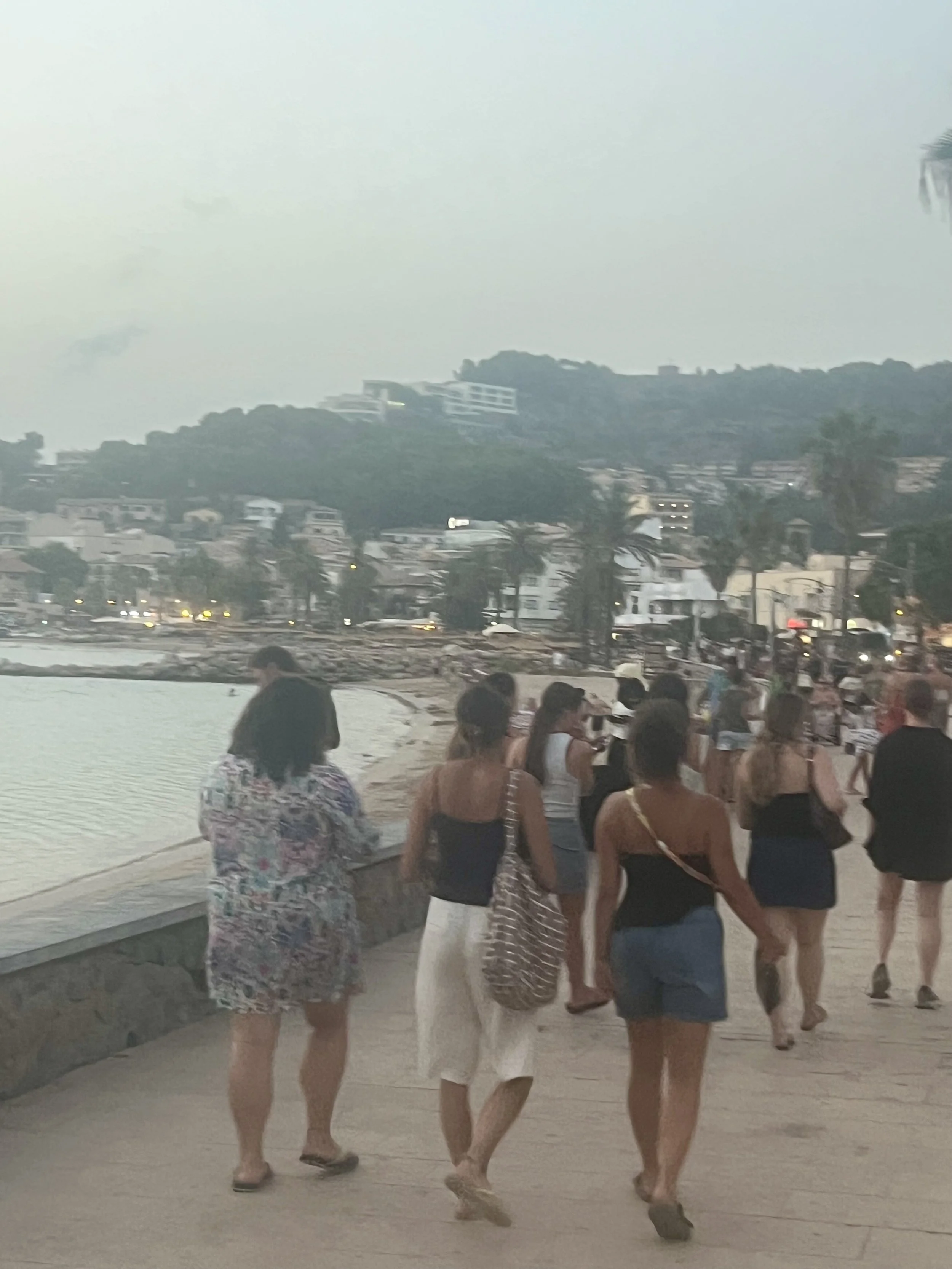
Our choice for the next three nights was Port de Sóller, a harbour filled with yachts and fishing boats. Our hotel sat directly opposite the beach—a very different setting—but we quickly warmed to having the sea just across the road and restaurants within an easy ten-minute walk. We loved Blai's vegetarian dishes so much that we ate there on two consecutive evenings.
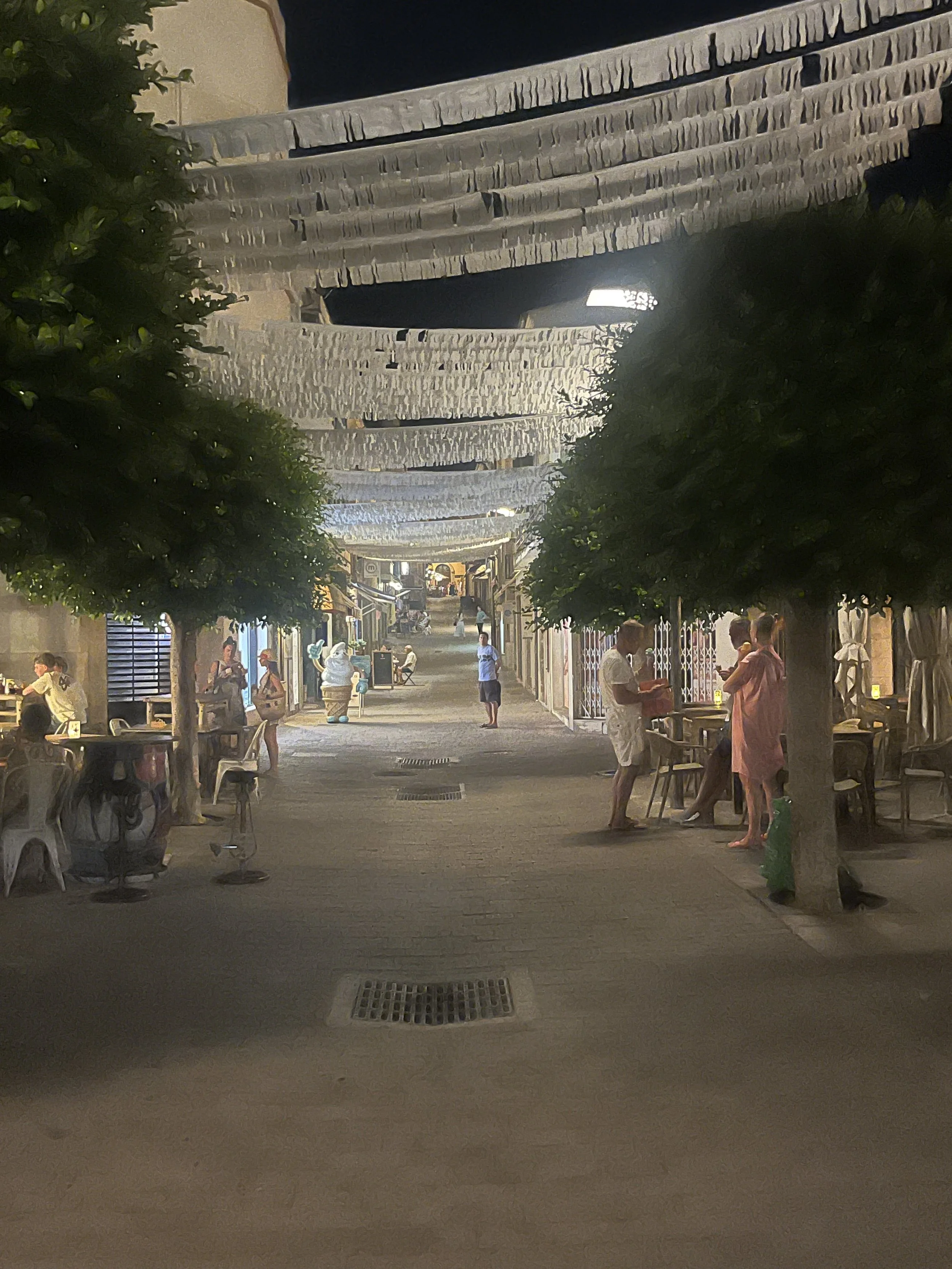
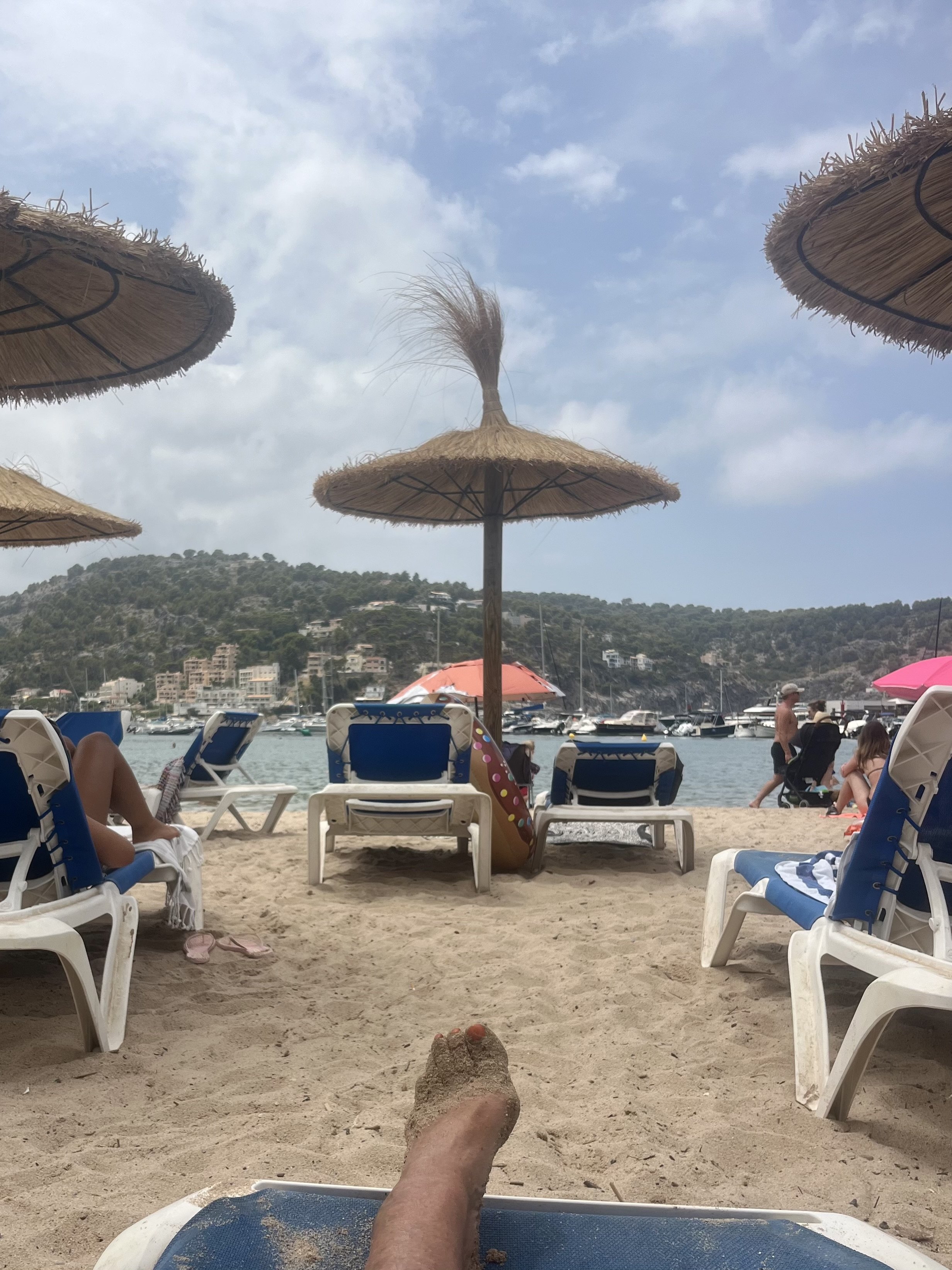
Dinner reservations at 9 or 9.30 p.m. were perfectly normal—in fact, they were considered early. Children were still swimming, and the restaurants lining the waterfront remained busy long after we wandered back to the hotel around 11.30. Hiring beach loungers for most of the day became an easy routine, still leaving several hours to explore before pre-dinner drinks and another leisurely meal.
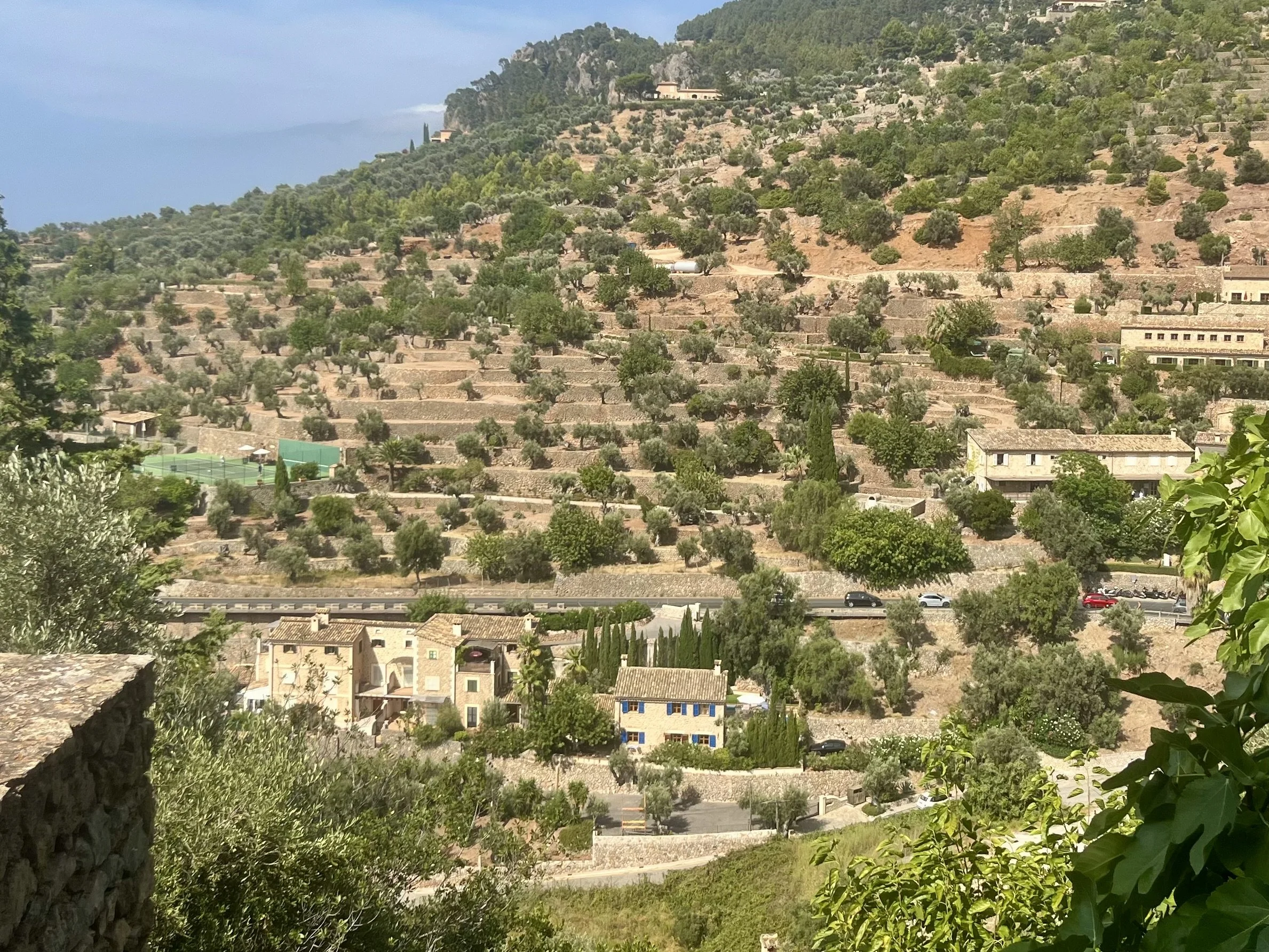
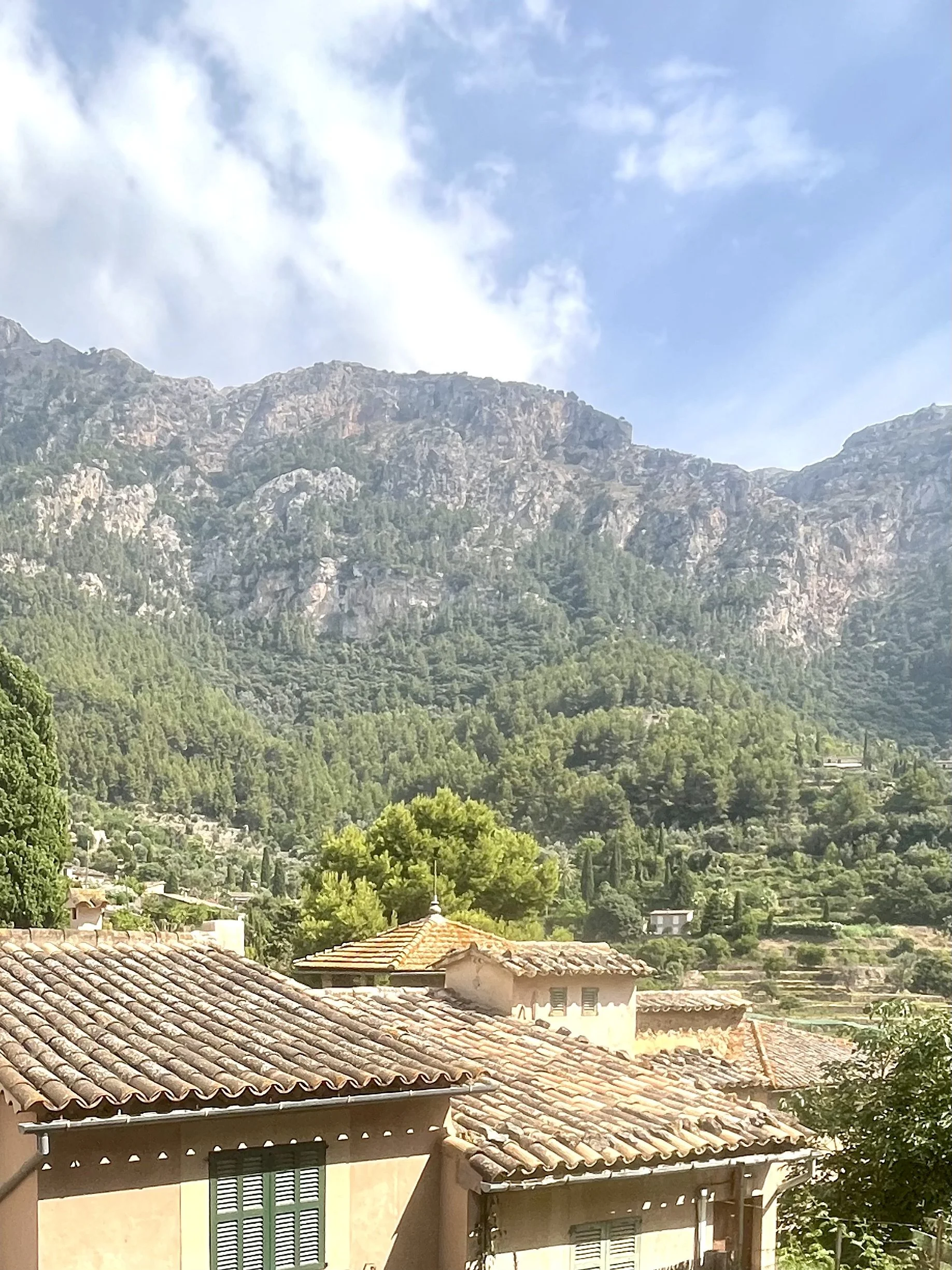
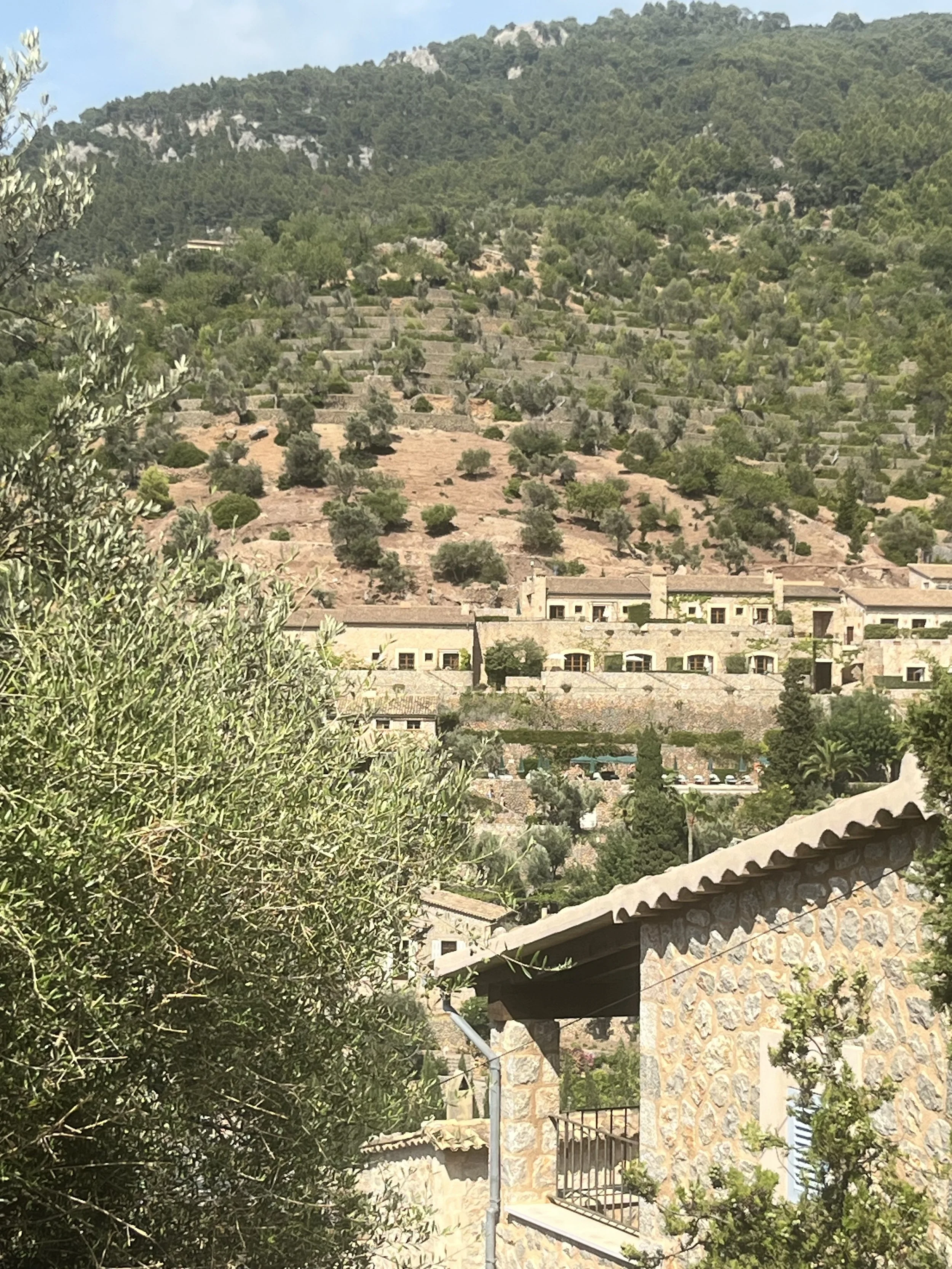
The magnificent Tramuntana Mountains dominate Mallorca's west coast. Interestingly, tramuntana is also the name of the prevailing wind. This UNESCO World Heritage landscape is one of spectacular limestone cliffs plunging into the sea, but what amazed us most were the extraordinary stone terraces. We had never seen anything so extensive, nor one still so actively farmed.
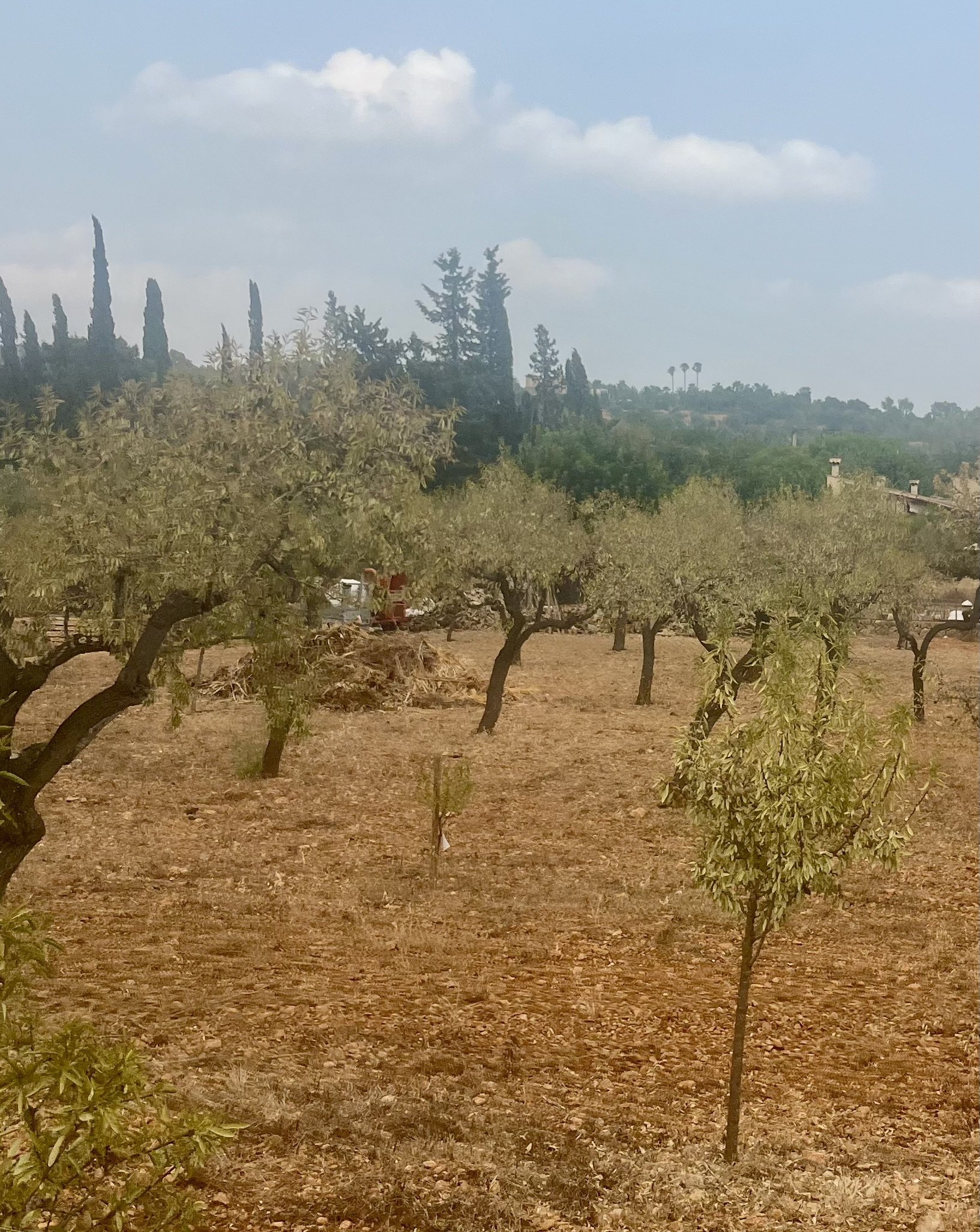
Built by the Moors over 1,200 years ago, these terraces continue to use the same ingenious water channels today. There are more than 14,000 kilometres of dry-stone walls on the island—roughly the distance from Mallorca to Auckland and back. Extremely old Olive trees line the hillsides in beautiful symmetry, climbing as far as the eye can see. Almond and carob trees are equally prolific. Mallorca is actually one of Europe's major almond producers.
We had driven from Polenca through to Soller over the mountains . Hoever, one afternoon we enjoyed an unforgettable drive through the mountains to the artistic hilltop village of Deià, then through Valldemossa, where Frédéric Chopin once lived, before continuing on to Bunyola. The scenery was breathtaking, and it was easy to imagine the hardships endured by those who once lived and worked in these rugged mountains.
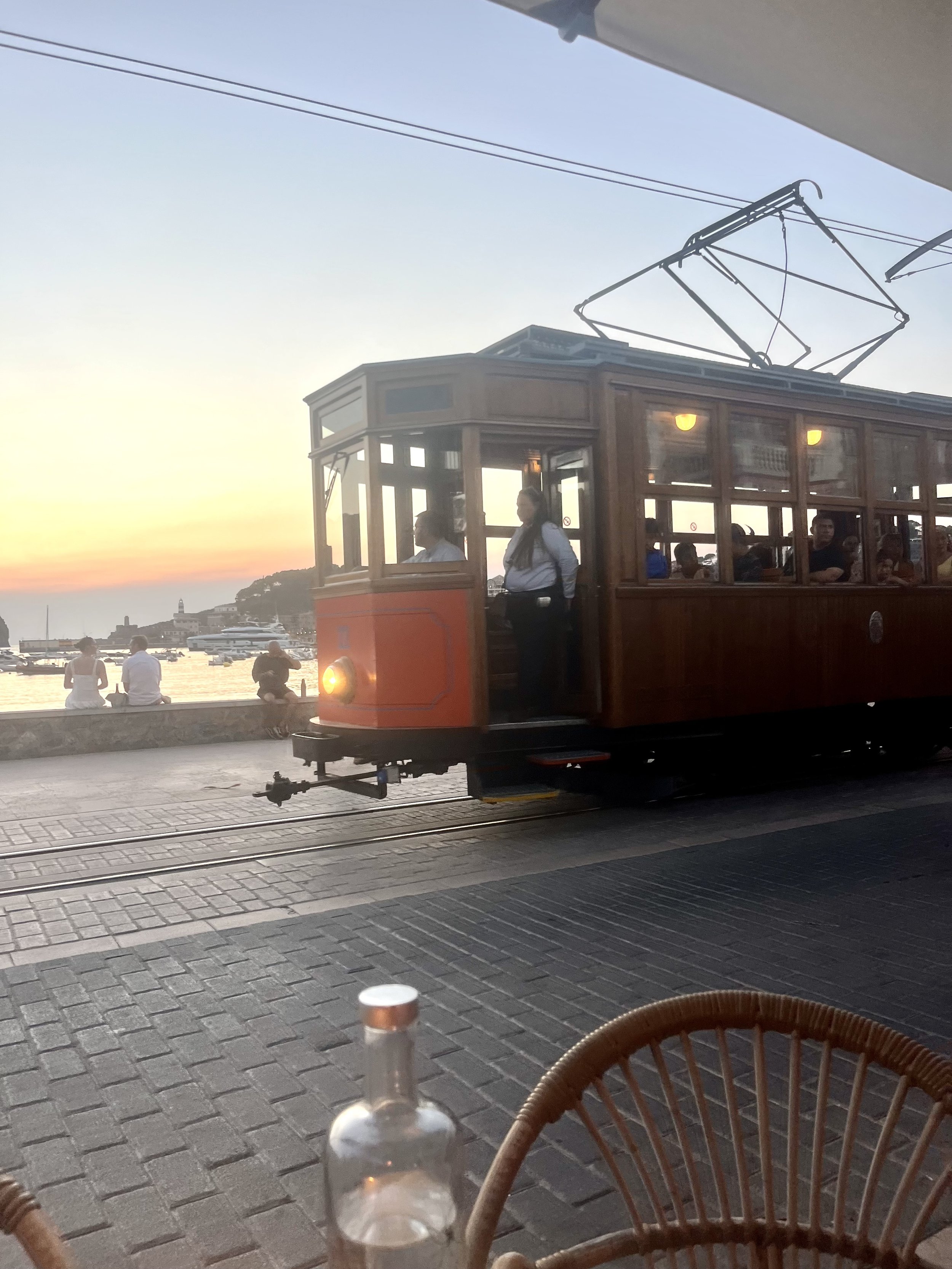
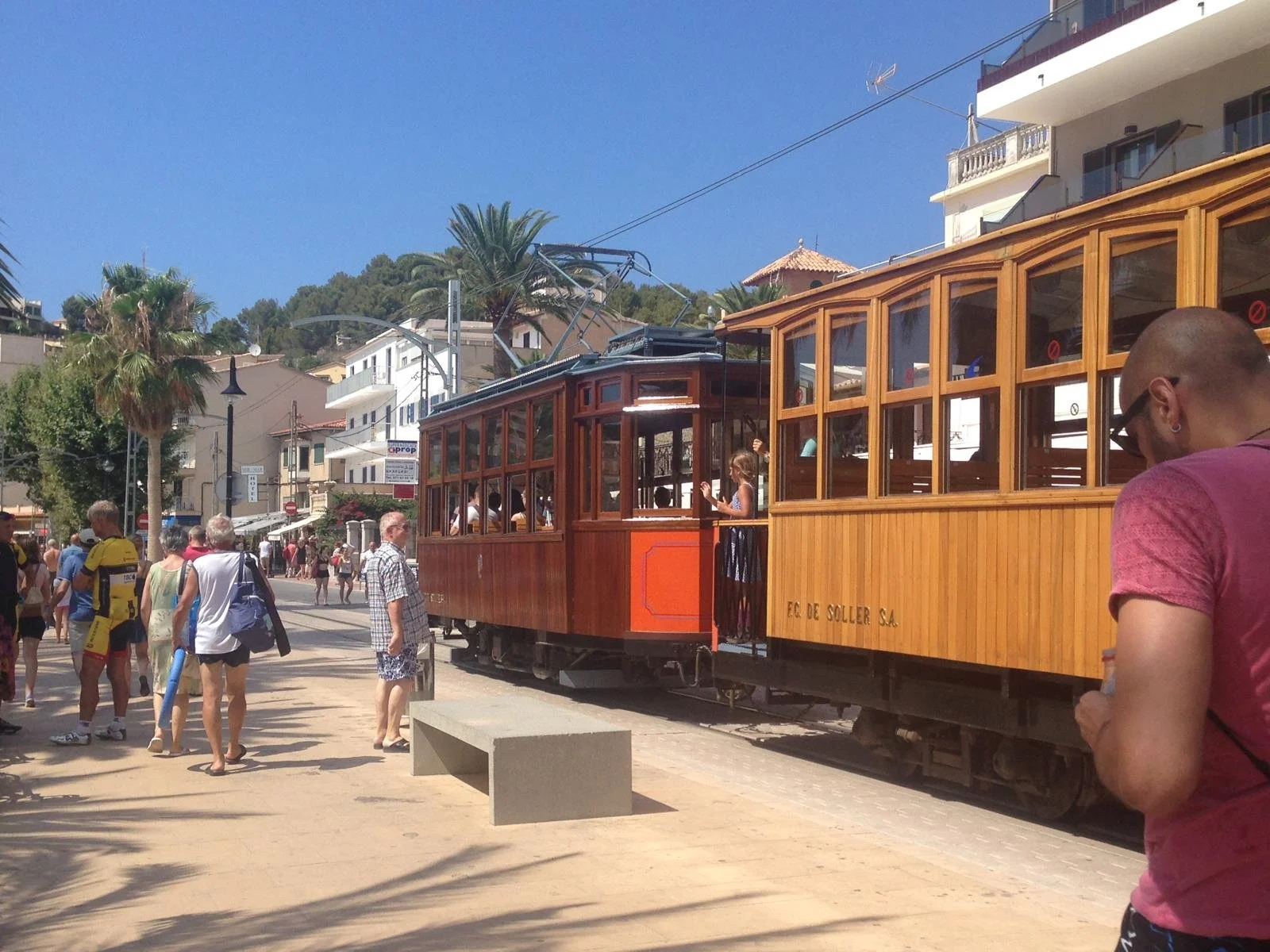
A beautifully restored wooden tram runs regularly between Sóller and the port, bringing visitors to the waterfront. We discovered it also connects with the historic train to Palma, so instead of driving we decided to experience this unique journey. Within a couple of hours we were in the heart of Palma, spending the next four hours wandering its narrow streets and historic squares.
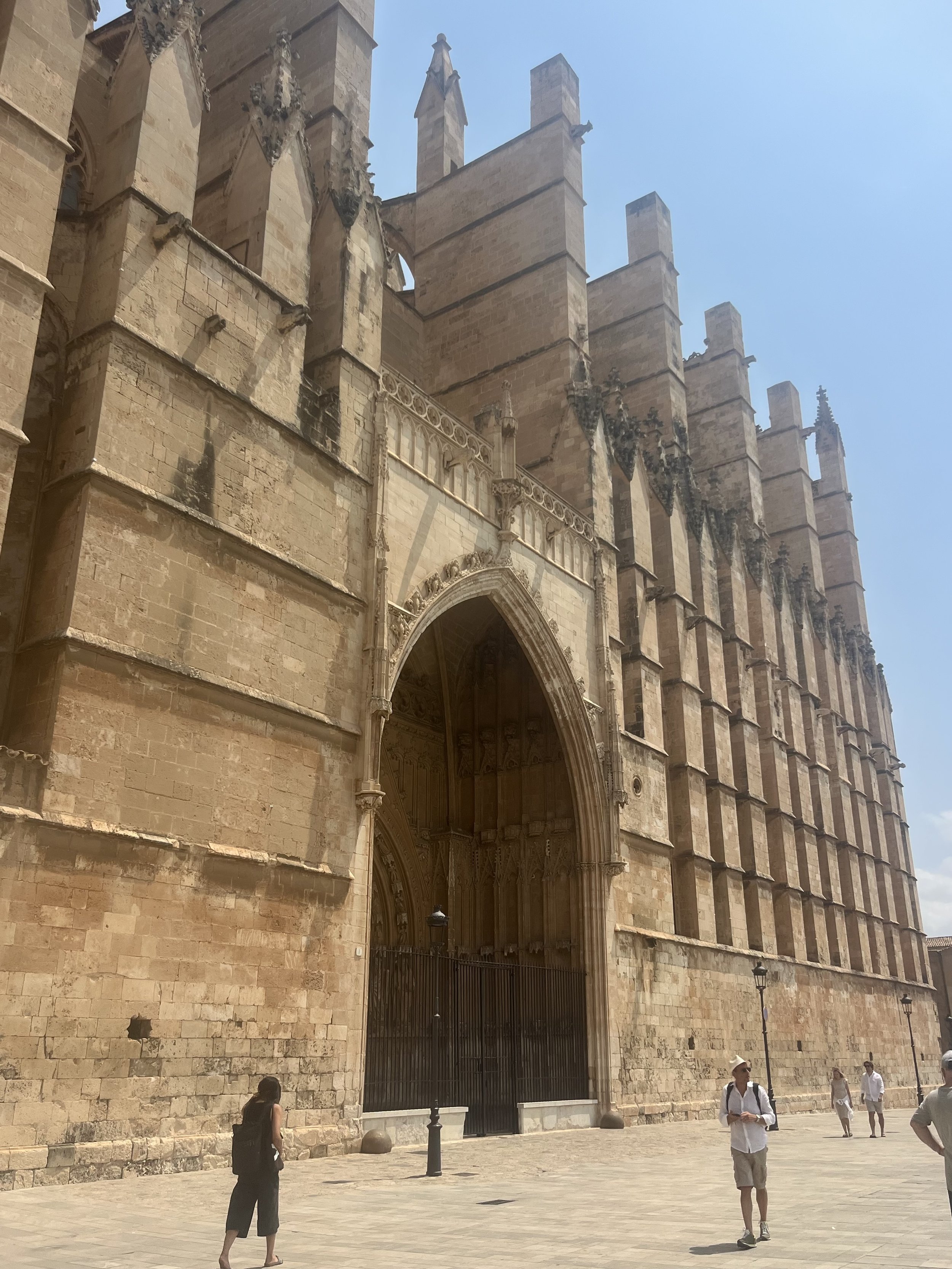
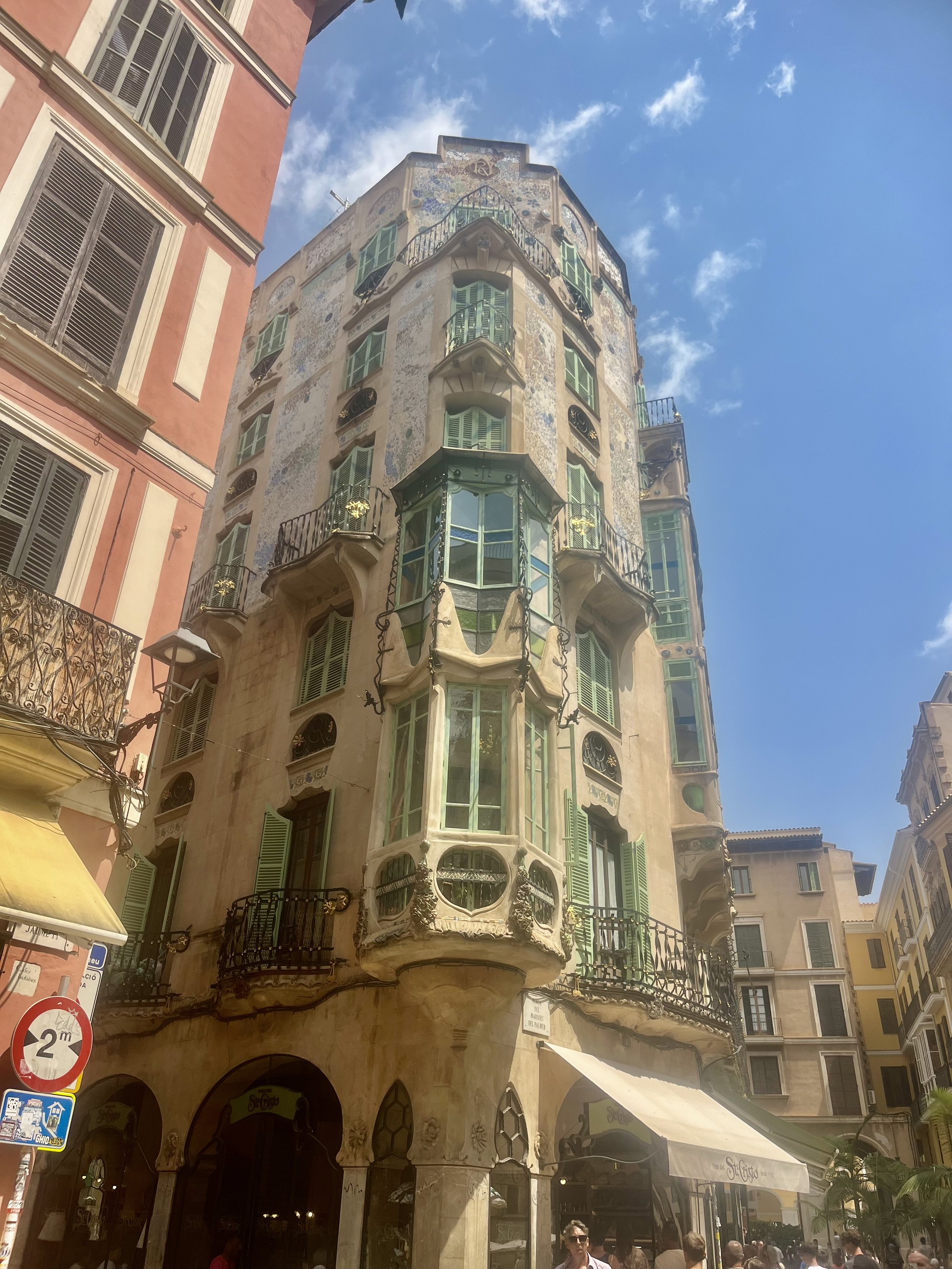
Although it was Sunday and many of the shops were closed, the city buzzed with visitors exploring the old quarter before drifting towards the waterfront. Sadly, the cathedral was closed, but we unexpectedly encountered an old acquaintance from Barcelona—Antoni Gaudí. We recognised his unmistakable influence and learnt that he had spent time in Mallorca, working on the interior of the magnificent Seu Cathedral.
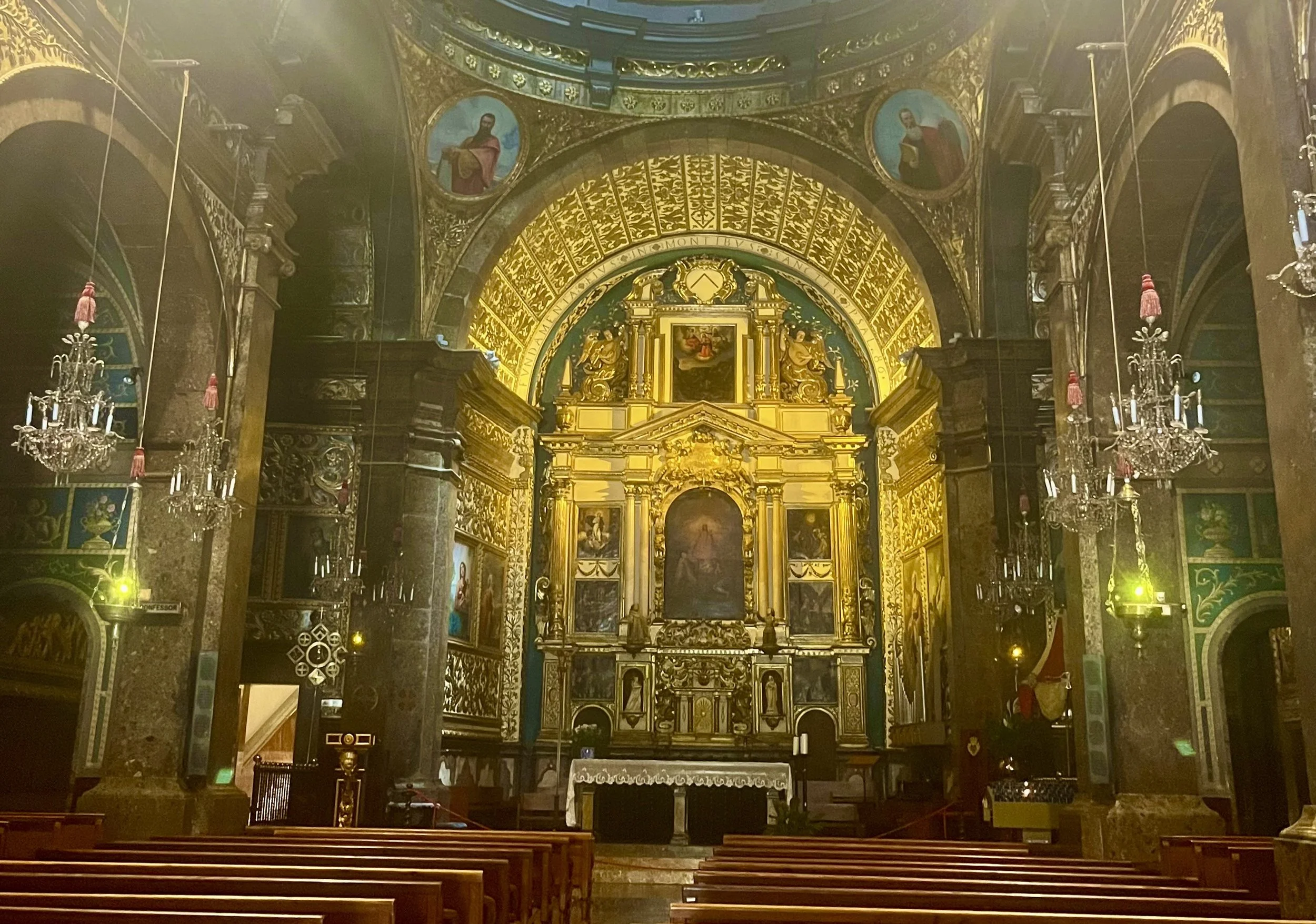
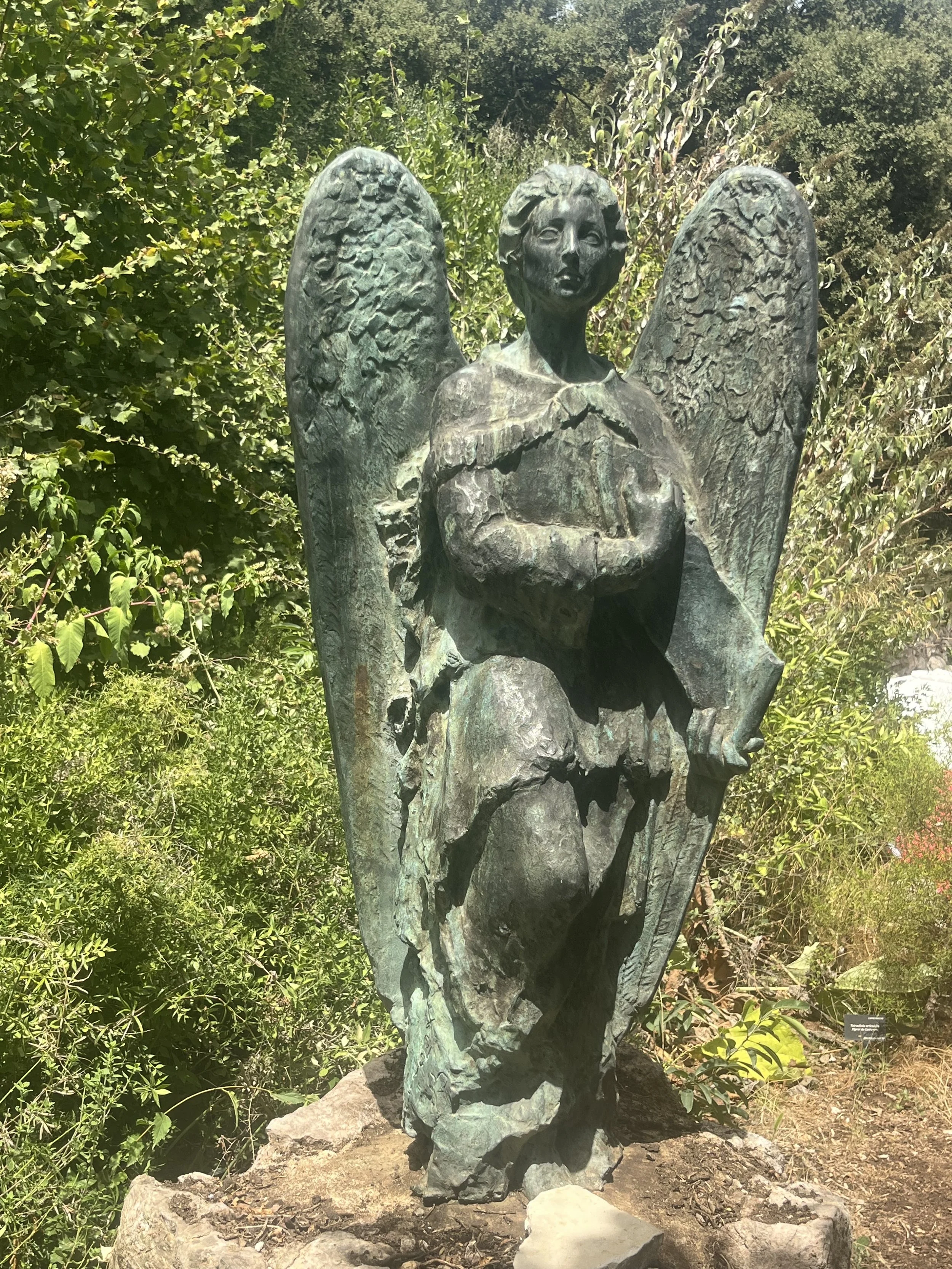
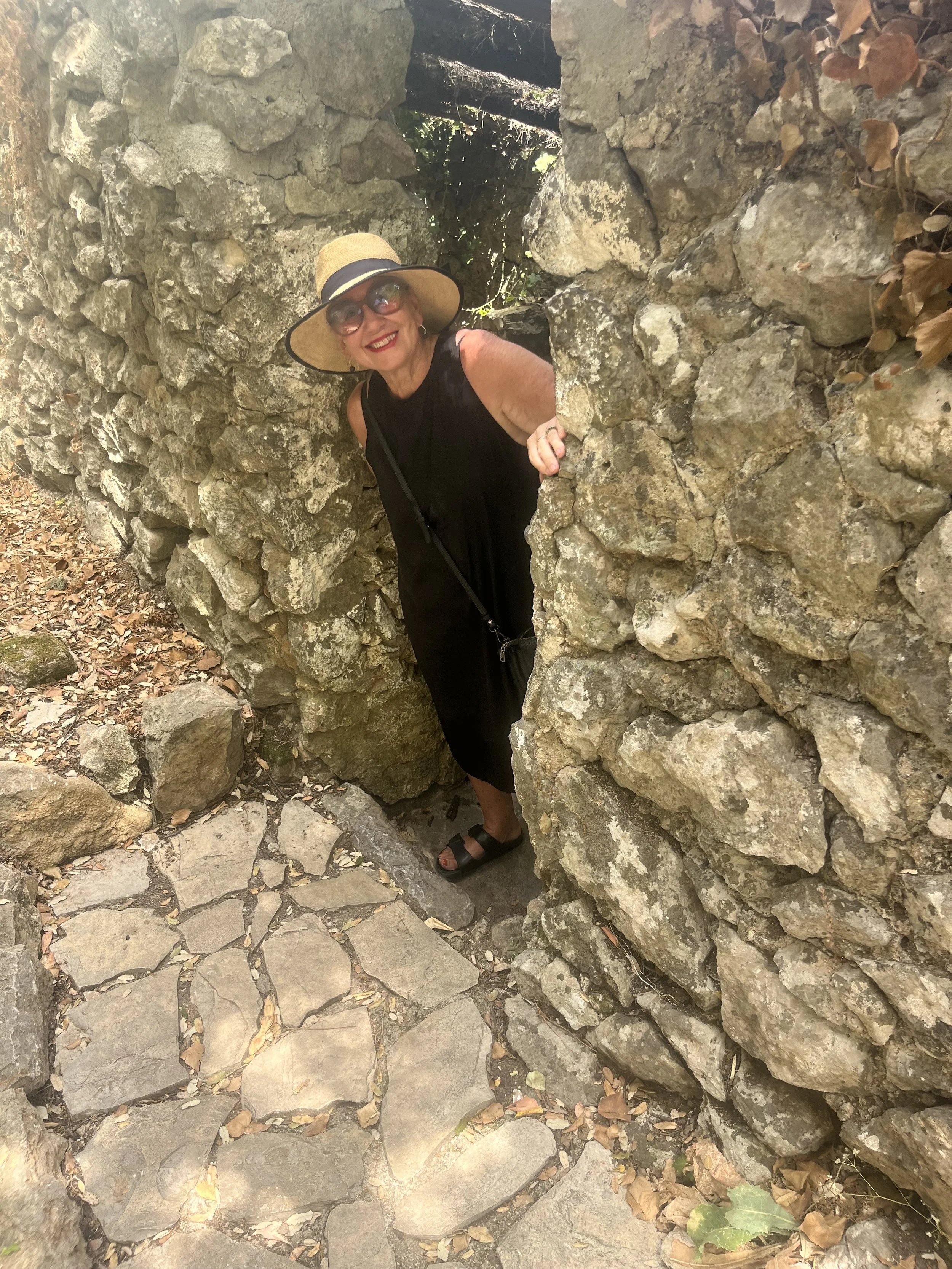
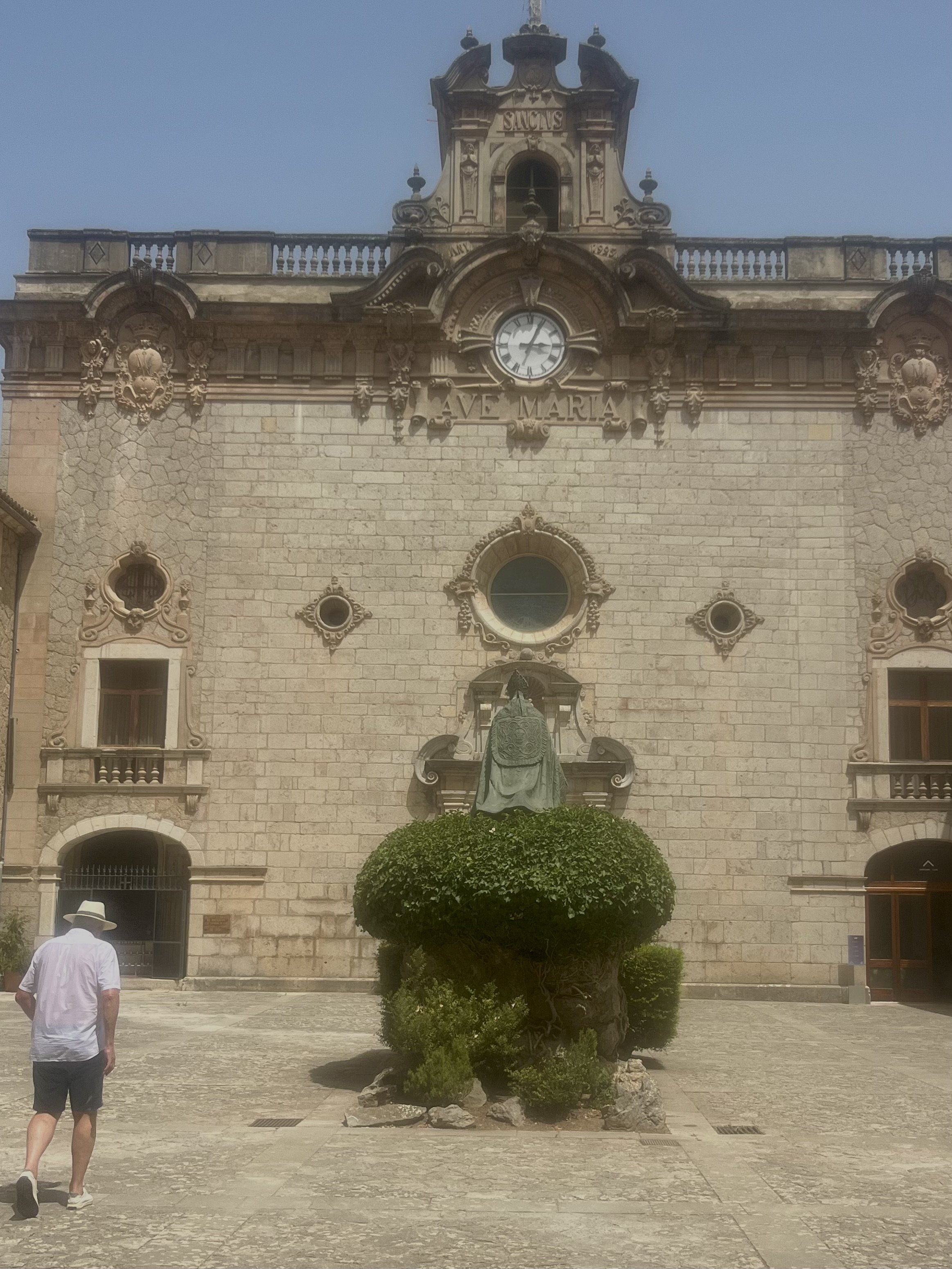
Earlier, while driving through the Tramuntana, we had stopped at Lluc. Our timing wasn't ideal, but we still discovered its remarkable sanctuary, basilica, accommodation and private school. Gaudí also designed much of the Baroque interior of the basilica, adding yet another connection to an architect whose work continues to surprise us.
We have certainly found our feet again. We have rested, read books and slowed down. Six days in Mallorca gave us a wonderful insight into the island's diverse landscapes, remarkable horticulture and relaxed lifestyle. We have enjoyed its food, sampled its wines, and would happily recommend Mallorca to anyone.
XXx Judith