
How Hot is Hot
Europe is currently experiencing a heat dome, where hot air becomes trapped like a lid on a saucepan. It prevents the hot air near the ground from rising and mixing with the cooler air above. As a result, the heat builds day after day, with temperatures running 5–10°C above normal. Our days have been between 37°C and 40°C, while the evenings have rarely dropped below 30°C.
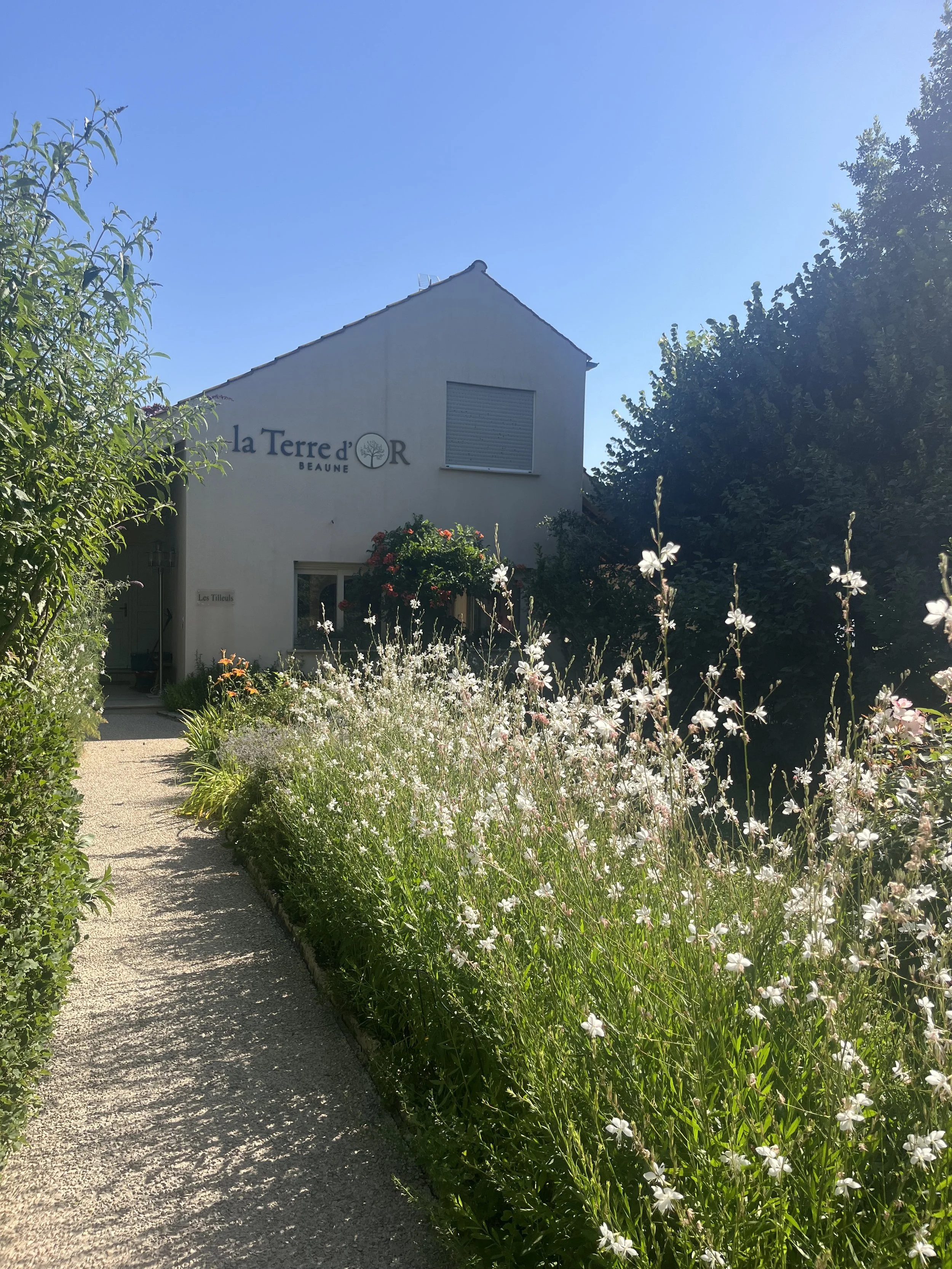
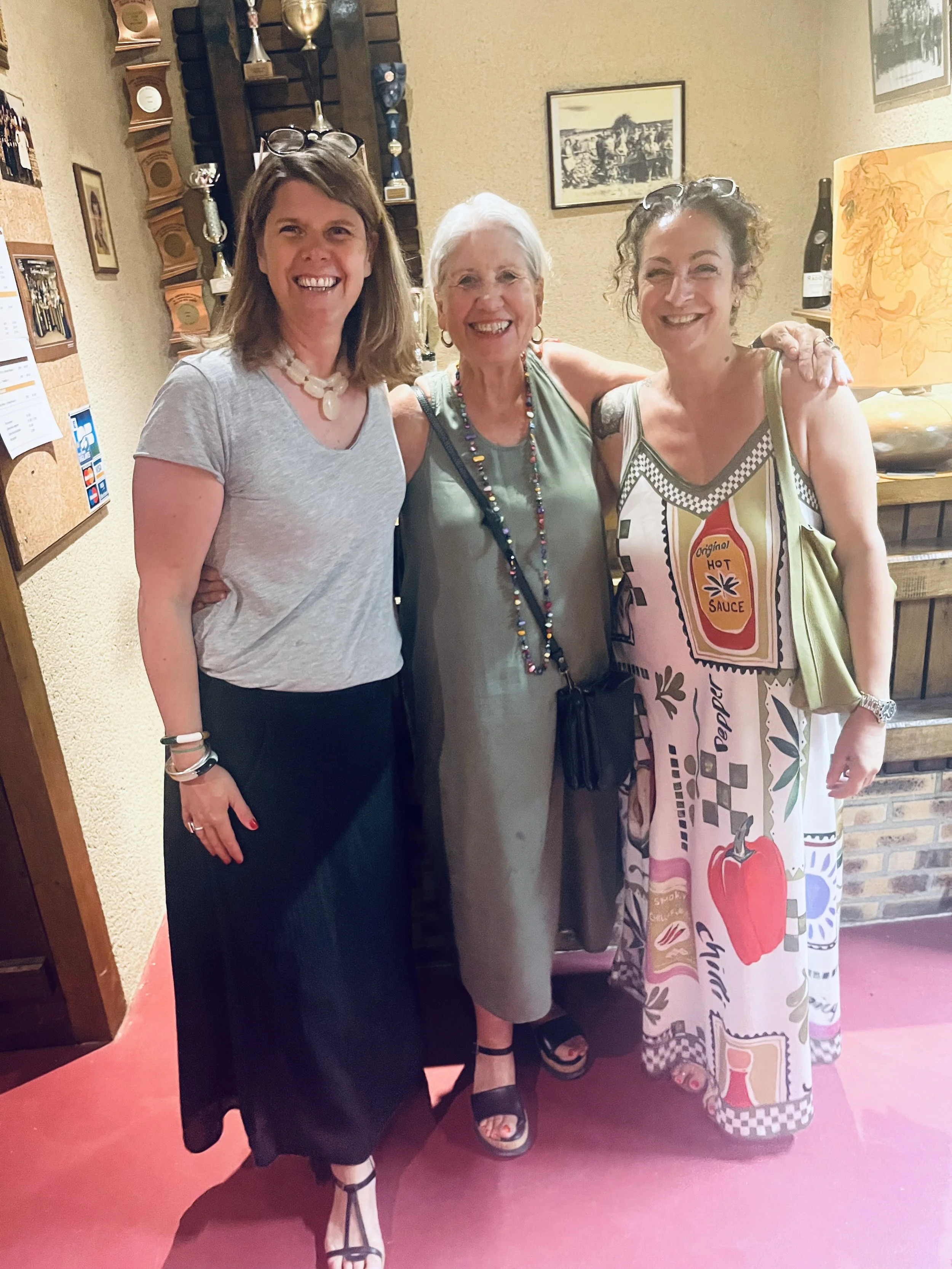
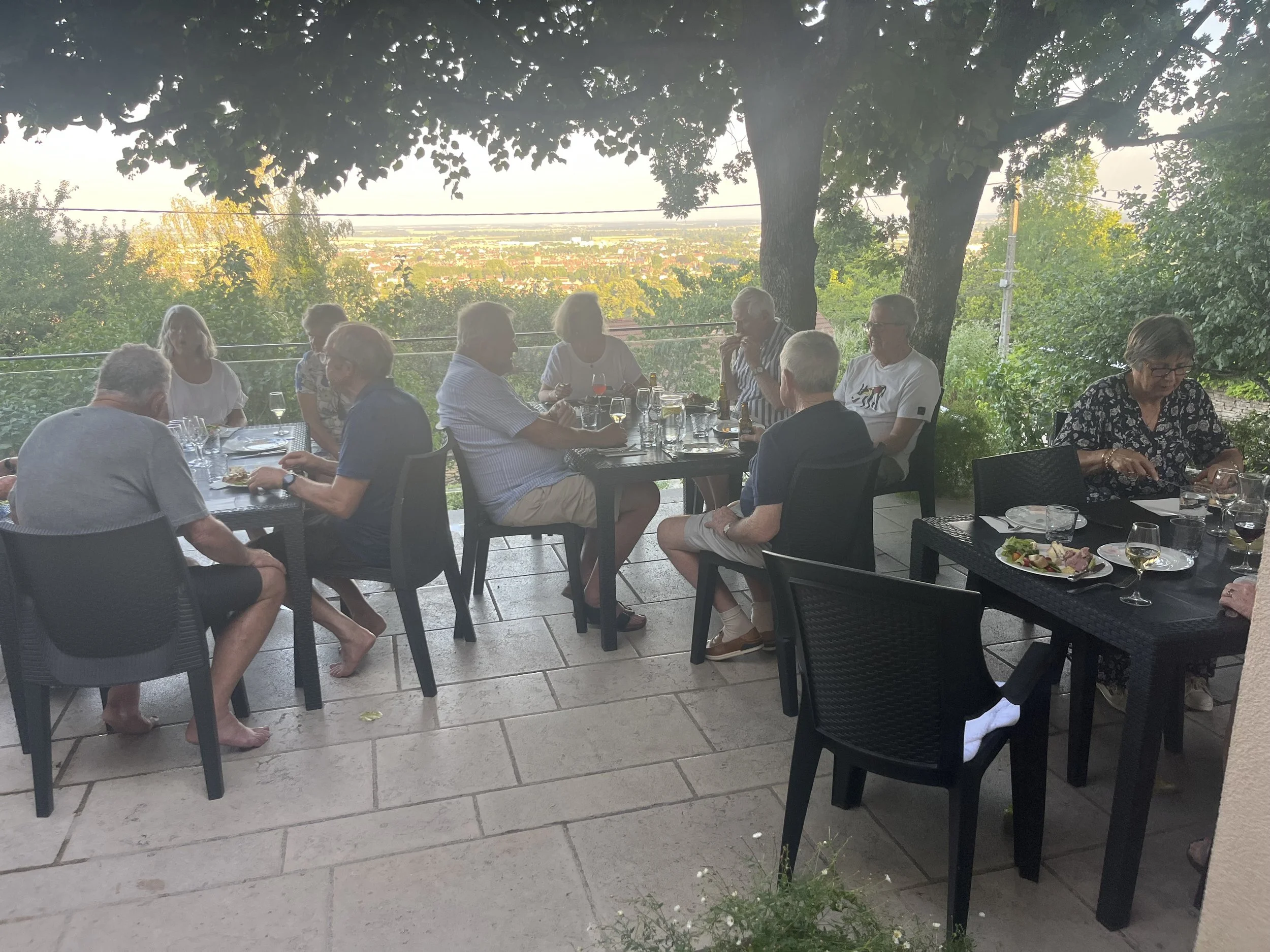
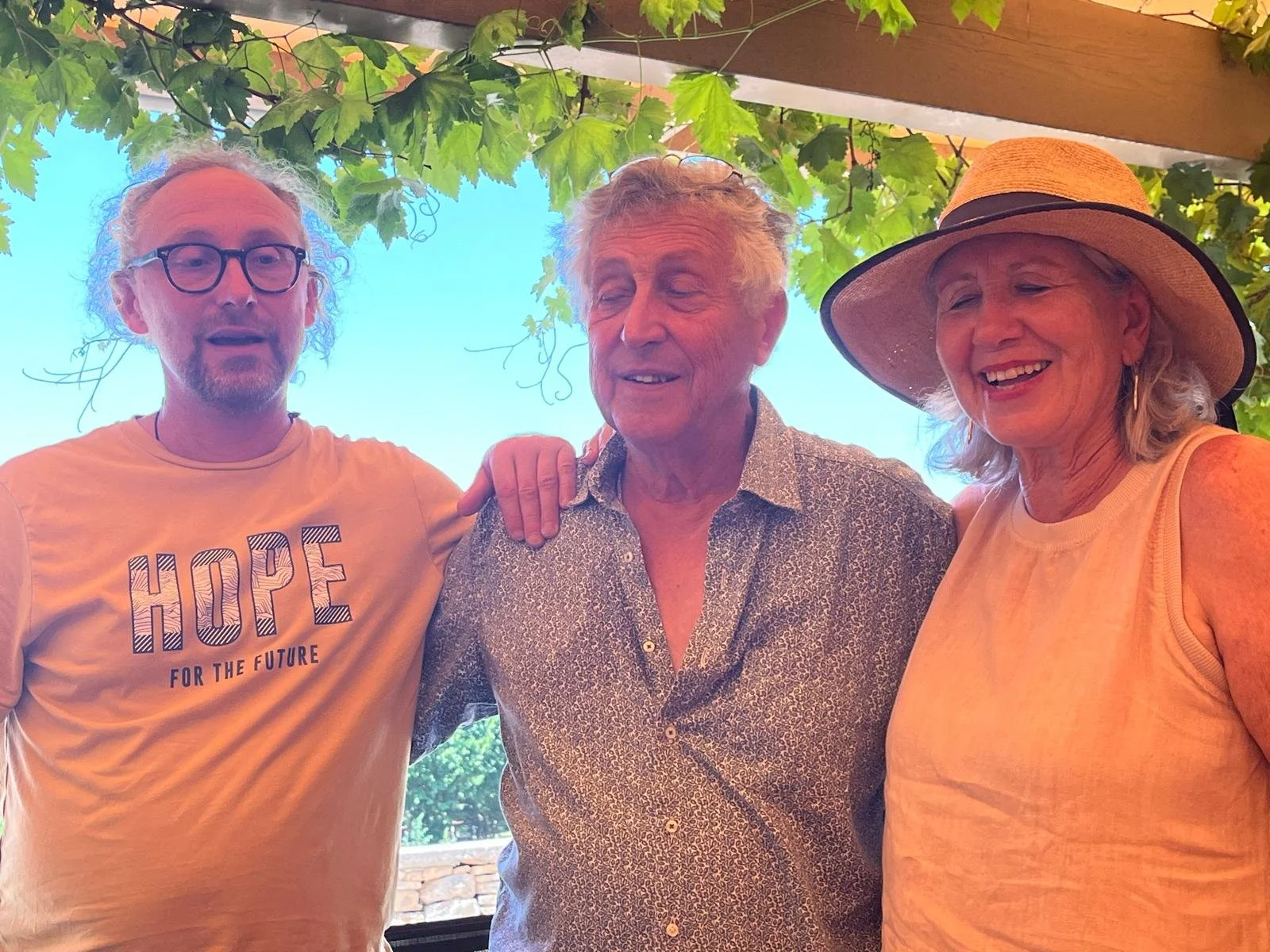
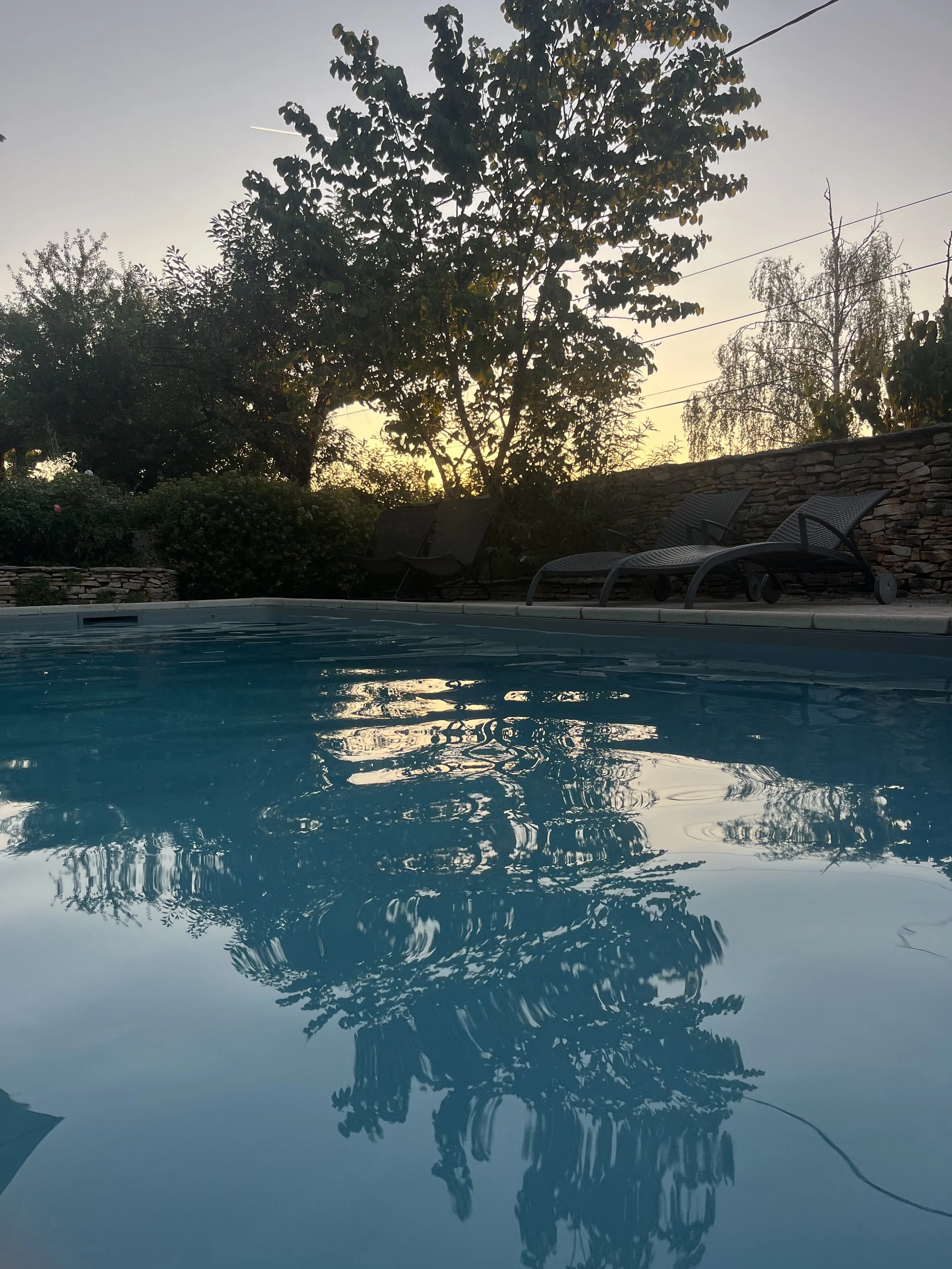
For the past five nights we have been nurtured and thoroughly spoilt by the Martin family at La Terre d'Or, perched above the vineyards just outside Beaune. The swimming pool was in constant use from 6.00 am until 10.00 pm. It was such a relief to return each afternoon to cool off, whether in the refreshing pool or the comfort of our air-conditioned rooms.
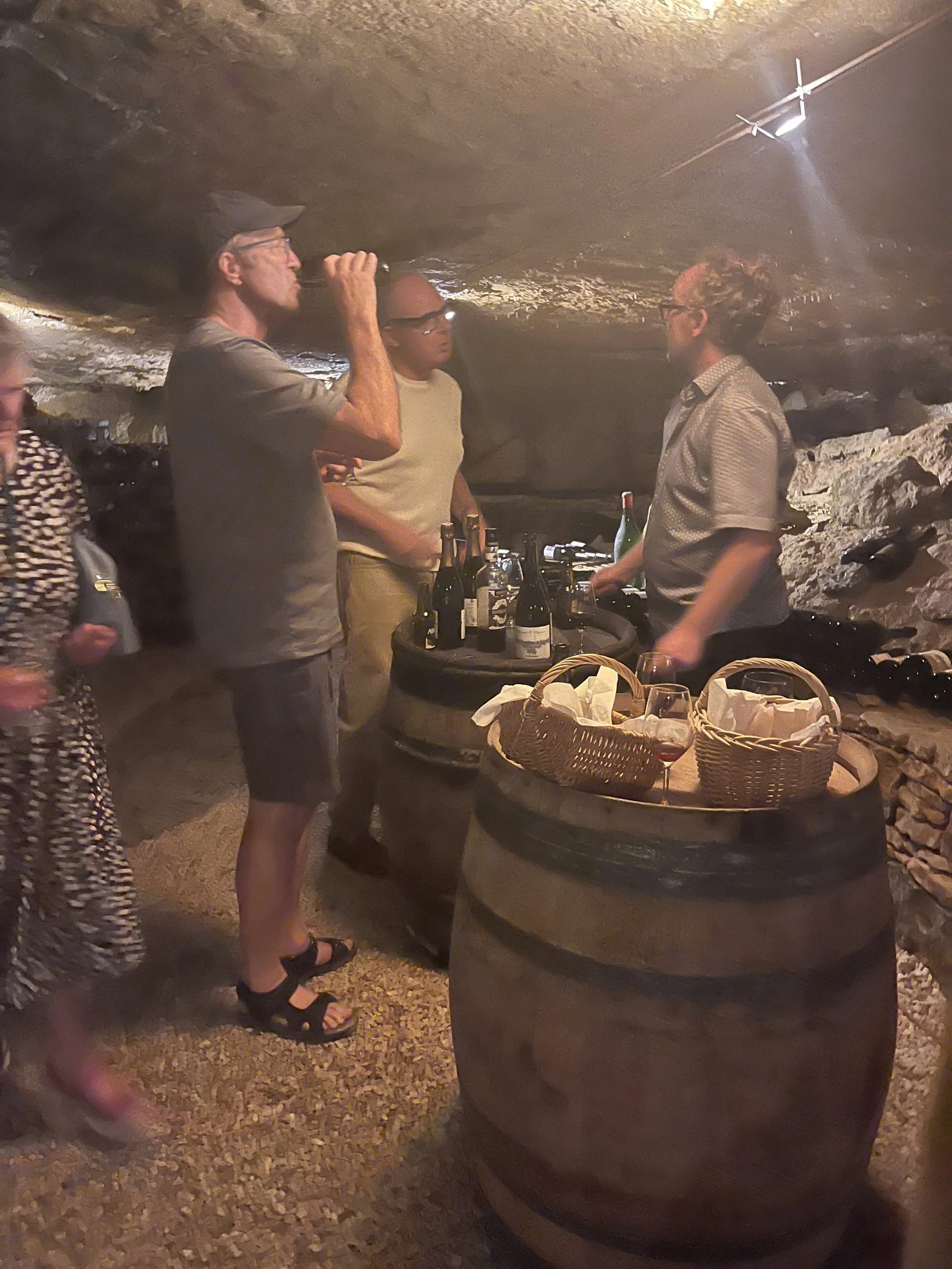
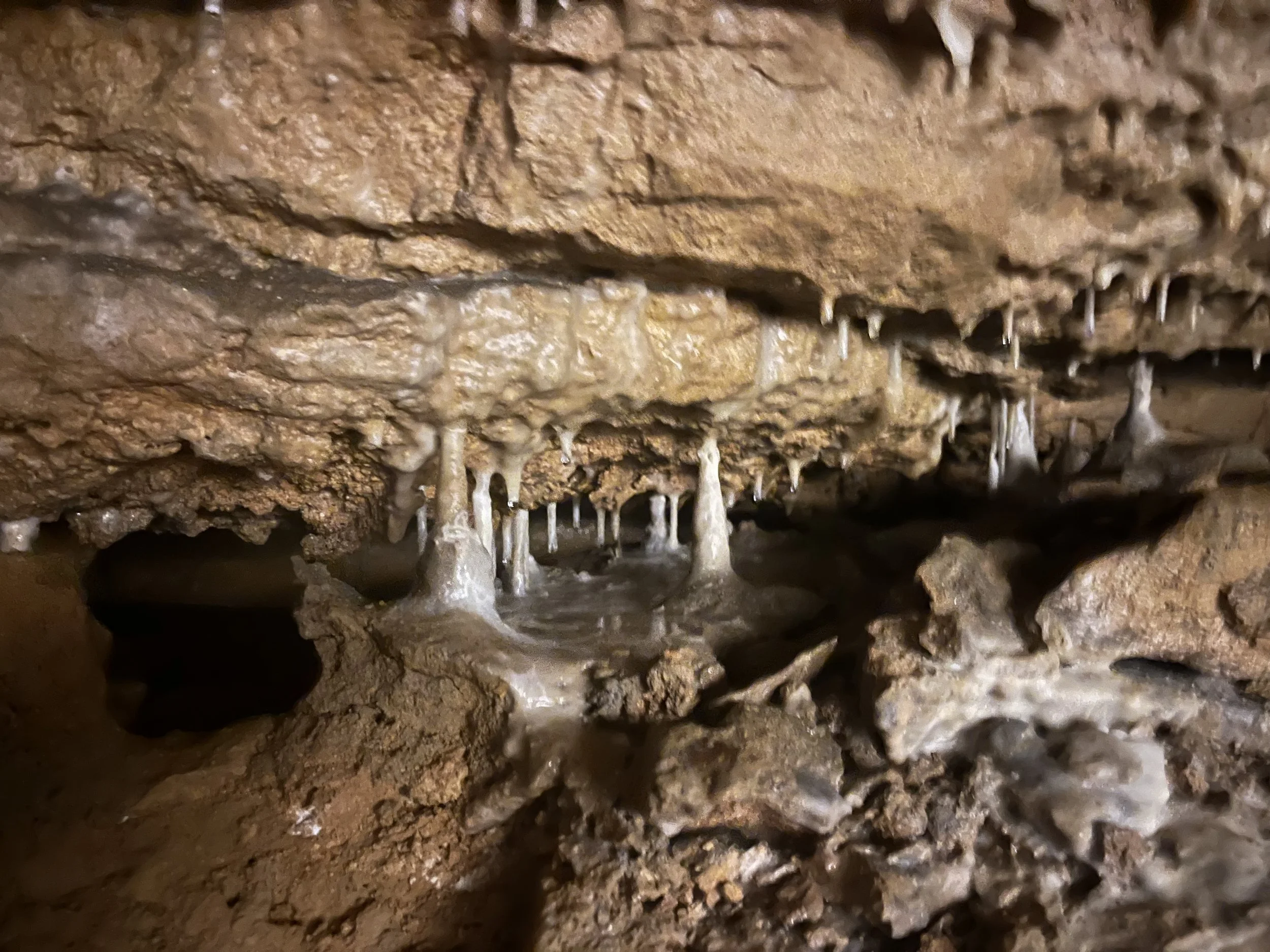
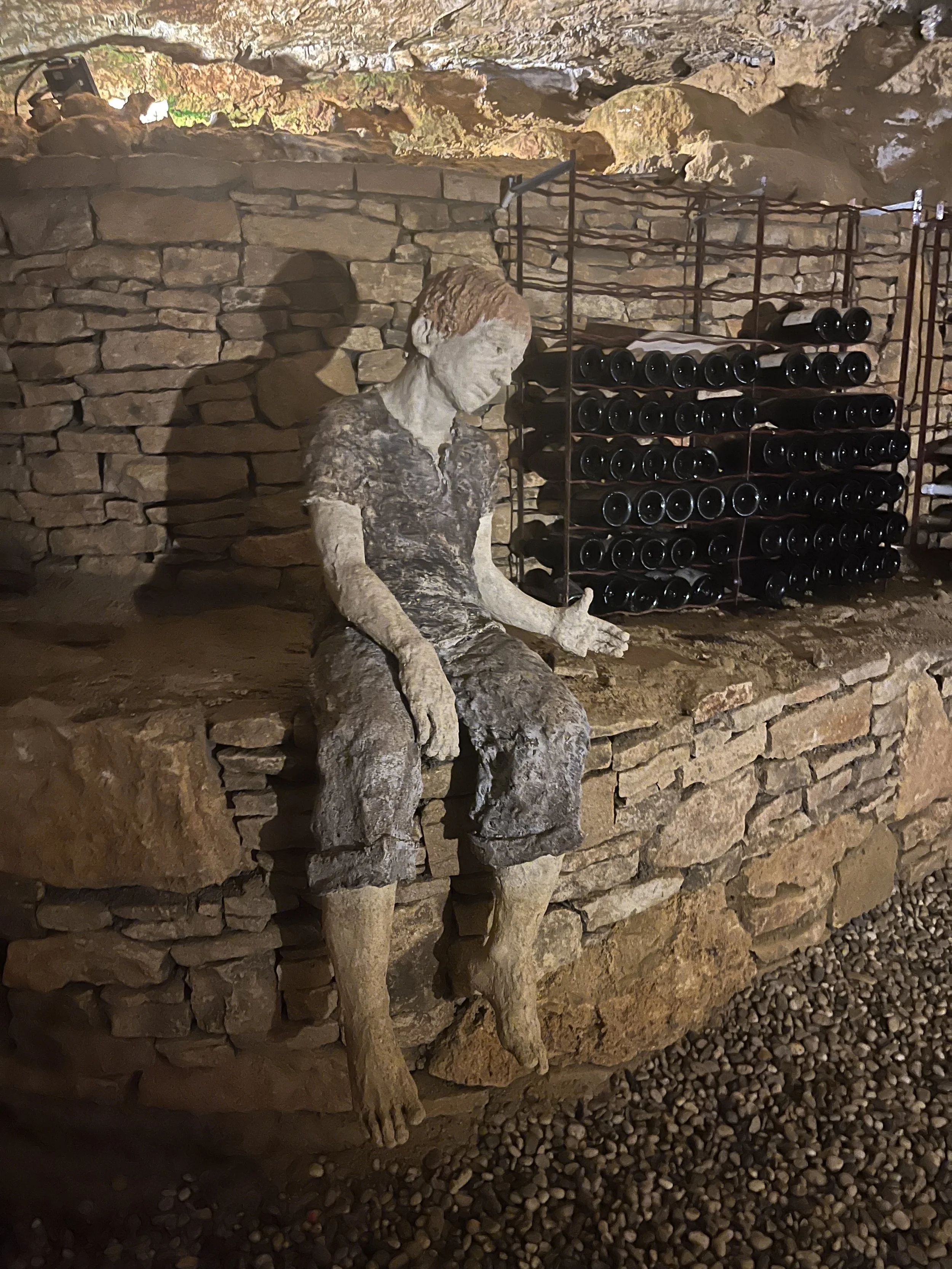
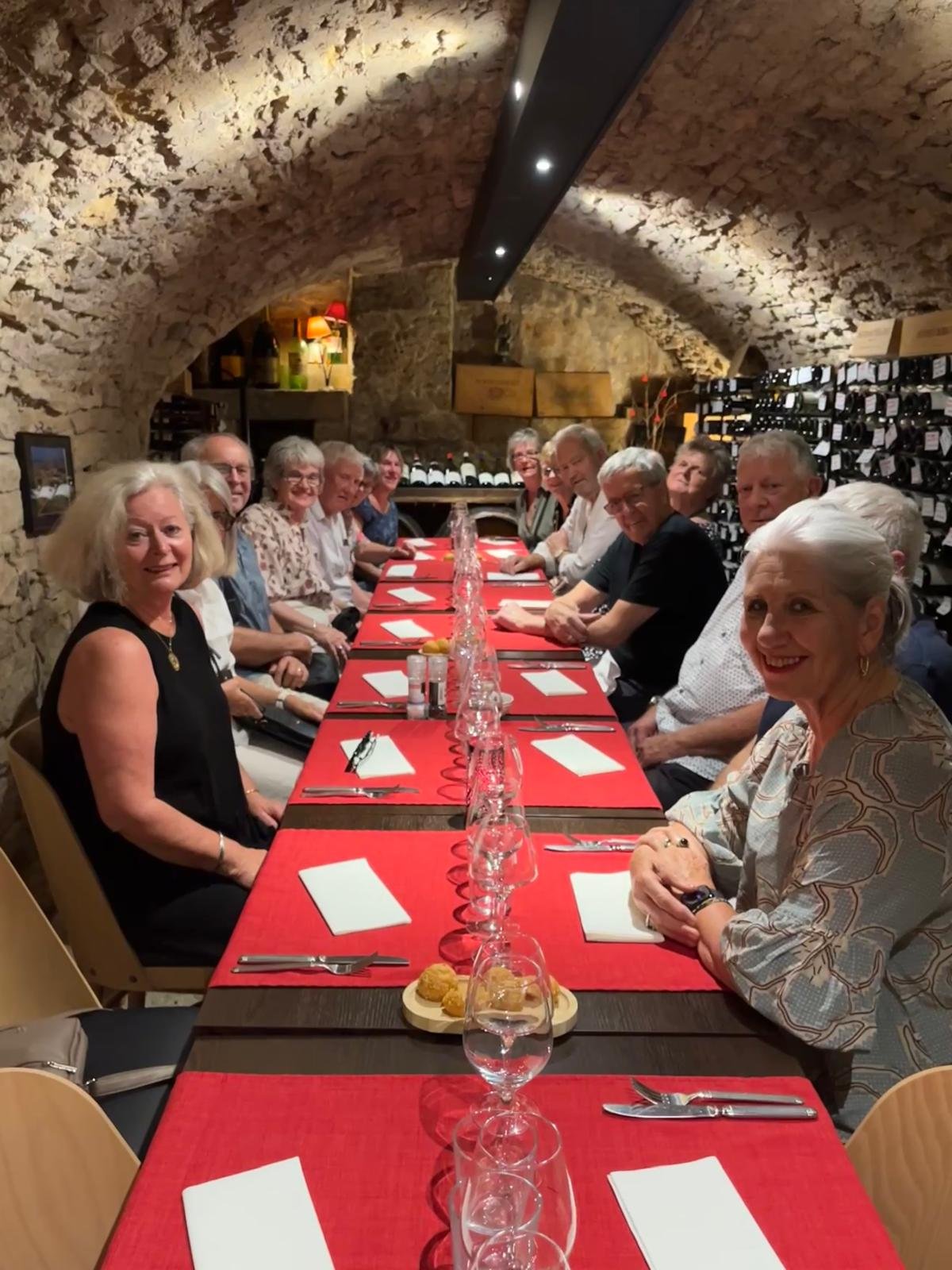
The famous pre - diinner Kir was an opening taster to La Terre dʼOr and served in the remarkable grotto, that was dug out with a lot of love for many years. Now a cool and a perfect hideaway from the heat.
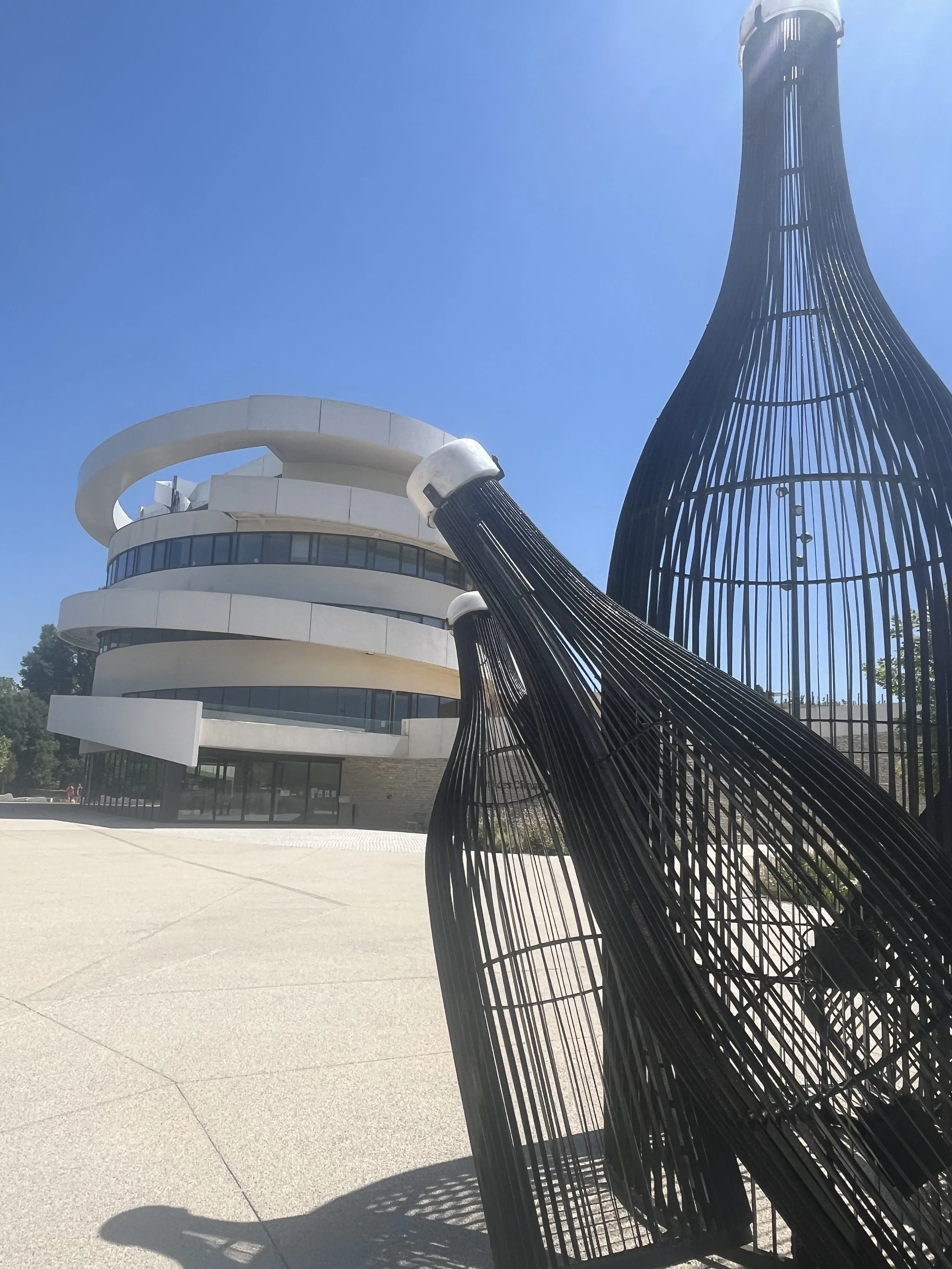
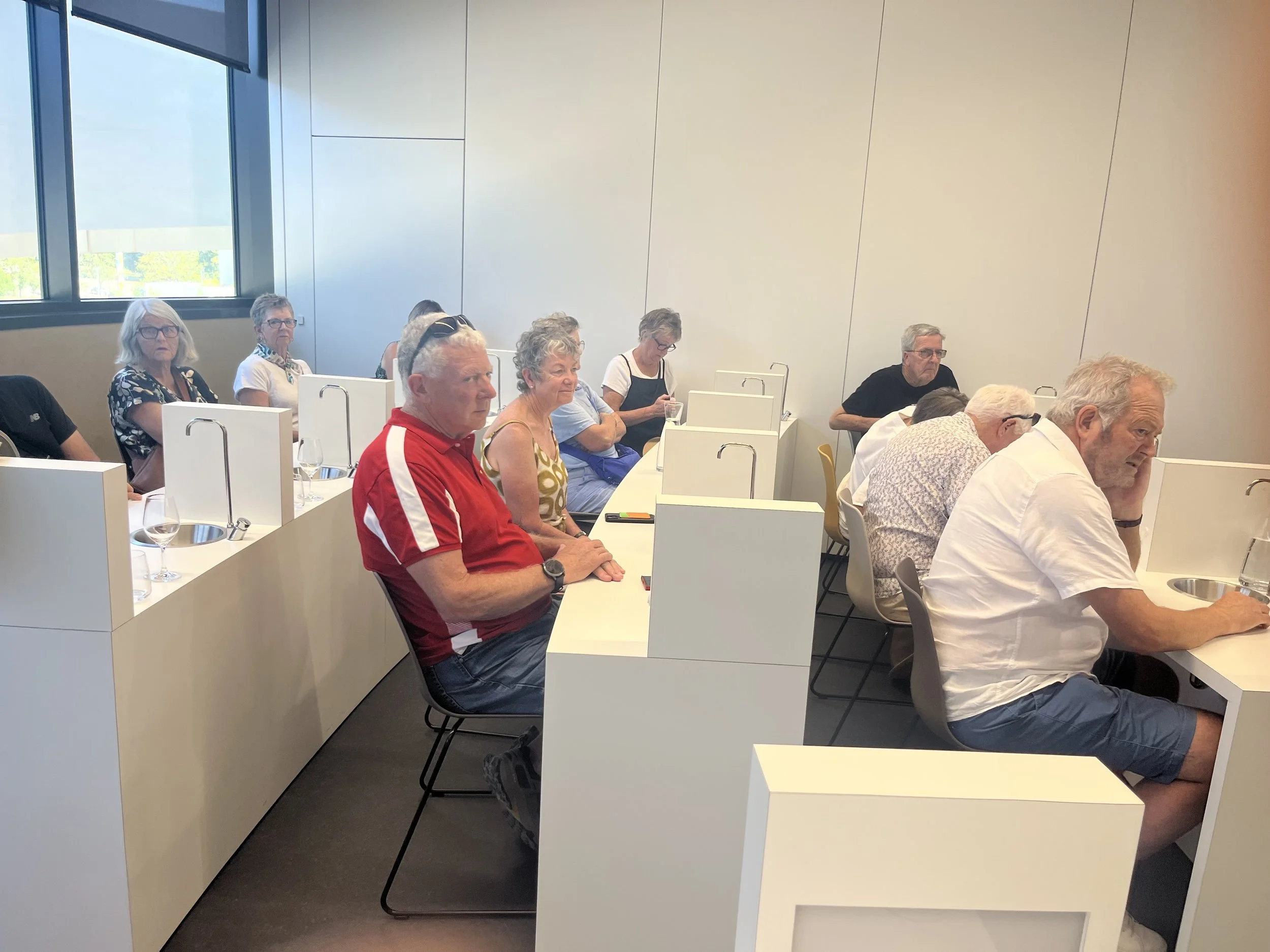
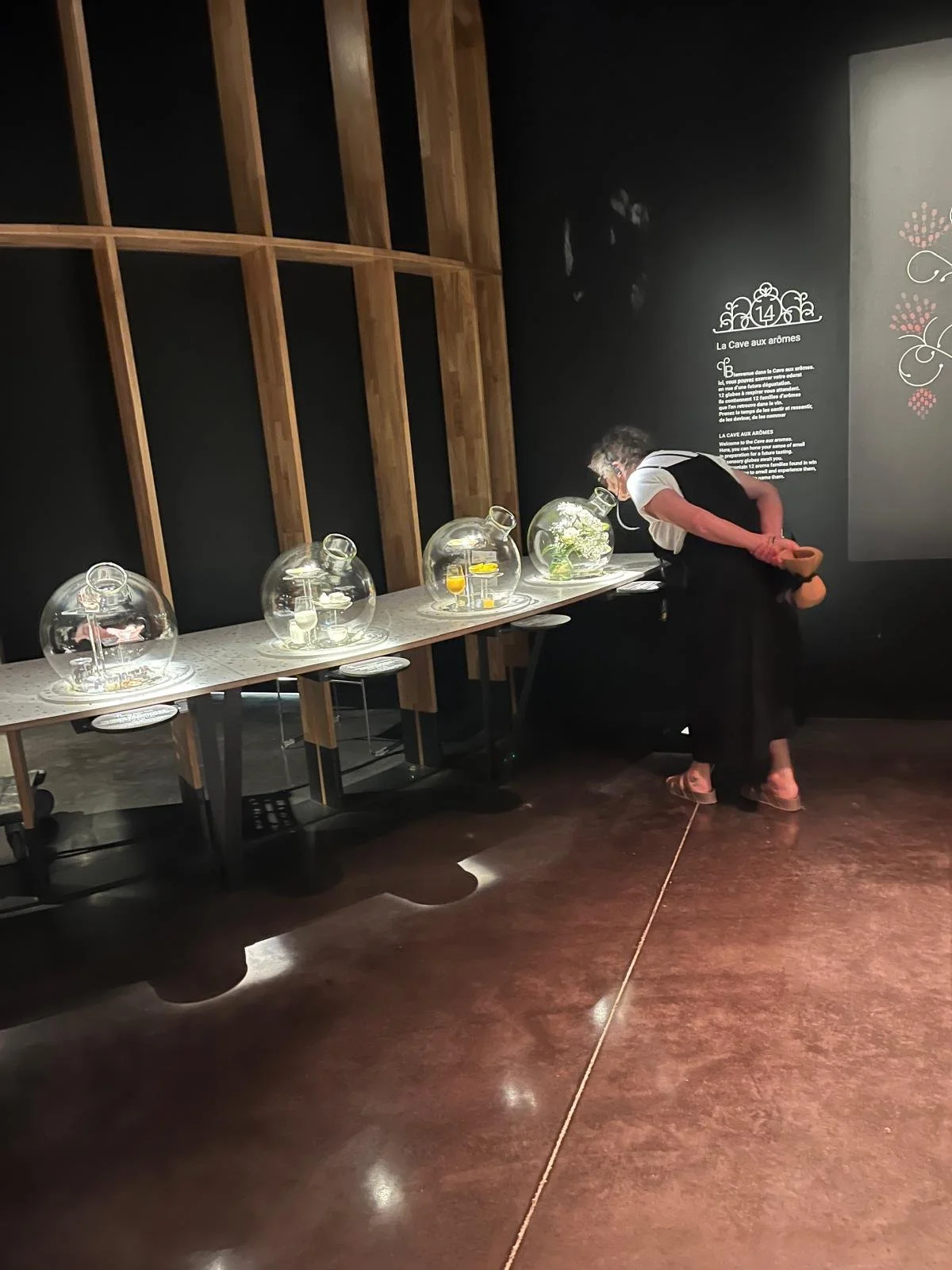
Our introduction to Burgundy began at the Cité des Climats et Vins de Bourgogne. We started with an excellent introductory wine-tasting class before exploring the large, immersive museum. Through films, interactive displays, reading and sensory experiences, we gained a wonderful overview of Burgundy's wine history and culture. We could easily have spent another hour there.
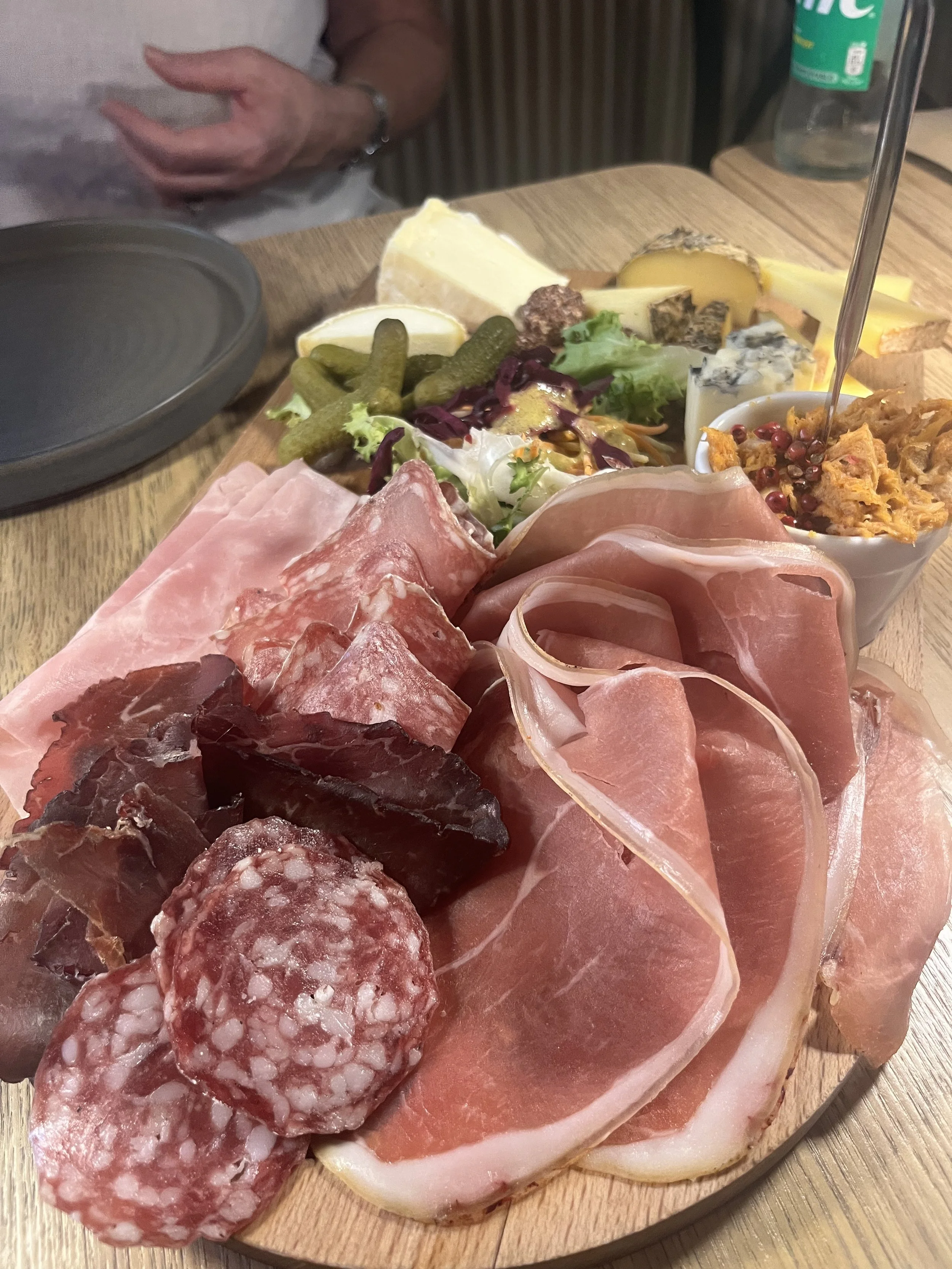
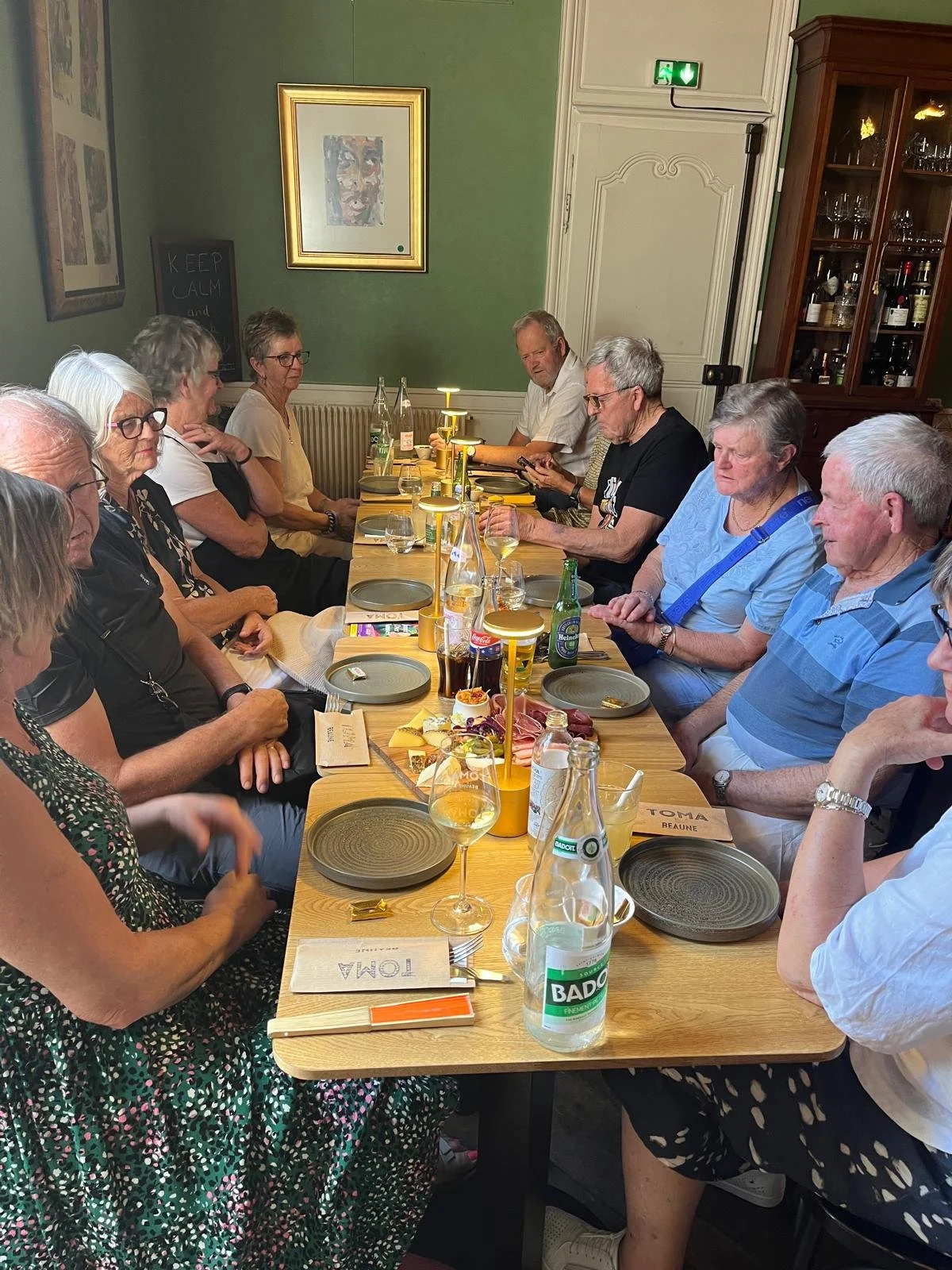
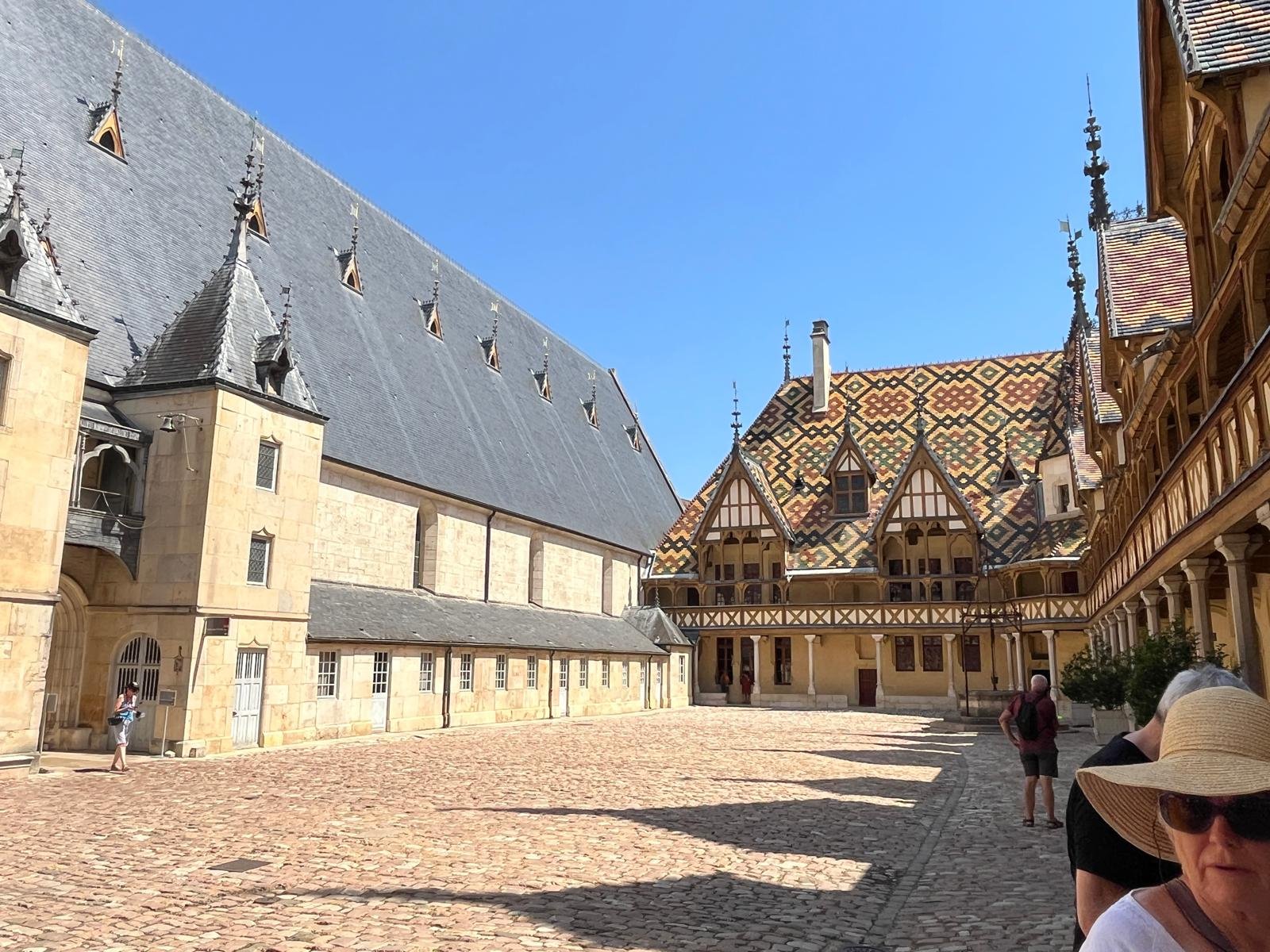
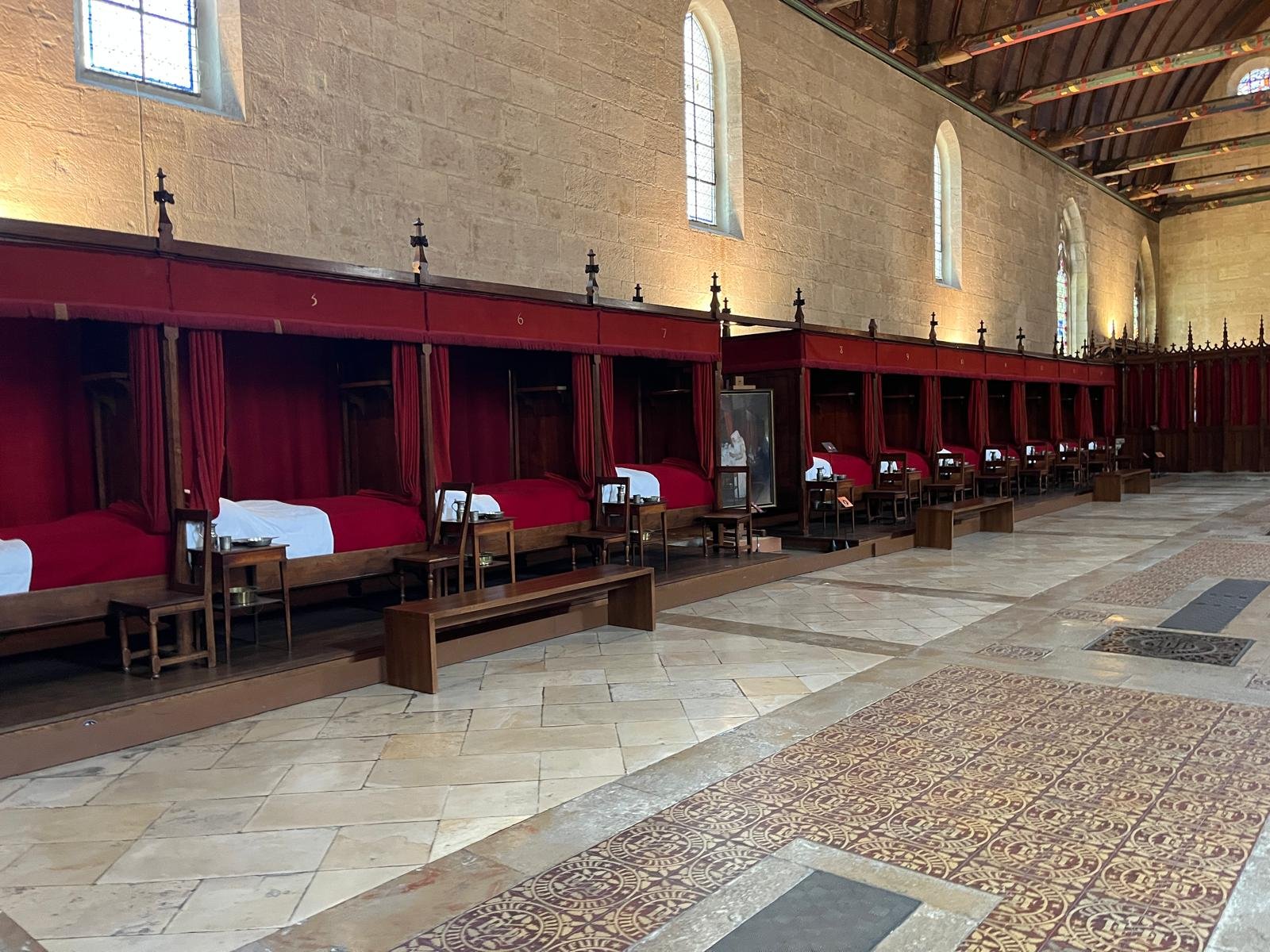
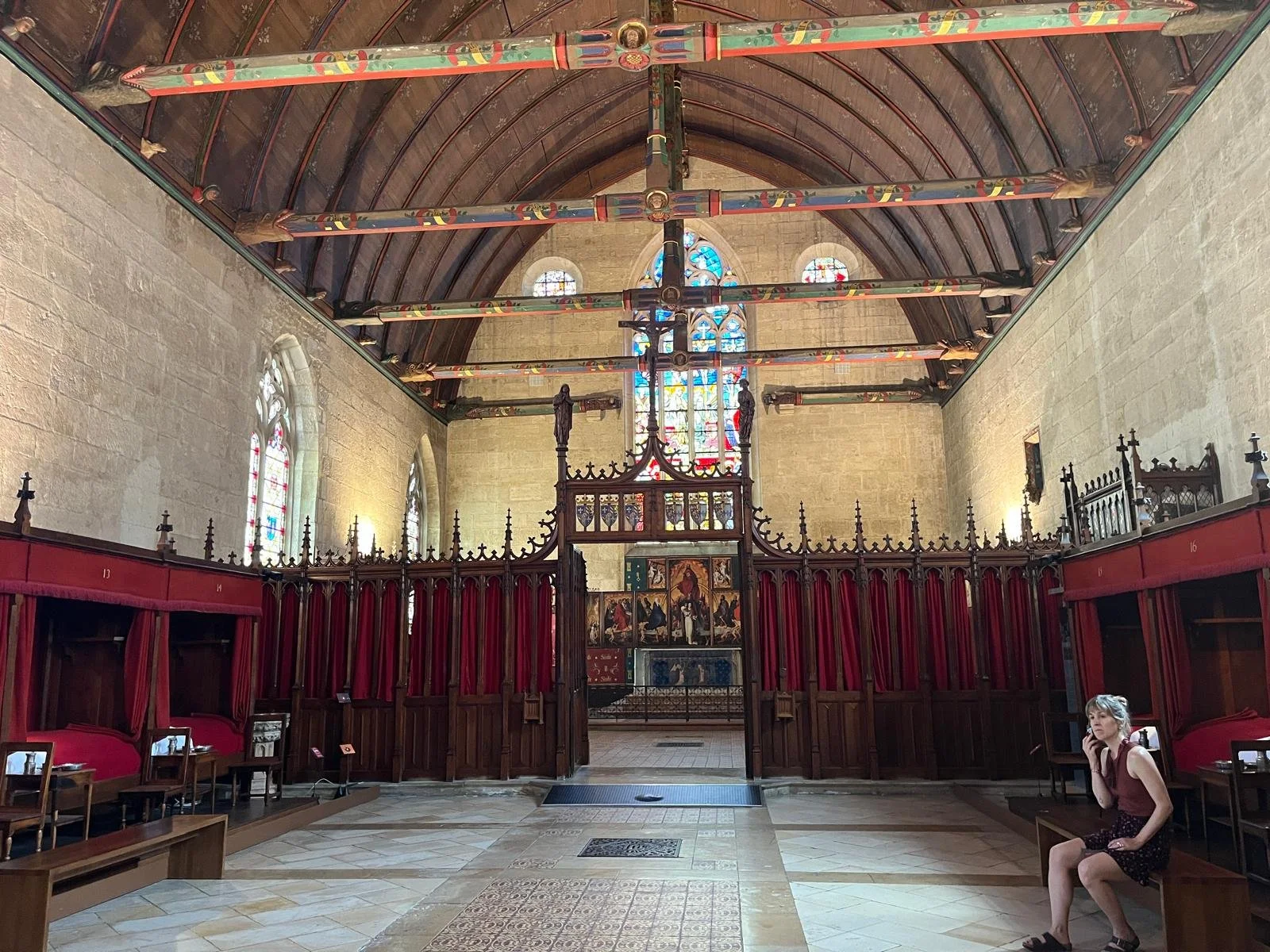
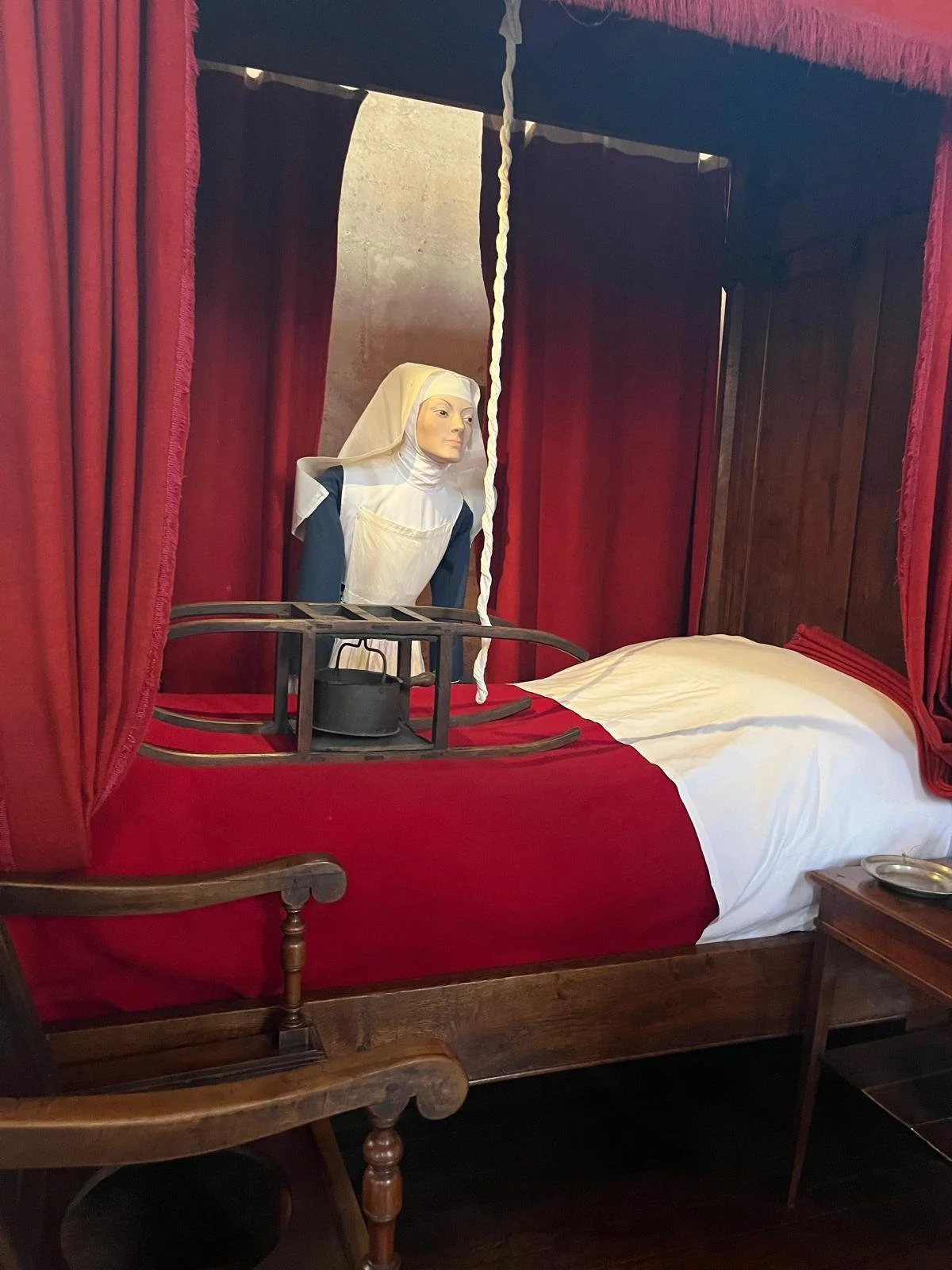
A simple platter lunch rounded off the morning perfectly before our visit to the magnificent Hospice de Beaune. Built in 1443, its iconic polychrome glazed tile roof, in rich Burgundian colours, dominates the courtyard and is one of France's architectural jewels. Inside, the Great Hall of the Poor contains fifty beds beneath beautifully carved canopies, while the extraordinary painted timber ceiling resembles the inverted hull of a ship. It is one of Europe's best-preserved medieval hospitals, serving the poor and sick continuously for more than 500 years until 1971, in the care by dedicated nursing sisters.
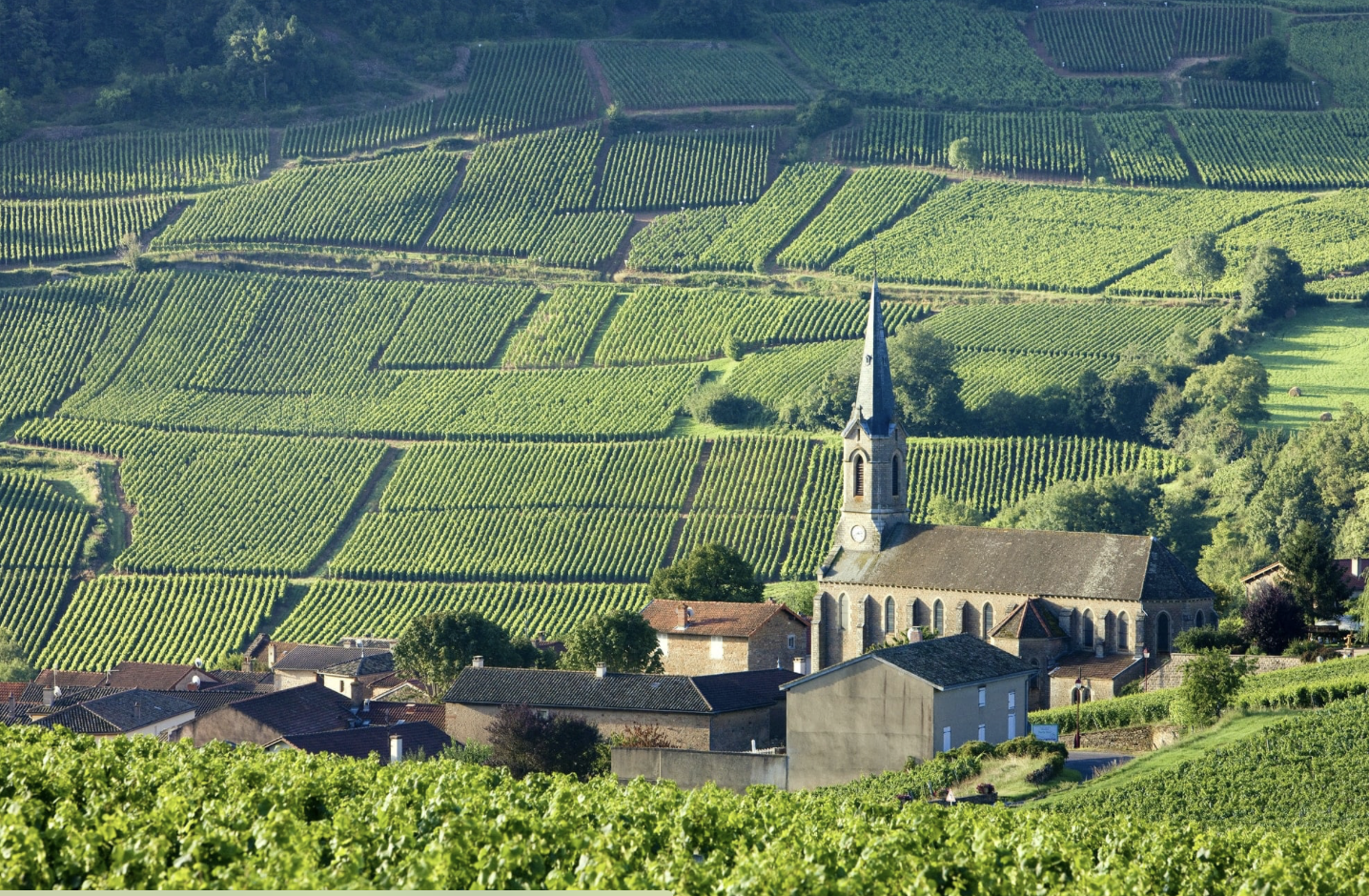
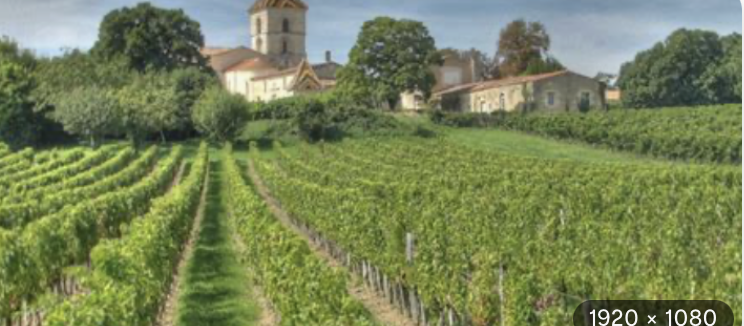
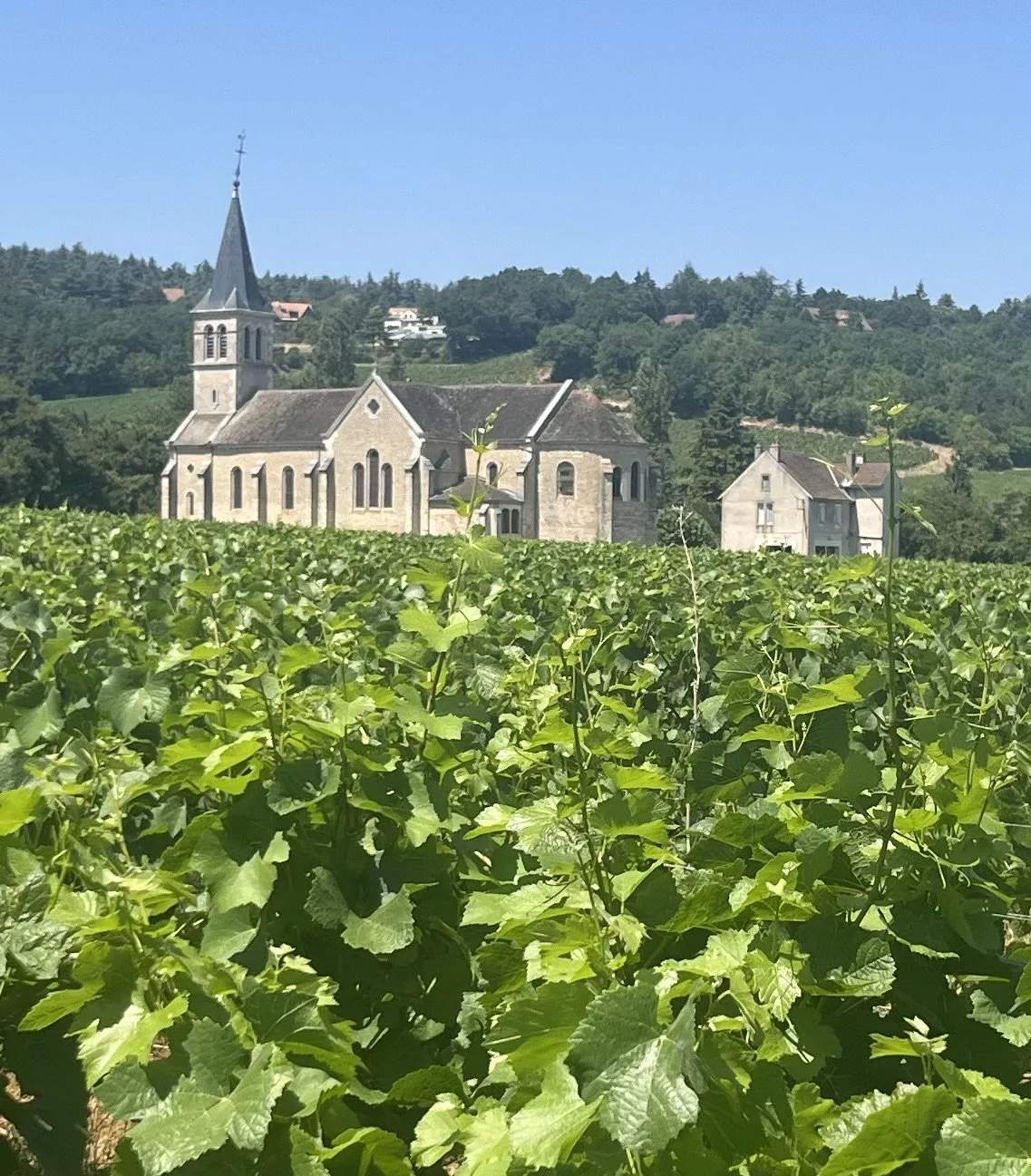
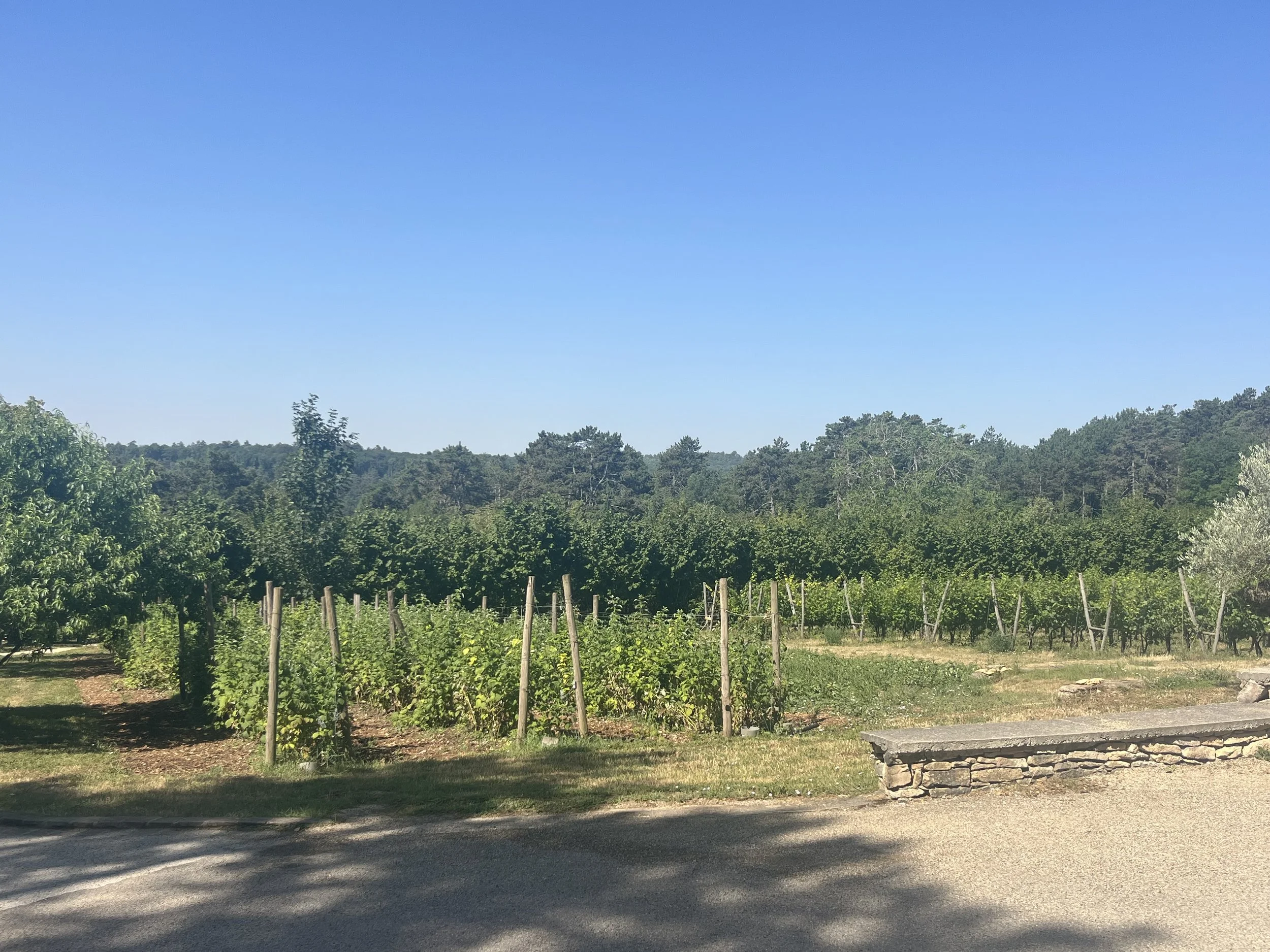
A trip to Burgundy is, of course, all about the wine. Everywhere you look, north and south of Beaune, the hillsides are carpeted in vineyards. Every plot has been mapped and classified, originally by the Cistercian and Benedictine monks over centuries of careful observation. They identified each parcel according to its soil, slope, aspect, drainage and history. What you see today is essentially the monks' spreadsheet, refined over hundreds of years of tasting and experience.
The land—not the wine—is classified, giving rise to today's Grand Cru, Premier Cru, Village and Bourgogne appellations.
The region is dominated by just two grape varieties: Chardonnay and Pinot Noir. Ordering wine can be quite daunting when presented with a wine list the size of a Bible, with bottles ranging from €25 to over €11,500 for a bottle of Romanée-Conti. Consequently, the sommelier has an incredibly important and complex role.
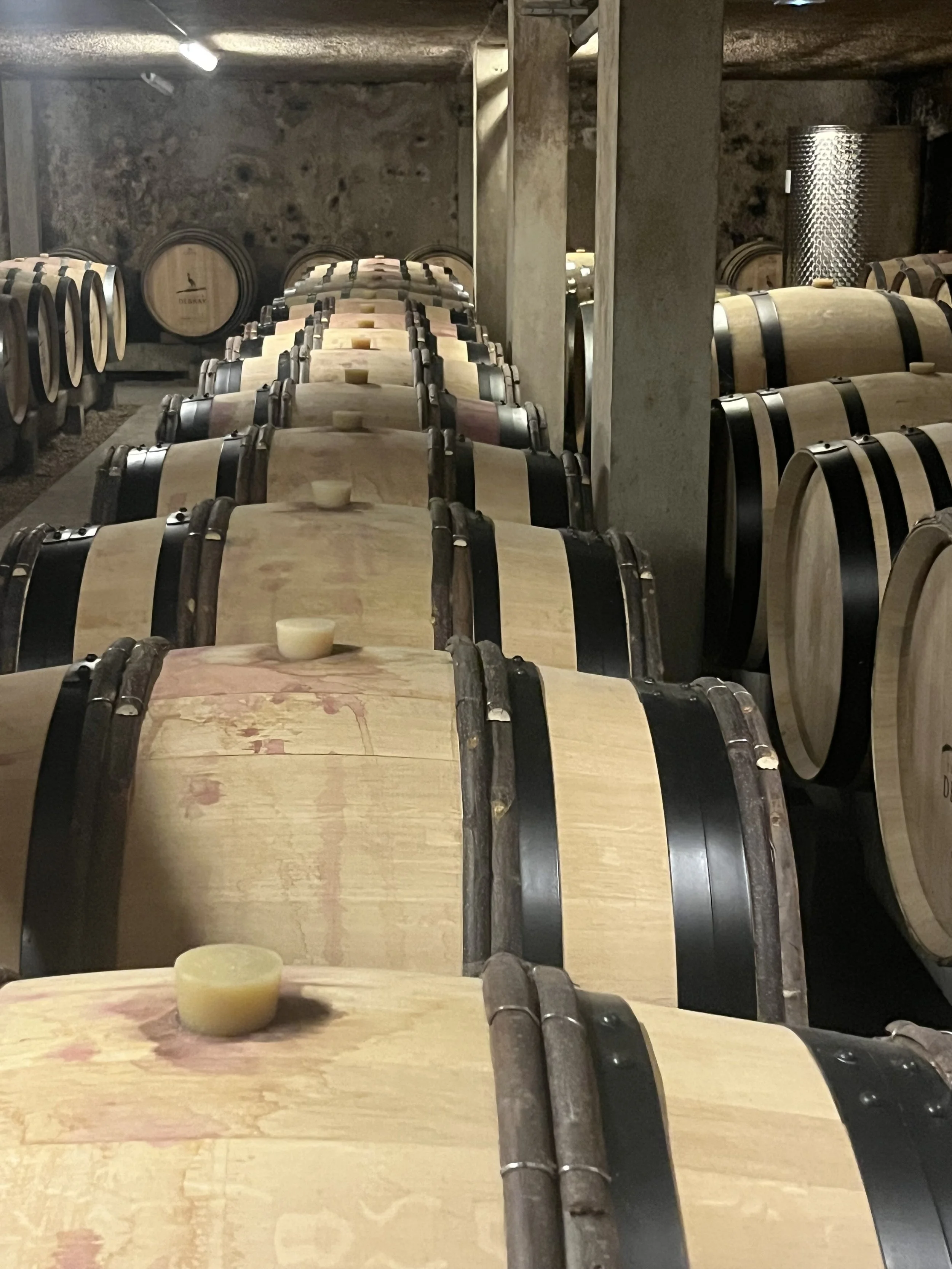
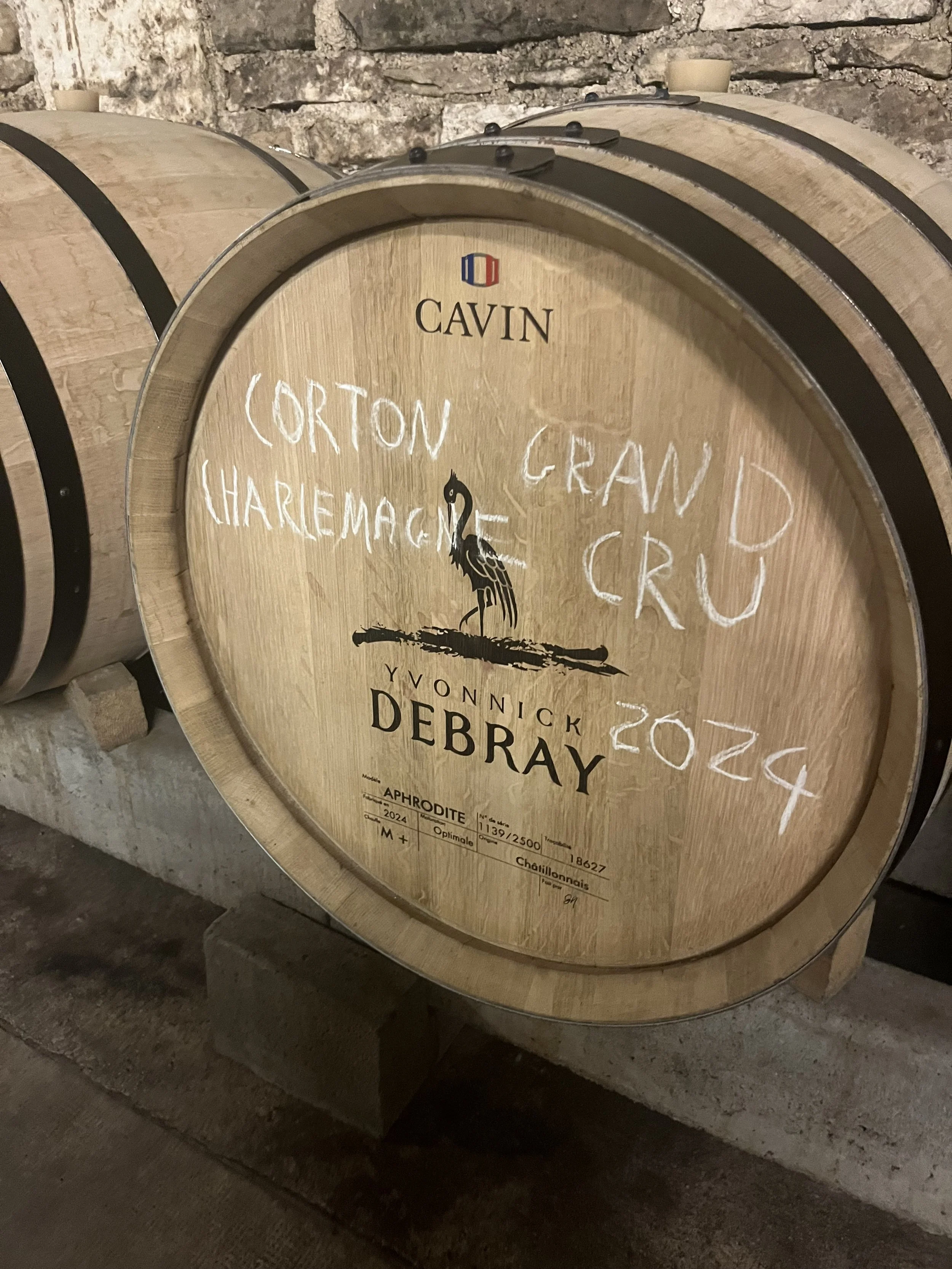
We enjoyed several wonderful cellar visits and tastings. The smaller family-run estates impressed us with their dedication to detail and obvious passion. Debtray the smallest producer sells only to customers on their allocation list, and each bottle label records exactly how many bottles of that wine were produced. Hector even demonstrated the machine that seals bottles with wax rather than the more common foil capsule.
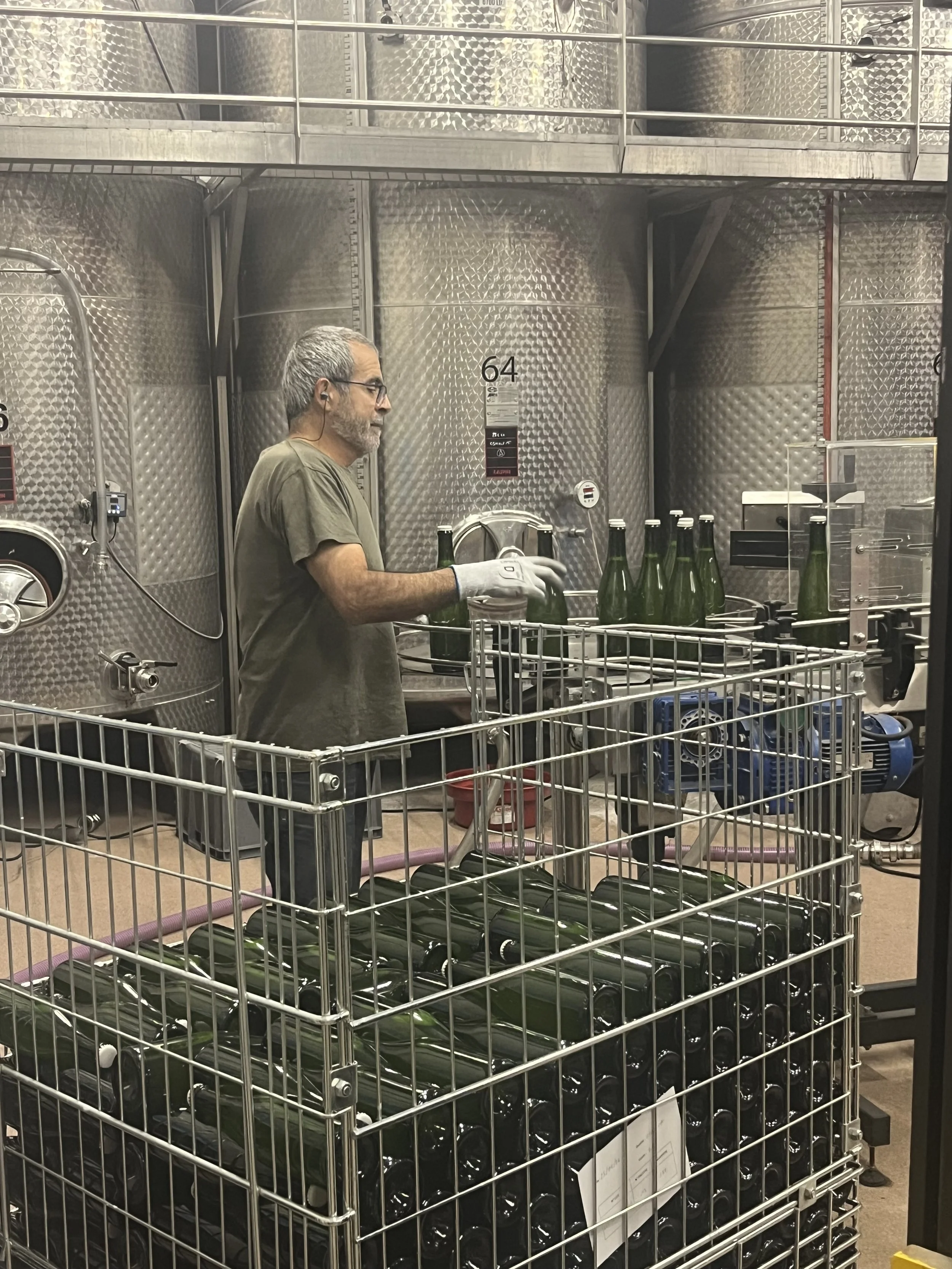
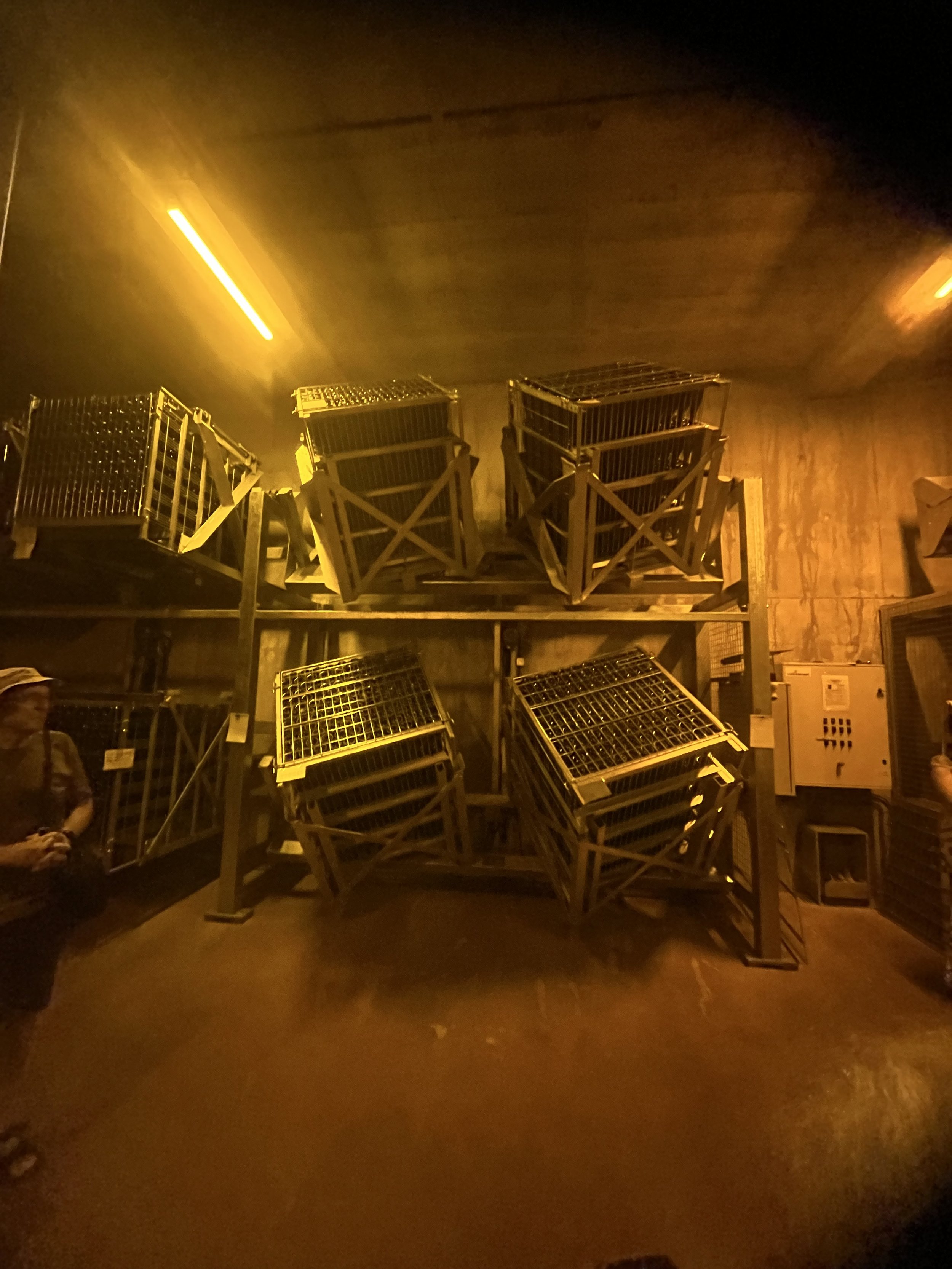
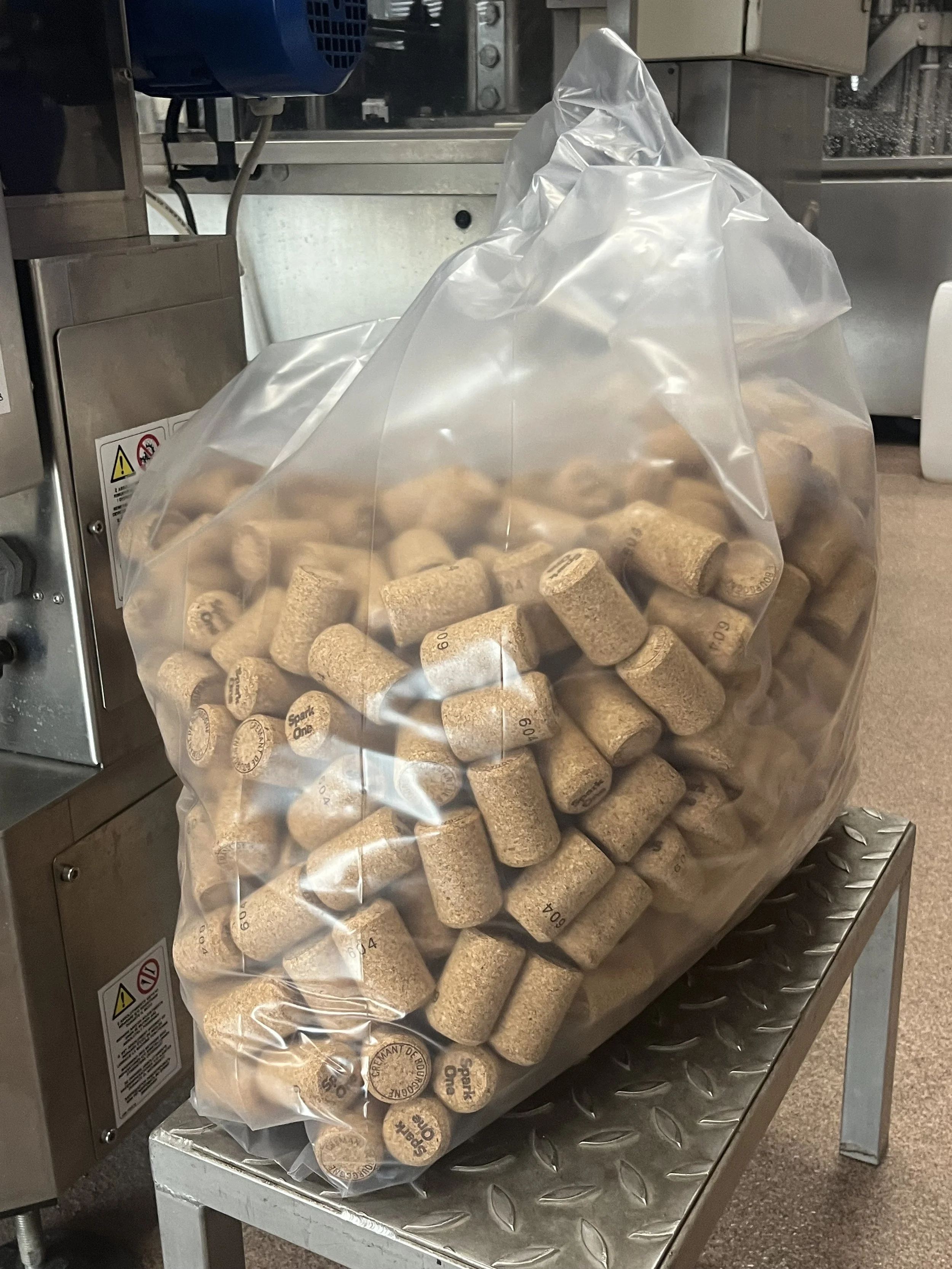
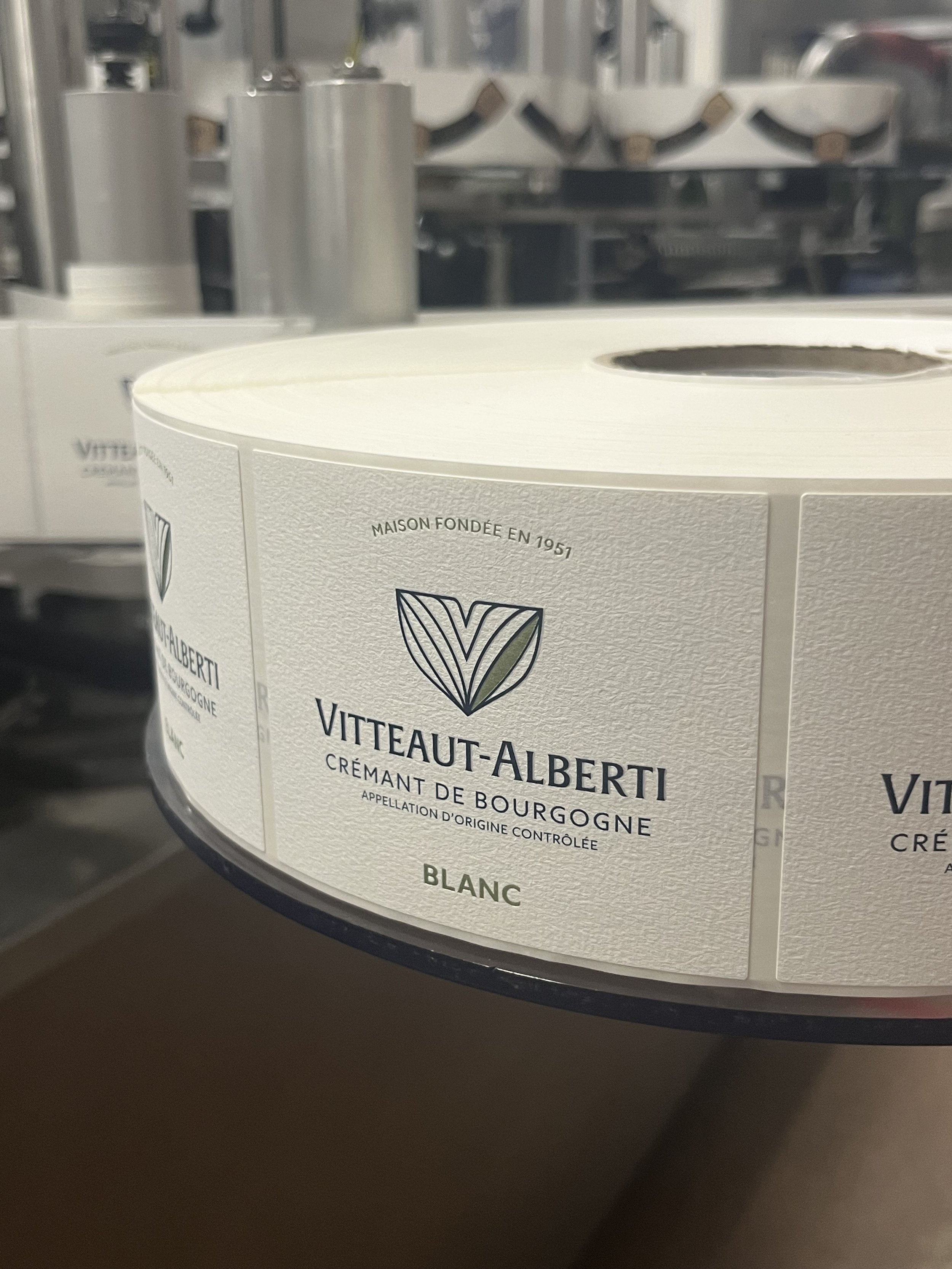
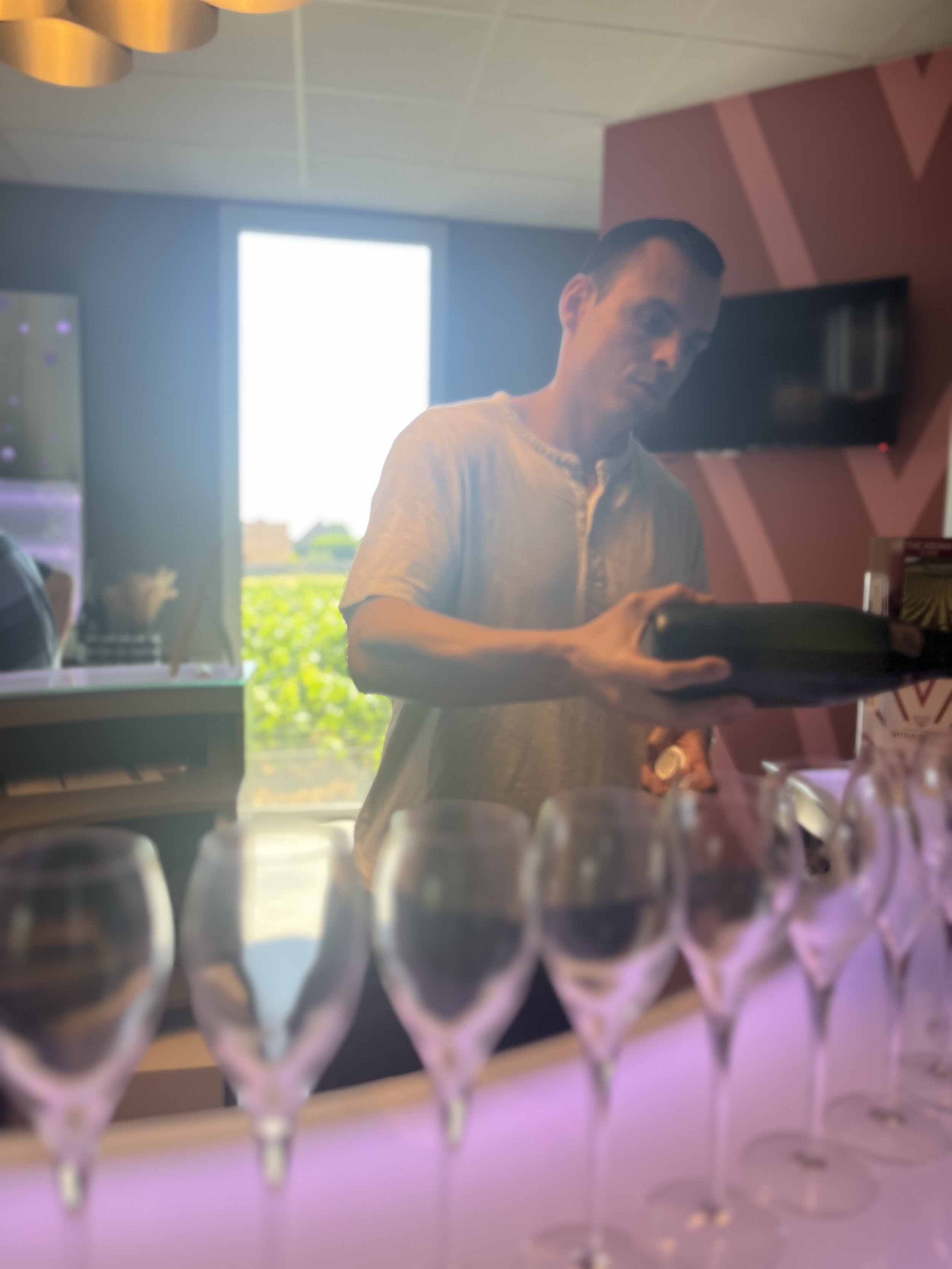
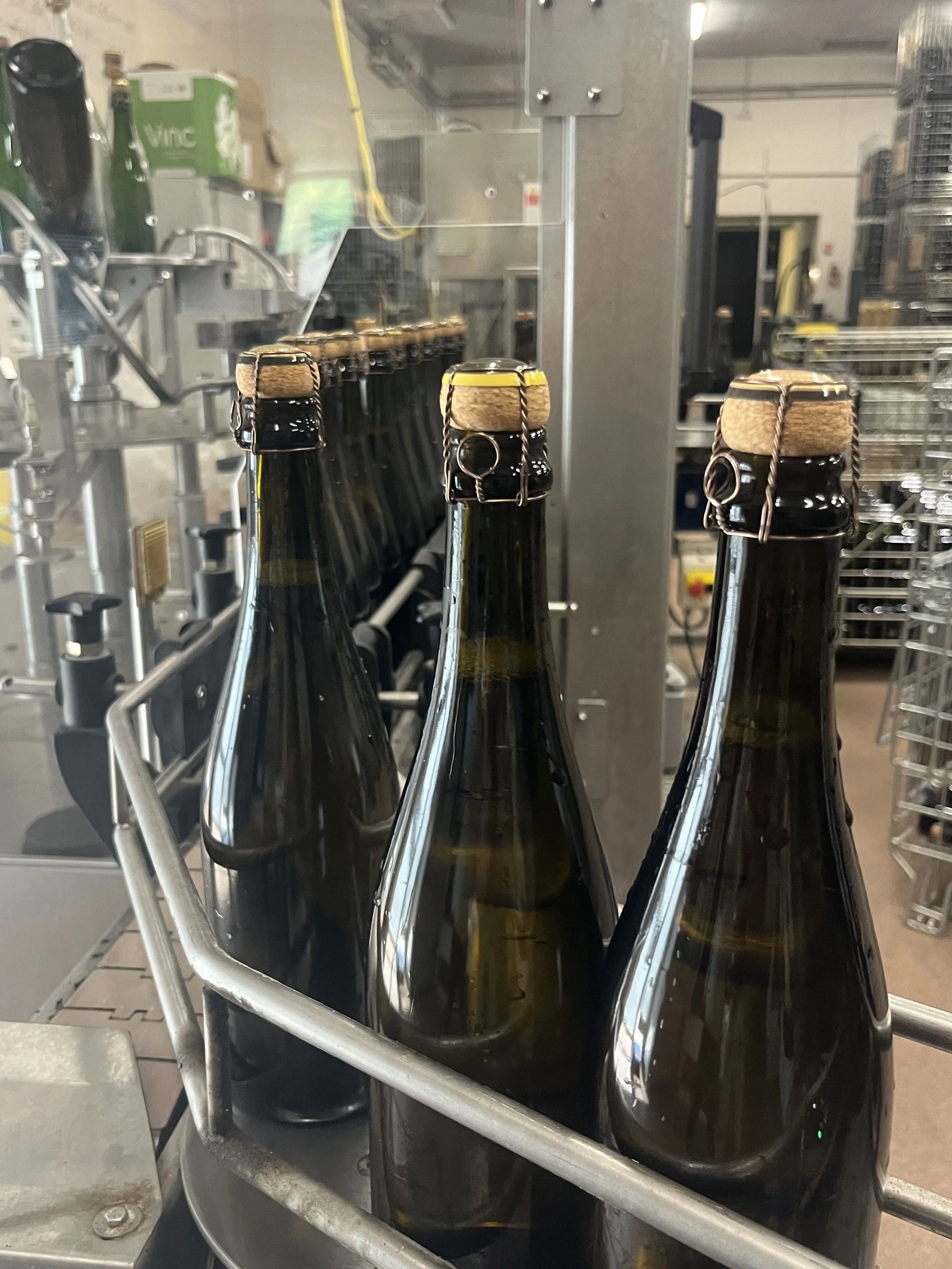
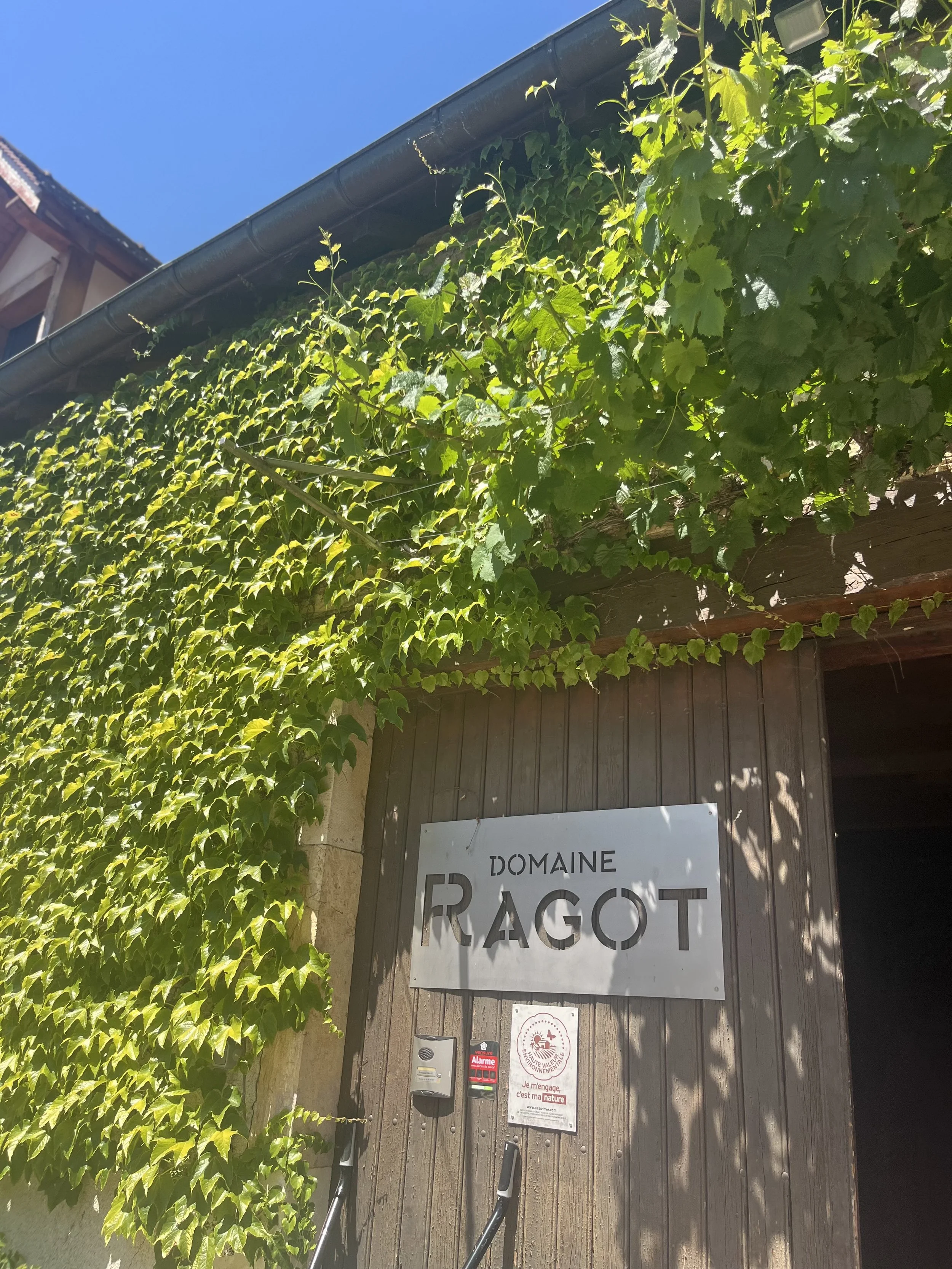
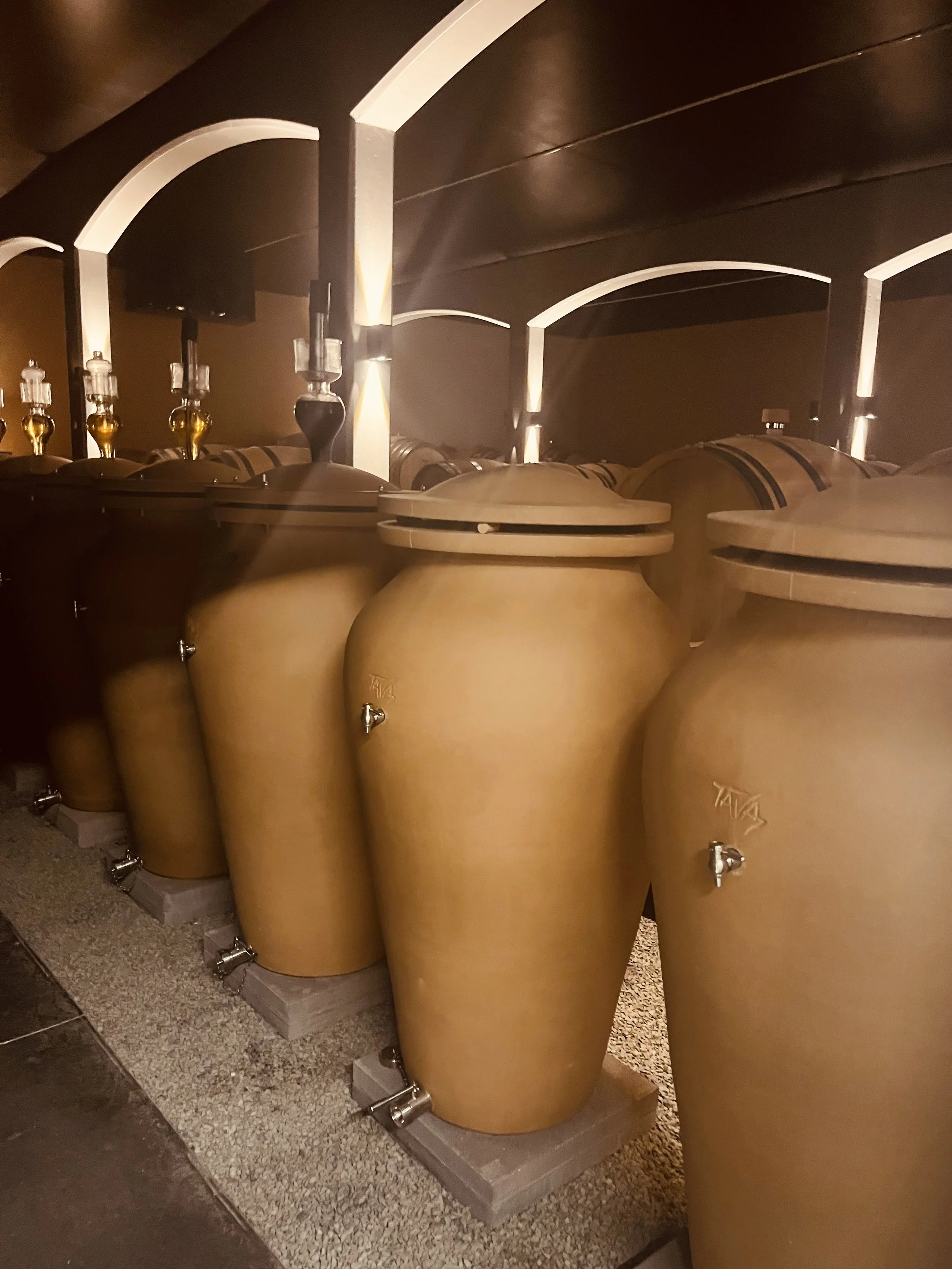
At Vitteaut - Alberti our Cremant producer, Pierre took us through the entire sparkling wine-making process—from the stainless-steel fermentation tanks to the enormous racks where bottles are slowly turned, through to disgorging of the frozen sediment, corking, washing and labelling. Lastly, Ragot where a modern winery extension was an architectural masterpiece, showcasing meticulous attention to detail, while Nicolas proudly displayed his collection of amphorae used along side traditional oak barrels. There is lot of experimenting and research going on here in Burgundy even though the wine making methods are strictly contrelled.
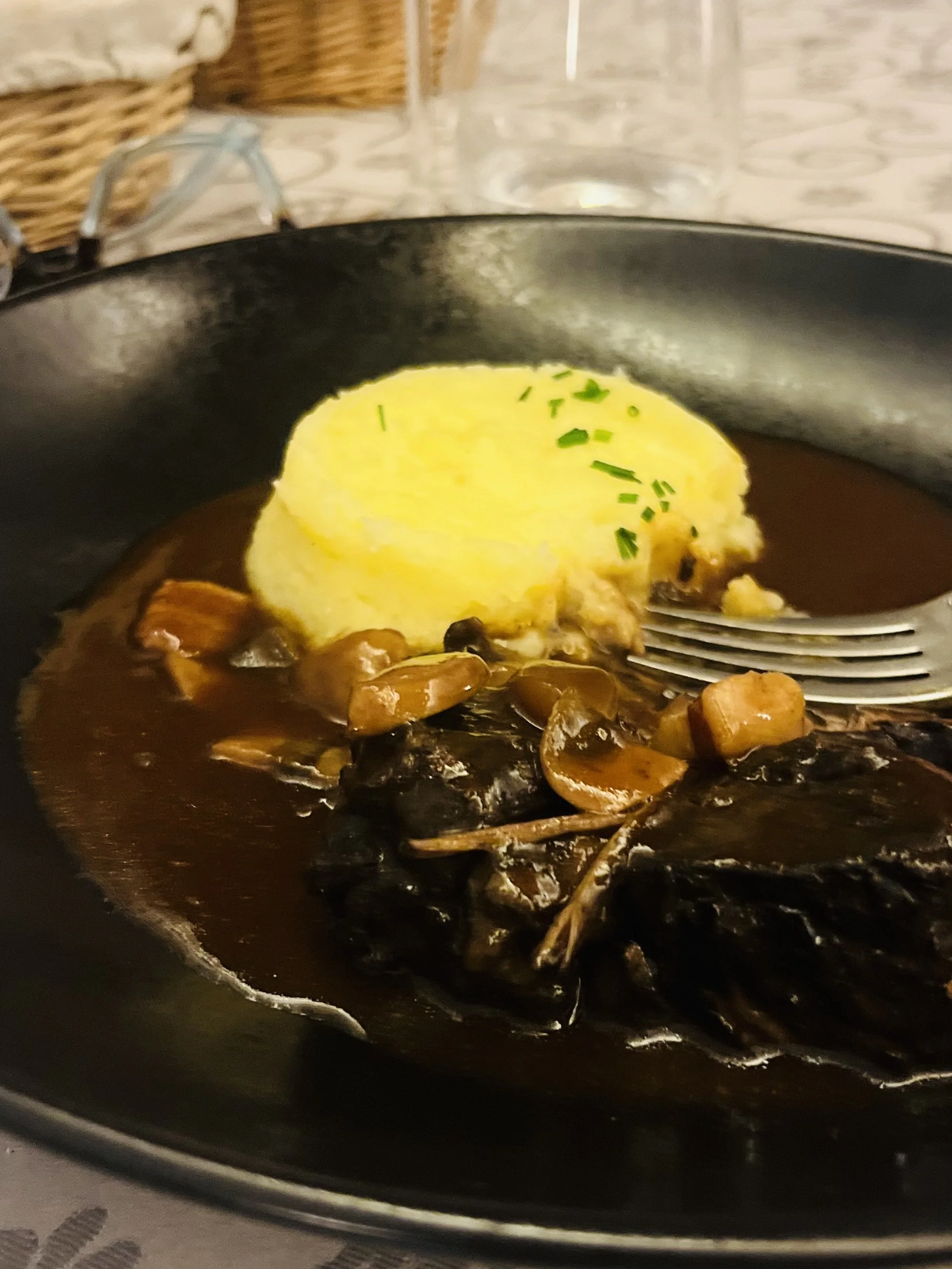
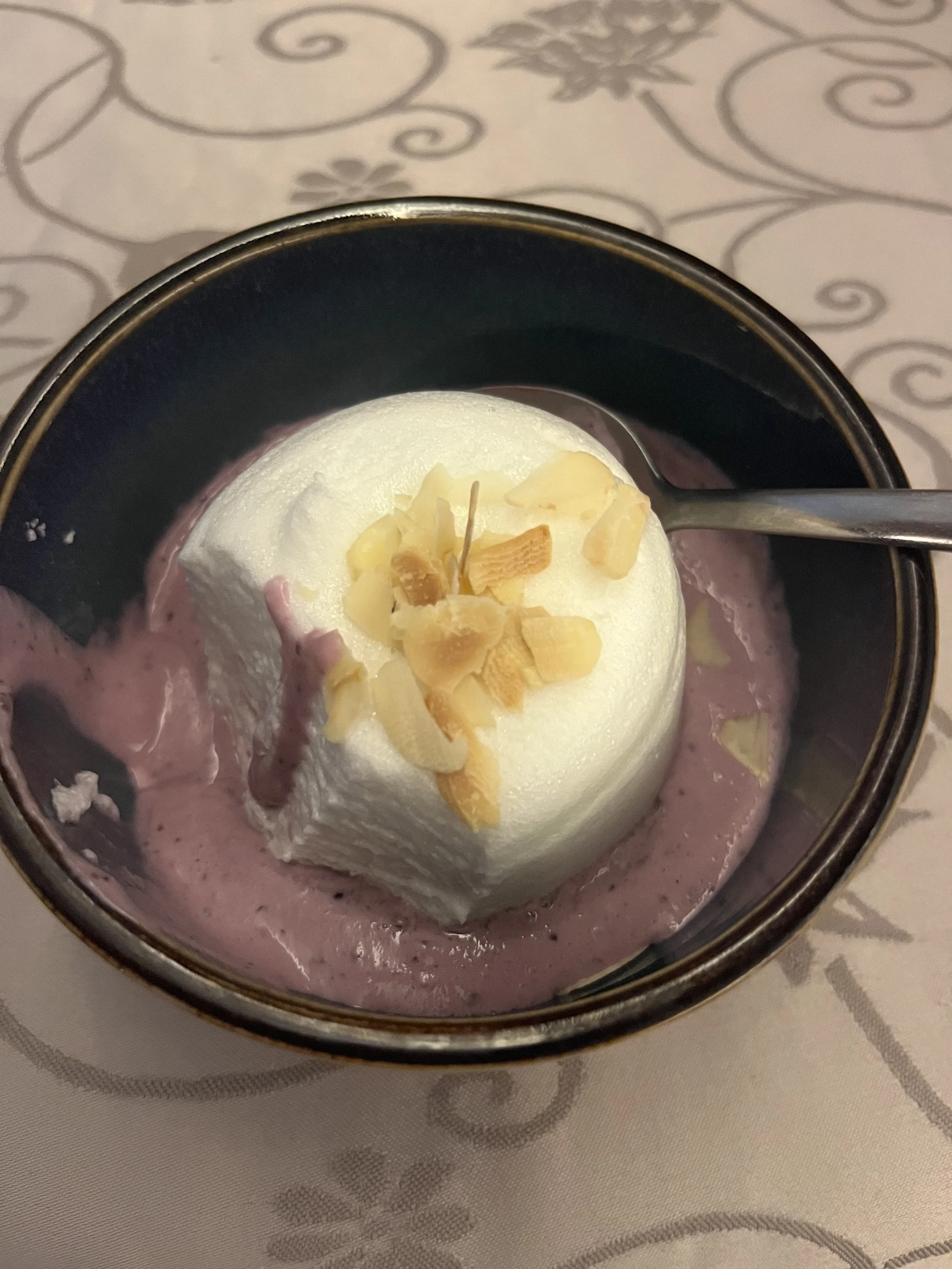
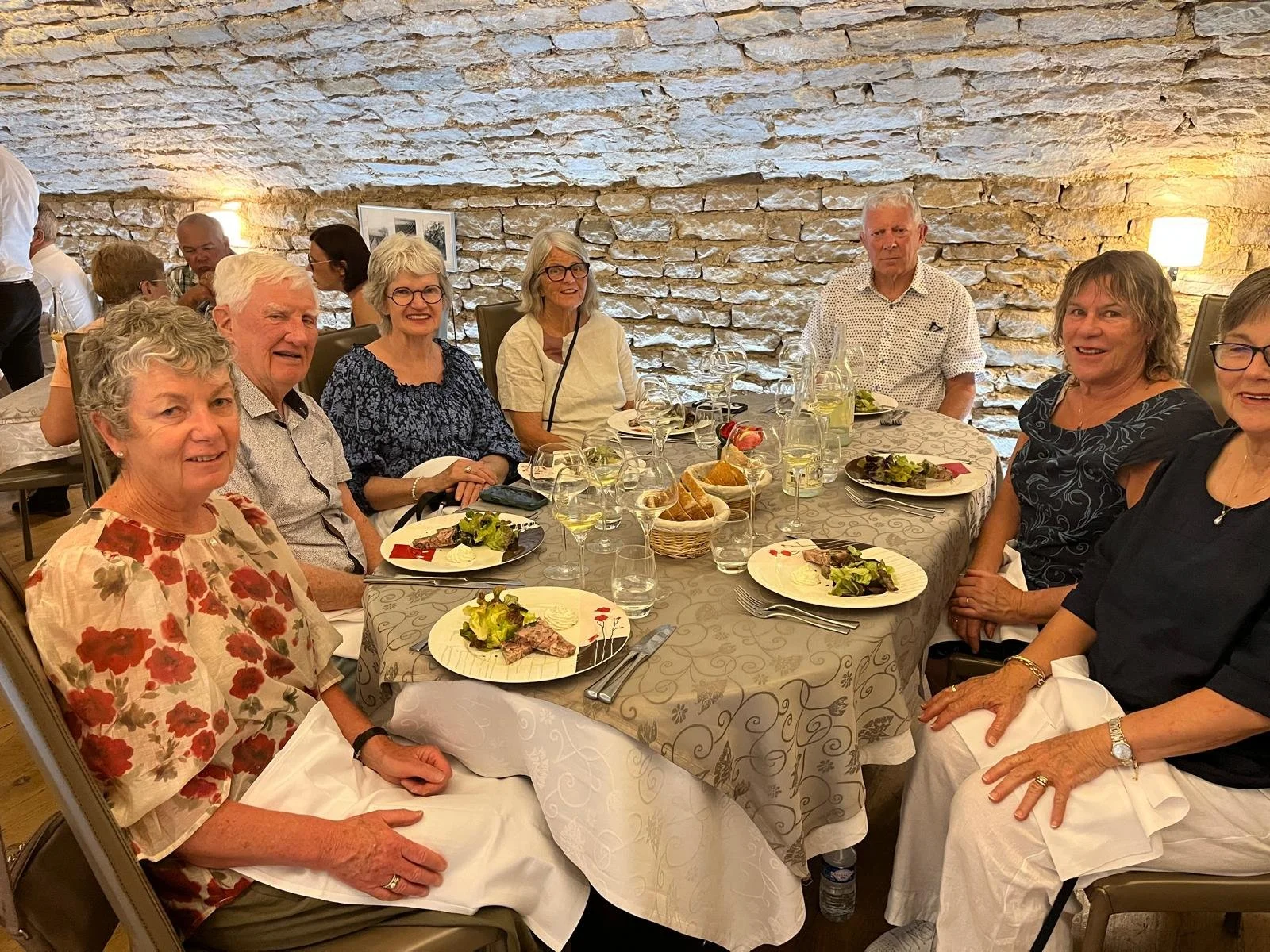
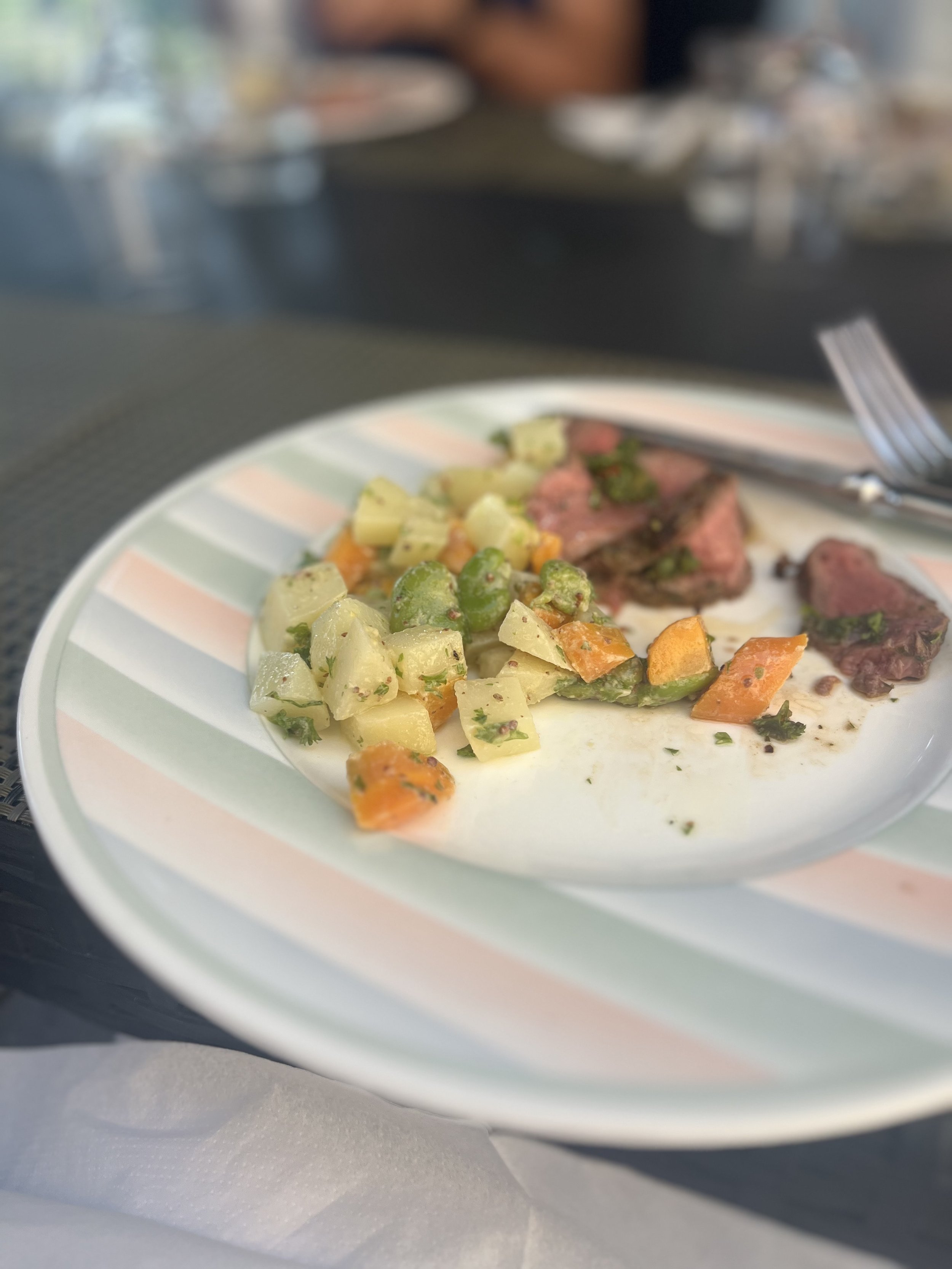
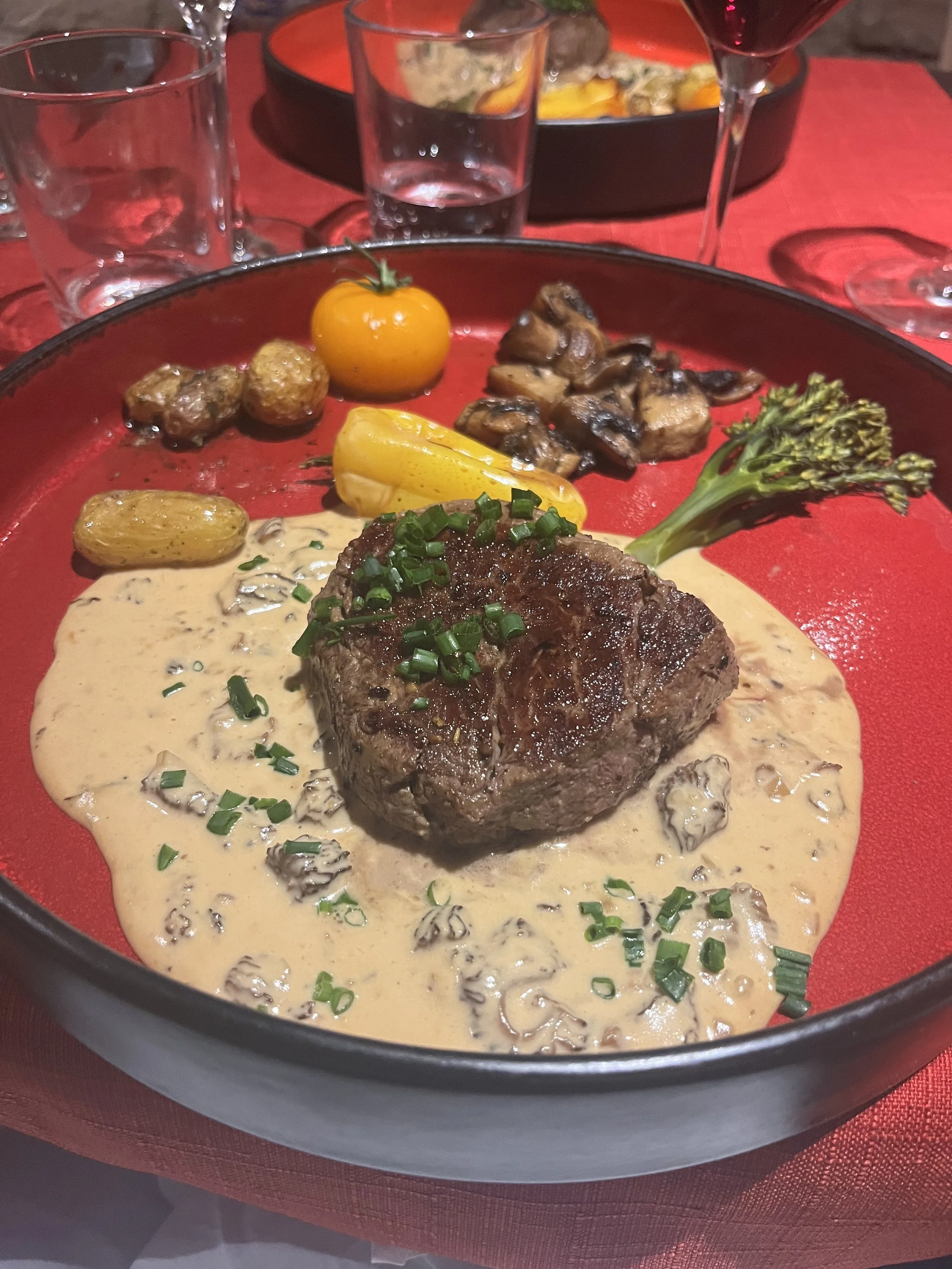
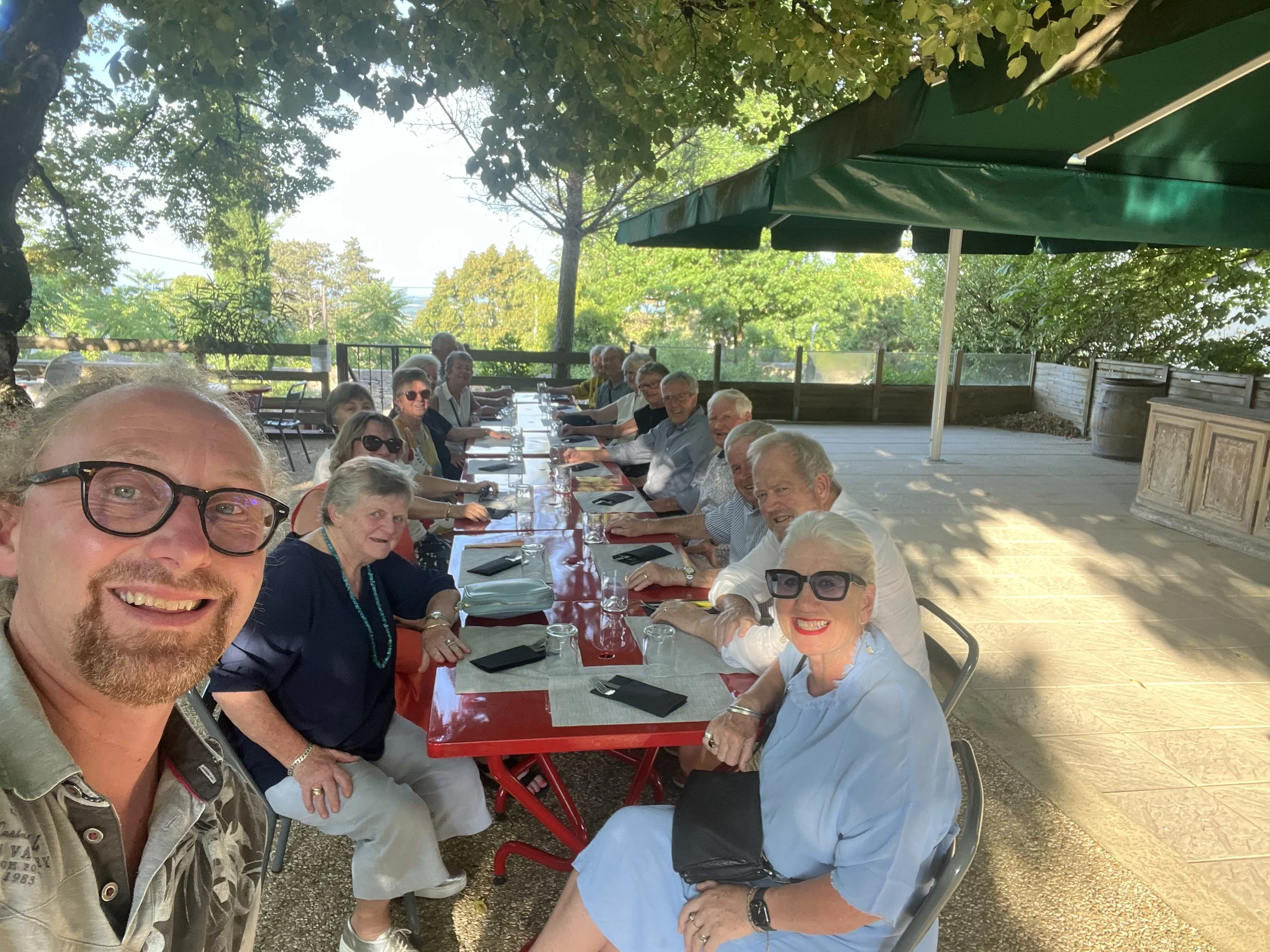
The food of Burgundy is as memorable as its wines. Classic dishes include Boeuf Bourguignon, Jambon Persillé (ham terrine with parsley and jellied stock), Coq au Vin, Oeufs en Meurette (poached eggs in red wine sauce), snails in garlic and parsley butter, Pain d'Épices (spiced gingerbread), and blackcurrants, which appear everywhere—from desserts to Kir, the traditional aperitif made with crème de cassis and white wine. Our meals varied from restaurants in Beaune to a long barbecue lunch prepared for us at La Terre d'Or by local caterers. One evening we enjoyed a simple supermarket terrine and salad, while on our final night we wandered the short 300 metres to the local village bistro.
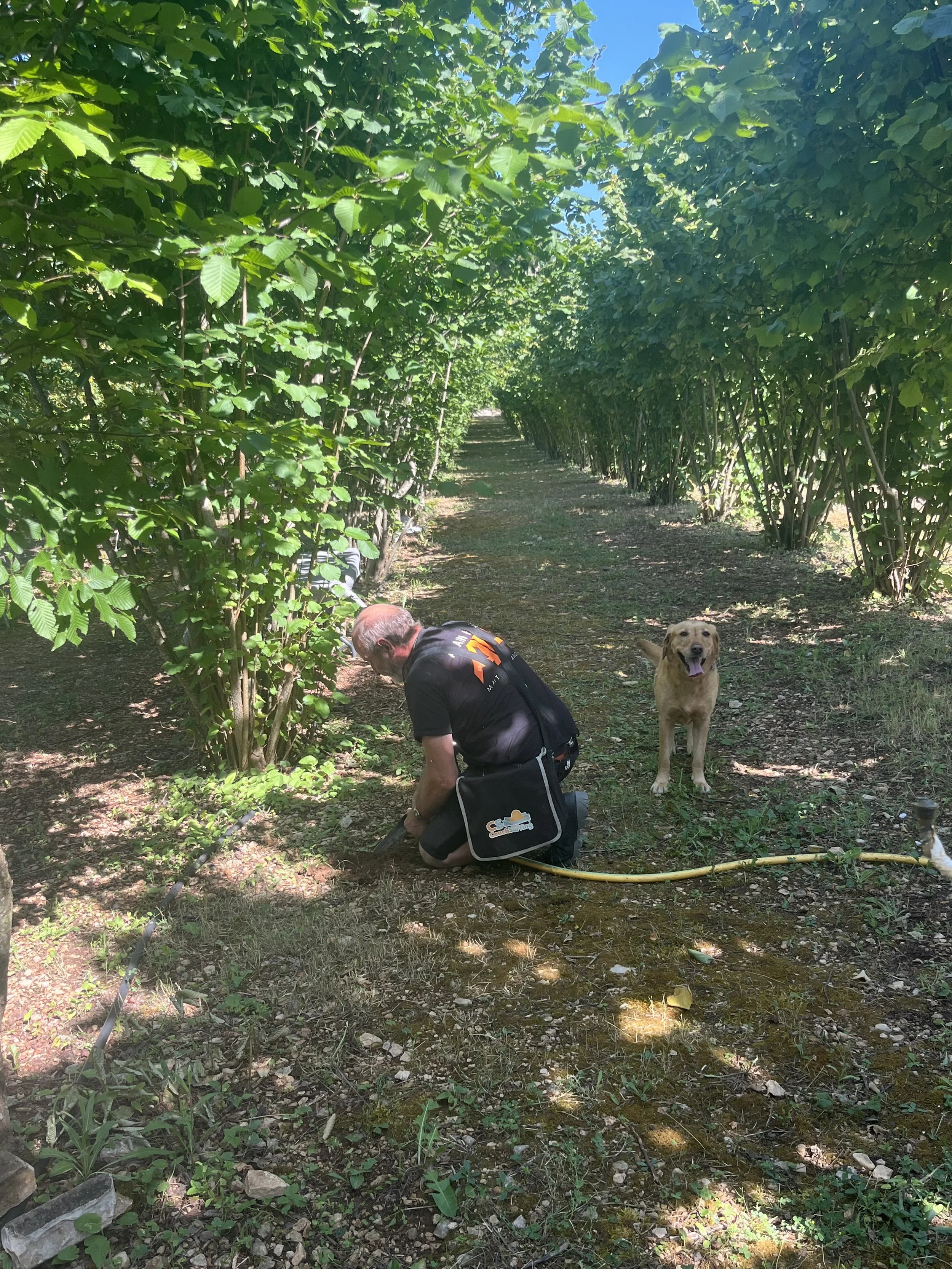
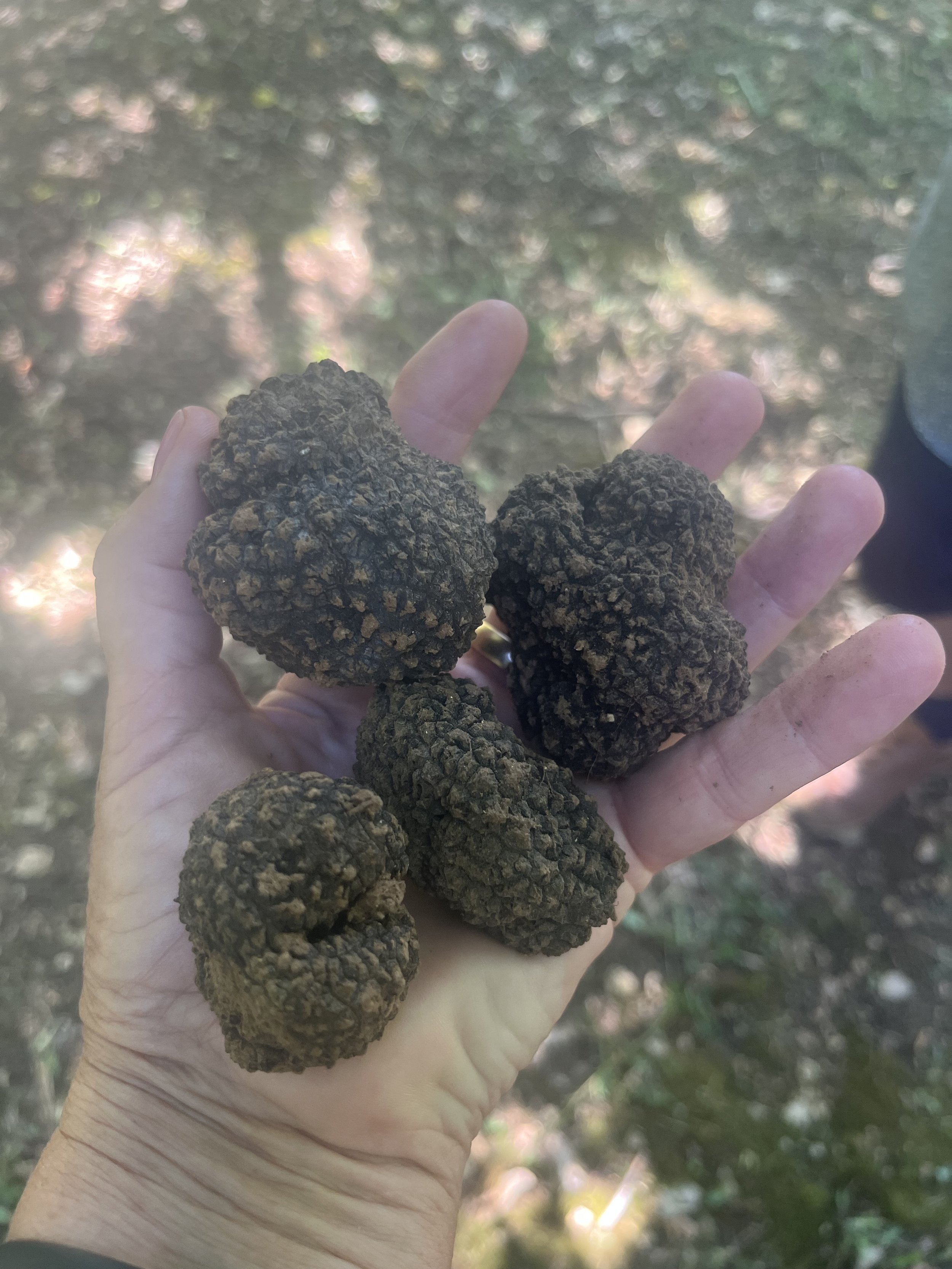
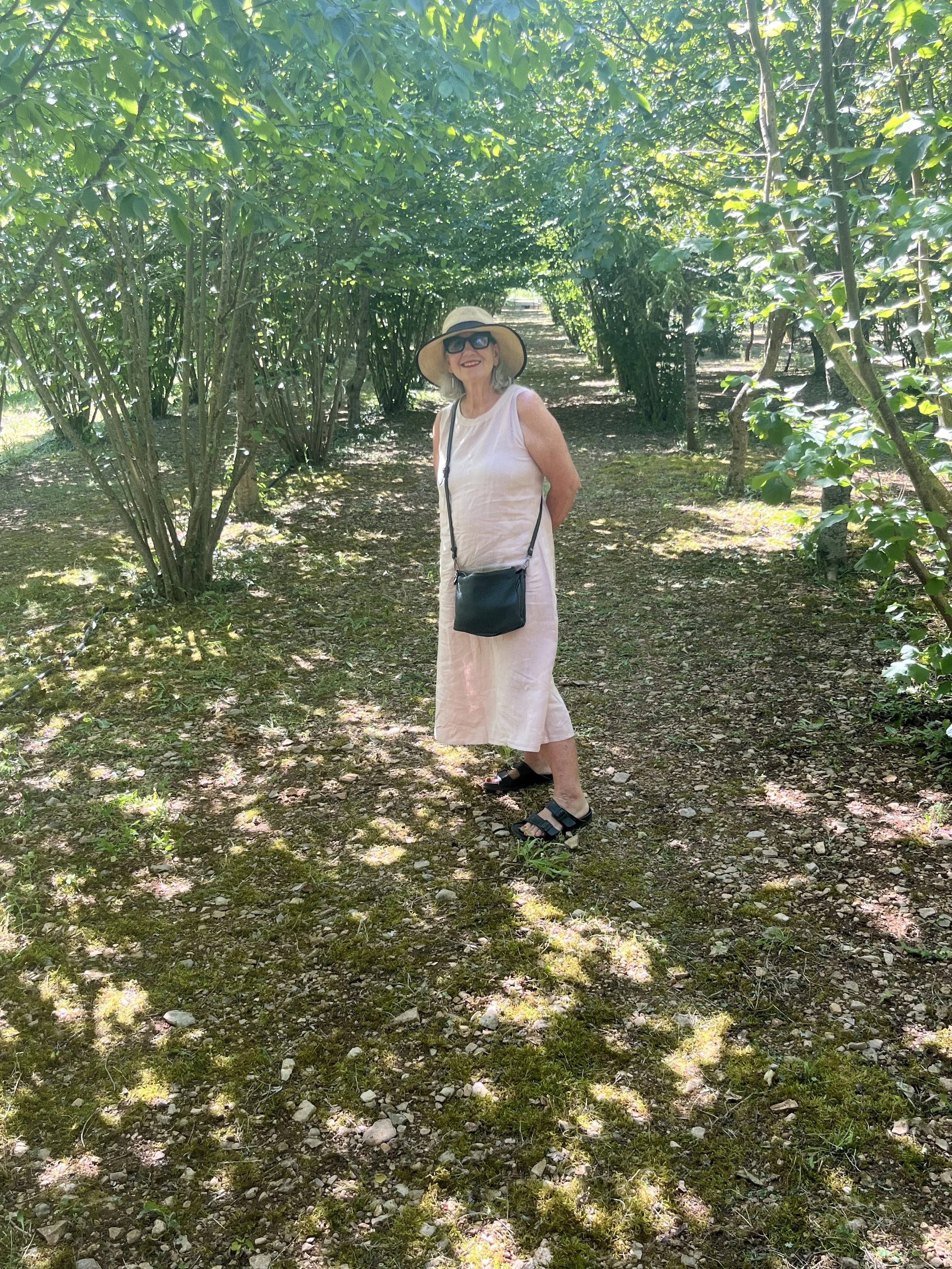
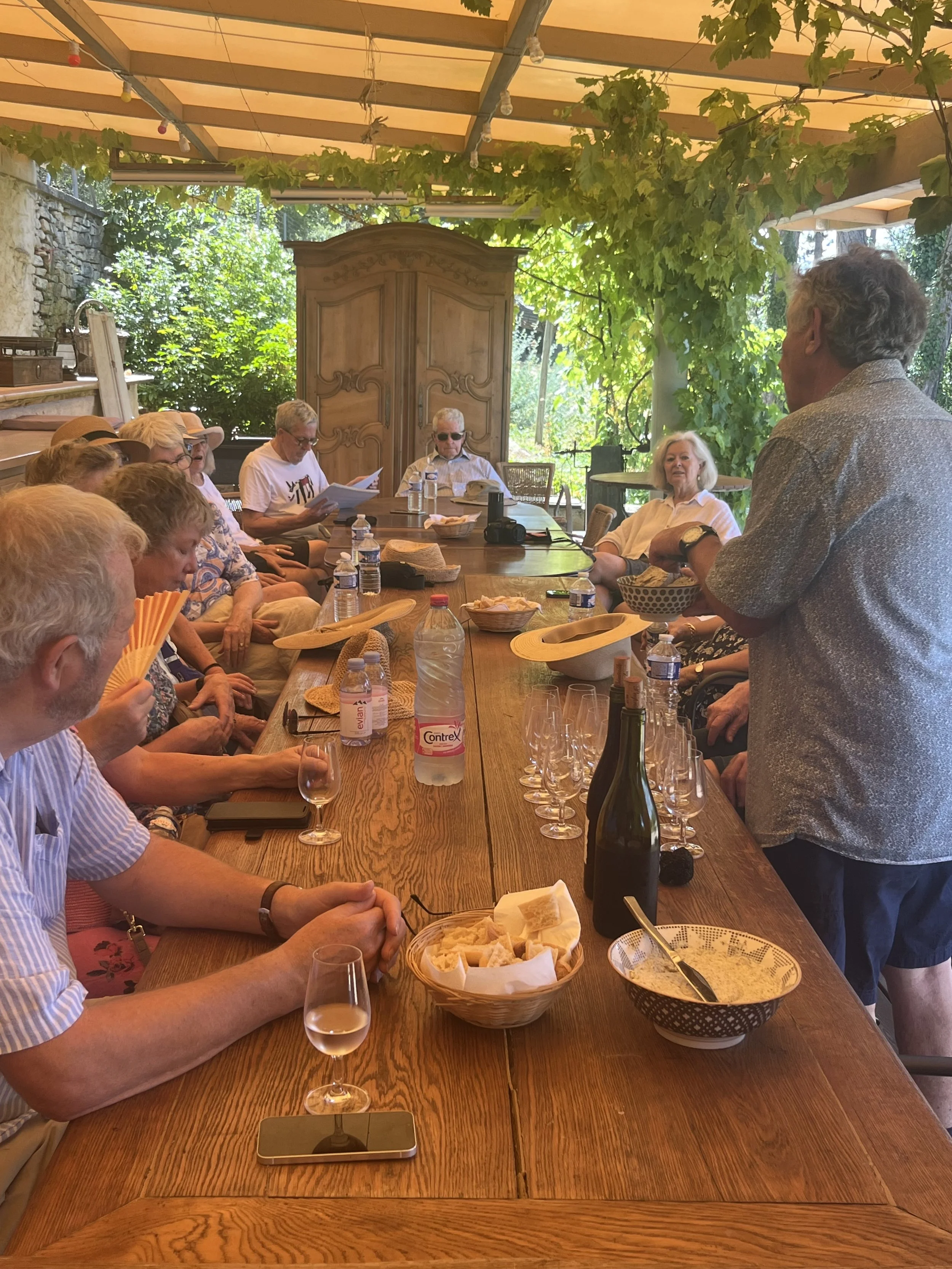
The highlight of our week was visiting Jean-Louis Clos. It has been seven years since my last visit, and his truffle-inoculated oak, hazelnut and pine trees are now producing truffles. To my surprise, he had arranged for a truffle hunter and his dog to demonstrate how the dogs work methodically along the rows, sniffing out truffles hidden beneath the soil.
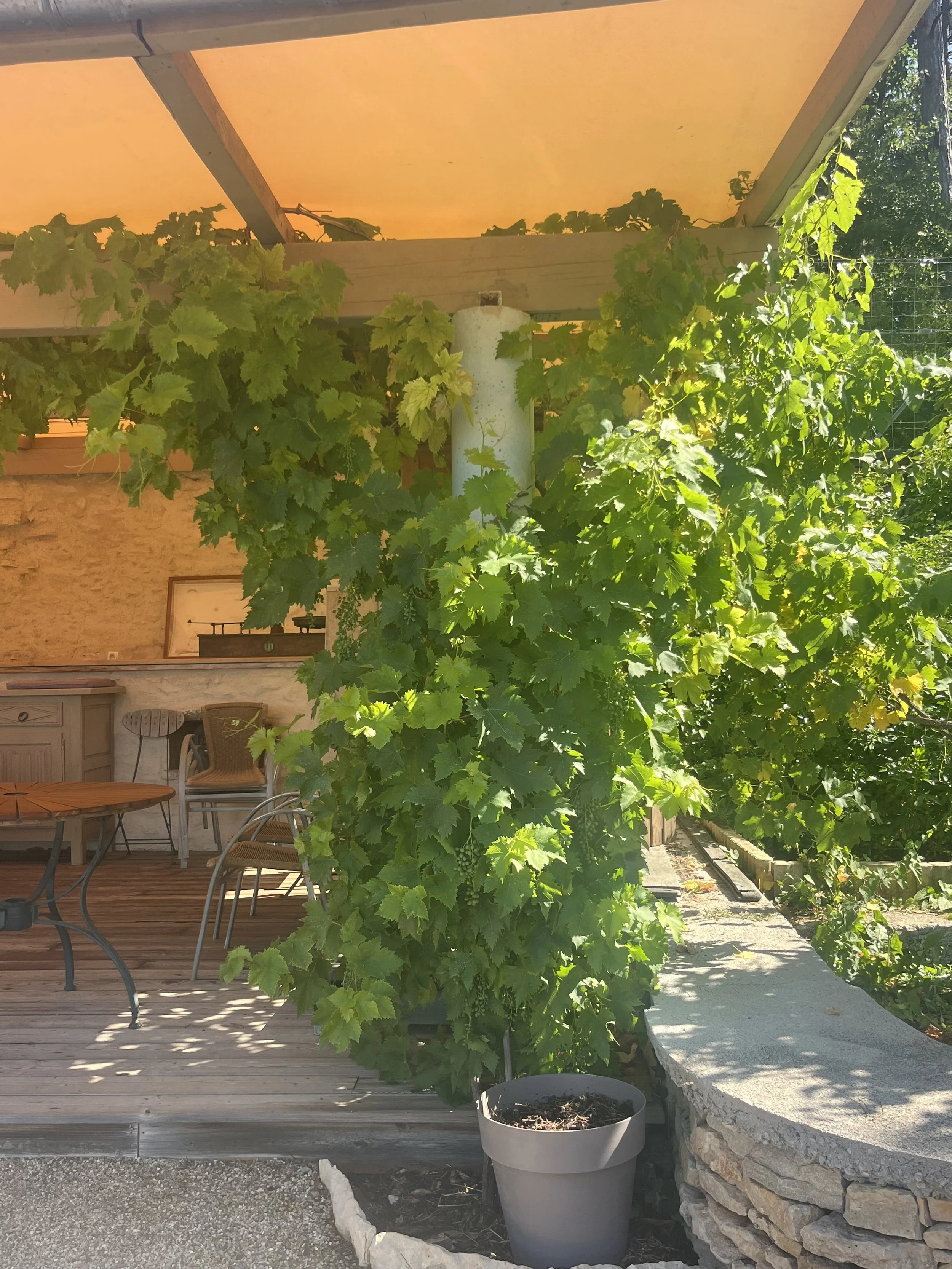
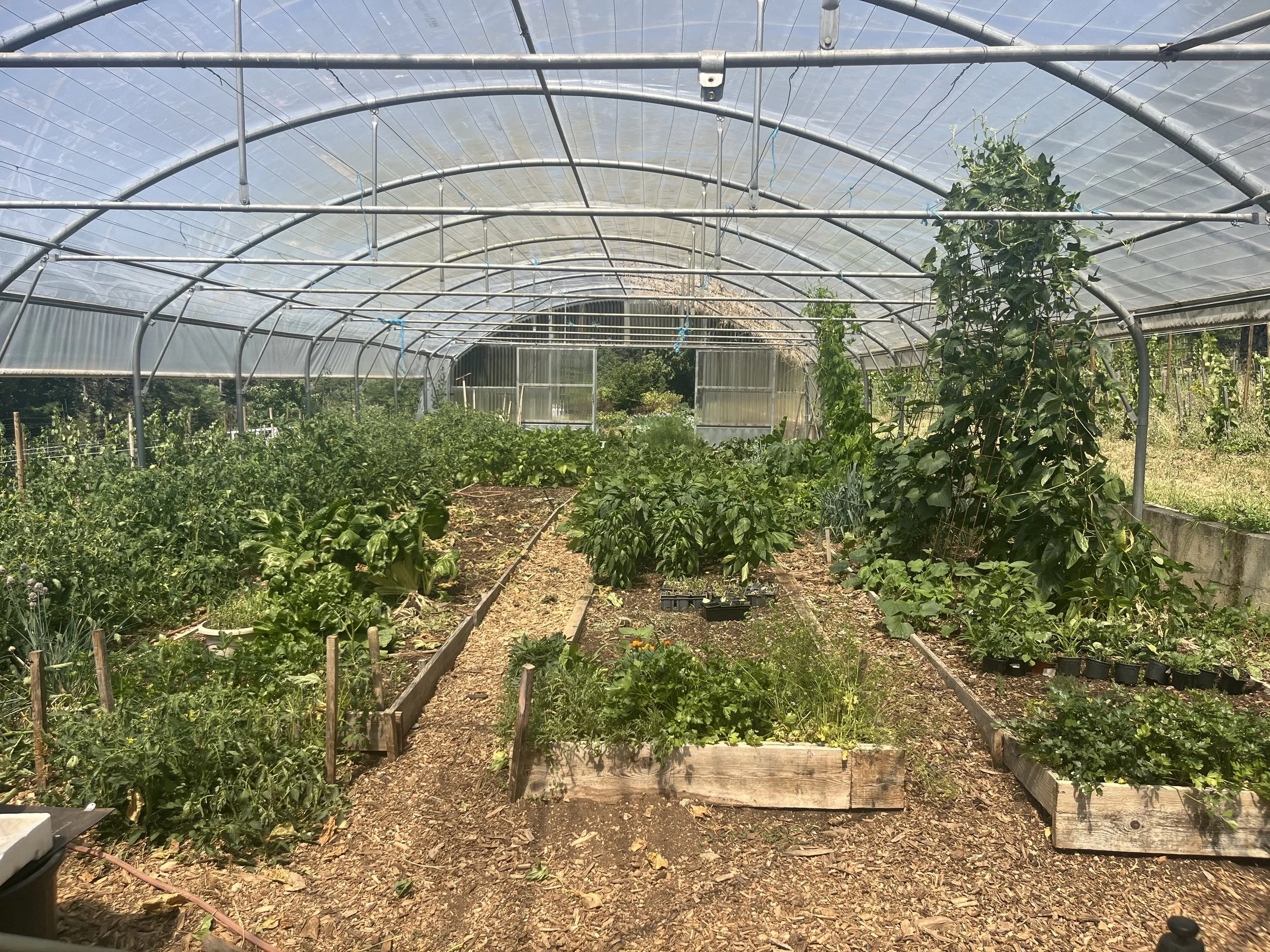
Whenever I feel overwhelmed by our own garden, I think of Jean-Louis and remain in awe of everything he has created. He now has a huge greenhouse producing an extraordinary range of vegetables. I can certainly relate to his passion, and his enthusiasm is infectious—although we don't have his magnificent kitchen and outdoor dining room capable of feeding fifty guests!
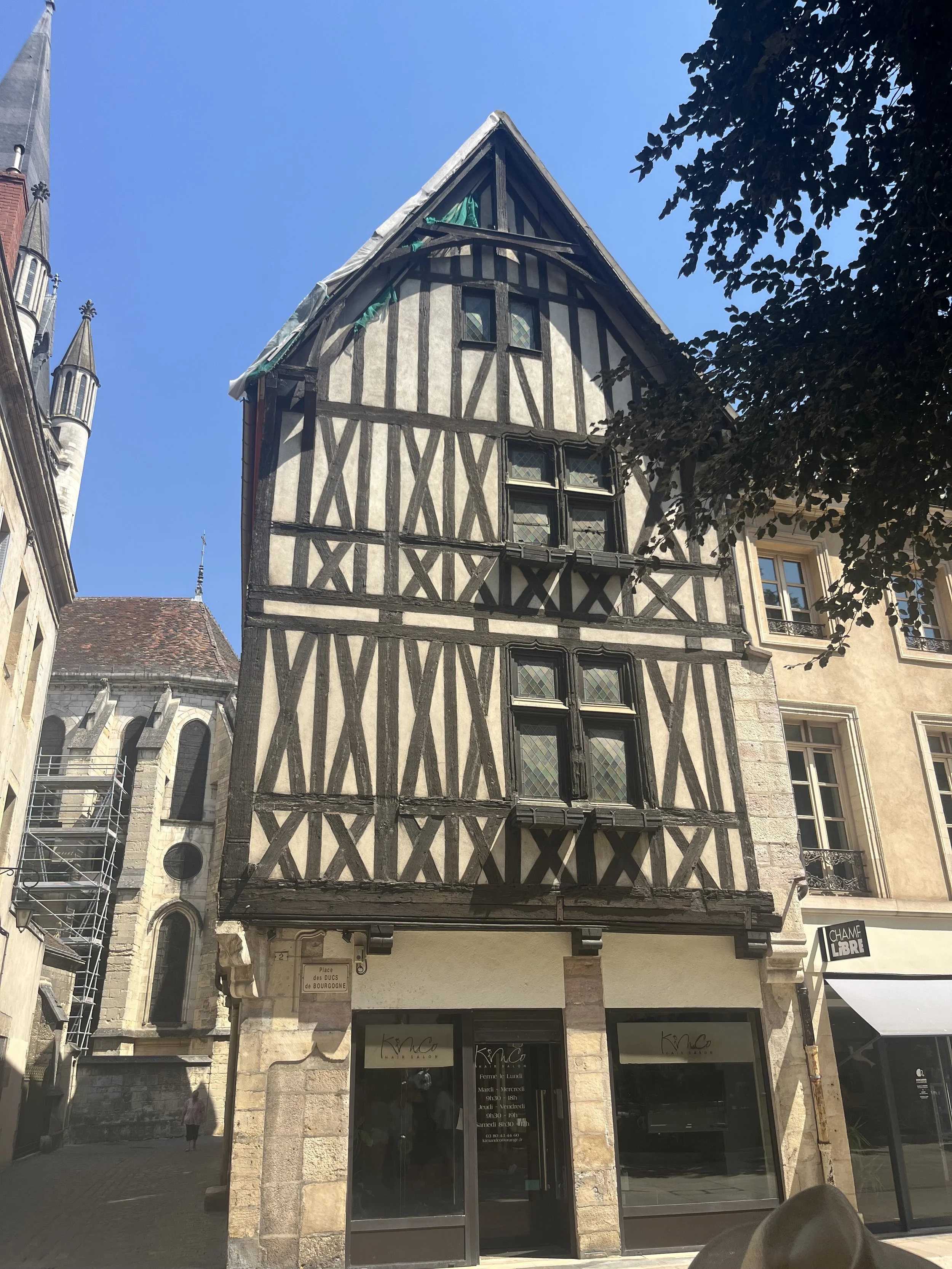
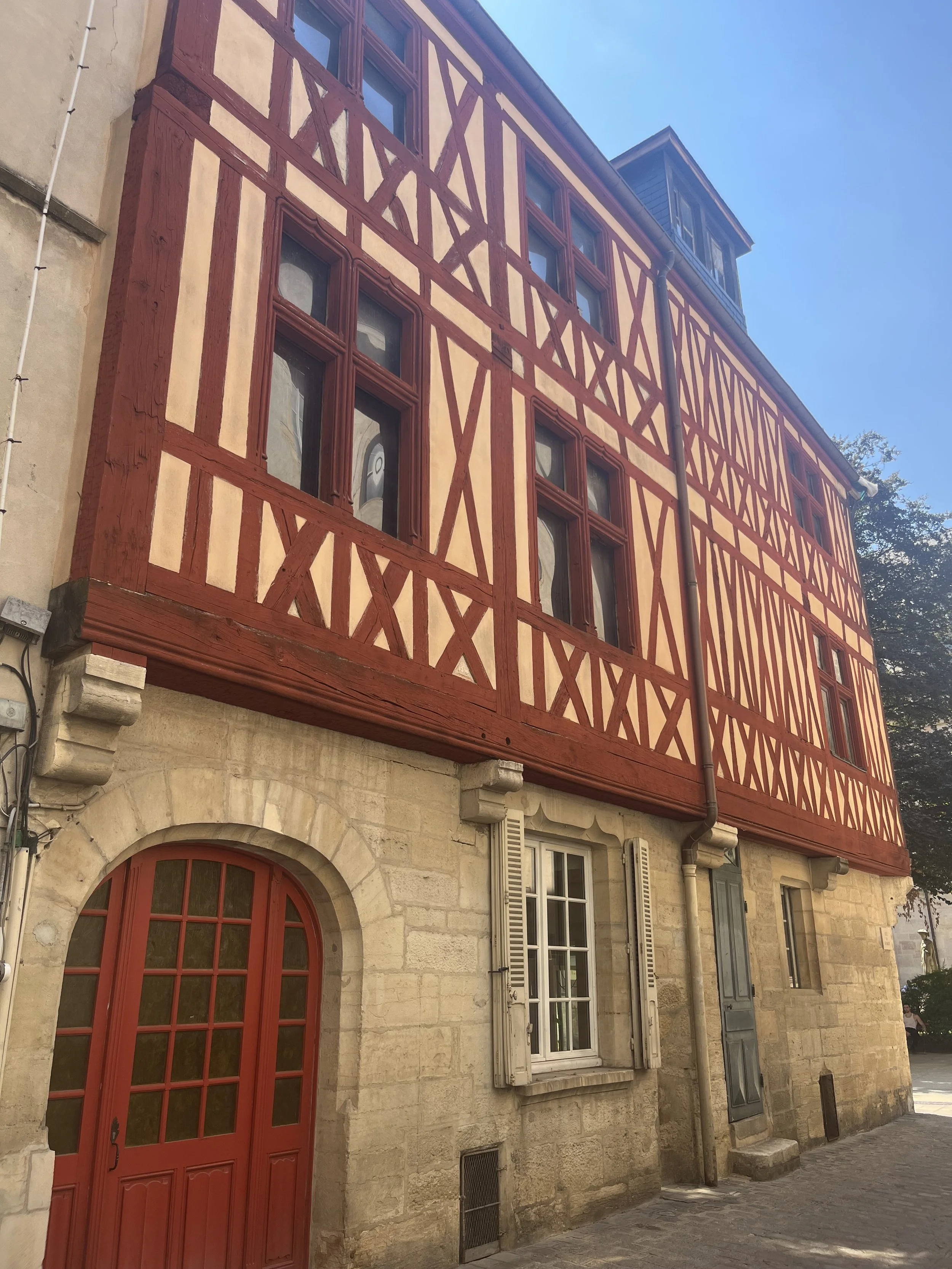
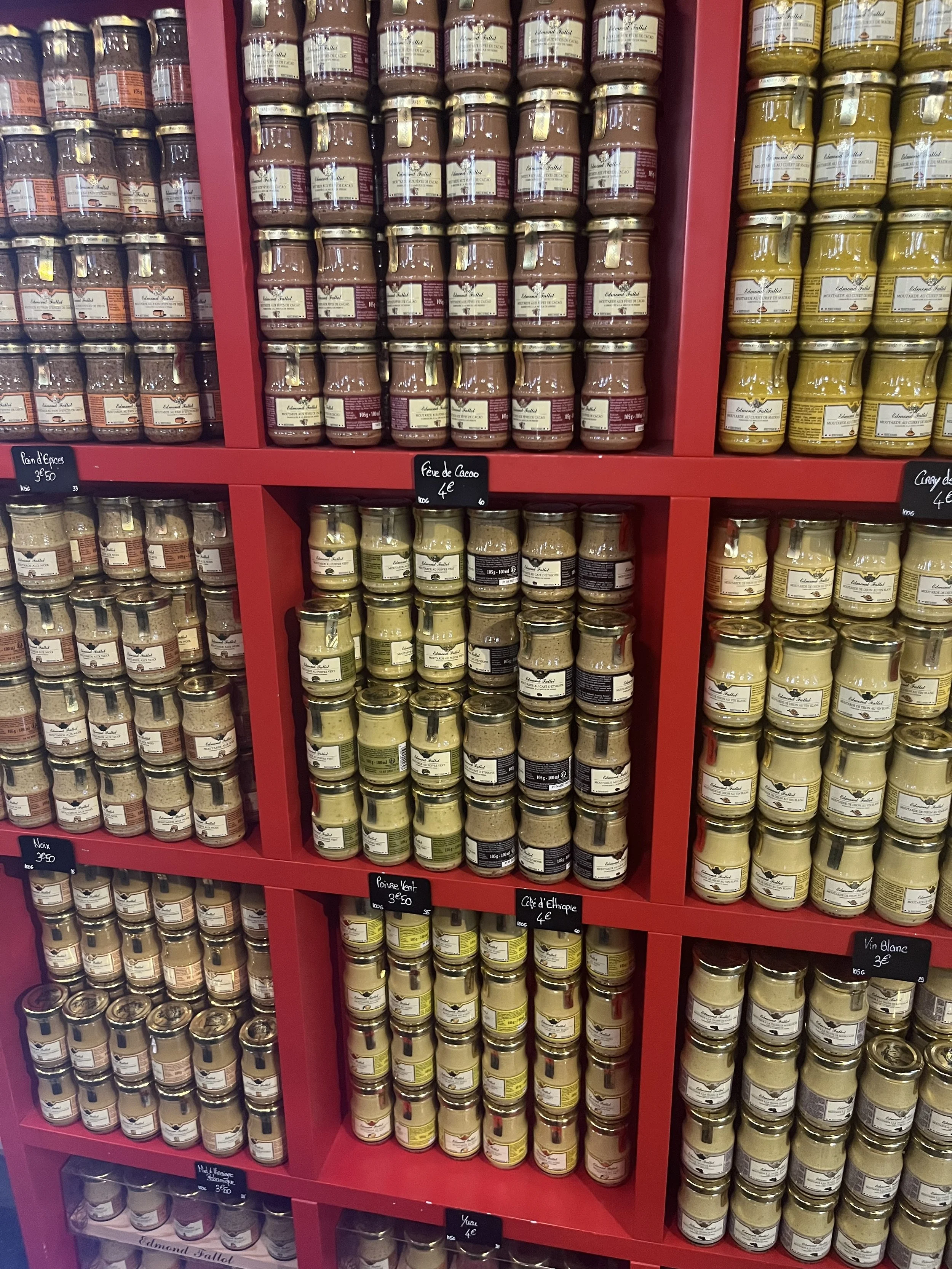
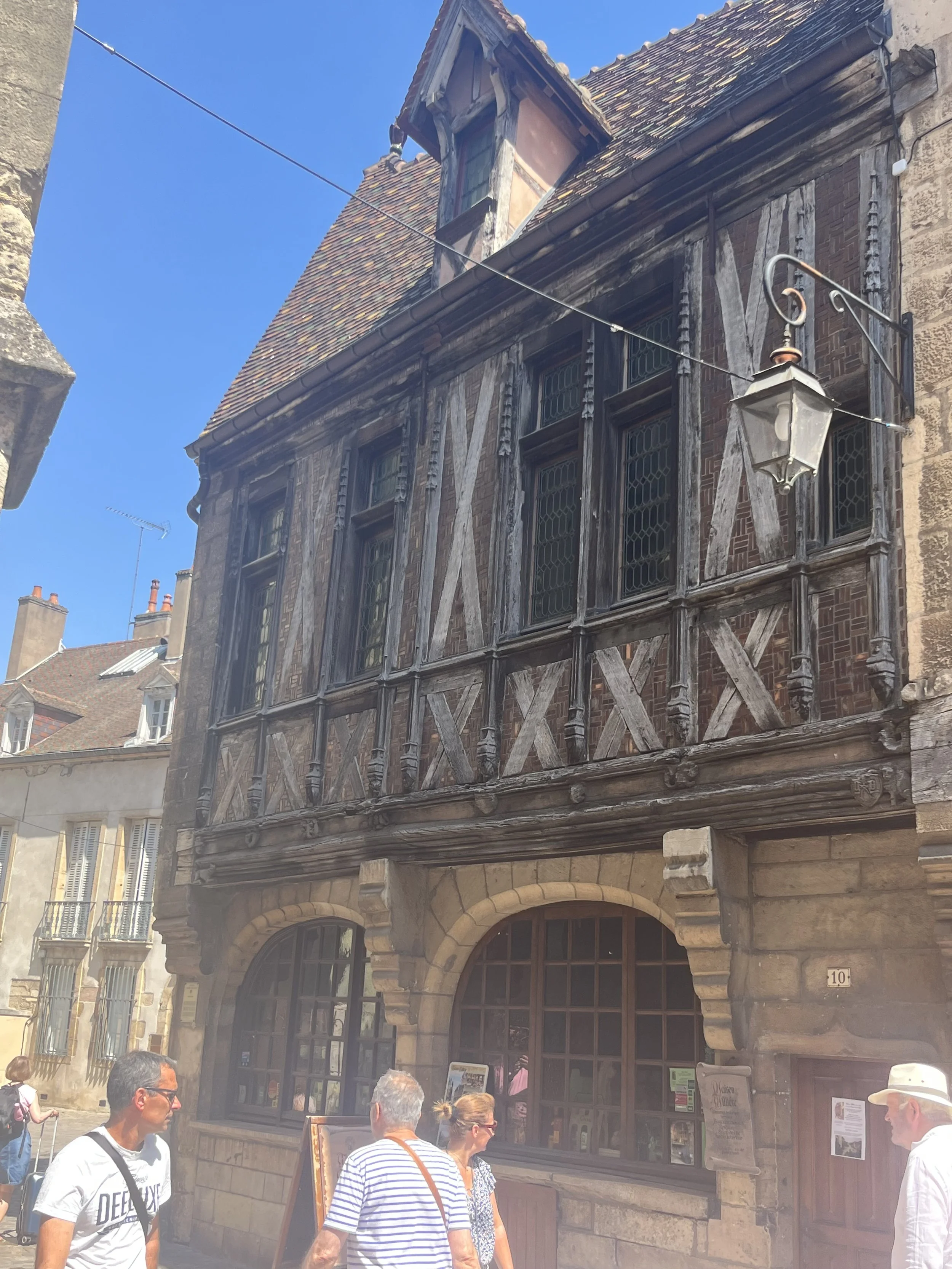
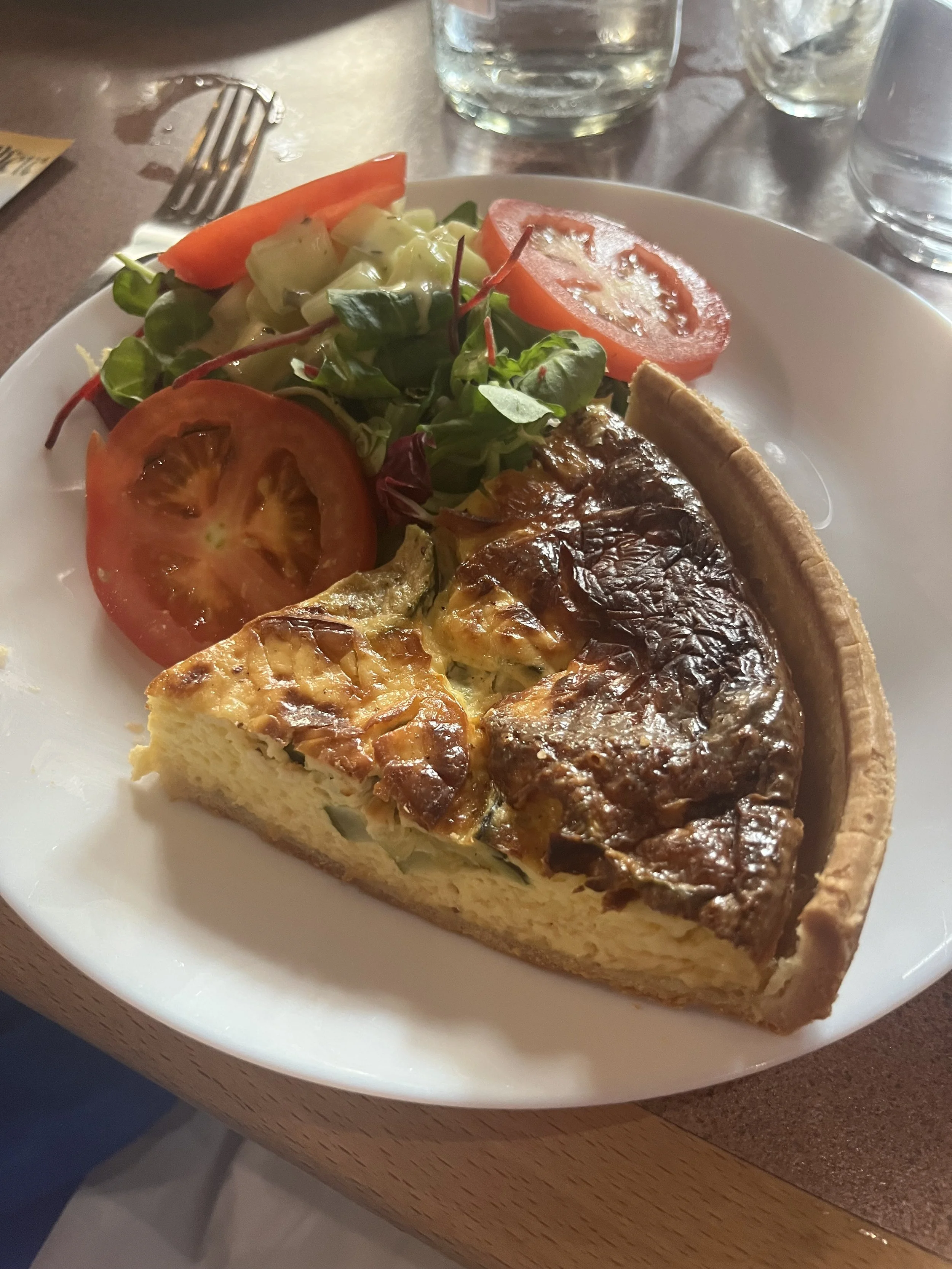
Our final sightseeing day was spent wandering through Dijon, with its beautiful collection of 12th to 15th-century timber-framed buildings. Wealthy merchants built homes using oak frames infilled with stone and cob. In medieval France, taxes were based on the ground floor footprint, so upper floors often projected over the street to create extra space without increasing taxes. Fortunately, Dijon escaped much of the bombing during World War II, leaving its medieval heart wonderfully intact. A visit to one of the famous Dijon mustard shops and a simple lunch of quiche and salad completed a delightful day.
The heat continued unabated. I found myself having a cold shower at midnight and back in the swimming pool by 6.00 am. Everyone assures us that temperatures are due to fall over the next few days!
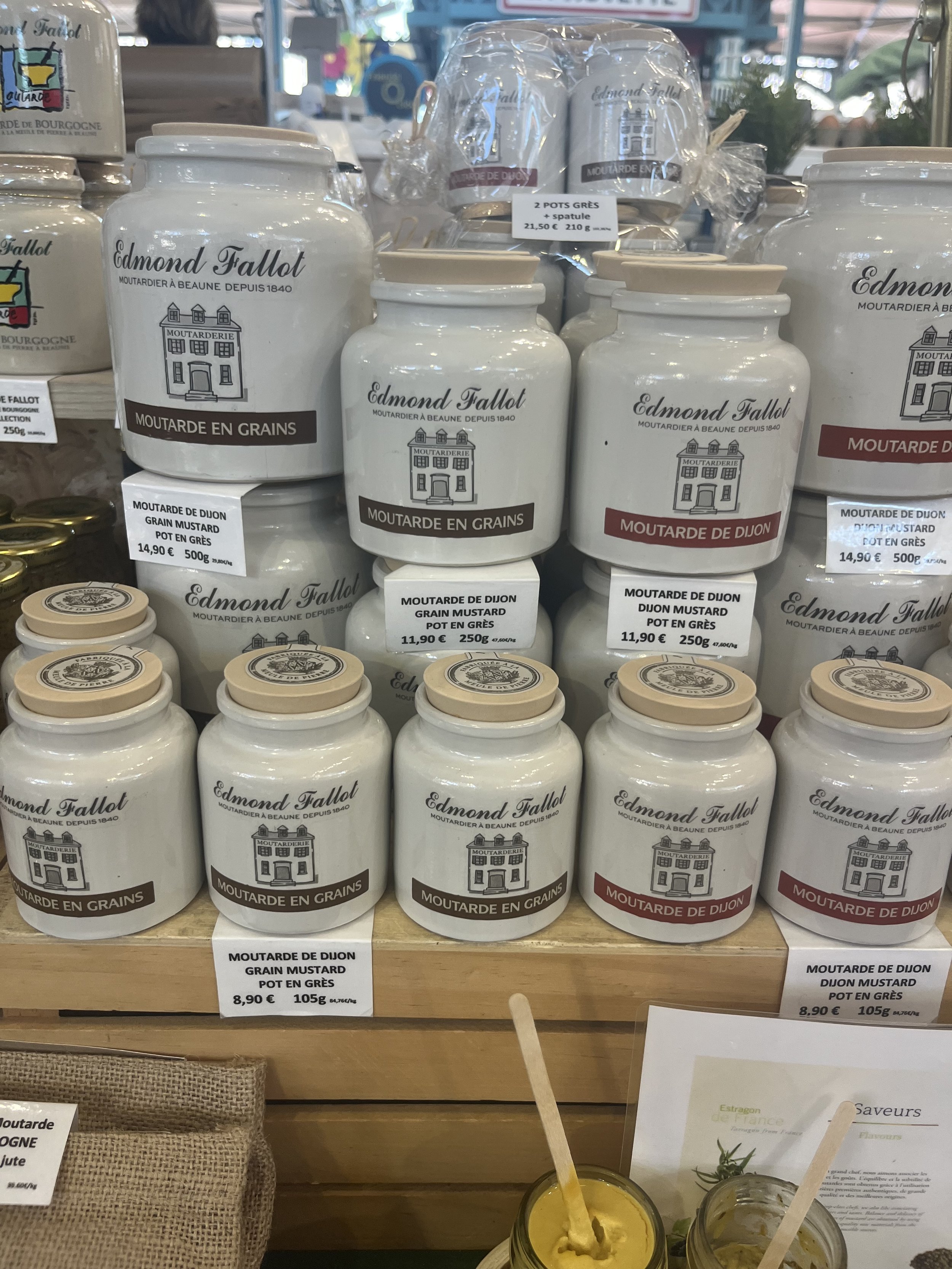
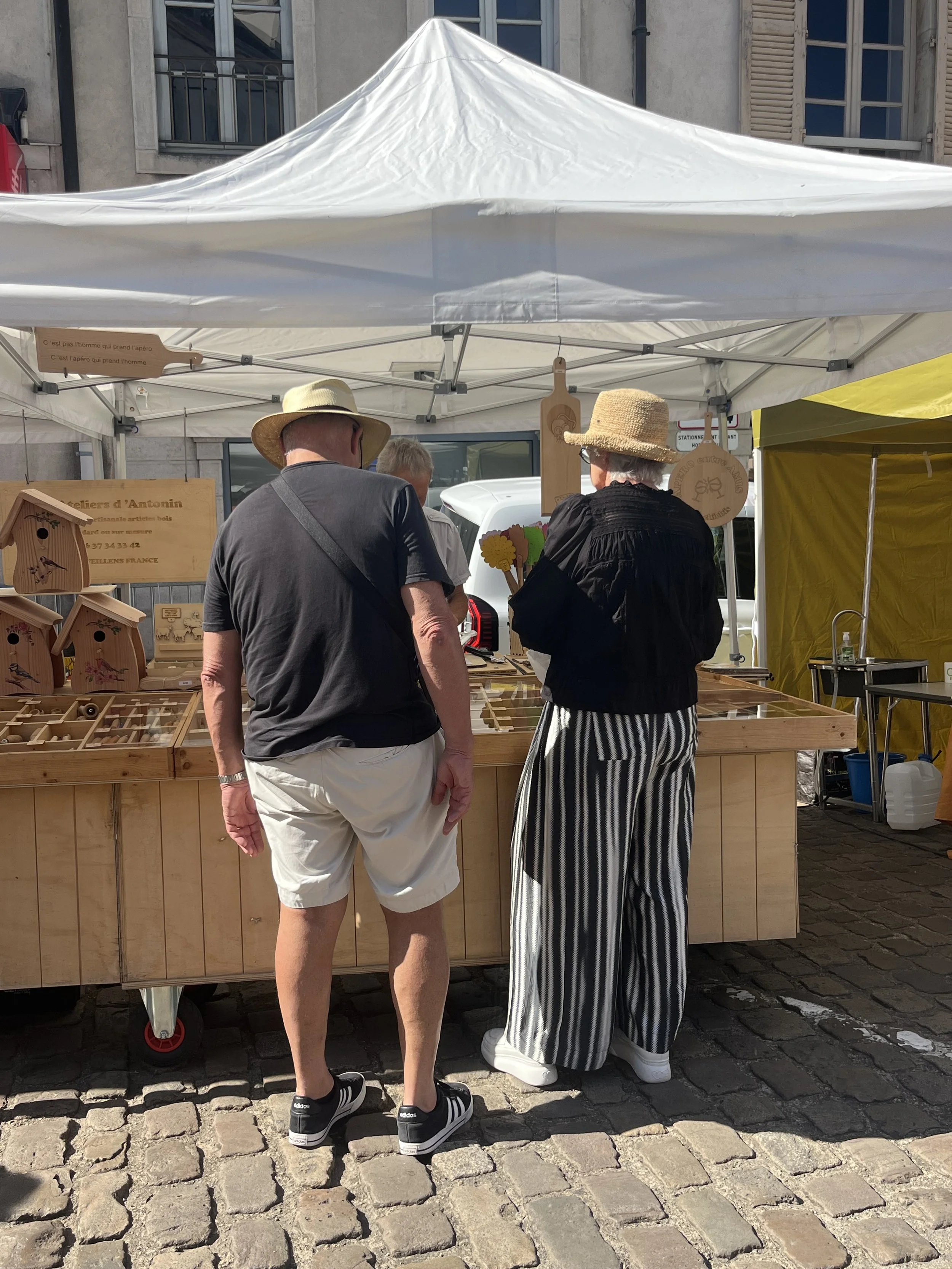
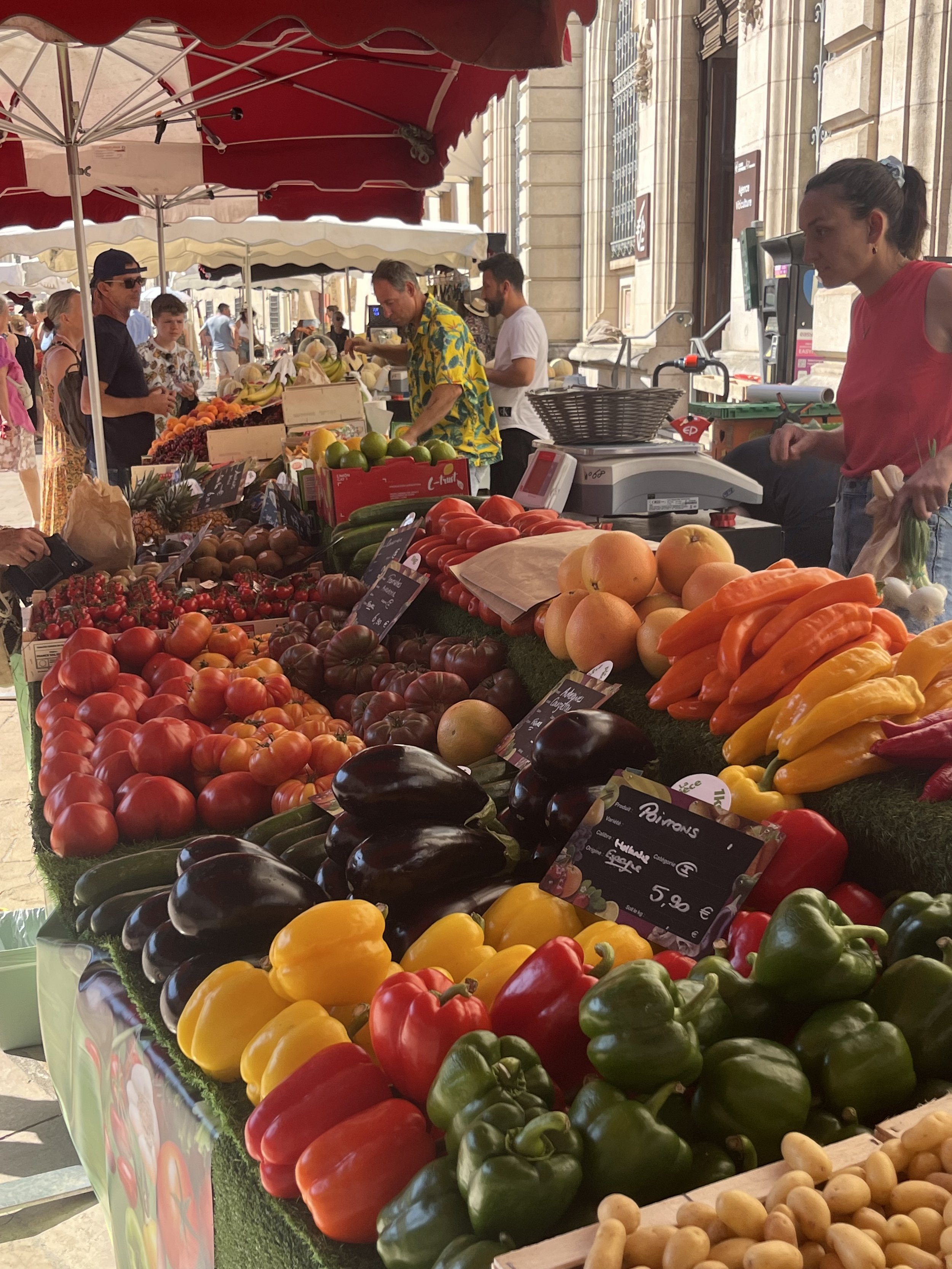
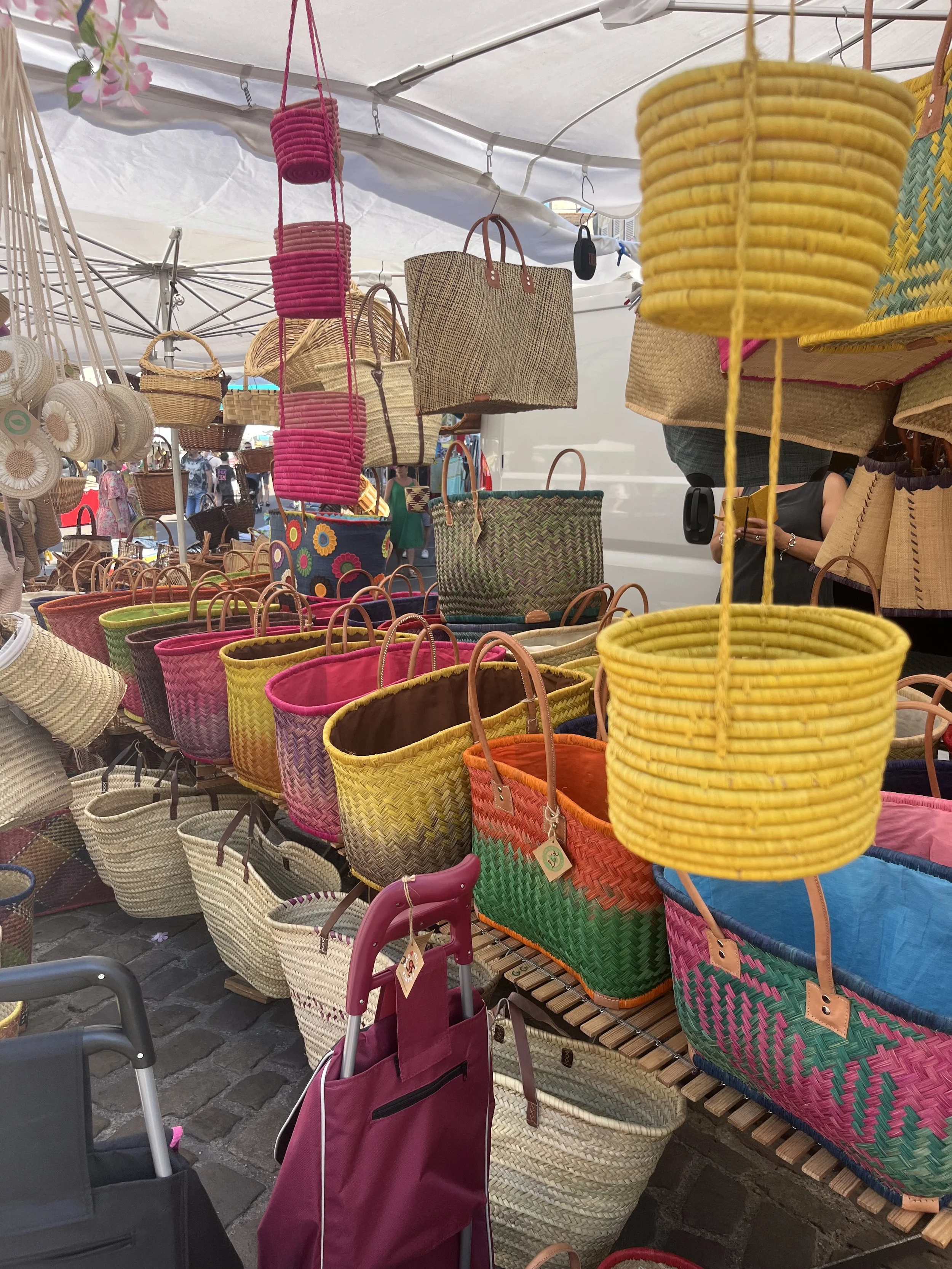
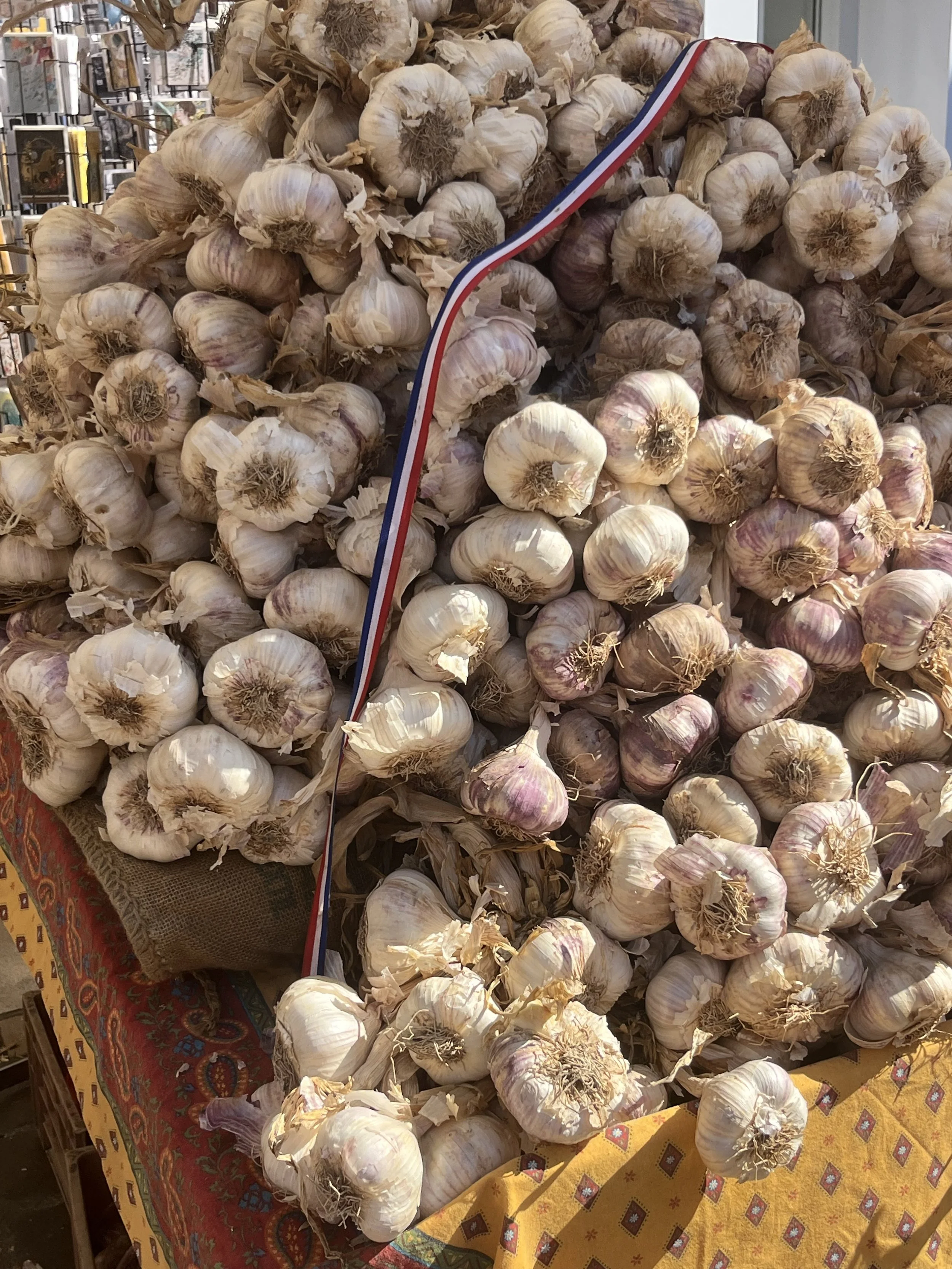
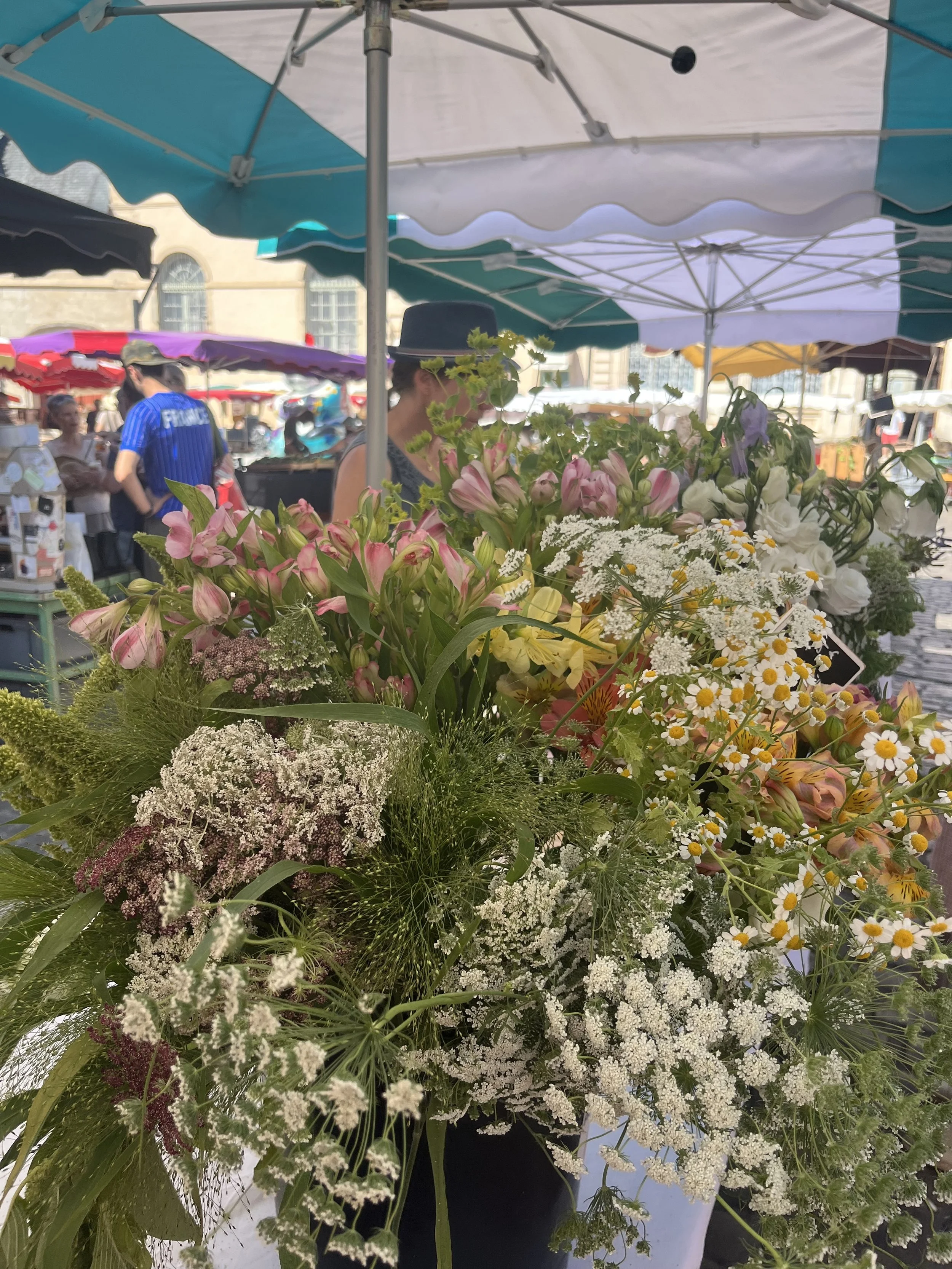
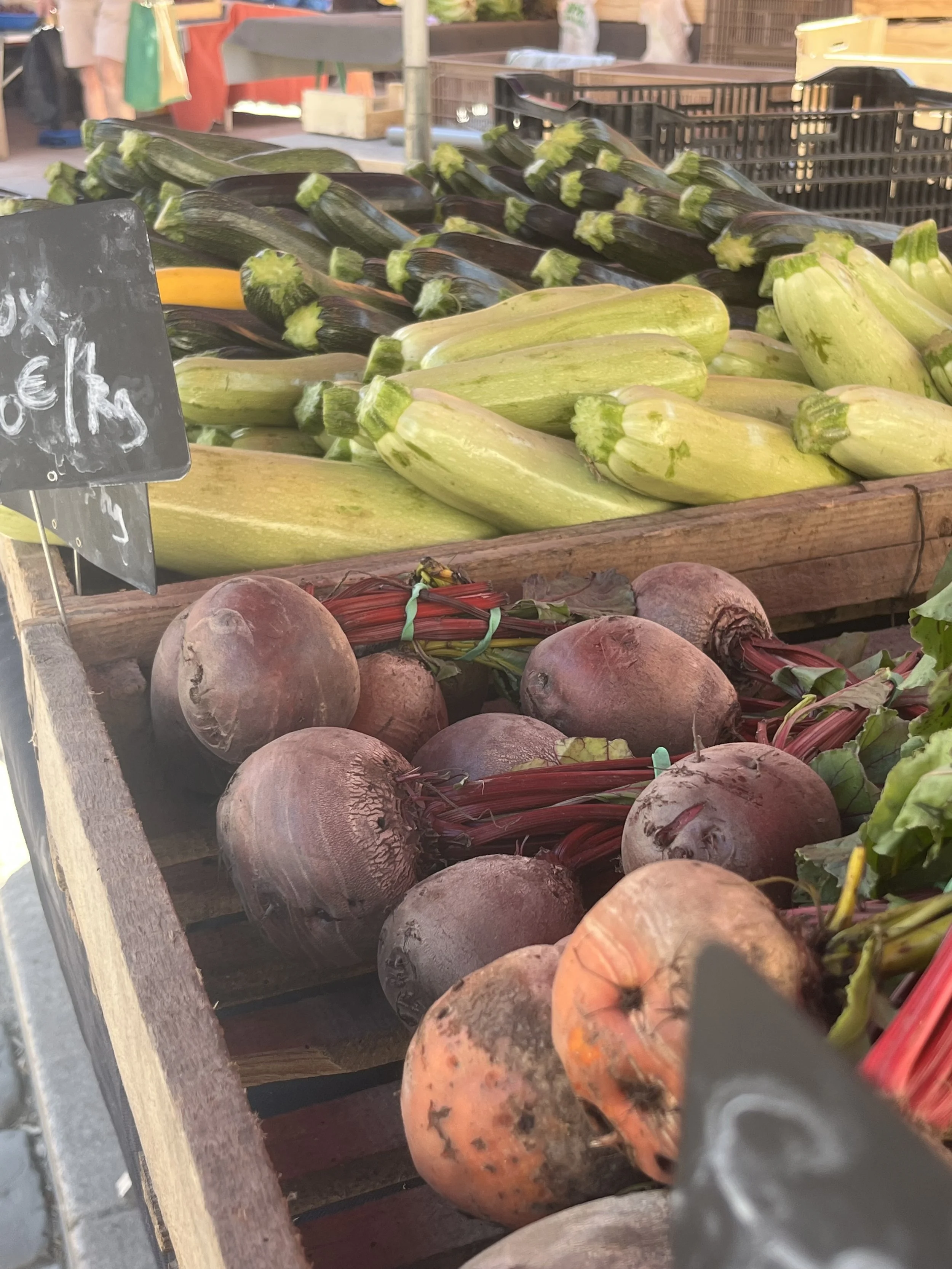
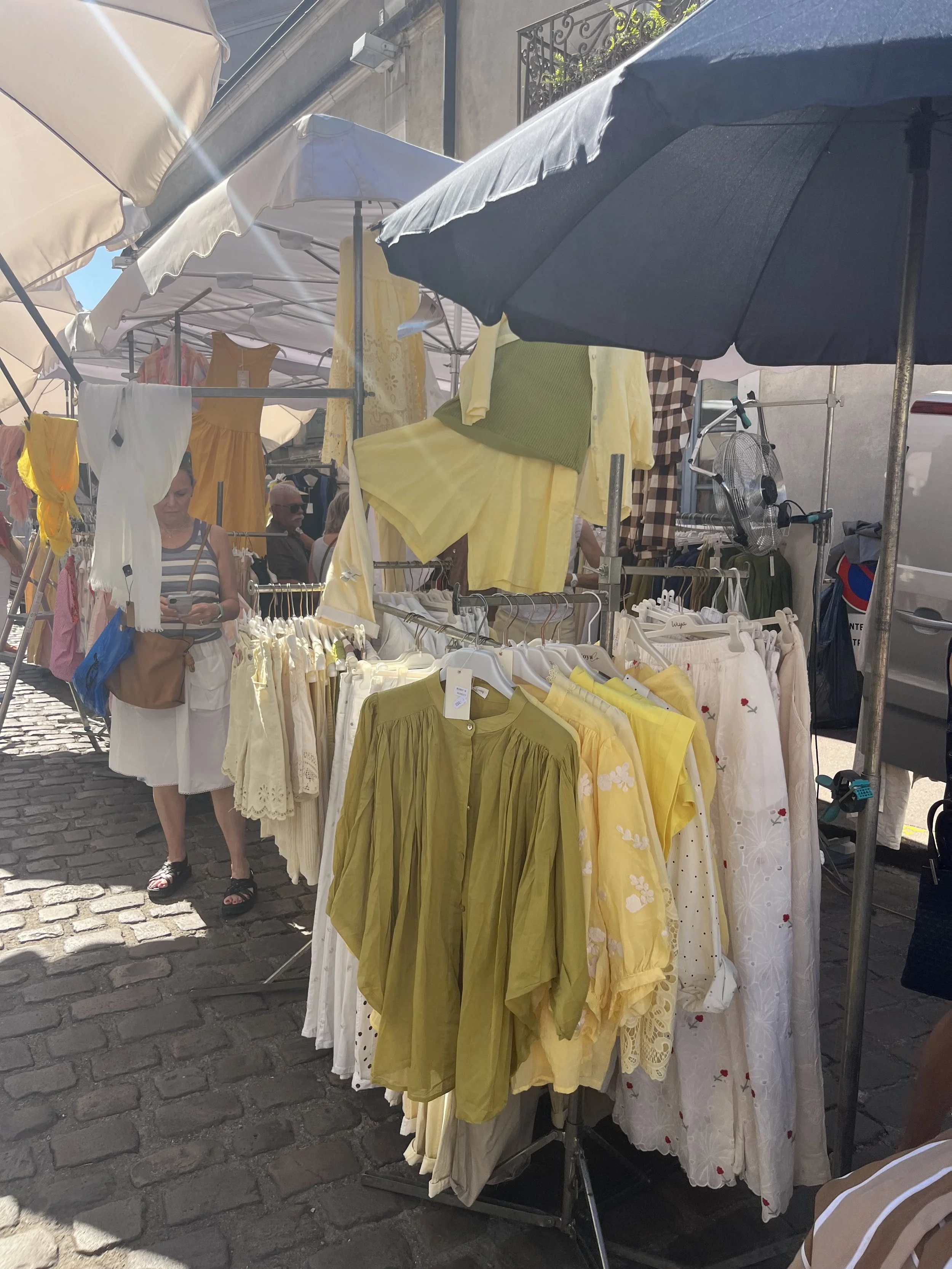
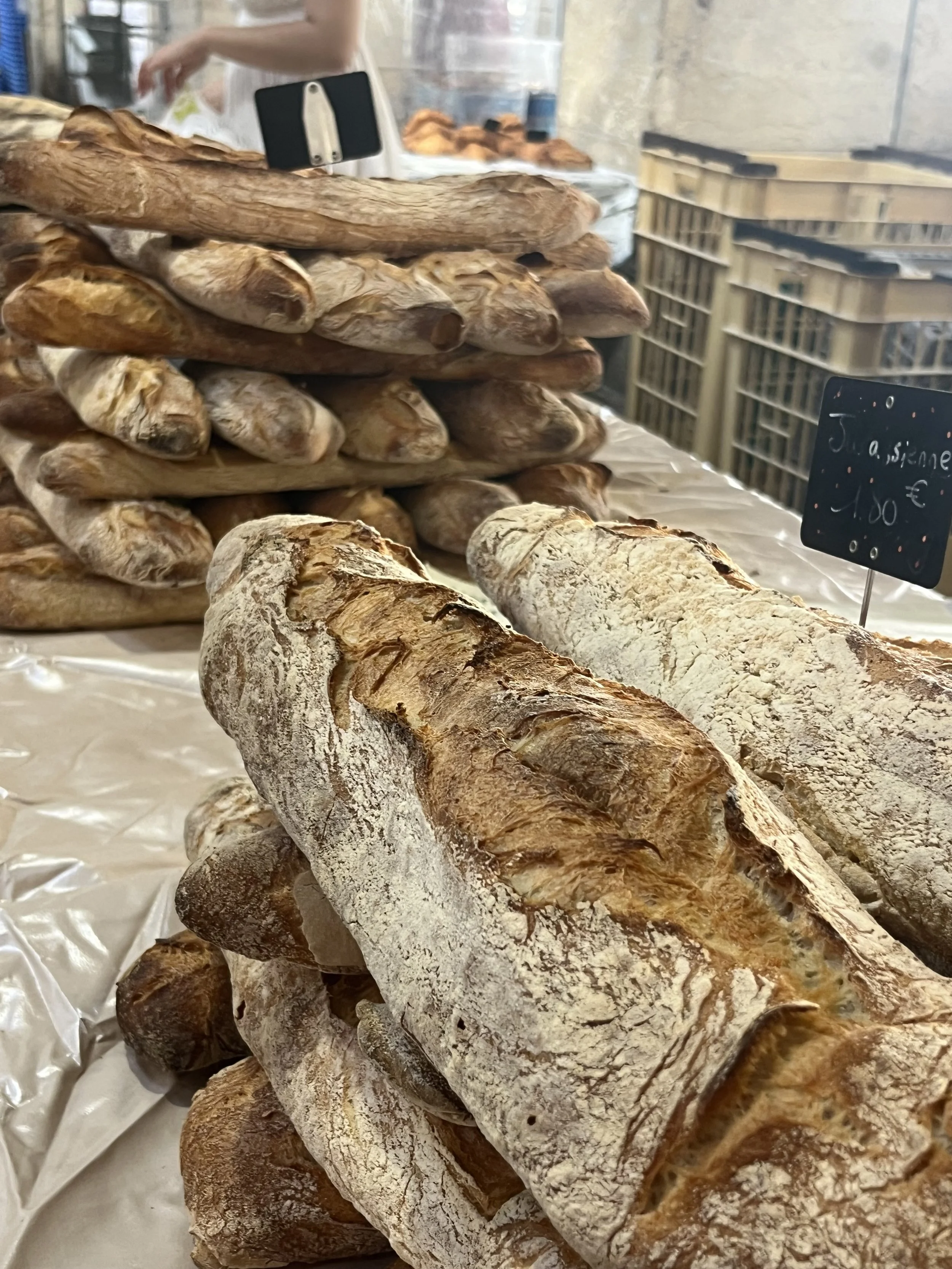
This morning our suitcases were waiting outside for Aimad, our new coach driver, to load them while we enjoyed one final visit to Beaune's outstanding local market.
As I write this, I am thoroughly enjoying our new coach. It has excellent air conditioning, Wi-Fi and plenty of space. We are travelling four hours through hundreds of kilometres of golden wheat fields on our way to Tours and new experiences.
Our time with Vincent, Sylvia and the wonderful team at La Terre d'Or has been exceptional. Their hospitality, kindness and generosity made our stay truly memorable.
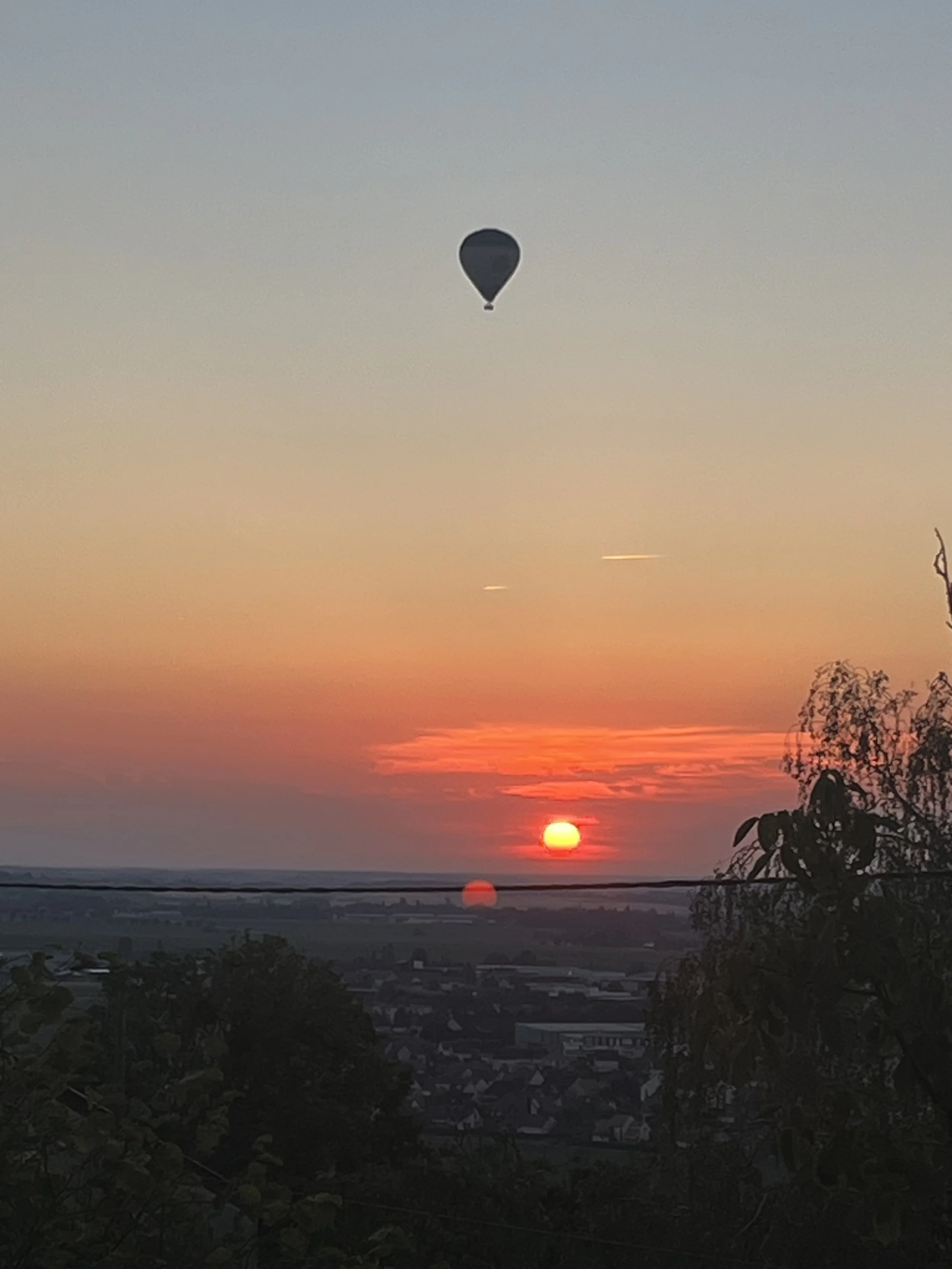
Merci beaucoup.
XX Judith